

News
Summers Will Not Finish Semester of Teaching as Harvard Investigates Epstein Ties

News
Harvard College Students Report Favoring Divestment from Israel in HUA Survey

News
‘He Should Resign’: Harvard Undergrads Take Hard Line Against Summers Over Epstein Scandal

News
Harvard To Launch New Investigation Into Epstein’s Ties to Summers, Other University Affiliates

News
Harvard Students To Vote on Divestment From Israel in Inaugural HUA Election Survey
Panelists Examine Depression, Disabilities
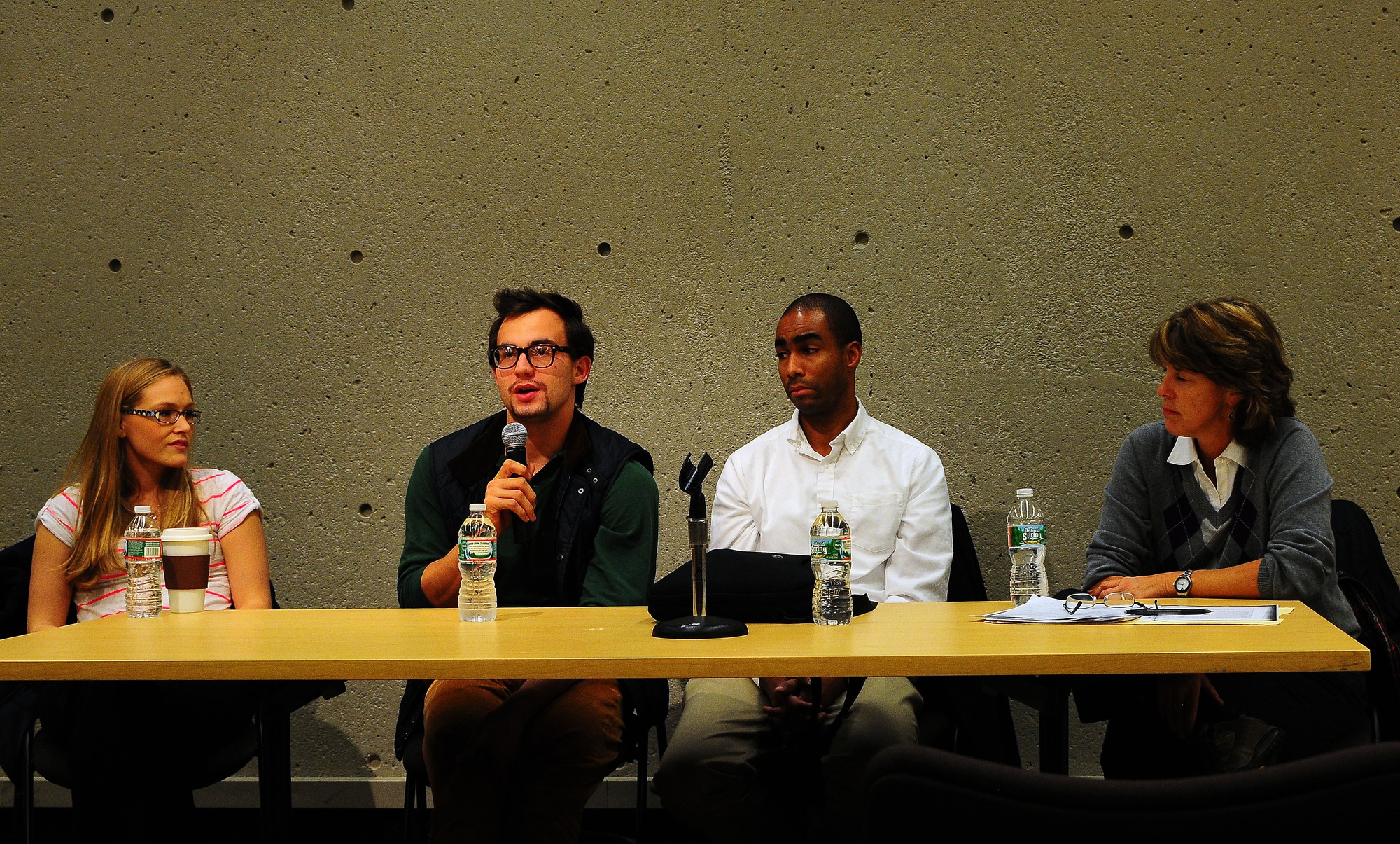
Though it is possible to recognize and accommodate some physical disabilities, according to a college-wide panel that met Wednesday night at Gutman Library, there is still much work to be done in understanding and treating mental disabilities.
At the event, sponsored by the Harvard College Disability Alliance, International Higher Education and Disability, and Student Mental Health Liaisons, student and professor panelists alike discussed depression as a disability, the stigma that surrounds it, and how students can move forward when suffering from depression.
According to Lawrence I. Reed, a Harvard College Research Fellow in Psychology, a large part of the problem in attempting to understand depression is the disease’s extreme complexity. Even though scientists have made great strides in researching depression, it “still remains very esoteric and misunderstood by many individuals,” Reed said.
Christine E. Looser, a postdoctoral fellow at Harvard Business School, further explained the elusiveness of depression.
“We can’t see anyone’s mind, so we have to sort of make it up,” Looser said.
Despite the inability to fully understand what happens in each other’s minds, Reed emphasized the observable impacts that depression can have.
“Depression...is almost the worst possible thing you can have for many college students,” Reed said. “There is decreased motivation, decreased concentration, sleep disturbances, and eating disturbances.”
All of the panelists noted that it is important for the public to be careful not to make assumptions about the mental conditions of those who may be depressed.
“Depression from the outside might look like laziness or lack of motivation, or anything other than what depression really is,” Reed said.
The panelists also addressed the options available specifically for students suffering from depression.
“It is up to you to inform people of your circumstances,” said panelist Sam R. Peinado ’15, a student mental health liaison for the College. “It is o.k. to ask for slack and it is often granted, but you have to be open and honest.”
For those with friends dealing with depression, Looser offered that “asking your friend how he is doing and actually meaning it” is a simple and intuitive way to offer assistance. In addition, Looser said that the best way for individuals to open up and be able to talk about problems they may be facing is to encourage “authentic conversation about how people are actually feeling.”
Over the past year, the students and administrators have made concentrated efforts to address mental health on campus. These efforts included a video campaign sponsored by the Student Mental Health Liasons called “Harvard Speaks Up,” at least one student rally, and open conversations between students and administrators about mental health.
Want to keep up with breaking news? Subscribe to our email newsletter.