Epstein, the Gift That Keeps on Taking
Even elite impunity has its limits.
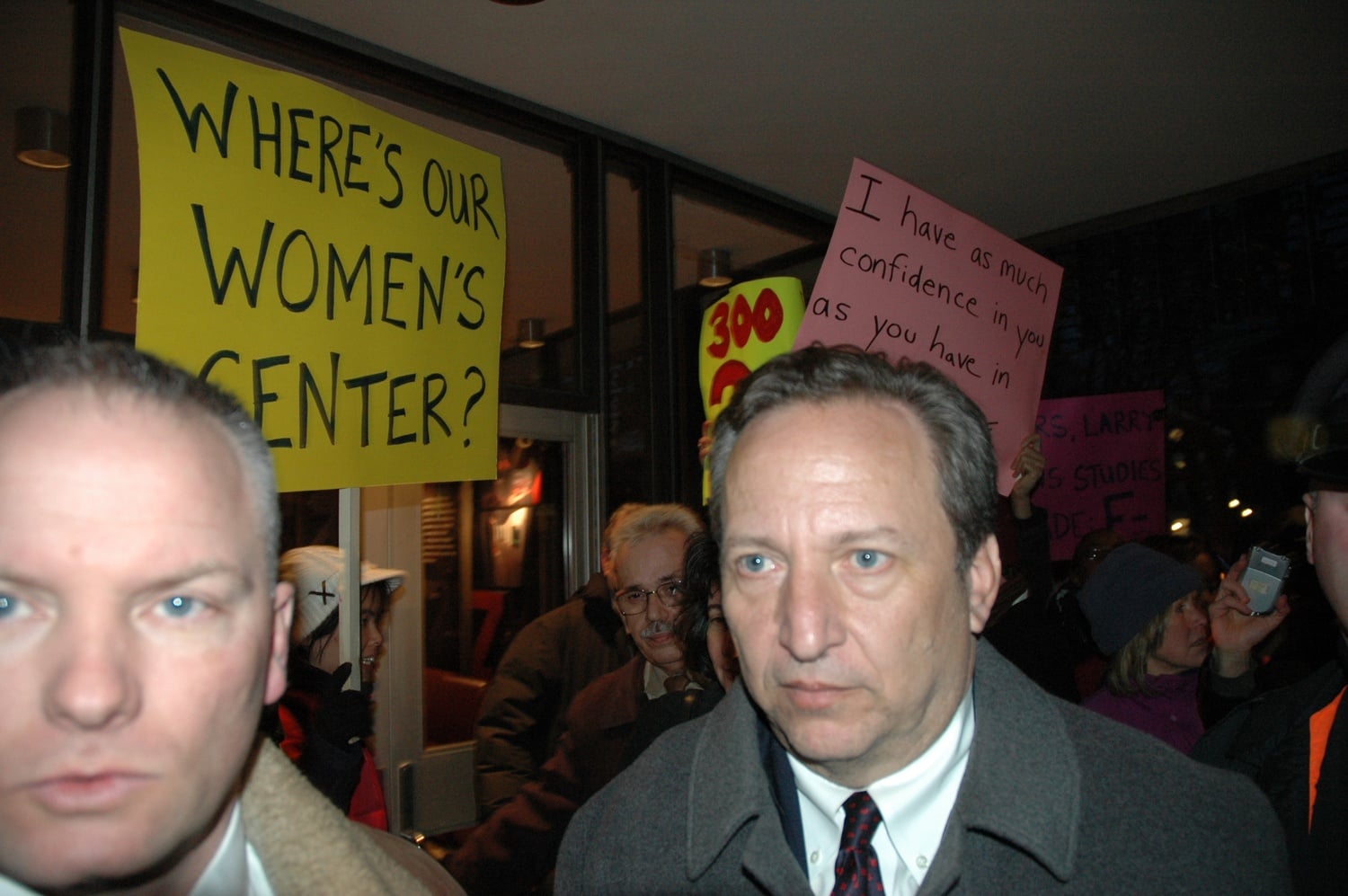
At long last, former Harvard President Lawrence H. Summers will resign from his academic and faculty positions at the University, effective at the end of this academic year. Summers’s departure builds on months of fallout over his sordid relationship with convicted sex offender Jeffrey E. Epstein.
Not all professors implicated in the Epstein files have stepped back voluntarily. Harvard just placed mathematics professor Martin Nowak on paid administrative leave as the Faculty of Arts and Sciences opens an investigation into his ties to Epstein.
Summers was right to resign, and Nowak should follow suit. While friendship or communication with odious actors should not automatically trigger dismissal, both men demonstrated an egregious lack of judgement — and basic respect for women and minorities.
To briefly summarize: in his interactions with Epstein, Summers cracked an offensive joke about women’s IQ, solicited advice for pursuing a woman he described as a mentee, and helped his wife as she solicited massive sums of money, ostensibly against Harvard policy. Nowak, meanwhile, allowed Epstein to use the Program for Evolutionary Dynamics to redeem his image post-conviction and continued to spend time with Epstein up until just months before his arrest. Nowak sent an image of a woman to Epstein with the caption “my korean friend.”
Their behavior is fundamentally at odds with the ethos of the University. Harvard faculty, especially those as prominent as Summers, should be held to a higher standard of judgment.
Summers and Nowak were not the only Harvard affiliates to be entangled with the infamous pedophile either. Former Harvard Hillel leaders solicited donations from Epstein. Andrew L. Farkas ’82, chair of the Hasty Pudding Institute, was good friends with the financier; the Institute accepted $375,000 in donations from him. Venture capitalist and Harvard alumnus Gerald L. Chan communicated with Epstein about creating an extension of the Tsinghua University campus in the Boston area. The list of associations runs long.
Epstein’s ubiquity at Harvard begs an important question — how did so many of the world’s top minds fall under his spell?
Chalk it up to flawed incentive structures.
In the past, Harvard’s diffuse fundraising practices could incentivize affiliates to personally network with powerful and wealthy donors, such as Epstein. This was because lower levels of the institution could quietly accept gifts from individuals that higher ranking administrators had already rejected. In the drive to acquire academic status, this setup rewards professors for looking the other way. One can imagine similar dynamics driving Hillel and the Pudding as they upkeep their expensive properties on the shore of the Gold Coast.
Harvard realized its mistake and changed these practices by putting increased, centralized scrutiny on external gifts.
While fundraising reforms might have made these unsavory partnerships less likely, Harvard affiliates will still encounter high-power, morally dubious people. With regards to our faculty, a clear line must be drawn between mere engagement with these individuals and substantial conduct that puts into question a professor’s ability to be a safe instructor, mentor, and colleague.
Just exchanging correspondence with a disgraceful person — though morally reprehensible — is not enough to warrant removal from the University. Not every Epstein-adjacent faculty member needs to resign.
However, when correspondence between professors and a reprehensible individual like Epstein transcends professional boundaries and suggests that they share certain perverse values — as was the case for Summers and Nowak — these professors must dismiss themselves.
If they don’t leave willingly, the University should circumscribe their influence to the smallest radius possible. Everything from stripping them of distinctions and honors, cutting them off from speaking engagements, and limiting interaction with community members is fair game.
After a consequential 50 years affiliated with Harvard — an illustrious career forever marred by shocking impropriety — we say one final goodbye and good riddance to Lawrence H. Summers.
As for Nowak? Perhaps he ought to follow Summers’s lead.
This staff editorial solely represents the majority view of The Crimson Editorial Board. It is the product of discussions at regular Editorial Board meetings. In order to ensure the impartiality of our journalism, Crimson editors who choose to opine and vote at these meetings are not involved in the reporting of articles on similar topics.
Have a suggestion, question, or concern for The Crimson Editorial Board? Click here.
Want to keep up with breaking news? Subscribe to our email newsletter
Have a tip for The Crimson? Share it confidentially