PRIVATE POLICY NYFW Fall/Winter 2026 Collection Review: Noodles, (Lunar) New Year, and New Designs
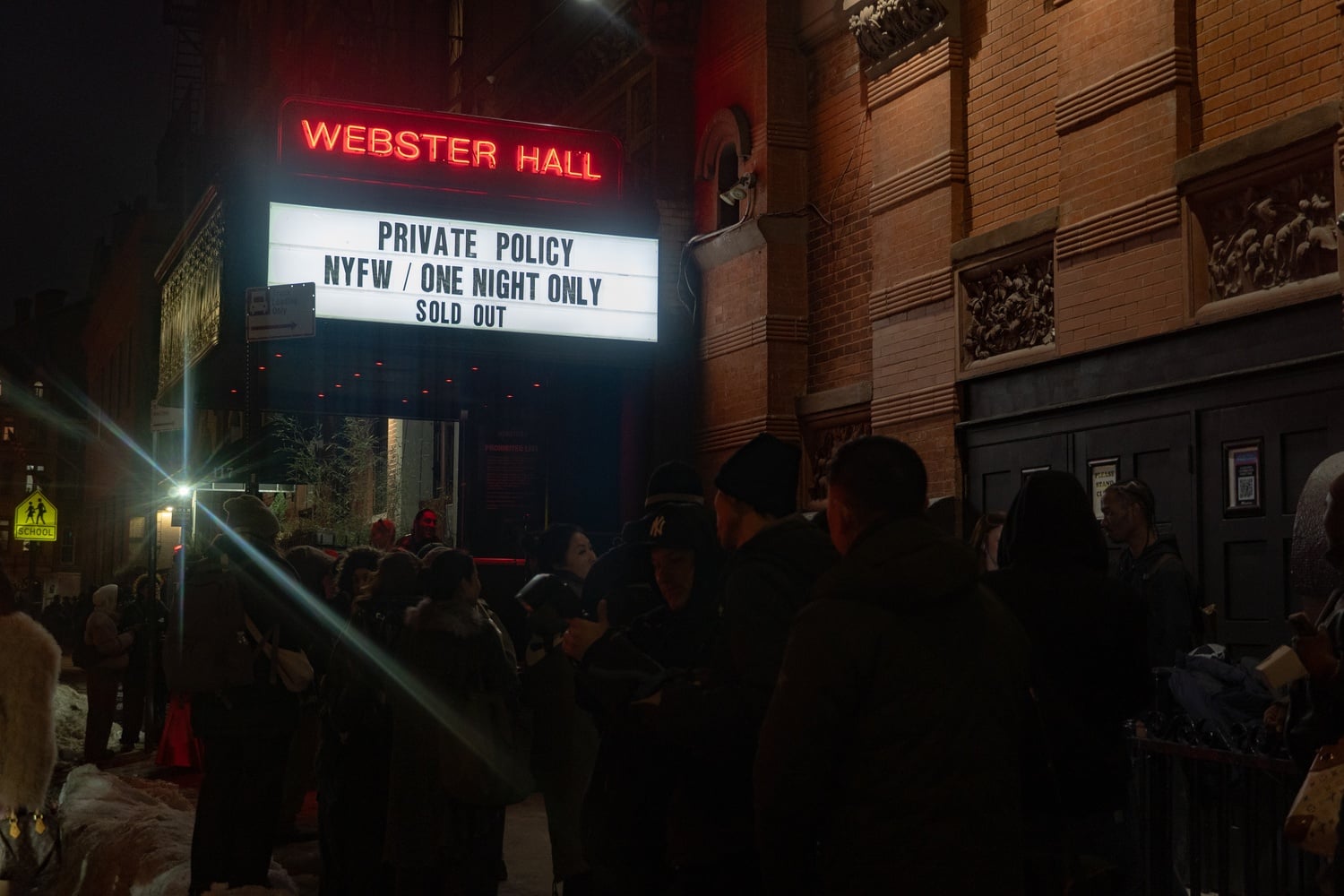
On Feb. 15, Webster Hall— a concert and nightclub space in New York City — transformed into the venue of PRIVATE POLICY’s runway. A line of impeccably dressed attendees wrapped around the building, as the marquee signaled the show was at full capacity. The energy was high as photographers snapped photos and influencers pulled others aside for outfit rundowns.
At exactly 5 p.m., the crowd was ushered in. Some headed towards the balcony and others were seated in front of the stage, where there normally would have been a pit. Noodles in take-out boxes were passed around, and those with assigned chairs were even given branded chopsticks. Given the show’s time conflict with usual mealtimes, it was a delightful surprise. A disco ball provided little dotted reflections across the walls.
The show was designed not only fittingly with Lunar New Year in mind, but also the history of Asian Americans across time, from 19th-century railroad workers to their integration into the corporate workforce around the 1980s.
Hence, several designs, from a floor-length skirt to jackets, were created from an extremely industrial, rusted brown, and leathery texture. One of the looks featuring this fabric head-to-toe was topped off with a head piece adorned with several metal fixtures. Two looks paired the fabric of these pieces with branded “Sweat” tanks and a short-sleeve bolero. While one was slightly more feminine and another masculine, after presenting one after another, their juxtaposition emphasized rather than diluted the genderless mission of Private Policy, highlighting the versatility of the brand. Other looks were branded with the cities "New York” and “Sacramento,” making one connect them with the Chinese diaspora. Although the intentionality behind the cities chosen was notable, they’re often used in clothing in much less meaningful or touristic contexts. While this collection could, in a way, rewrite the narrative behind these cities to reflect their deeper importance in society, the lettering may also backfire to undermine the distinctive nature of the looks.
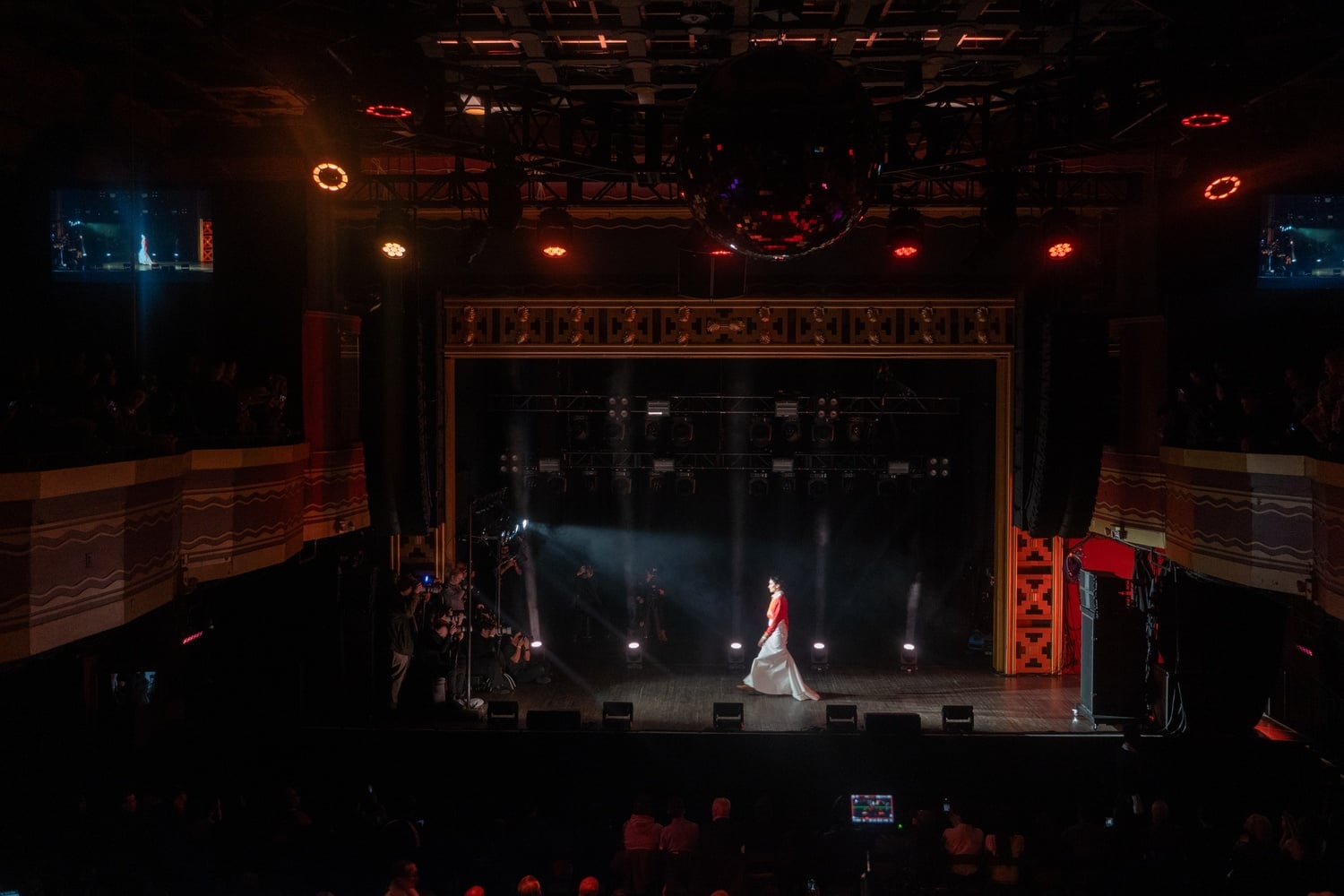
Intermixed with these practical looks were more business casual designs: pencil skirts, three-piece suits, and collar shirts. Many incorporated silk fabrics and qipao collars, a beautiful integration of Asian culture with American corporate wear. These looks were some of the best in the collection, encapsulating the main message of the show while incorporating an absolutely gorgeous fabric.
There was also a recurrent plaid pattern, which was incorporated in A-line and bodycon silhouettes. The pattern was definitely drabber than the light, pastel colors used in the previously shown designs — which were more synonymous with the ’80s era — and was clearly uplifted when paired with silkier bottoms. The collection did a phenomenal job at including monochrome and mixed-fabric looks, rotating structure and fit, and sticking to a muted color palette, which made the few brighter pieces stand out.
In general, the silhouette for the collection was largely amorphous and unisex, breaking the traditional gender norms in business wear and aligning with the aforementioned style of PRIVATE POLICY. As an extension of this “boxy-ness,” some tops even gave the impression of padded power shoulders, a subtle yet creative nod to ’80s fashion.
Adding to this sense of structure, some of the clothes were also studded with metal, and others had several embellishments pinned on. A highlight was an all-red leather two-piece set, which was studded all the way down to the sleeves. The bottoms flared out, with the studs unbuttoned to reveal a few fringes. The look stood out particularly when compared to the tamer business wear that preceded and succeeded it, despite several looks employing similar studding techniques. Gloves were also recurrent motifs, often leather and varying from cutting off at the hands or at the elbows. Another motif was fur, often placed at the hood and wrists of the pieces.
There were even a few calls to Western styles, linking the clothes to the homage to Western beginnings for many Asian immigrants during the Gold Rush. This context is critical when dissecting the collection because it gives depth to what may seem inconsistent and inconsequential at first glance, or may even appear entirely random.
However, with subtlety and grace, PRIVATE POLICY takes on the special and immensely difficult challenge of addressing Asian American history from two very distinct eras, combining them and applying them to modern tastes. While onlookers may be initially disoriented, it takes a genius like Haoran Li, co-founder of PRIVATE POLICY, and his team to compose a collection like this.
As a whole, the runway was a fabulous homage to Asian American identity and its transformative role in the workforce. It was especially well timed with the Lunar New Year and merged several aspects of textures, styles. Just as 2026 is the Year of the Horse, it may also be the Year of PRIVATE POLICY.
—Staff Writer Maia M. Abed can be reached at [email protected].
Want to keep up with breaking news? Subscribe to our email newsletter
Have a tip for The Crimson? Share it confidentially