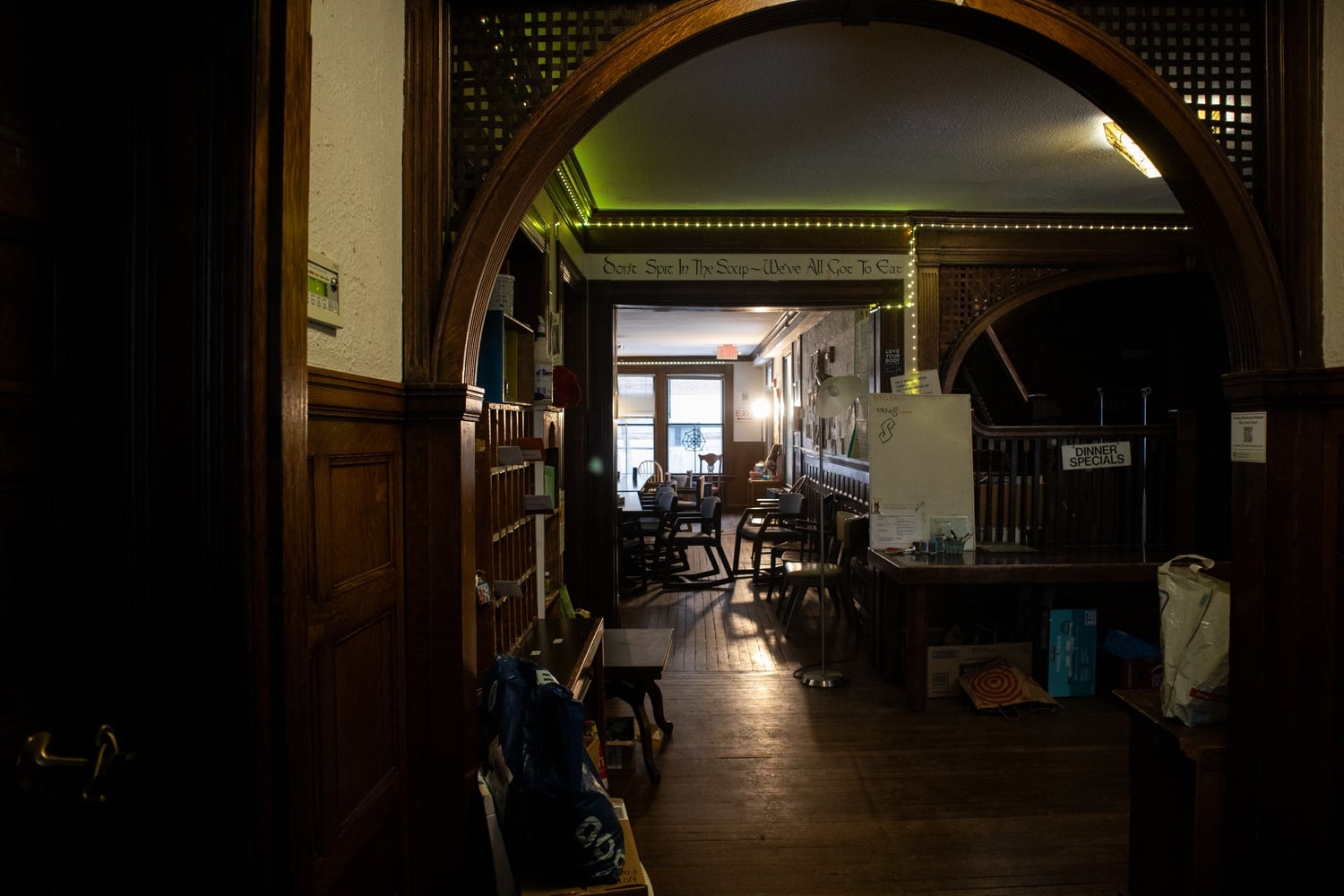
As Harvard Dismantles Dudley, Students Grapple With the End of a 90-Year-Old Community
More than a week after Harvard announced it would dismantle the Dudley Community, current and former students are mourning the loss of a space that served students outside the House system for more than 90 years — and mobilizing to save the Dudley Co-op, whose future beyond this upcoming academic year remains uncertain.
The Crimson spoke with more than a dozen current and former Dudley affiliates following last week’s announcement. Most expressed sadness or uncertainty over the closure, with Co-op residents and alumni particularly alarmed that Harvard has only guaranteed the alternative residential community through the 2026-27 academic year.
A smaller group of students living off campus — including several veterans — welcomed one part of the change: the opportunity to affiliate with one of Harvard’s traditional Houses, an option they said would give them greater access to a central part of undergraduate life.
The divergent reactions reflect the disparate groups housed under the Dudley umbrella. The community serves roughly 120 students, including about 45 off-campus undergraduates and Dudley Co-op residents as well as participants in the Visiting Undergraduate Students program. Under Harvard’s plans, Dudley-affiliated students living off campus will receive support through the Houses.
Visiting students face a different uncertainty. Nearly 70 are expected to arrive for the fall 2026 semester, but two visiting students told The Crimson that they had not received formal communication about how Dudley’s closure would affect their program.
The closure also comes as all three members of Dudley’s administrative staff prepare to depart. Resident Dean Laura Chivers and undergraduate coordinator Carvina Williams were laid off as part of the FAS workforce planning process, while Visiting Undergraduate Students program manager Chris Gilbert had already planned to leave in August for medical school.
The changes are part of a sweeping Faculty of Arts and Sciences restructuring aimed at closing an estimated $365 million structural budget deficit that has eliminated or reshaped dozens of jobs across the FAS, including Harvard College.
In a July 29 email to Dudley affiliates, Dean of Students Thomas G. Dunne acknowledged the impact Dudley’s discontinuation would have on students and staff.
“For the students, staff, and others who have found an important home and source of support in Dudley, we recognize that this change will feel significant and challenging,” he wrote. “We remain committed to supporting you all in the days to come.”
An FAS spokesperson did not respond to a request for comment.
‘The Bread, the Politics, the Sense of Community’
Get The Crimson in your inbox.
Since Dudley’s phase-out was announced, more than 300 students and alumni of the Dudley Co-op have joined a WhatsApp group chat titled “Save the Dudley Coop Which is Currently Threatened.”
Many have focused on preserving a space they considered their home at Harvard. The July 29 announcement guaranteed that students assigned to the Co-op could remain through the 2026-27 academic year but did not say what would happen afterward.
“Everybody’s sad and angry,” said Bethany L. Potter ’13, a former Co-op resident. “Folks are connecting — alumni and current Co-opers — and trying to figure out what we can do moving forward to try and make sure that the Co-op does not close.”
For several alumni, losing Dudley’s separate advising network — its own tutors and support staff outside the House system — was far less concerning than the prospect of losing the Co-op itself.
“The advising situation doesn’t really feel like a big deal to me,” Potter said. “If Harvard wants to dissolve Dudley and then just put the Co-op under the purview of one of the quad houses, that’s whatever.”
“It’s the idea of losing, like, a home that is the much bigger issue,” she added.
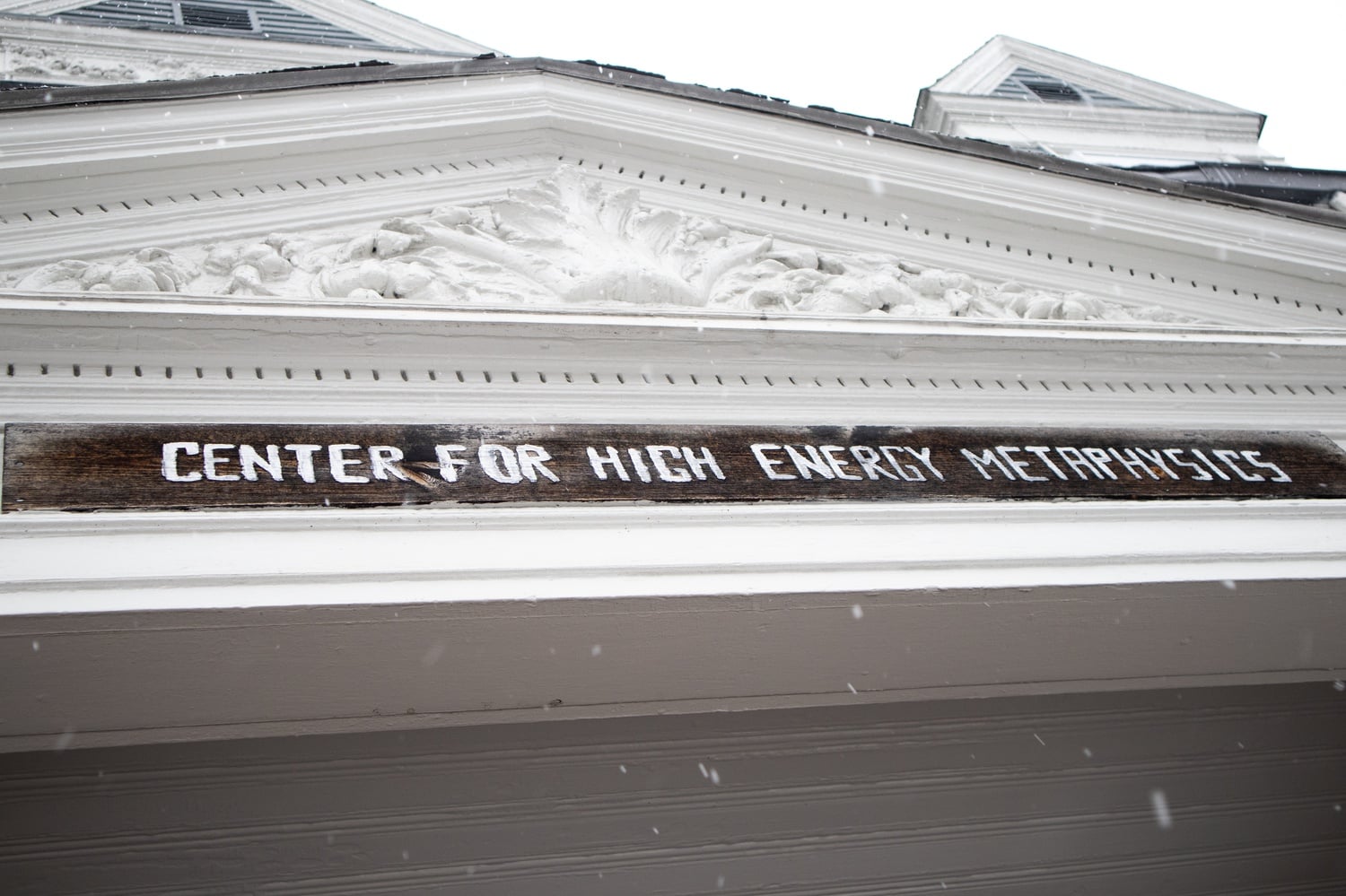
Founded in 1958 as an alternative to traditional House residence, the Dudley Co-op has carved out a corner of undergraduate life as Harvard’s quirky, frequently political “13th house.”
Residents, who must apply to live there, purchase and prepare their own food and share responsibility for maintaining the Co-op’s two buildings, making room and board substantially less expensive than in the Houses.
For many current and former residents, that independence is precisely the draw.
“In the Houses, you are not spending a lot of time doing normal domestic tasks, so your schedule is very optimized for school performance, professional performance. You’re not ‘wasting time,’ so to speak, on doing laundry or cooking for yourself,” Kendall I. Shields ’24-’25 said.
“People in the Co-op find value in expending effort on things like that and on caring for others around them,” they added.
Alumni described nightly community dinners, communal singing and study sessions, and the ritual of baking bread together as central parts of life in the Co-op.
For some, the community was the difference between staying at Harvard and leaving.
“I was in bad shape when I started college, and I really didn’t like it at Harvard,” Isabel “Isa” Haro ’21-’24 said. “I considered leaving, and the Co-op made me stay.”
“I care about anybody that comes from a situation like I do, and feels completely lost and disoriented and alone, and won’t have the huge resource that the Co-op is,” Haro added. “I truly shudder to imagine what that’s going to be like.”
Molly E. Dektar ’12 said it was both the community and the space to express leftist political ideals that drew her to Dudley.
“The bread, the politics, the sense of community, the sense of responsibility for each other — those were all really, really wonderful things and truly inspiring in my life,” she said.
Dudley has long been a home for student activists. Dektar said the Co-op was where she found her “lefty education” on campus. During her time as an undergraduate, many Co-op residents participated in the 2011 “Occupy Harvard” protest that temporarily shut down Harvard Yard.
“All of the Co-opers sort of went en masse with the tents. We all went and occupied the old yard, and that too was something I wouldn’t have participated in without having this wonderful group of leftists around me,” Dektar said.
Several current and former residents also described the Co-op as a refuge for students who felt alienated from other campus spaces, particularly queer, trans, neurodivergent, and disabled students.
“I think that a lot of students, particularly, for example, neurodivergent students, students of color, queer and trans students, and just generally people who sometimes at Harvard have very few safe spaces available to them,” De Jesus said.
Sonia E. Meytin, a recent Dartmouth graduate who came to Harvard as a visiting student in fall 2023, said they were both shocked and disappointed by the news of Dudley’s closure. Meytin was a “quarter-boarder” at the Co-op, meaning they participated in chores, meals, and activities without living in its buildings.
“One of the things that really inspired me when I first came to Harvard was the strength of the student body’s support for each other and the strength of the alumni network,” they said. “I did worry that because the Co-op and Dudley are not necessarily mainstream in Harvard’s life, that they wouldn’t have this.”
“But to be able to see these hundreds of people rise up and want to help in any way they can has been really, really wonderful, because it’s nice to see just how much this space matters to so many other people and not just to me,” Meytin added.
For Some, a Welcome Change
Unlike Co-op residents, many of the students advised through Dudley did not choose the community.
Under College policy, upperclassmen who have previously lived in their assigned House may remain affiliated with that House if they later move off campus. But students who begin living off campus before ever residing in their assigned House are automatically affiliated with Dudley.
The arrangement has frustrated some students — including many veterans who choose to live off-campus — who see belonging to a House, even without residing in one, as a central part of the Harvard experience.
Edward J. “Ed” Somuk ’27, a veteran who was married with kids when he arrived at Harvard, has never lived in a College dorm. Still, he entered the housing lottery as a sophomore and was sorted into Eliot House.
His decision to remain off campus meant giving up his official affiliation with Eliot and joining Dudley instead. But Somuk remained invested in House life and formed close relationships with Eliot House staff.
“It’s part of the college process, especially with Harvard. It’s very much ingrained into the identity of the school, and more importantly the identity of the alumni,” he said of House affiliation. “You mention Dudley to some folks, and they’re like, ‘What’s that?’”
Thomas R. Gower ’24-’27 said he was “happy” and “really excited” to learn that Dudley had been discontinued and that he would instead receive advising through the Houses.
“I always had this feeling that I wasn’t really a part of Harvard, and being a part of the housing system is kind of like that big thing that everyone dreams about, right?” Gower said. “Even for my veteran counterparts that do live in the housing system, they’re very proud of it.”
Even before the FAS workforce planning process put Dudley’s future in doubt, the College had explored ways to give veterans greater access to the House system while they lived off campus.
Beginning in fall 2025, some Dudley students, including veterans, participated in Cabot House events and were included on House communications, according to Cabot Faculty Dean Ian J. Miller. That plan had been in the works for at least two years.
Miller said bringing off-campus students into the House system could “help them feel more at home at Harvard” and “generate the kinds of friendships and connections that this place, in particular, the houses, really cultivate.”
“Sitting down next to someone who comes from a different background, different life experience, different set of identities, different country, in this case, different generation, perhaps, and just having a conversation with them,” he said. “That’s the goal, to open the houses to the remarkable men and women who have served our country and have served the military.”
Gower said he felt he had missed out on some of the “community feeling” by belonging to Dudley rather than a House.
He described engagement between the different groups Dudley serves — Co-op residents, off-campus students, and visiting undergraduates — as “minimal,” adding that interaction was more common at large events than in day-to-day Dudley life.
“I don’t think Dudley really is much of a community in the way that the other houses are,” Somuk said.
Somuk emphasized the differences among the populations under the Dudley umbrella, saying that alternative residential life favored by many Co-op residents was not a natural fit for many veterans.
“Someone had explained to me that they’re kind of crunchy over there, right?” Somuk said. “It’s a little bit more old-school hippie vibe, and most members of the military don’t come from that kind of background.”
“I felt like the last place that you’d want to send military veterans is a Co-op where they’re growing their own vegetables,” he added.
Somuk said he was excited that he might be able to affiliate with Eliot, but said that enthusiasm was tempered by the loss of Dudley staff.
“Although I’m excited that I’ll have the opportunity to possibly have the official affiliation with Eliot, my heart goes out to the folks at Dudley who now have found themselves without employment,” he said. “Although I may benefit from it, I really wish that this was not the pathway there.”
‘There Has Been So Little Communication’
While other Dudley affiliates were directly notified of the community’s closure, visiting undergraduates said they received no formal communication about the decision or the layoffs of Dudley administrators who had overseen their program, according to two visiting students.
Visiting undergraduates are not Harvard degree candidates but enroll in University courses for one or two semesters. Dudley has served as their primary connection to academic advising and undergraduate life at the College.
Tong Zhou, a visiting student who participated in the program in the spring and will return to Harvard in the fall, wrote in a message that she was surprised and confused to learn about Dudley’s discontinuation. She said that she learned about it from The Crimson and from other visiting students.
“The Dudley community was a central part of my student experience last semester, and I’m saddened that it has been discontinued,” Zhou wrote. “At the same time, because there has been so little communication, it’s still unclear what this change will mean for visiting students.”
An informational document provided to fall 2026 visiting students describes the Dudley Community as “your connection to the academic, advising, and community events of the Visiting Undergraduate Student Program.”
The document directs students to the Dudley resident dean and VUS program manager for information about the program — the former position affected by the restructuring and the latter left vacant.
In a July 29 email to Dudley staff, Dunne wrote that he did not anticipate “substantive change” to the VUS program.
“As program staff I recognize and appreciate your commitment to the Dudley and VUS students. We will honor the conditions of your position and need your help in facilitating a smooth transition for these students,” Dunne wrote.
He added at the time that more logistical information would be provided as the College prepared for the start of the fall term.
An FAS spokesperson did not respond to a request for comment on the lack of notification to visiting students. Chivers did not respond to a request for comment on visiting students not receiving her email.
For Meytin, Dudley had been the first Harvard community they heard about before arriving at the University as a visiting student.
“My initial reaction was one of shock, quite frankly, and disappointment in Harvard administrators for taking this step,” Meytin said. “The Co-op and Dudley House as a whole provide countless invaluable services to the student body.”
—Staff writer Sebastian B. Connolly can be reached at [email protected] or on Signal at sbc.23. Follow him on X @SebastianC4784.
—Staff writer Summer E. Rose can be reached at [email protected] or on Signal at ser.85. Follow her on X @summerellenrose.
Want to keep up with breaking news? Subscribe to our email newsletter
Have a tip for The Crimson? Share it confidentially