Federal Judge Sends Harvard Personal-Time Pay Lawsuit Back to State Court
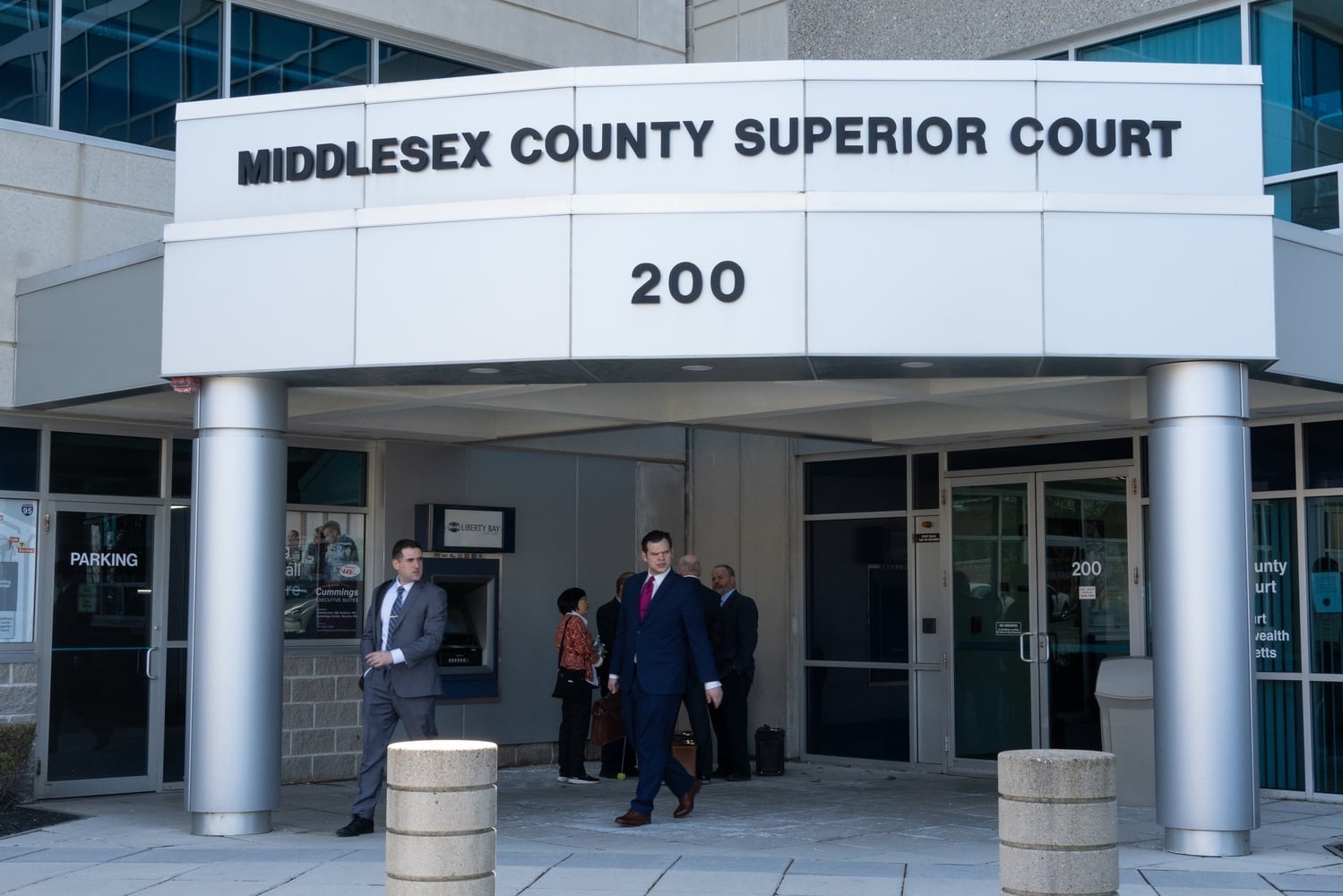
A federal judge remanded a wage lawsuit against Harvard to state court last month, rejecting the University’s bid to keep claims by two former employees over pay for unused personal time in federal court.
The proposed class-action lawsuit, brought by former employees Anna Weick and Ira E. Stoll ’94 on behalf of similarly situated former employees, alleges that the University violated the Massachusetts Wage Act through its policy of not compensating employees for unused personal time when they leave Harvard.
Weick was a program manager for two clinics at Harvard Law School, and Stoll was a managing editor of the Harvard Kennedy School-based publication Education Next.
Harvard removed the case from the Middlesex County Superior Court to federal court in October 2025, arguing that resolving Weick’s claim would require interpreting her union’s collective bargaining agreement and an incorporated personnel manual and therefore that the claim was preempted by federal labor law. In a subsequent motion to dismiss filed in November, Harvard lawyers also argued that personal time “is not a wage under the Wage Act.”
In an 11-page ruling, U.S. District Judge Angel Kelley granted the plaintiffs’ motion to remand and denied the University’s motion to dismiss as moot, finding that the plaintiffs’ Wage Act claims were based on rights independent of the collective bargaining agreement and could be resolved without interpreting it.
Kelley wrote that “Harvard does not point to any relevant provision of the CBA that the Court could consult to answer this question.”
Weick did not respond to a request for comment. Stoll referred The Crimson to his lawyers.
“Harvard delayed the progress of this case for eight months based on a Hail Mary argument that it can ignore the Massachusetts Wage Act with respect to compensating unionized employees for their work,” Weick and Stoll’s attorneys wrote in a statement. “That argument was not just legally erroneous: it was an affront to the unionized workforce, who rightly expect that the same laws that protect non-unionized workers protect them as well.”
The University and its lawyers did not return requests for comment.
Under Harvard’s paid-time-off policy, Weick and Stoll each accrued three paid personal days per year, equivalent to 21 hours. At the end of their employment, each had 21 hours of unused personal time for which Harvard did not compensate them, according to the amended complaint.
Get The Crimson in your inbox.
Weick was a member of the Harvard Union of Clerical and Technical Workers, while Stoll was a non-union employee. Stoll is a former president of The Crimson.
Lawyers for Weick and Stoll wrote that “all class members suffered the same injury
regardless of union status: deprivation of earned wages.”
Harvard’s lawyers argued that although unused vacation time was paid out in final paychecks, personal time fell under a separate University policy and is not a “wage” under the Wage Act.
The Massachusetts Wage Act explicitly includes certain holiday and vacation payments in its definition of wages but does not mention personal time. Employees who prevail on Wage Act claims are entitled to triple damages and attorneys’ fees.
Harvard argued that because Weick was on short-term disability leave from September 2024 until her separation in June 2025, the federal court would have to interpret the union contract to determine whether she had accrued personal days. But Kelley found that Harvard’s own HR records showed Weick had three unused personal days as of April 2025.
Kelley also wrote that an “employer cannot contract away an employee’s statutory rights through a CBA” but she did not decide whether personal time counts as a wage under the Wage Act, finding instead that the question remains unsettled under Massachusetts Law.
“It is unclear whether personal time is a wage for the purposes of the Wage Act,” she wrote. “Thus, whether personal time is considered a wage under the Wage Act is entirely a question of state law interpretation that is best left to the state courts and the case is remanded.”
The case has been sent back to the Middlesex County Superior Court, where the lawsuit was originally filed in September 2025.
In its October notice of removal, Harvard asked the court to allow the University to seek an interlocutory appeal to the First Circuit if she remanded the case.
—Staff writer Uy B. Pham can be reached at [email protected] or on Signal at ubp.88. Follow him on X @uybpham.
Want to keep up with breaking news? Subscribe to our email newsletter
Have a tip for The Crimson? Share it confidentially