Flyby Investigates: Harvard’s Bikini Bottom
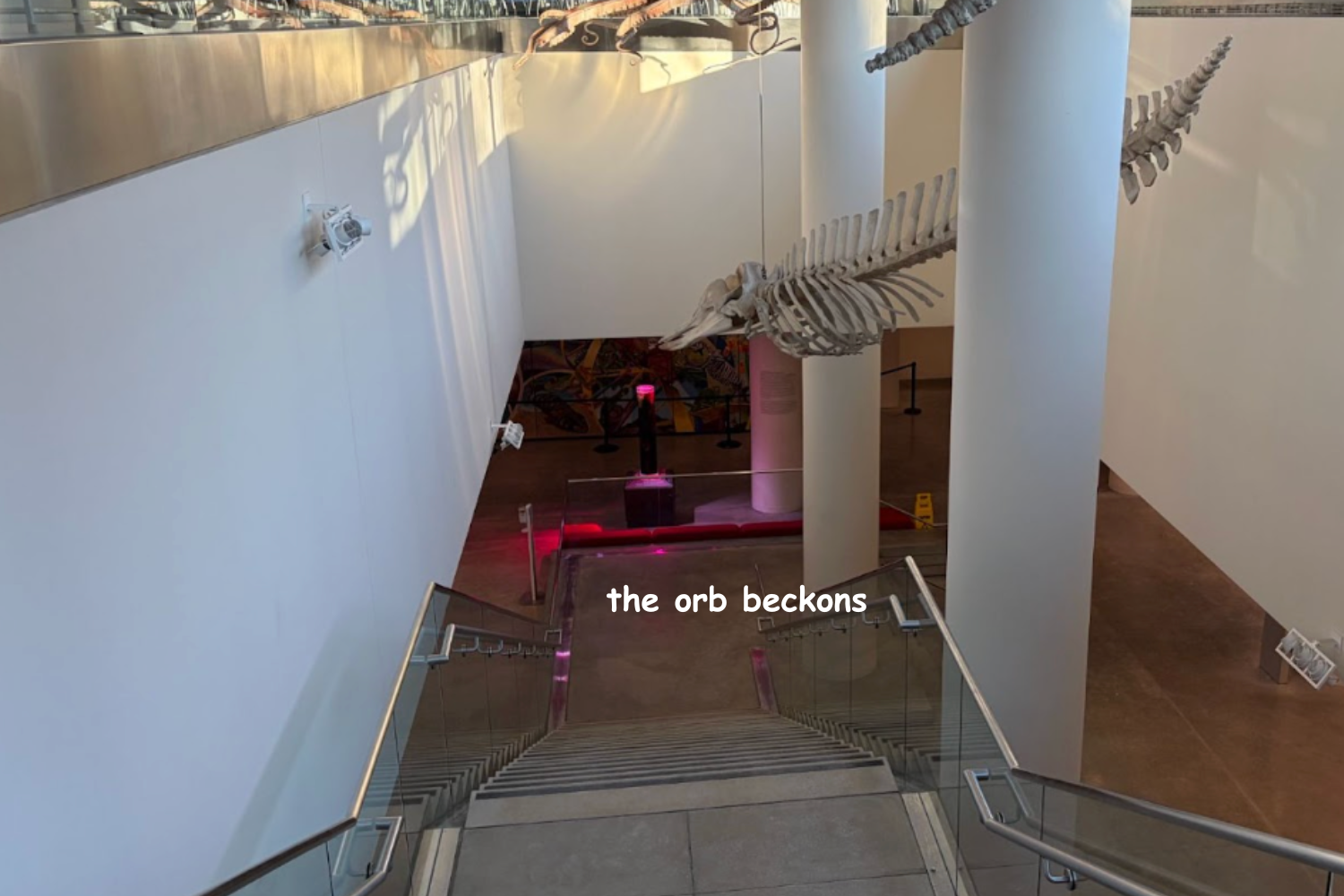
Have you ever noticed the large cylinder full of rather suspicious-looking green, purple, and brown colors on your walk to class? Or were you too tired from your four-hour lab to care?
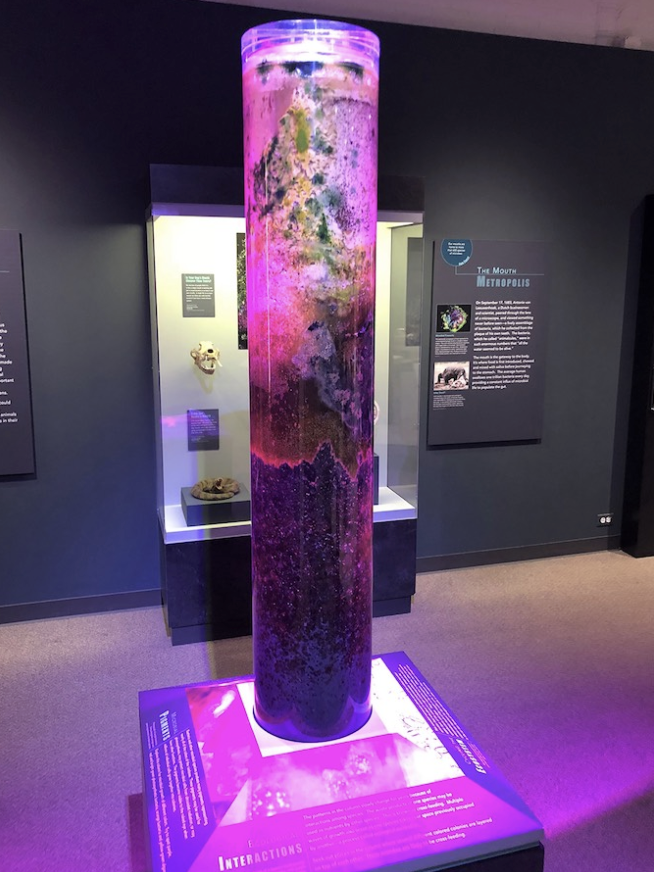
Either way, yes, the suspicious cylinder I am talking about is in the Northwest building, right at the bottom of the stairs that lead to the basement. Those brave enough to approach the mysterious goop will notice that purple LED lights illuminate the contraption, with green and dark-brown objects floating inside. Is it a bird? Is it a plane? Could this be Harvard’s very own Bikini Bottom? Are SpongeBob and his friends living there? I had so many questions that it kept me up at night. That and the rats in Canaday.
“Winogradsky Column”
I decided to do what not many others dare: I read the labels on this strange-looking cylinder, which turned out to be a “Winogradsky Column.” Huh. Now I was even more lost. If only the caption was as straightforward as “Leftover food from meeting, 04/14/2026. Donuts, Quincy DHall.”
Curious to know what this was doing in the dungeons of Northwest, I embarked on an arduous journey of googling to find the man, the myth, the legend who made the column: Scott Chimileski, a former postdoctoral fellow at Harvard Medical School and current research scientist at the University of Chicago Marine Biological Laboratories.
For all of my non-STEM readers out there, a Winogradsky column may seem like a simple science fair project, but trust me. Even though it is not entirely a cutting-edge science tool, it’s nothing short of amazing. And you can even DIY one yourself! Start by adding some mud rich in bacteria from the area you want to study, then add sand to provide the microbes with a home, and feed them well by tossing in nutrients. Wait a couple of days and watch all sorts of colors develop as the microbes grow. If you consider yourself a proper Bill Nye, you can take things a step further and study the patterns of colors to learn more about the microbes you collected. But for the rest of us underachievers, admiring the beautiful colors is probably enough. Yes, this serves a better purpose than that molded food you forgot in your room. That is not at all in the name of science.
Not only are the inhabitants of the Winogradsky column more purposeful, they probably have a better team dynamic than any group work you had to do in Ec10b. “There’s an interdependence aspect” where “microbes live naturally in these communities, and within those communities, they exchange nutrients with each other,” Chimileski said. Talk about diversity and collaboration. Watch and learn, people…
Finding SpongeBob and Patrick
Still reeling from Bieberchella? Want to take it back to the good old days in the 2010s? Well, you’re in luck — this microbial tower dates back to 2017. Chimileski said it may have been “one of the world’s largest versions on public display” at the time it was built for the exhibit “Microbial Life: A Universe at the Edge of Sight,” open from 2017 to 2021 at the Harvard Museum of Natural History. The column was later moved to its current location when the exhibit space was renovated. Calling any super-super seniors who were around back in those days – you have some lore to share.
So you may be wondering: where’s SpongeBob? Have I led you on like those “ACTION REQ” emails that don’t require any action? The first piece of good news is that this is salt water. The materials were collected from a salt marsh in Massachusetts, so talk about #freshcatchoftheday. Chimileski said the green parts are the “photosynthetic microbes on top” and each color represents a different type of bacteria. Purple for sulfur-eating microbes, and the darker shades are those that desperately avoid oxygen. Now, if Squidward had to live somewhere..
Future Thesis??
Listen up MCB concentrators: this is your chance at getting an ironclad thesis.“You can find bacteria for all colors of the rainbow,” Chimileski said, so just pick one color, investigate, and change the world. Easy, right? Also, who wouldn’t want to spend their junior summer making weekly visits to Northwest? Let your less cool friends gallivant to do thesis “research” in Madrid and Athens…
Chimileski also called on anyone interested in a colorful side project to “do an experiment to revitalize” the Winogradsky Column. This could even be as simple as “just restarting it with their own blend of nutrients and watching it develop,” he recommended. #sidequest #readingperiodprocrastination.
Now, for everyone who is responsible enough to show up to the Northwest in the morning–don’t just fall asleep, and don’t just stare at your section crush. Instead, say hi to these creatures in the Winogradsky Column waiting for you, and take inspiration from their work ethic.