
Packing Light
My own life, it turned out, was light enough to carry in a suitcase.
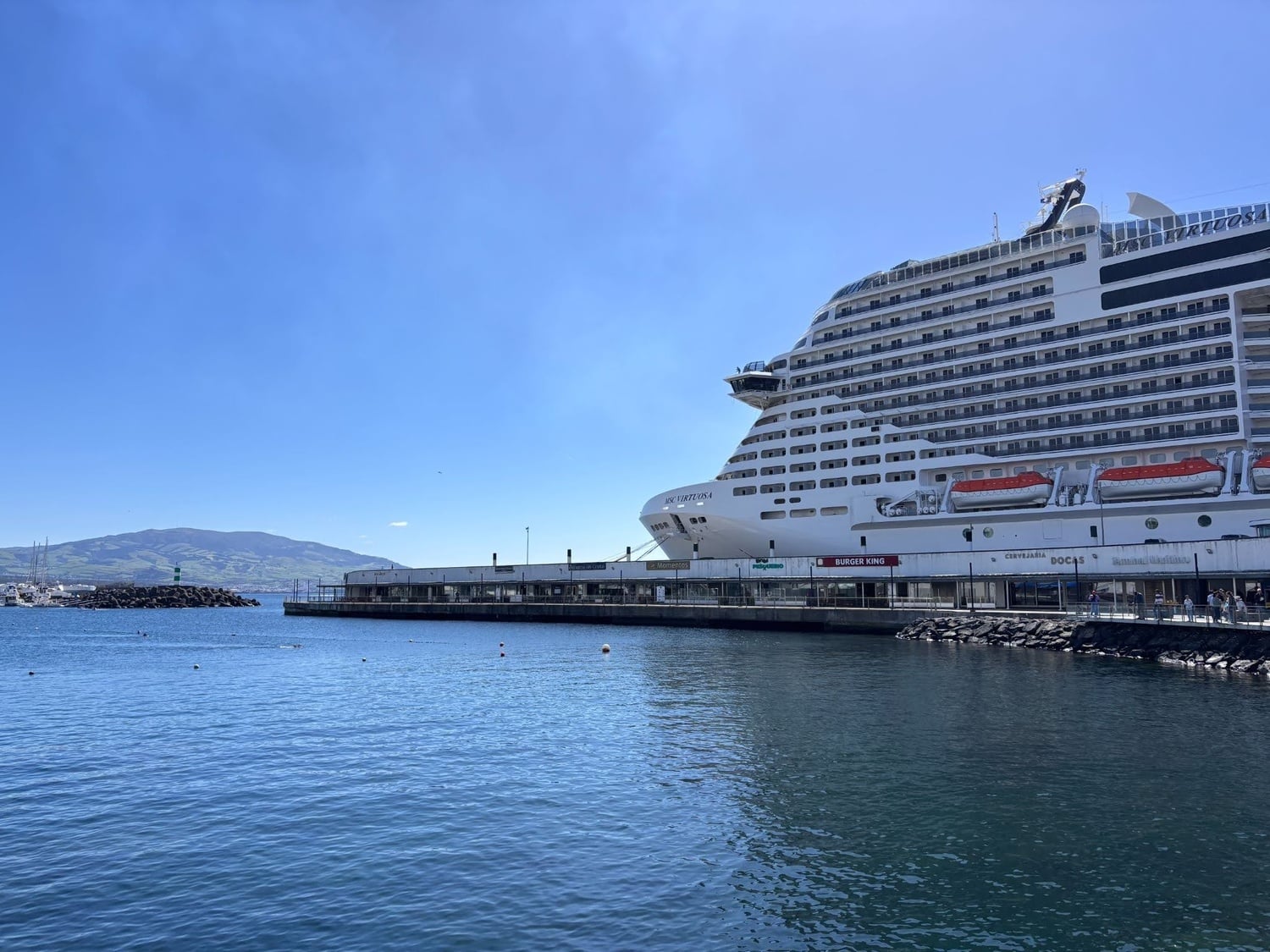
n a windy April day in Martinique, I wheeled my suitcase up the gangway and boarded the MSC Virtuosa, bound for Southampton.
The transatlantic crossing would take 17 days, and I was making it alone. This was a bit of a disappointment, not because I thought I would be lonely (the ship had Wi-Fi, and I had my phone), but because I had to pay the $300 supplement that the cruise line levied on solo travelers. Still, the deal was too good to pass up: tickets for one-way repositioning cruises sell at a steep discount because few people have 17 straight days in April to spare, and I didn’t know when I would next be one of them.
I had the time to travel because I was on a gap year. When visa uncertainty began to loom over Harvard’s international students, I traded Cambridge, Massachusetts, for Cambridge, England, spending a year as a visiting philosophy student at Christ’s College. I had tried to use the remarkably short terms (just eight weeks long!) to persuade my friends to join me, but none were willing. Each had too much at Harvard to leave behind: classes to take, clubs to lead, and in the case of my engineer friend, a race car to finish. My own life, it turned out, was light enough to carry in my trusty Samsonite suitcase.
After the ship slipped its moorings and set sail, I watched from the stern as the rolling hills of Martinique dropped slowly from sight. The sleeves of my shirt rippled in the breeze. Soon, there was nothing ahead but open ocean, and nothing behind but the ship’s wake, stretching into the distance.
{image id=1388303 align=center size=large caption=‘“Soon, there was nothing ahead but open ocean, and nothing behind but the ship’s wake, stretching into the distance.”’}
***
A few days later, I was nursing my morning coffee at the breakfast buffet when another passenger approached my table. He wore a faded T-shirt one size too big for him, and his hair stood up in spikes. He asked where I was from. “Singapore,” I replied.
“Then you must come with me!” the man exclaimed, and he led me to his table by the window.
It turned out that he, too, was from Singapore. A self-described full-time traveler, he was on his way to Algeria, the last country in Africa he had yet to visit. His long-running travel ambition was to visit every UNESCO World Heritage Site; of the more than 1,200 on the list, he had only a few dozen left to check off.
The man glanced around the buffet. One diner was piling his plate with MSC’s signature pizzas; another was eyeing a slice of chocolate cake. “I am a traveler, but most of these passengers are tourists,” he said. “They don’t actually want to see the world.”
I thought of a line in Olga Tokarczuk’s “Flights” about those who aren’t real travelers: “they left in order to return.” They come back, she writes, to collect the letters and bills piled up at home. “To do a big wash.”
He had not been back to Singapore in 16 years. In his twenties, after losing his father to liver cancer and his lover in a car crash, he booked a one-way ticket to Casablanca and spent three years making his way back overland. But when he finally arrived, he no longer felt he belonged; Singaporeans, he complained, are too cold, too sterile. And so he left again — this time for good.
I asked whether it was difficult, traveling without a home to return to. The hardest part, he told me, was letting go of things. “You must pack light, then,” I offered.
“Yes,” he said. “Light in the mind.”
***
On the final night of the cruise, I went to the main dining room for a late dinner. The Indonesian waiter who had looked after my table each evening was in high spirits. He had spent the past nine months at sea, and tomorrow he would finally get to go home.
I asked if he would return to the Virtuosa after his break. To my surprise, he told me he was thinking of leaving the job altogether. He had joined the cruise line almost 16 years earlier, at 23, but now he had a wife and two daughters back in Bali, the youngest just a year old. He and his wife had recently bought a small grocery store. He missed them, he said.
Pulling out his phone, he showed me a picture of his family, and we exchanged WhatsApp contacts. “You must let me know if you come to Bali,” he said. I promised that if I ever went, I would be sure to visit his store.
Walking back to my cabin, I thought of a friend from Christ’s College. During Lent Term, I had spent the better part of a week peddling the idea of the cruise to him, and he had seemed more open to it than anyone else. But one night, he sent me an apologetic text: he couldn’t come because he felt he owed his parents a proper trip before seeing the world on his own. I told him that he shouldn’t apologize — and, after a moment, that he was a good son.
***
On disembarkation day, I ran into the Singaporean traveler again at the buffet. His olive-green trekking pack, bristling with straps and buckles, was propped against his seat. I pulled up a chair, and we waited for our turn to go ashore.
“So, what’s next for you?” I asked.
He ran through his itinerary: he had a flight that evening to Mallorca, where he would spend a few days before heading to Alicante for the Moors and Christians festival, then Algeria, then Sulawesi, then, if all went well, Kamchatka sometime the following year.
“And after that?” I asked.
He paused. After that, there was hardly anywhere left to go — only a scattering of tiny territories and heritage sites. At some point, he would have to stop, and lately he had been wondering what he would do then. Perhaps he could write a book, he said, or start a tour company (for real travelers), or go back to teaching the violin.
But none of these paths sat right with him, and the more he turned them over, the more lost he felt. I asked him if he would consider returning to Singapore. Probably not, he said, though he wasn’t sure where else he would live. It seemed as if 16 years of carrying so little had left his life too light to bear.
An announcement crackled over the PA system, calling us to disembark. At the bottom of the gangway, my legs took a moment to acclimate to solid ground, and I was surprised by how glad they were to find it. From there, I walked together with the traveler to the train station, his pack on his back, my suitcase rattling along behind us. When we reached Southampton Central, we said goodbye, and I wished him well. And then he was off.
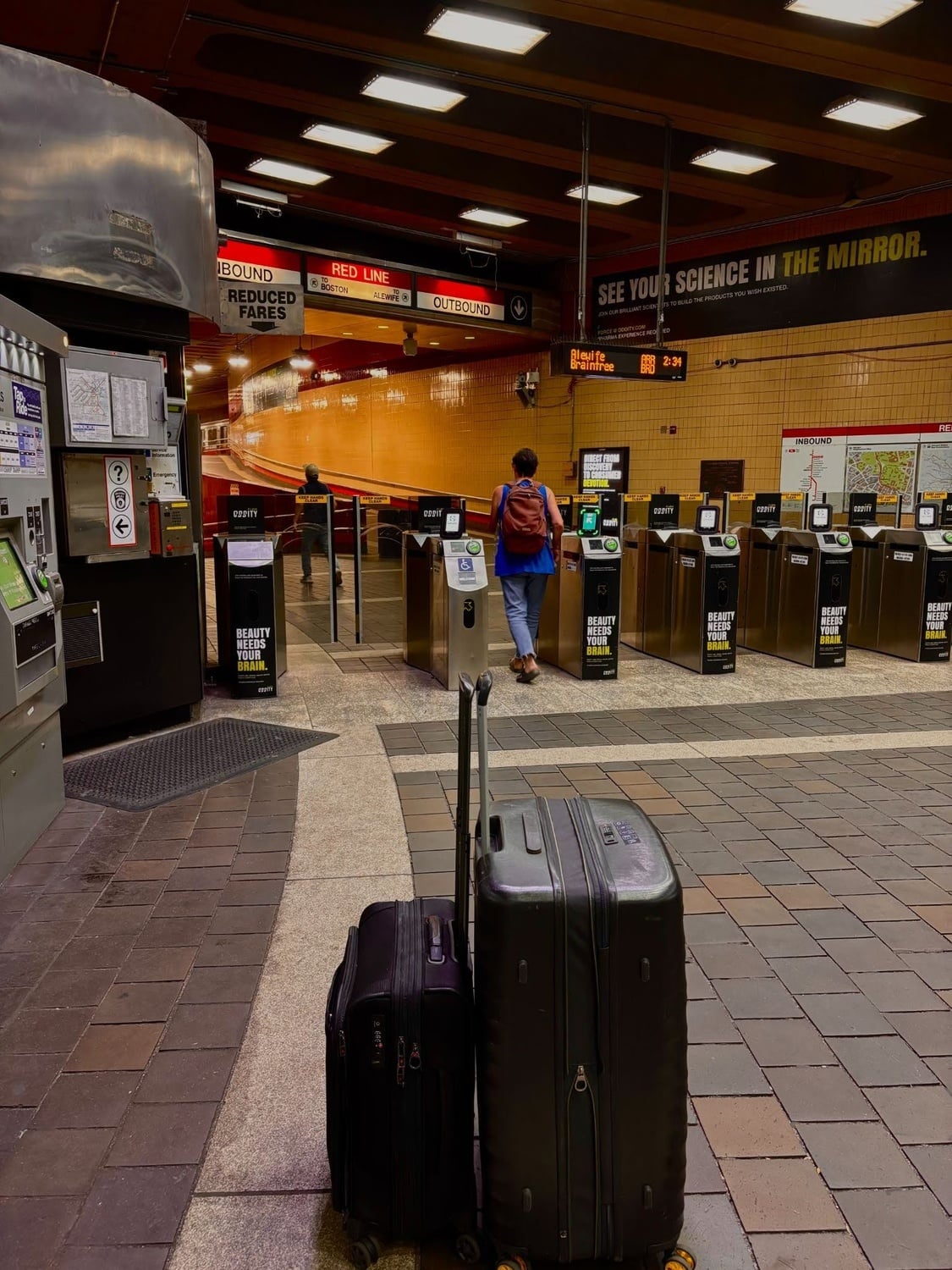
On the platform, I found a bench and waited for my train. I texted my parents to let them know I had made it to land and then recorded a birthday message for a friend in Singapore, whom I had not seen in a year. That evening, back in Cambridge, I emptied my suitcase into the washing machine, then sat to watch 17 days of clothes turn over and over in the whirring drum.
—Magazine writer Raphael Z. Niu can be reached at [email protected]