
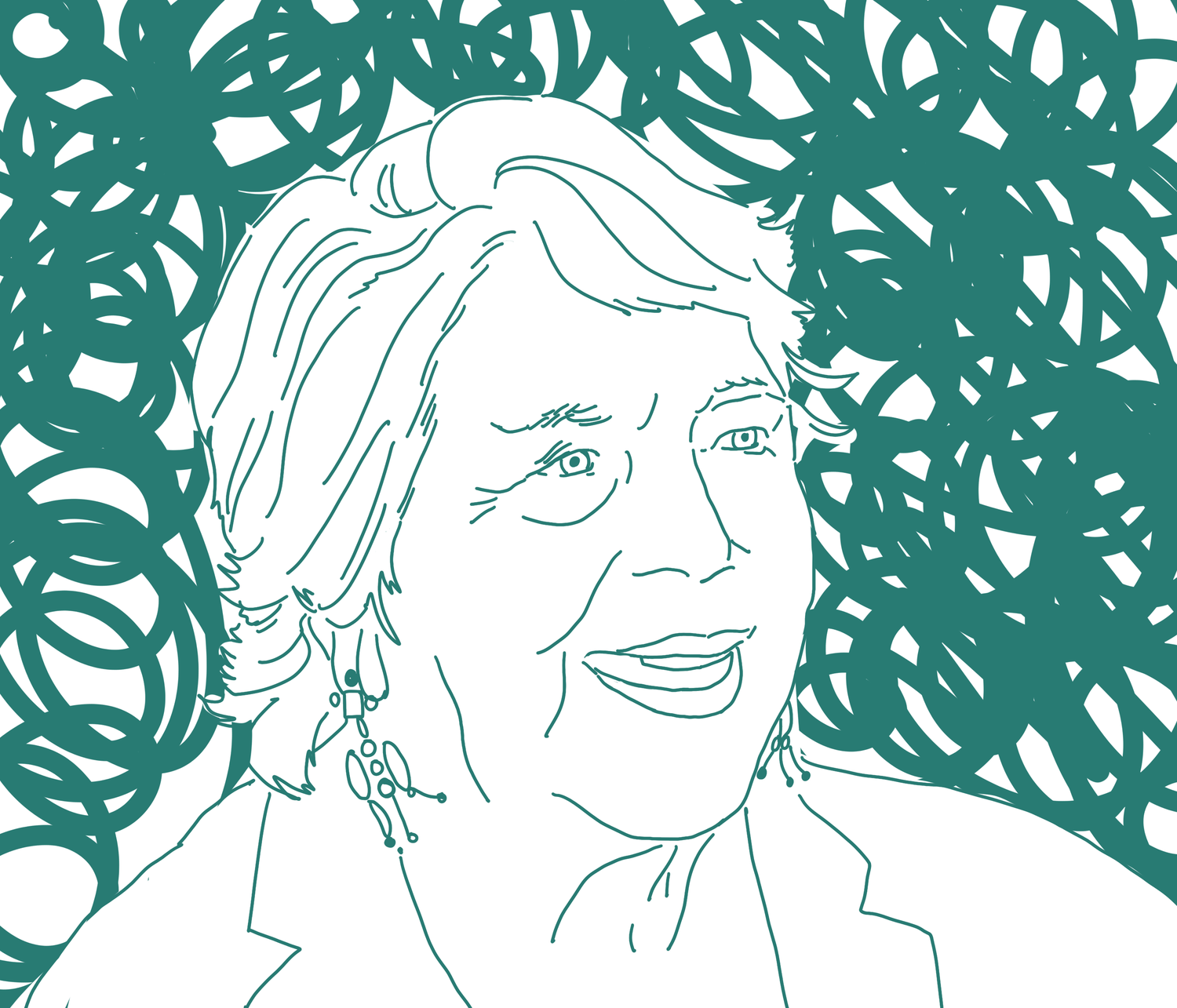
A Eulogy for Dolores Huerta
I knew Huerta’s story long before her obituary was in the pages of the Times.
Oct. 28, 2026 — As I stepped out of class on the third floor of Zimmer Hall, my friend looked up from her phone, turned, and told me, incredulously, that Dolores Huerta had died. The passing of Huerta — who for my entire life had represented ceaseless strength and determination — did not quite feel real, not as we sat among chattering friends to eat our lunch in Annenberg Hall, or as I walked against a brisk wind to the Harvard Kennedy School for my next class, or as I fell asleep that night with the endless noise of Cambridge seeping through my window.
In fact, it didn’t truly sink in that one of my childhood heroes had passed until the next day, when I called my ultimate hero — my mother. “Did you hear Dolores Huerta died?” I asked her, and suddenly it all rushed in, feeling far too real. I opened up the New York Times app on my phone, needing to check, and there it was: “Dolores Huerta, Labor Leader and Force for Civil Rights, Has Died.” In her 96 years of life, Huerta protested fearlessly about a range of social issues. She was arrested for her activism at least 22 times. She co-founded the United Farm Workers union with César Chávez and managed the late 1960s Delano grape strike. She was brutally beaten by San Francisco police in 1988, and after recovery, donated the $825,000 from her settlement with the city to women’s causes.
I knew Huerta’s story long before her obituary was in the pages of the Times. I was a San Francisco kid raised on Hetch Hetchy water, California-grown avocados, and storybooks about the brave battles of unionized laborers. She is, quite literally, a Californian hero: In the state, April 10 is Dolores Huerta Day. As a young girl, I proudly bore Huerta’s rallying cry — “¡Sí, se puede!” — on an oft-worn, beloved red t-shirt.
I inherited this admiration for Huerta from my own mother’s activism. I grew up hearing stories from my mother’s work as a union firm lawyer and later as a civil rights lawyer. My family instilled in me a firm belief in social justice, advocacy, and empowerment, reading me children’s books on unions and collective bargaining like “Click Clack Moo, Cows That Type.” Before I could even conceptualize politics, I was already tied to the causes that Huerta dedicated her life to. During Barack Obama’s 2008 presidential campaign, when I was just a newborn, my parents placed stickers bearing his campaign slogan — “Yes, we can,” which was adapted from Huerta’s “¡Sí, se puede!” — on my onesies. A few years later, as a young child attending marches and protests with my family, I imagined myself as a blossoming Huerta-esque-figure.
But Huerta was not only an inspiration for me as a child. She also taught me how to grapple with the complexities of being an activist as I imagined a future life as one.
In March, her story took on an added layer of significance. An investigation by the New York Times revealed allegations that César Chávez had for years sexually abused women and girls within the farmworker movement. Huerta was at the center of the piece. She told the Times that Chávez raped her in 1966 and recounted a separate incident where she said she felt pressured into a sexual encounter with him. She added that she became pregnant after both incidents and gave the children to others to raise.
“I carried this secret for as long as I did because building the movement and securing farmworker rights was my life’s work,” Huerta wrote in a public statement following the piece’s publication. “I channeled everything I had into advocating on behalf of millions of farmworkers and others who were suffering and deserved equal rights.”
The story shook my understanding of the movement and sent shockwaves rippling out around me. Driving to school the week after the allegations became public, my mother turned to me. “I wish I could say I’m shocked about this news about César Chávez,” I recall her saying. “But, I remember working in a very liberal union firm as a young woman pregnant with you, and facing some of the most blatant misogyny I have experienced in my life.” I was shaken. I struggled to reconcile the powerful impact of the UFW’s organizing with the violence that had allegedly occurred within the movement.
Why does misogyny and violence against women thrive in activist spaces? I wondered. I turned to research hoping to answer this question, learning about Angela Davis’s experiences in the Black Panther Party, and the gender imbalances within the Civil Rights Movement. I also looked to those who had taught me about activism, feminism, and intersectionality in high school. I spoke with close friends and teachers about the personal disappointment and underlying gender dynamics that the allegations brought up for us, hoping to reevaluate our memories of the movement he represented.
Anger and betrayal roiled across my city as residents looked at streets, murals, and schools honoring Chávez. Many around me spoke about a desire for accountability, proposing to remove Chávez’s name and likeness from landmarks and public spaces. Some suggested renaming them after Huerta. But Huerta has said that she does not want streets and buildings named after her, instead suggesting that streets and landmarks be named for “the martyrs of the Farm Workers Movement.” Her humility in this request, despite being a renowned organizer, prompted me to rethink how we remember liberation movements. Our commemorations frequently center around a single figurehead, when in reality, the fruits of these movements are the product of many people who struggled and sacrificed. In May, César Chávez day in California was renamed “Farmworkers Day” — a reminder that activism is collective.
Even after her passing, Huerta’s advocacy continues to inform how I engage with politics and social justice in the world around me. Less than a month after her death, women of color made history up and down the ballot in the 2026 midterm elections. When making sense of these results, my mind shifted to Huerta. She spent much of her life campaigning for more representation of women of color in political offices. Yet, her unceasing work for justice and equality over decades reminds us that this is not an endpoint.
The very fields I drive past on road trips to see my family in Los Angeles continue to be sites where farm workers are mistreated. Federal cuts to Medicaid threaten Medi-Cal, California’s state Medicaid program — cuts which would disproportionately impact the communities Huerta fought for.
I am grateful to my mother for immersing me in political activism and giving me the strength that I now use to carry on Huerta’s legacy.
As Huerta said in a 2017 interview with NPR: “I want to say to mothers out there, you know, take your children to marches. Take them to meetings because this is a way that they can become strong, and they understand what politics is all about because they are actually living it.”