
You Then, Me Now
I wanted to be thoughtful enough to earn the respect of those I admired. I wanted to be articulate enough that my words themselves held weight. I wanted this polished exterior, and yet, I wanted to be genuine and true.
Oct. 2, 2026
I walk past BerryLine onto a residential street. The brick is uneven under my shoes, and the road is dimly lit by streetlamps.
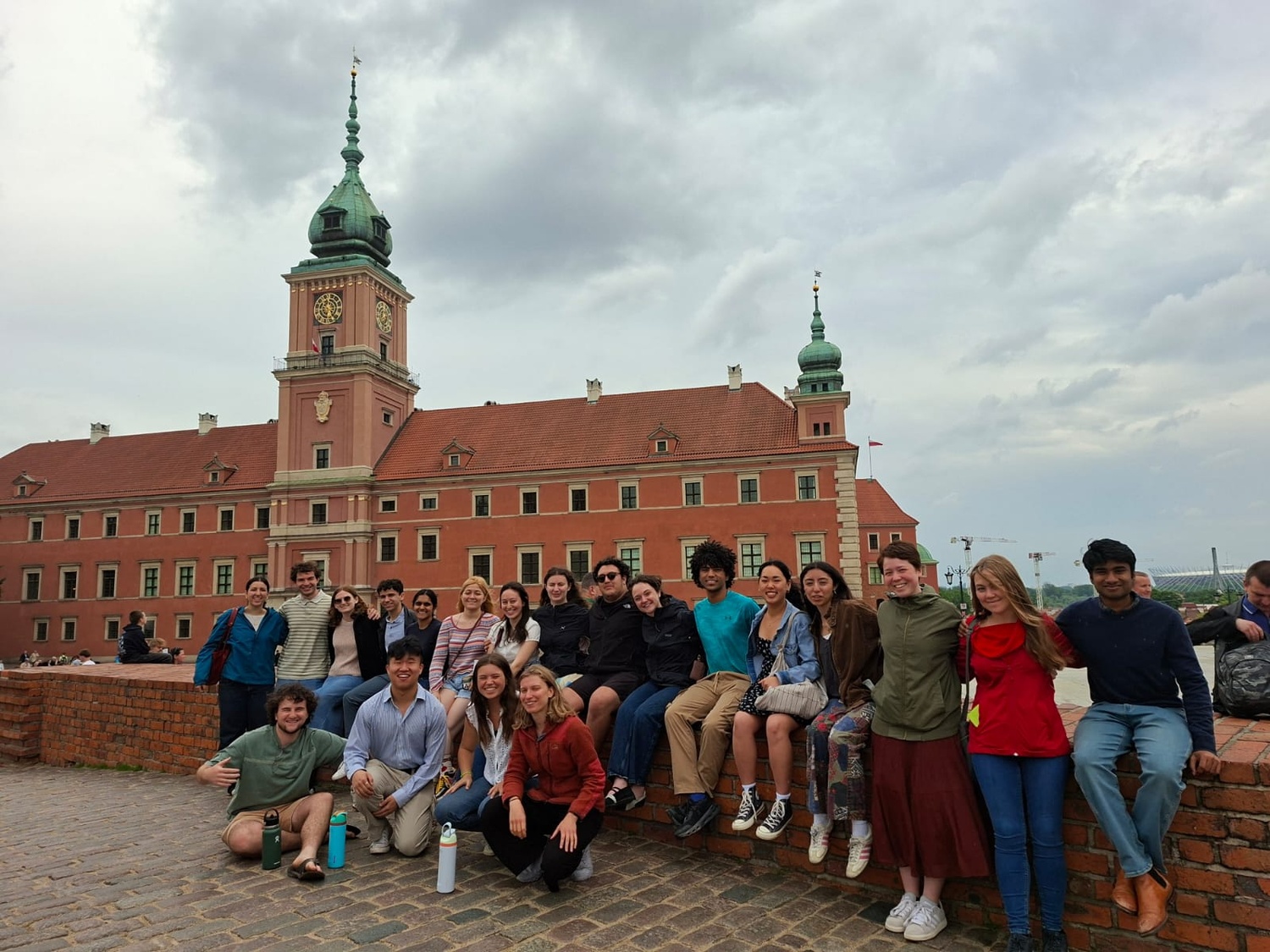
Last spring, after finals, I spent two weeks traveling through Lithuania, Poland, and Hungary exploring Jewish culture on a Harvard Hillel-led trip. Now, two months later, my travel group is gathering for a reunion dinner.
I arrive at a small apartment. After three knocks, the door swings open to reveal Shira’s friendly face. She pulls me in for a hug before leading me to a dining table so big it barely fits inside the room. I feel my smile widen as I take a seat next to people that I came to know intimately over our two-week trip. Avery. Kugu. Sarah.
People trickle in. I recognize their voices before I see their faces, and soon, the empty seats next to me have all been filled. The space grows smaller, warmer. Laughter rings in the air as we begin to recall memories from the summer. Miguel shows up with the bunny puppet he carried around every day over the trip to tease us, affectionately named Miroslav after our Lithuanian bus driver, and we give the puppet his own chair.
Avery and I debrief our summers. She tells me of her Polish summer school. I tell her of my fear of closing doors on opportunities. I feel at ease, drawn back into the familiar cadence of long winding conversations as we walked down busy pedestrian roads in Europe. When I hear the word “journalist” in the slew of conversations around me, I find myself jumping into a discussion on whether I feel the words I write still hold value in an evolving media landscape that so often spreads misinformation and fuels polarization.
A part of me had feared that my connection with these people was rooted only in Europe, and that we would not be able to transplant that spirit back to American soil. But as we break off pieces of challah and sip grape juice — a familiar ritual during our group meals on the trip — I think perhaps we’ve brought something more back.
Three months ago, I couldn’t have imagined sitting here, my internal storm of worries quieted, surrounded by so many people I trust.
June 2, 2026
Back in Krakow, I’m terrified.
Sylvie asked me to run with her through Kraków. I met her at JFK airport three days ago — and we’re acquaintances at best. As I tie my hair back into a braid, I feel an impending sense of doom. I have to make conversation and keep up with Sylvie. Oh god. I exhale. I tie my laces a little too tight before I take the elevator down to the hotel lobby. Here goes nothing.
Soon, my white Nikes are striking in a familiar rhythm against the pavement. Sylvie’s blonde hair swishes back and forth in my periphery. Almost immediately, she bombards me with piercing questions.
A year at Harvard taught me to reduce my experiences into a clear-cut story that others could easily digest — or better yet, how to carry a conversation without anything truly personal to me. I could list my classes or career plans, but I always deflected when it came to talking about my family or the deeper reasons behind my beliefs. I stopped sharing anything intimate about myself for fear that others wouldn’t be entertained — even when I longed to be seen. I didn’t believe that my story alone was captivating.
I found myself feeling like the class clown. I so desperately wanted to belong that sometimes I couldn’t control the words that came out of my mouth. I’d blurt out a stupid question or a self-deprecating joke — often stumbling over my own words in the process — and then immediately wish I could rewind the clock a few seconds.
I couldn’t stand the awkwardness of silence. I’d rather make a fool of myself than hear the voices in my head tell me I’m boring whoever I’m speaking to. And yet, I felt that even this version of myself wasn’t enough to keep people entertained — so I kept searching.
All of freshman year, I had looked for the perfect shell to fit into, a tool that would allow me to navigate the various obstacles that Harvard posed to me. I wanted to be outgoing so that people would seek me out. I wanted to be an enthralling storyteller so I’d finally have reason and space to share stories about myself. I wanted to be thoughtful enough to earn the respect of those I admired. I wanted to be articulate enough that my words themselves held weight. I wanted this polished exterior, and yet, I wanted to be genuine and true.
I wanted an identity that was advantageous to me. I wanted to be nimble enough to change who I was at a moment’s notice. I was desperately trying to find a sense of belonging — and I thought it required me to transform into something that others found valuable. There wasn’t an inkling in my mind that I would ever want to just be me.
It simply wasn’t an optimal option.
Speaking with Sylvie, though, was different. Each of her words was spoken with care. I could hear the intention behind each question. They cut straight to the heart of who I was. Running alongside her, with no other souls around, there was no way to deflect — I didn’t want to deflect for once.
Hesitancy still grips me, but as I test the water explaining my parents’ marriage, she nods her head in agreement and supplements my answers with experiences of her own. I feel a wave of relief — she understands me.
One story turns into another as her follow-up questions continue to prod at memories I hadn’t trudged up in months — memories no one had cared to ask me for.
Never before in such a short period of time had I felt I could be equally at ease and liked. I had only ever associated being liked with always being slightly on edge — with anticipating the reactions of the person and catering to them.
The glass wall that exists between strangers is broken immediately between us. The conversation quickly turns to what we think of love, how our parents’ relationships shape that understanding, and how it affects our perception of ourselves and the lives we hope to lead. The conversation continues to meander as we find ourselves along the local river. Tall pieces of grass sway in the wind, surrounded by little dots of purple flowers.
I hadn’t shared with anyone on campus just how deeply my social anxiety plagued me. I had come to see my anxiety as a cloud in my mind, a soul-sucking fog that filled my lungs. It could convince me of everything that wasn’t true — but there was always the chance it was, right?
As we cross a teal, metal bridge, I tell her of my impending fear of drowning in conversations I couldn’t keep up with. Of my inability to perfect banter. Of how desperately I want to perfect myself, to become someone utterly magnetic. I want to be lustrous. I want to glow. I want to entertain others without having to feel performative — because the issue with performing was that eventually, the mask has to come off.
She turns towards me, and offers me a smile — one that I’ve come to associate with just her, wide, genuine, with a pensive look in her eyes — and tells me that I already do glow. She says she felt captivated by my stories last night at the bar. She tells me it’s a sentiment many people share on the trip. Her words bring me joy, and a grin I can’t help spreads across my face. Yet the comfort I find is not just having won over one person, but knowing I’m not alone in wanting to be charismatic and entertaining.
Finding someone who understands the restlessness I feel, the constant frustration and fear of falling behind, allows some of these worries to dissipate. And as they do, as the mask begins to loosen, I realize (and forgive the cliche) that I have been trying on so many masks that I concluded I must be the reason none of them ever fit — only to realize that I never needed one. Running with Sylvie, I can talk about myself and my life experiences. I’m surprised to find that those stories alone can hold someone else’s attention.
We run through Kraków, along the winding paths around the Old Town. The pavement beneath my feet gives way to cobblestones again as we slowly make our way back.
It isn’t until I am alone in my hotel room, changing out of my sweaty clothes, that I notice my hands aren’t shaking with fear or from overstimulation as they usually do after a social interaction. I feel giddy.
Ironically, it was the structured nature of the trip — the forced friendships, the group meals — that taught me it was advantageous to be me. The gears in my brain had a chance to slow. I didn’t need to come up with the next question, to feel responsible for their enjoyment, to cater at the expense of my own sense of peace. I was finally able to revel in the beauty of conversation. It felt like there was enough time and space that I could trust others to care about my stories.
I felt that this couldn’t possibly be true — that this illusion they had of me had to come crashing down at some point. My biggest fear as the trip came to a close was that my newfound confidence was yet another mask that I had manufactured. Back under the pressures of Harvard, I worried I would return to the shell of a person I was on campus.
Oct. 2, 2026
When our stomachs feel full, Anna asks each of us to share what they remember most about the trip. There are so many memories to choose from.
Unknowingly taking a huge bite of gefilte fish during that very first meal in Lithuania. Walking along the main sandy path of Auschwitz, seeing two deer prancing in the distance. Taking shelter in one of the lodges through a thunderstorm. Laughing so hard that tears pooled in my eyes and my face turned red after we scared a group of men off by saying we were sister-wives. And of course, how could I ever forget Miroslav.
Yet, I knew exactly which one I would choose. It wouldn’t be the boisterous nights spent in Budapest at ungodly hours, or the bus ride across Eastern Europe blasting Katy Perry. It would be the 10 kilometers along a small Polish river, talking with a girl I would come to greatly respect, feeling that I had finally outrun my fears.
The night comes to an end, and I rise from my seat and bid everyone good night. The cold night air wraps its arms around me. I should have brought a jacket, I think. With a plate of cookies in one hand, I dig my AirPods out of my jeans. I scroll through my music library until I reach one song in particular: “You Then Me Now” by Maisie Peters.
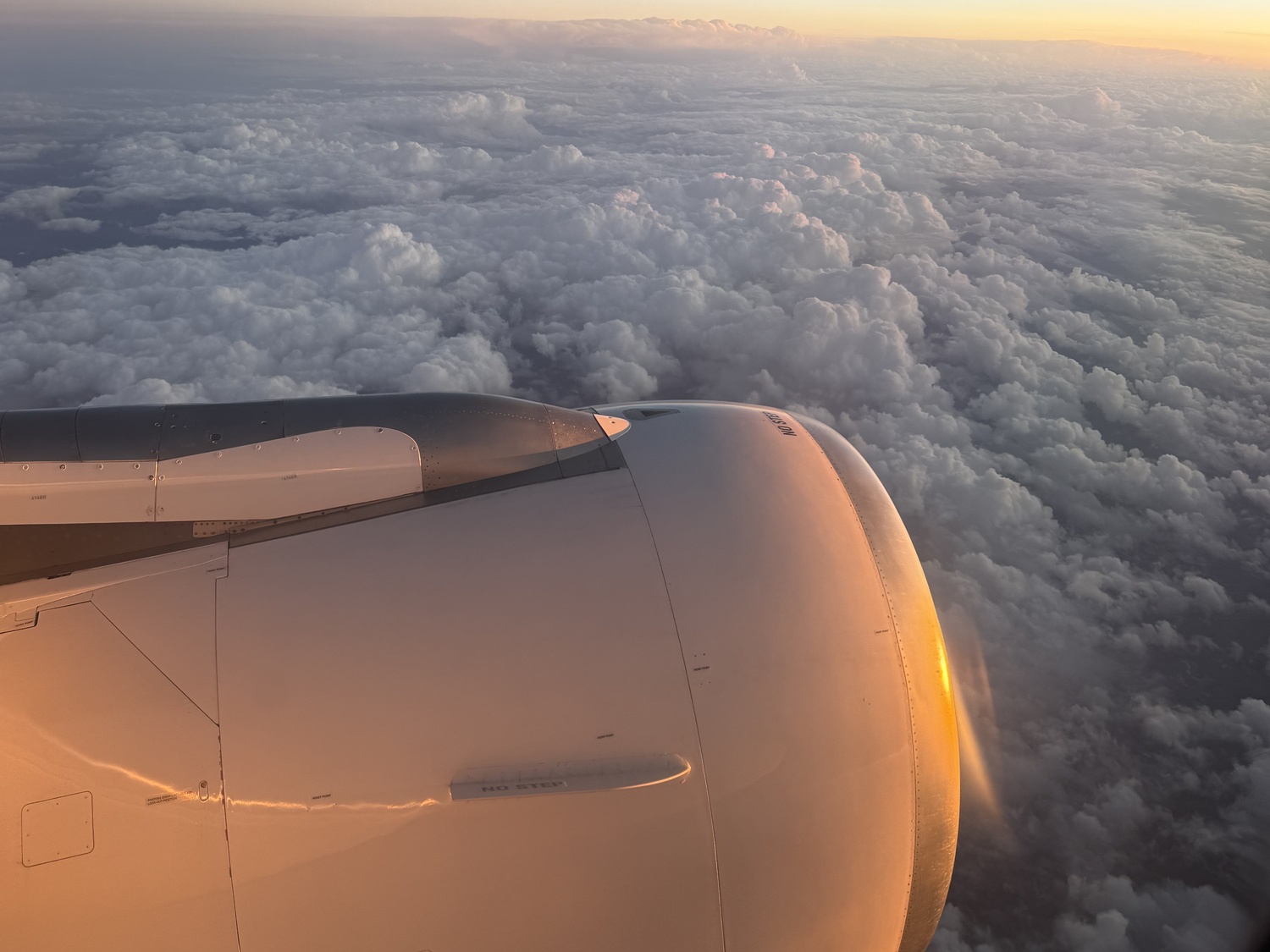
I am transported back to the flight that marks the conclusion of this trip. Waiting for takeoff on the tarmac, I play this song on loop. I watch the airport ground crew wave their wands, the reflective strips on their safety vests sparkling as the sinking rays of the sun hit them.
“I remember 18 and telling a lie.”
It’s a song about the desperation of wanting to be wanted in your youth — and how impossible it feels to see beyond that at the time. You feel grateful for the girl you were. And yet, looking back, you realize everything that felt once like your “whole sky” was only a small fragment in your universe. You were always meant to bloom into something more.
“I couldn’t see it for the trees, oh Lord.”
The sky is blue, but slowly turning into soft shades of gray and white. The sunset filters in through the small airplane windows, and I lean my head against the side of the plane as we ascend above the clouds.
“My heart used to break, now it’s all muscle.”
I think about how free it feels to finally break through the mist in my chest, the clouds in my mind.
“Eye to eye and I won’t back down.”
An ocean away from Harvard, I finally feel that I have grown into myself.
I belong to myself.
“You then and me now.”
—Magazine writer Anne Sun can be reached at [email protected].