
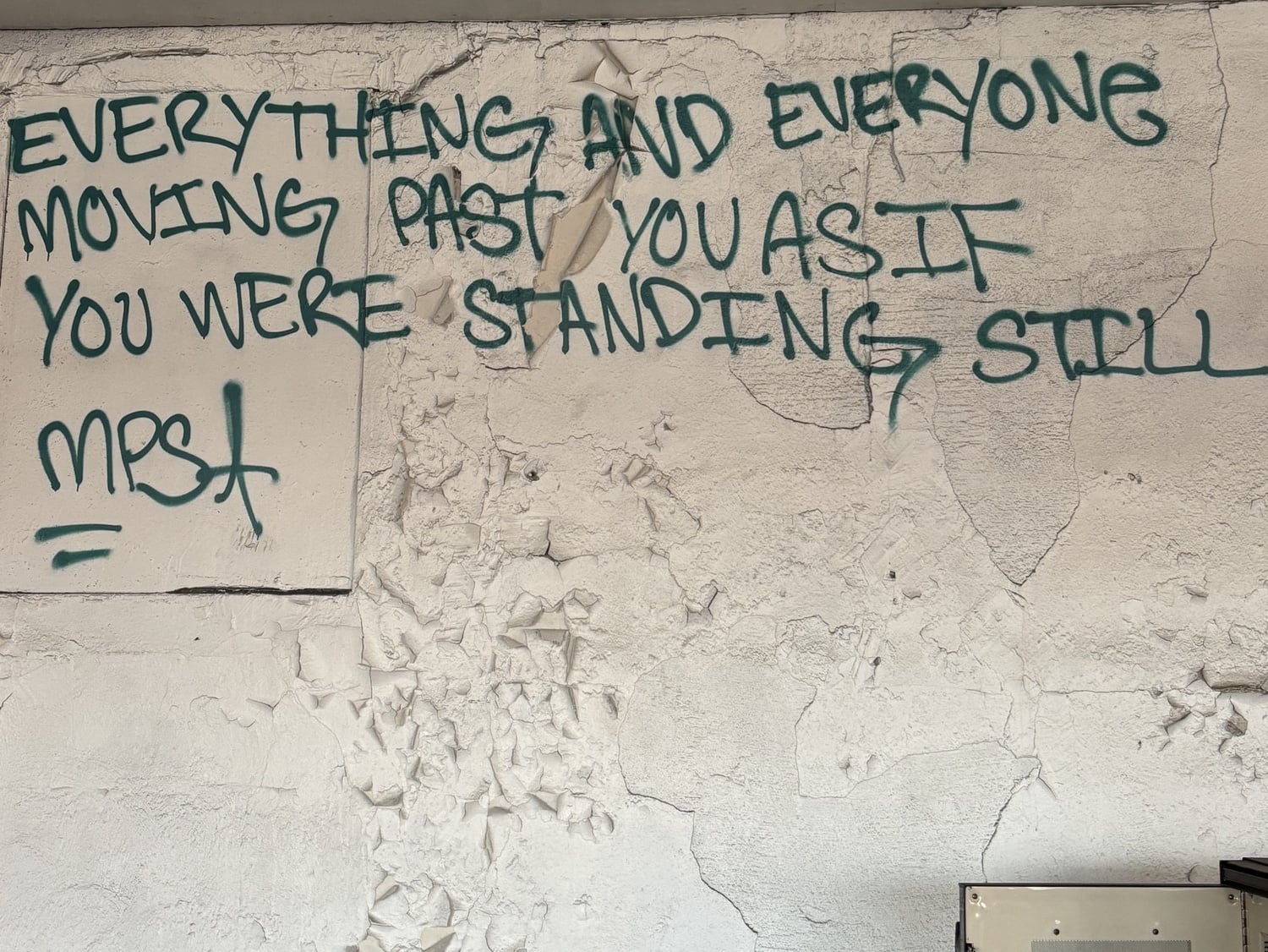
In Transit
I grew up waiting for the weekend, for the days I could take that highway up to St. Louis or to Chicago, constantly itching for the next time I would travel to someplace I deemed exciting and different. I was always disappointed at the end of every trip, when I returned to Peoria.
he average American spends up to two full years of their life in transit from one place to another.
I believe that I have far surpassed this number in just 18 years of life. From late-night parking lot debriefs and long-winded karaoke sessions to Gracie Abrams on my 12-minute drive to high school. It might even be true that I’ve spent more of my life in a car — traveling from one place to another — than I’ve spent at a single destination.
Transitioning from a small city in Illinois to Harvard, I quickly learned that some of my classmates had never been behind the wheel. I have never known a life without four wheels taking me from place to place — a life without gas station stops, greasy fast food wrappers on car seats, or the constant need to catch a ride from a friend until you’re able to grab the keys yourself.
Known colloquially as the most average town in America, Peoria exists neither as a suburb, rural town, nor urban hub — it is a city by geographical standards, but not quite large enough to gain the advantages of one. Equidistant between St. Louis and Chicago, and centered around a river, Peoria has every trapping of a potentially major metropolis — yet is one of the fastest shrinking cities in America.
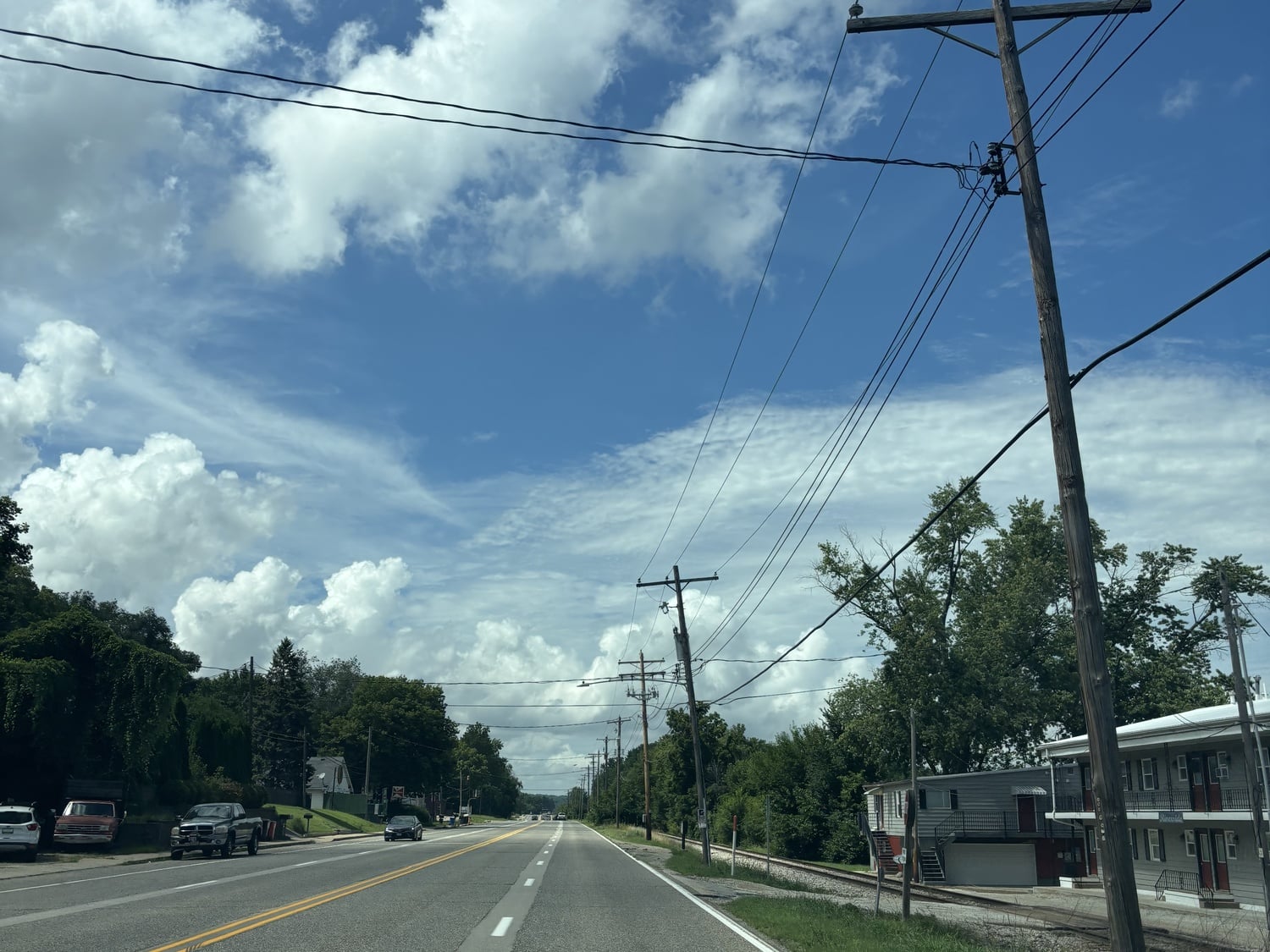
Peoria’s walkable areas are few. Parks are among the limited locations open to free roaming. There is one by my house, interspersed with a lush forest, strict grey roads painted with yellow lines, and deer-crossing signs. We had a large arcade for a while, which is closing now. It was attached to a large shopping mall with most of the stores liquidated, their doors boarded up. My high school lay on a street with a Starbucks, a gas station, and an assisted living home.
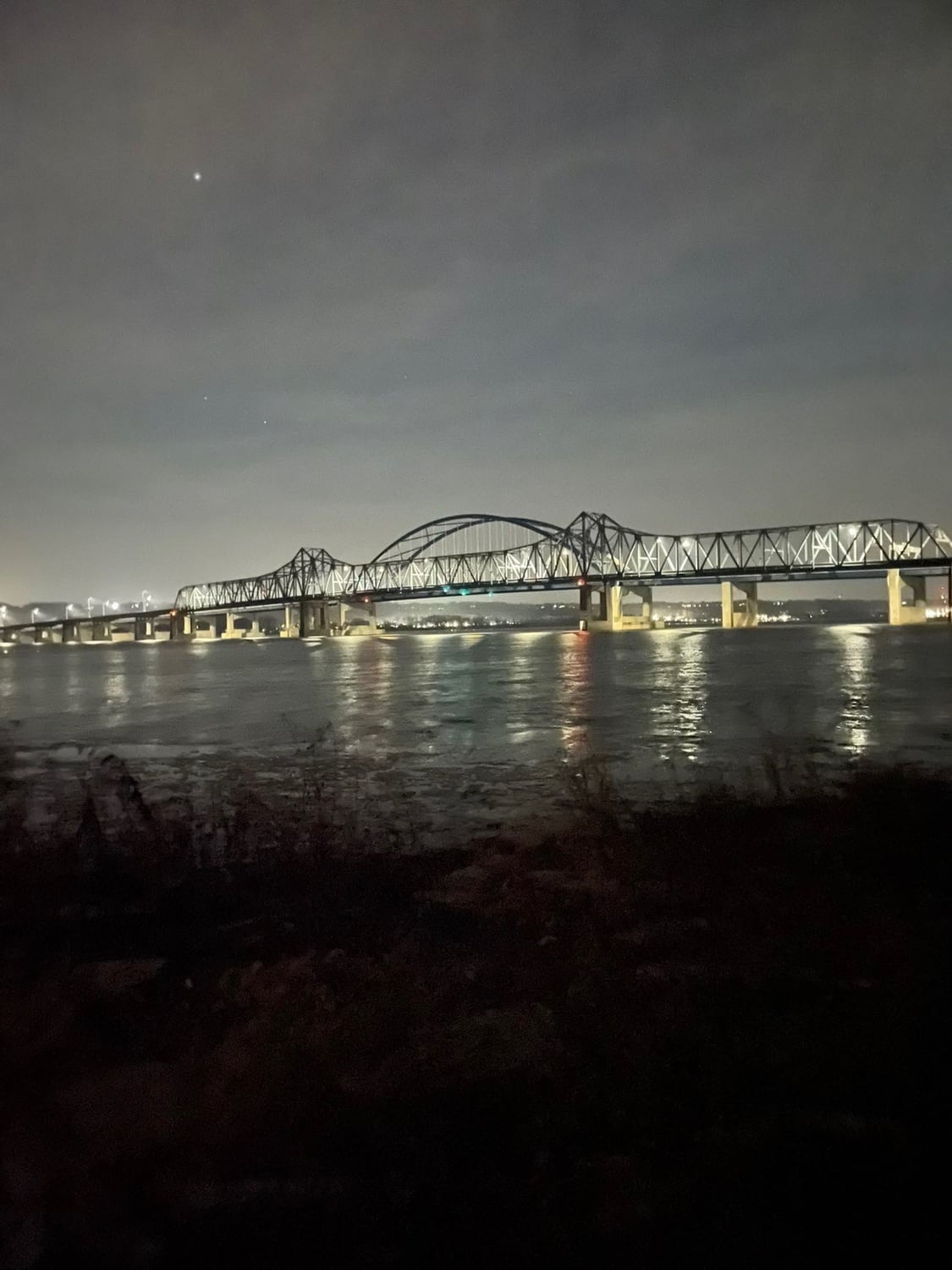
A winding highway weaves its way from my house on the outskirts, through downtown, past mostly quiet buildings, McDonald’s, and out across the Illinois River.
I grew up waiting for the weekend, for the days I could take that highway up to St. Louis or to Chicago, constantly itching for the next time I would travel to someplace I deemed exciting and different. I was always disappointed at the end of every trip, when I returned to Peoria.
***
In my first few weeks at Harvard, I was jolted awake by the constant noise coming from my open window — the inevitable aliveness of campus left my body physically buzzing.
The noise, the energy, made me unable to calm down — Cambridge, and Harvard, was not an endless dreamscape, but more so a chugging machine of innovation. I thought I could take its machinery, but I was terribly wrong.
In Peoria, I had never experienced trouble focusing before. But in my new life at Harvard, it didn’t matter how quiet the library was; I couldn’t work until I removed myself from the constant energy of campus.
I struggled to do homework because of the pulsing in my head. I found myself running down to the Charles River at odd hours of the night, armed with my laptop, a copy of The Odyssey, and a leaky black pen.
Sitting on a dark park bench and typing on my laptop, watching the grass on the bank move in turn with the breeze, I was at peace for the first time in a month. The noise in my head finally quieted. I grew up surrounded by tall trees and large clearings, and the small patch of grass in the middle of this metropolis provided me an escape to home.
Some nights I walked aimlessly, listlessly across the Weeks Footbridge, possessed by the pounding in my head to keep going. I was attracted to the patch of trees in the yard of Harvard’s Newell Boathouse and would sit awkwardly under the branches, typing furiously on my laptop in the dark as cars zipped down the highway.
My escapades pushed further into the night, leading to fewer opportunities for me to toss and turn in my Holworthy dorm bed. This, coupled with early-morning Army ROTC wake-ups, left me unable to keep my eyes open when I was stationary.
***
The first time I used public transport in Boston, I fell asleep. I rested my head on the bus’s smooth yellow holding pole, and the tilt of the churning wheels and the never-ending feet tapping by its passengers lulled me into an uneasy rest.
20 minutes later, I was startled awake as the bus completed its course.
Looking around in bewilderment, at the rays of focused, dust-filled sunlight hitting the corners of my shoes, I watched the myriad of people that surrounded me — a woman with a metal cart, a young man with a briefcase, a college-aged couple holding hands. My face flushed red, embarrassed by my lack of self-awareness.
I remembered my dad’s parting words as he dropped me off at my empty dorm room: “You live in a city now.” I had to stay awake, stay alert, and above all, remember to do everything in my power to stay safe in a place that was so different from where I was from, so far away from anyone who could help me.
Walking blearily down Newbury Street, my eyes scanned the mismatched townhouses in Boston, more grayish-red than vibrant. I had never seen a place so alive, and yet dead at the same time — thousands of people milling about, somehow so disconnected from each other.
Drifting in and out of consciousness on my bus ride, I felt that disconnect. I witnessed people so absorbed in their lives that a stranger could fall asleep on a crowded bus, and people wouldn’t bat an eye.
***
In a bout of homesickness and continued sleep deprivation, I frantically booked a flight home.
During the haze between Thanksgiving and my delayed flight back to Cambridge, I decided to reach out to my ex-boyfriend, whom I dated for most of high school. We sat in his car, shared a cigarette, and talked about our first semester of college.
His blue Jeep chugged waste into the parking lot next to my house. Our conversation turned to the distance between our past and present selves. He told me he thought that people from our high school never quite got me, that there was an expectation of how I was supposed to act, a construct that neither of us fit into.
I was different now — I fell asleep in class, got behind on schoolwork, and spent more time socializing with friends in Annenberg than being obsessively dedicated to my grades.
Hearing him describe who he thought I was — in high school and now — made me realize just how far I was willing to go to escape Peoria, and every iteration of my past self. At Harvard, I tried to change every part of who I was — to suddenly be fun and impulsive, an attempt to prove that I wasn’t boring like the town I had come from.
Sitting there, watching this boy I had spent so much of my life with, I realized that he no longer knew who I was.
I felt a pang of sadness — he was supposed to be my benchmark, a lighthouse in a snowstorm. I had thought that by talking to him, I would be anchored back to my identity. I’d return to Cambridge with resolve. I’d finally be able to sleep.
***
Two women from California found me wandering around the Yard on a snowy December day. They didn’t ask, but I gave them an impromptu tour of Harvard’s campus.
They asked me if I was happy here, if I liked my classes and Cambridge.
I stopped. As customers and tourists bustled in and out of Harvard Square, I thought about the nights I spent crying alone by the Charles River, the disastrous grade I got back on the paper I submitted last week, and my endless loneliness despite being surrounded by people.
I blinked. I lied. Yes, of course, I was happy here — Harvard was my dream.
The lie shocked me into realization — I didn’t know myself.
And maybe I didn’t have to know.
I am no longer the person I was in Peoria, but I still carry her with me. Maybe the initial detachment I felt was the blank slate I was promised in my new life, the one I’d been waiting for all this time.
En route to college the day I turned 18, I felt for the first time like my life was moving too fast, hurtling toward a destination that I wasn’t sure of. For so long, I had wished for my life to pick up speed, to fast-forward to the “good part.”
When I left the two women from California — probably to catch a train, or a bus, or to visit some bookstore in the city — I stopped at Widener Library’s looming steps. Looking up at the darkening sky, I couldn’t see any stars.
I could always see the stars in Peoria, poking out from behind darkened trees, reminding me that they were still there, despite everything — a constant hallmark in the sky.
I allowed myself this moment of stillness, allowed myself to stay in transit between two skies. It was then that I trusted that the stars were still there, that they’d always be there, even when I couldn’t see them.
—Staff writer Theresa F. Bartelme can be reached at [email protected].