

News
Progressive Labor Party Organizes Solidarity March With Harvard Yard Encampment

News
Encampment Protesters Briefly Raise 3 Palestinian Flags Over Harvard Yard

News
Mayor Wu Cancels Harvard Event After Affinity Groups Withdraw Over Emerson Encampment Police Response

News
Harvard Yard To Remain Indefinitely Closed Amid Encampment

News
HUPD Chief Says Harvard Yard Encampment is Peaceful, Defends Students’ Right to Protest
Telling Frost Family History
Poet's granddaughter finds her long-stifled academic voice
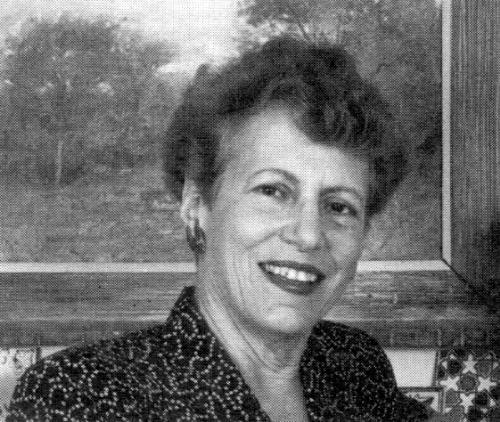
Lesley Lee Francis ’52 kept a mass of press clippings in her desk. They documented a trip her mother and her grandfather took to South America in the mid-1950s.
“What am I supposed to do with this stuff?” she remembers asking herself at the time.
A decade later, it was looking through these papers that Francis first faced her grandfather’s legacy—her grandfather was Robert Frost.
Quickly she became “hooked” on researching her grandfather’s life as one of America’s greatest poets, turning a family connection and deep interest into a full-fledged occupation.
Francis first read her grandfather’s poetry as a child at home and memorized several of his poems. She saw him frequently and, like the rest of his close family, called him affectionately “RF.” Even today she recalls discussing with him the sound of poetry and “the strain of rhythm upon a meter.”
When her childhood impressions developed into a scholarly approach, Francis had finally found a place where could make a professional career of a personal pursuit.
She had already made a name for herself studying academic tenure and the status of women in higher education for the American Association of University Professors (AAUP). And as a Romance Languages professor she had experienced firsthand discrimination against women in academia.
By the time she started studying her grandfather, she had already raised a family of three daughters and had directed a summer school for American girls in Spain.
“I think it kind of falls naturally to women to wear many hats,” she says.
She confronted the same dilemma many of her Radcliffe classmates faced: finding recognition was difficult because of a history of “leaving women out on the edges.”
Recognition came in 1994 with the publication of a full-length Frost biography.
She’d finally etched a place for herself as a woman in the scholarly world.
Nothing Subtle About It
Francis says she has seen many doors barred to her as a woman, starting from her days at Radcliffe, when she was not allowed to enter Lamont Library.
A concentrator in modern European history, she swam in her free time and noticed the inequity in women’s athletics—the pool for female swimmers was “pathetic,” she says.
She lived at Edmonds House, a cooperative where women who had at least a B average could cook for one another.
“I call that extracurricular,” she says. “Trying to cook for a bunch of students is a lot of work.”
By her own account, her career at Radcliffe went more smoothly than her grandfather’s rocky two years as a Harvard student.
Frost, who never graduated, had a particularly bad experience in first-year English, where one of his poems received a B-, and he found Harvard students too driven by grades.
“He didn’t like the people having to take all these notes and having to feed them back to the professor,” says Francis, who published an article on her grandfather’s experiences as an undergraduate in a 1984 Harvard Magazine article.
Although she enjoyed Harvard more than her grandfather, she insists, “I’m not one to go into sentimental raptures about school, about any school.”
Throughout her years of schooling—until, in fact, she earned her doctorate—she did not feel recognized as an academic because of her gender.
Applying to graduate school at the University of North Carolina, where she applied to be a teaching assistant, she was told the school simply would not allow women to be teaching assistants—because that would mean a woman would teach a classroom of men.
So she turned away from North Carolina and went to Duke University, where she received a fellowship for graduate studies in Romance Languages.
With her degree from Duke, Francis took up teaching at Sweet Briar College in Virginia. But halfway through the 1961-62 school year, her employers found out she was pregnant with her first child. They promptly fired her.
“There was nothing subtle about that,” she says.
Tenure and Teaching
By 1974, after another decade of teaching, Francis joined the staff of AAUP, which studies the state of higher education and advocates for professors nationwide.
Having been twice denied teaching positions, she now tackled academic women’s issues directly. She served on the association’s committee on academic freedom and tenure and on another committee dedicated to the status of women.
She recalls the mindset of higher education administrators in the late 1960s and early 1970s, who would tell female tenure candidates, “You only need one breadwinner in the family. Why do you need tenure?”
Within the organization, Francis worked to bring minority representation to the AAUP. She also helped form the association’s pro-affirmative action positions on events at the time, including the influential Regents of the University of California v. Bakke case in 1978 that set a precedent for using race as one factor in university admissions decisions.
While working full time for the AAUP in Washington during the academic year, Francis reserved her summers for La Granja, Spain, a town north of Madrid, where her mother had founded a summer school for American girls in 1962.
“We never made any money out of it but we had a nice summer vacation, a working vacation,” she says.
She ran the school until 1988 and over the years brought her whole family to Spain, where her daughter came as a student and eventually met her future husband.
“I could care less whether you study if you come back with a husband like that,” she says.
Avocation Adventures
After decades of scholarship on her grandfather, Francis completed her major work of family history and biography.
Her 1994 book The Frost Family’s Adventure in Poetry sought to provide a personal perspective on Frost and his family—and particularly on the women who published his poetry and helped advance his career.
At the moment, her research interest lies in Frost’s attempts to make his poetry accessible to young people and in his relationship with his own children.
In her current occupation as a substitute teacher, Francis says she has noticed the low-quality textbook compilations of poetry that students are assigned to read.
“I’m just horrified by the things I read there,” says Francis.
Students should not be forced to read poems that do not interest them, she says. Instead she tells children to find a poem “that catches your attention and sticks with you.”
In addition to substitute teaching, Francis lectures on her grandfather, still devoting most of her time to studying his life.
“I’m the only one in my family reckless enough to do this,” she says. “It’s something I view as a legacy to my children.”
And for her part, the pursuit of RF’s legacy has fulfilled personal passions and professional aspirations.
Robert Frost once wrote, “My object in living is to unite/ My avocation and my vocation.”
His granddaughter has adopted those lines, which appeared in his 1936 poem “Two Tramps in Mud Time,” to describe herself.
“The ideal is to have your vocation and your avocation,” she says. “In many ways, that’s what’s happened in my life.”
—Staff writer Claire A. Pasternack can be reached at cpastern@fas.harvard.edu.
Want to keep up with breaking news? Subscribe to our email newsletter.