
Friends by Chance
Coming into college, I imagined I’d recognize my people from the start. But what if they weren’t the people I would have picked?
Over the summer, I got to spend quality time with the mandatory modules meant to help prepare freshmen for college life. Despite my wandering attention, one question stood out: “As you prepare to join the Harvard community and live on campus, share in one to three words what you are most excited about.” In the word cloud of our responses, “meeting new people” appeared in the largest letters, surrounded by other hopes for friendship and community.
This excitement drew me to pre-orientation programs. After all, what better way to meet new people than somewhere full of others looking to do the same? After researching the options, I chose the First-Year Outdoor Program, not for the allure of going days without showers or a bed, but because I hoped it would help me make lasting friends.
On Aug. 18, I joined hundreds of freshmen on the steps of Widener Library, where FOP leaders performed skits to reveal the groups we would spend the next week hiking with. About an hour in, my name was finally called, though I was too drained from move-in to notice. My group, FOP 203, eventually found me, and we got acquainted through a half-hearted attempt at “Bunny Bunny,” a camp game requiring more enthusiasm than any of us had. Nothing was inherently wrong with the group, but I’d be lying if I said our first meeting left me thrilled at the prospect of spending a week together.
I wasn’t the only one who had doubts. “I thought everyone was really different from me,” says Leela L. Uppaluri ’30, recalling the first evening before our trip together. “I kind of didn’t really think I’d get really close to any of the people.”
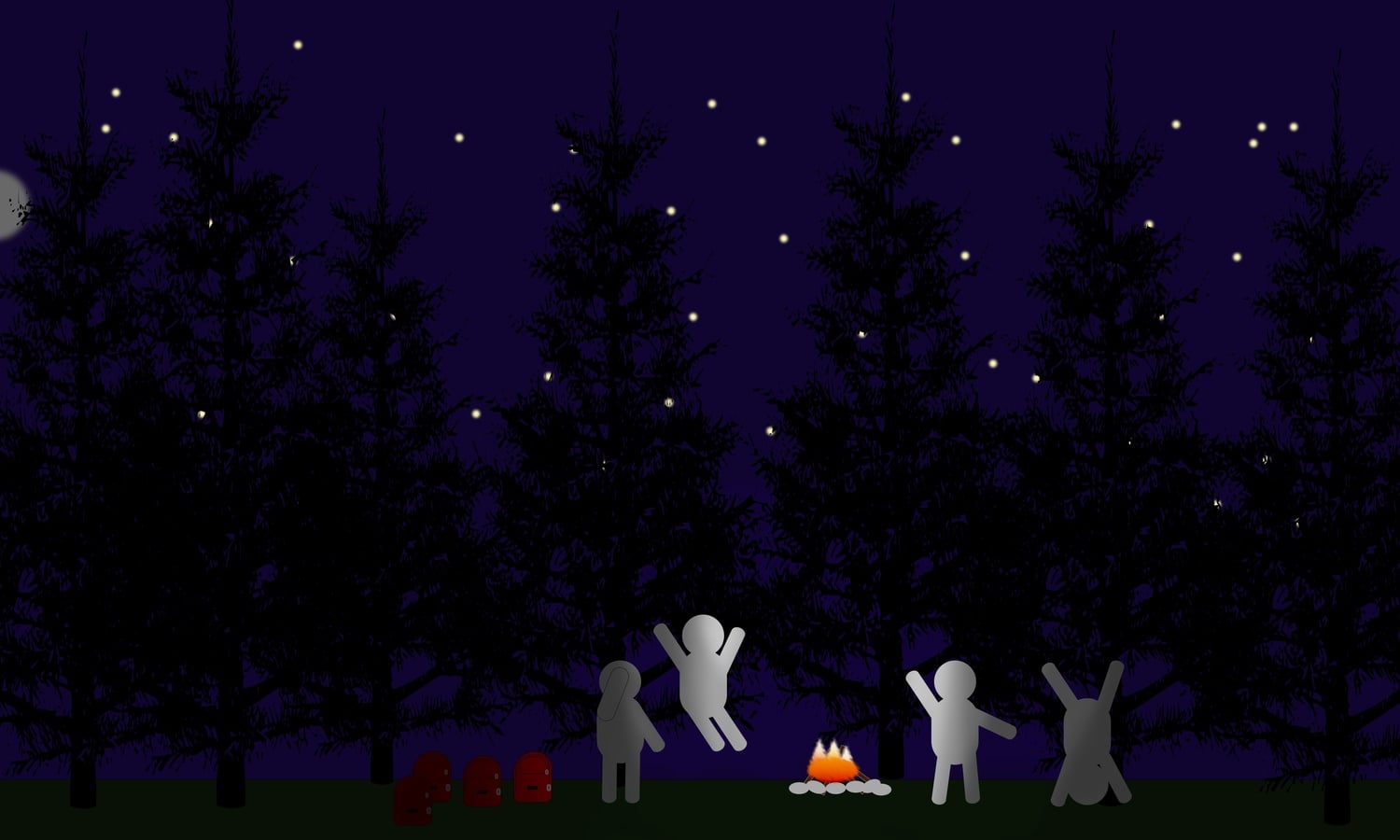
Then came a week together in Vermont, where our home base was a farm that doubled as a summer camp. We picked tomatoes, apples, and lettuce for our meals, made a diss track for our FOP leaders, and played countless rounds of Mafia. We sat on a dock watching the stars, moving past introductory questions and into stories of the lives we were leaving behind. Without our phones or an endless stream of people to meet, we could let conversations wander without looking for somewhere else to be.
Still, I didn’t expect us to spend much time together once we returned to Cambridge. We hadn’t chosen one another, and it was easy to give everyone a chance when the alternative company was goats. Surely, I thought, I’d find a more obvious fit among the people I chose to meet than those whose names happened to be called alongside mine.
Back on campus, I did get plenty of chances to meet those people. But the cycle of exchanging Harvard intros and forgetting names as soon as I heard them became exhausting. I enjoyed many of these conversations, but a meal at Annenberg Hall only gave us so much time to get to know each other before someone had somewhere else to be. When I saw my FOP friends, though, I felt an immediate sense of comfort. I didn’t have to say anything when I was with them; we could just be together. I found myself looking for their faces in crowds, and before I knew it, we were spending most of our time together.
As we kept choosing to see each other, I discovered sides of my friends I hadn’t seen in Vermont. Their senses of humor grew more familiar, and stories about their families helped me understand them beyond the week we’d shared. We had different personalities and interests, yet FOP had already given us shared stories and jokes. With them, I could simply join a conversation instead of feeling like I was playing conversational ping-pong with someone I’d just met.
So despite my claims of wanting to stretch my circle and meet new people, I found myself drifting back towards familiar faces. I believed everyone had something interesting about them, yet I rarely got past introductions long enough to discover what it was. With my FOP friends, I’d had a week to find out. With someone new, I was expecting one conversation to do the same.
When I asked my roommate Sophia R. Aloise ’30 about meeting people beyond her own FOP friends, I recognized my own worries in her answer. “I do wish I made more of an effort to talk to new people,” she told me. “I feel like I’ve gotten comfortable with the people I already know.”
By October, approaching people who were already part of a different group felt even harder. “Friend groups do seem pretty established,” Saniya Yamin ’30, another member of my group, told me. But she also considers how ours might look from the outside. “If somebody looks at me and my friends, they might think the same thing.” To me, it’s easy to remember how recently we were strangers. To someone else, we might already look like a table with no room left.
Now that the semester is coming to a close, classes and clubs have given us more chances to see familiar faces. While I’ve enjoyed these connections, I’m still figuring out how to turn acquaintances into friends I regularly spend time with. Rayee Feng ’30 tells me that, even when you meet people you really like, “usually you just get people’s Instagrams and then don’t talk to them ever again.” As I settle into a routine, I’m finding that building a friendship takes more intention than those first conversations during orientation did.
Wanting to know what role my early friendships might play in the rest of my college experience, I asked seniors how their friendships had changed since their own first falls.
For Hannah McLaughlin ’27, starting college with her FOP group made it easier to branch out. She describes those friendships as “really foundational” to feeling comfortable at Harvard, giving her “a home base to come back to” as she explored on her own.
Michelle Zhang ’27 remains close with several people from her original FOP group, including one she plans to go backpacking with in Patagonia this January. Over time, she explains, you stop thinking of them as “just your friends from FOP.” Instead, they become “your friends and your best friends, period.”
Emmanuel T. Edwards ’27 finds himself organically staying in touch with members of his original group because they end up in similar spaces, like the Harvard Outing Club and the FOP Steering Committee. Still, many of the people he is closest to now entered his life “a little bit later in the game”, he says, in freshman spring or sophomore year.
Hearing their experiences, I realize I’ve been wanting every new conversation I have to help me answer a bigger question: Have I found my people yet?
Coming into college, I imagined I’d recognize them right away. But my FOP friends weren’t the people I would’ve picked out for myself. Getting to know them has made me realize that my friendships don’t need to be justified by shared interests, resemblance to friends from home, or plans to co-found a start-up. I can appreciate the friendships I’ve made while looking forward to others. I can still feel lonely sometimes without diminishing the connections I have. Maybe I won’t just find “my people.” Perhaps that sense of belonging has to be created.
One of my FOP leaders, Juliet Bu ’27, reminded me that these first weeks don’t determine our college experience. She described “a really beautiful randomness” to the friendships she’s formed at Harvard, and encouraged me to keep building relationships, both old and new, after freshman fall.
I’m grateful that chance helped me find people I now choose to spend time with. But I also want to remember how unfamiliar they once were and how much I would’ve missed out on if I’d listened to my first impressions. Over the summer, I said I was excited about meeting new people. That hasn’t changed, but I’m beginning to realize how much there is to look forward to after the first introduction.