
Fifteen Questions: Bonnie Talbert on Contact Juggling, Nietzsche, and Local Government
The Eliot House Dean sat down with Fifteen Minutes to discuss education in an AI age, obscure hobbies, and her time on the Wheel of Fortune.
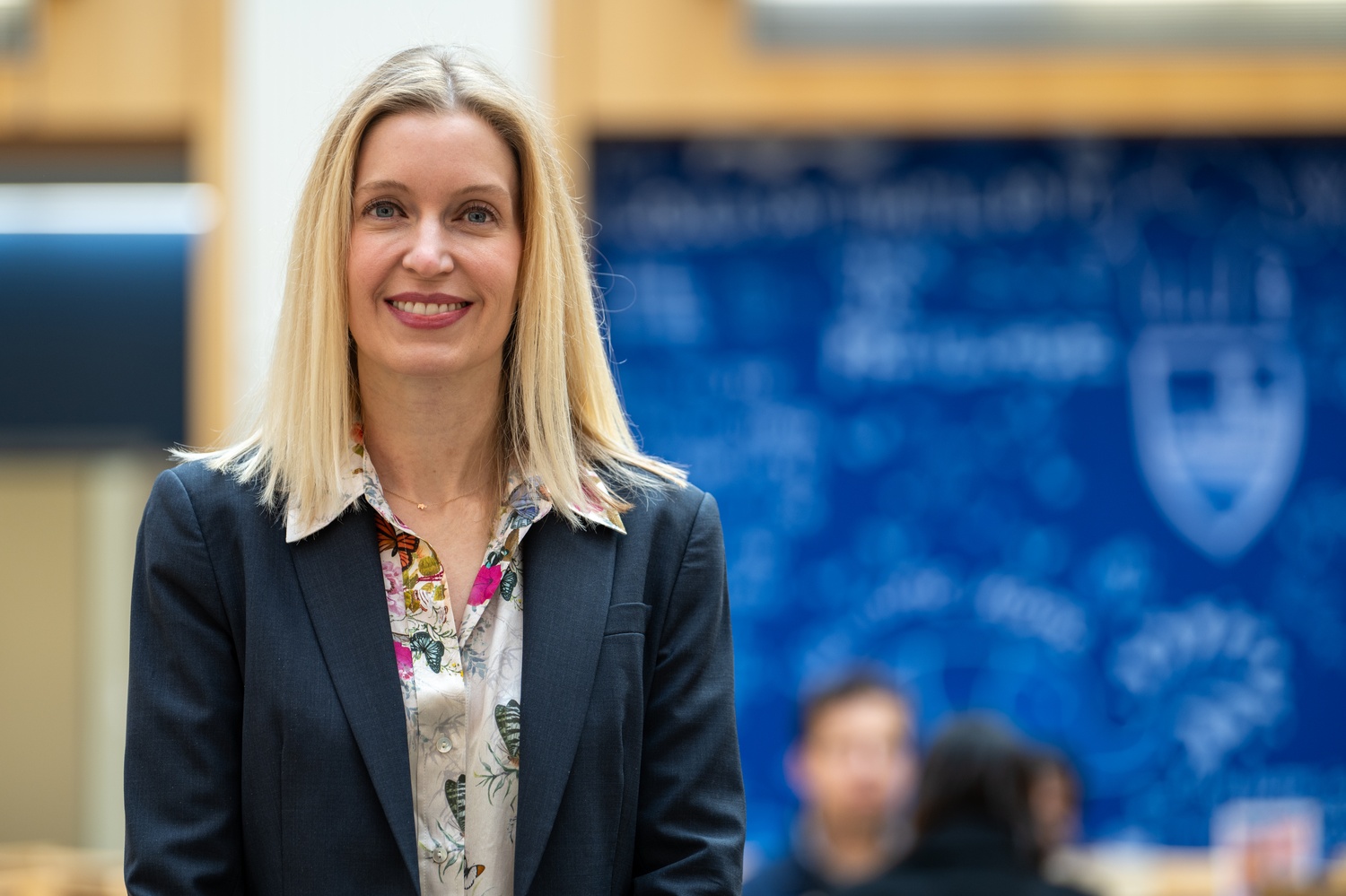
Bonnie Talbert is an Eliot House Dean, the director of the Harvard Foundation, and a Peace Commissioner for the City of Cambridge. This interview has been edited for length and clarity.
FM: In your role as the Peace Commissioner for the City of Cambridge, what are some of your unique responsibilities?
BT: I’m one of a group of volunteers on the Cambridge Peace Commission, and there are certain things we do every year, including Meet Your Neighbor Day. We have a Martin Luther King Jr. Day celebration. We help host a Holocaust remembrance. And so there are certain things that we do at regular intervals, and then there are other things that we do depending on what the community needs and with what we feel like we need to be paying attention to and responding to.
It is an amazing city. We also want to make sure that the benefits of living in such a fantastic city extend to everybody who lives here.
FM: What hopes do you have for our city?
BT: I would hope that everybody in the city would be able to access and enjoy the benefits of living in this city. It’s an amazing city, and there’s so many opportunities. I would just hope that everybody is able to take advantage of them. I hope people get to know their neighbors. I hope that neighbors continue to help out when their neighbors need them, and I hope people come together and recognize how fortunate we are to live here together in Cambridge. I hope that we continue to stay true to our values, and that we continue to build a community that’s inclusive and that can be a model for what good local democracy looks like.
FM: On the note of commissioning the peace of Cambridge, do you believe there is something spiritually different about Cambridge compared to some other cities in the world?
BT: Cambridge is a unique city for so many reasons. It’s right at the heart of some of the best educational institutions on the planet. It’s also very near to some of the best hospitals on the planet, and it’s got an incredibly diverse range of people that live here. I think it is unique in so many ways, and it’s a wonderful city to live in. I think everybody in Cambridge really cares about one another. It certainly has its challenges, like any other city.
I think everybody should get involved in local government.
FM: As the Director of the Harvard Foundation, what are some struggles you have faced this year so far?
BT: It’s a new organization. I think anytime you’re part of a new organization, one of the things that you have to figure out is logistics. What is going to be in my purview? What projects are we going to try to prioritize? And how can we do everything that we need to do to follow through and make sure that they happen?
I think we’ve got a lot of really great projects that I’m excited about. And I think we’ve managed to be flexible but also find a way to really stay true to our mission and continue with the work that we think is important.
FM: What is something you’re looking forward to for the Foundation this year?
BT: Last year, we took a small group of students to the Commission on the Status of Women at the United Nations, and that was a remarkable, incredible experience. And we are planning another trip in March during spring break, so I’m looking forward to that again. Given the larger situation surrounding the United Nations, there’s going to be some uncertainty in the background, but I think it’ll still be a wonderful experience for our students to hear from policy makers and civil society leaders and high level diplomats what the are challenges that they’re facing, and how they can hope to overcome them.
FM: How is Eliot adjusting to swing housing?
BT: There is a great piece in The Crimson — “Honestly, I’m Fine with It.”
I really appreciate that, because I think it’s important to recognize that there are things about being in one building that we miss a lot, but everybody has wonderfully embraced the Inn, has embraced all the opportunities that we have to make it feel like Eliot. And there are also new opportunities that swing housing presents for new traditions, new types of programming, new logos, and new branding. There’s just a lot of fun that we’re able to have with it. So I appreciate the way that everybody’s come together and really maintained the Eliot spirit throughout this transition.
FM: I know that prior to swing housing, there were many hopes and aspirations to keep the spirit of the house alive — do you feel that you have been able to manage that?
BT: I hope so. We have such a strong team in Eliot. When I think of our leadership team, and the students in HoCo, everybody has really come together. I think when you have a strong team in place, you really do feel like, “This is going to be hard, but we can do it,” right? Because it doesn’t fall on any one person, and because there’s such a level of trust and care and motivation to get this done and to do it right. And I think it’s incredibly empowering.
FM: So, we’ve learned that you are quite into the very unique hobby of playing the pedal steel guitar. How did you pick up that hobby?
BT: It’s one of those things that I always wanted to do, and for whatever reason, I think, had just put it off. And one day I just thought to myself, “If I’m not going to do it now, it’s never going to happen.” So I found an instructor, and I bought the instrument. It’s a very difficult instrument to play. I sort of feel like I should have chosen something easier, because you have to sit at the guitar, and there’s 10 strings.
I think it actually reveals something important about learning just for the sake of learning something.
FM: What are some educational practices that you believe might begin to shape our world as we know it with the development of AI in it?
BT: It is interesting because we don’t yet know, so that opens up some space for experimentation. I think one thing that’s really important is to think about both what AI can offer, but also to really think about what the core features of learning are, and how AI might change it. One thing, for example, that I think is really important is that there’s a social aspect to learning, and you can do it in community with others. And there is something about the face-to-face experience with no technology that’s — so far — pretty irreplaceable. There might be new models for social learning that technology can open up, but I think we just need to be very clear about what we have and what’s changing, so that we can also be clear-headed about how we want things to move forward in a way that continues to benefit everybody.
What’s the importance of learning? What’s the difference between doing it with yourself, doing it with other people, doing it with technology? In order to ensure that technology is actually helping us make progress, we can’t lose sight of these deeply philosophical questions.
It all comes back to philosophy in the end! These are questions about the good life and about living with others.
FM: We also have learned that you are a fan of contact juggling. What is contact juggling and how long have you been doing it?
BT: I should have brought my contact juggling ball.
I think the reason it’s called contact juggling is because it doesn’t go into the air. It is always touching you, in your hands and your arms. So you have this acrylic ball, and you’re not throwing it up in the air usually.
Again, I always thought it was fun. I thought it was interesting. I thought it was something I would want to learn just for the sake of learning. It’s the kind of intrinsic value of learning something new that I think is really important.
There’s not really anything to lose. If anything, all you have is to gain friends and a new skill. It’s fun, plus it just looks really cool. I spent a lot of weekends in graduate school going to magic shows in New York City. It was a great balance to my work — sitting alone, doing research and philosophy, working on my dissertation. It was great fun to meet up with this completely different community and get a break.
FM: Who is your favorite philosopher to read and why?
BT: That’s so hard, because I love all of it.
Right now I’m reading Brandon Terry’s new book, and I think he’s incredible. I love reading what people are writing about now, and so some of the current scholarship I find really fascinating. I also love reading the classics. I love reading things I haven’t read before in philosophy.
Probably the book that changed my life philosophically was Kant’s “Critique of Pure Reason.” It’s one of those foundational texts. A lot of philosophy is very good in articulating things that you already know but haven’t been able to say clearly. You haven’t been able to articulate them in quite precisely the way that somebody else can. It’s very important to get clear descriptions of the world and descriptions of things that you are thinking. When I went through the “Critique of Pure Reason” for the first time, it was one of those moments where it was like, “Wait a minute. This is doing something different. It’s not articulating something that I already know to be true. It is really articulating the limits of human reason in ways that profoundly change the way in which I understand the relation between human perception of the world.” I would say that might have been one of the most formative books that I read.
There’s very little philosophy that I don’t like reading.
FM: Is there a view from a philosopher that really captures your personal perspective? And, on the other hand, what philosopher do you disagree with the most and why?
BT: I disagree with all of them. That’s part of the fun, right? There’s nobody that captures my experience. That’s not even possible. And that’s what’s so fun about it. In almost every philosophical text, there’s parts of it that I love and parts of it that I disagree with. But that doesn’t necessarily affect the significance of it. There are texts that I enjoy reading because every time they speak to me in a slightly different way. I think of someone like Nietzsche as so intentionally provocative that I might get a little bit irritated in a slightly different way every time I read it. But that’s also part of the fun, and I think that’s why I really enjoy reading Nietzsche.
There’s a transformational or inspirational effect of these ideas that will move you to act depending on your position vis a vis these ideas.
FM: You specialized in the philosophy of psychology. In layman’s terms, what does it mean to study that? Why were you drawn to it?
BT: Looking back on my dissertation, which at this point was written a long time ago, I was very interested in the question of what it means to know another person. My basic idea was that knowing another person is very different from knowing other things in the world. A lot of times the models for knowing other things in the world are unidirectional. You try to figure out what’s in the world and learn about them, and that’s it. But knowing another person is an interactive process. Usually when you get to know someone, you know one another, you’ve interacted with them, and there’s a really important face-to-face component.
There was a little bit of irony in sitting alone in a room, writing about the special nature of knowing other people and what you can learn from the interactive face to face process. But that was also part of the fun.
Then I started to ask some questions that are more related to sort of moral and political philosophy. Not only how can we know other people, but how can we help them? How can they help us? How can we help each other to build a better world?
So I think that fundamental question itself was really important, but it also helps conceptualize other related questions.
FM: Which city do you like better, New York City, where you did your PhD at Columbia, or Cambridge where you reside now?
BT: For my time in graduate school, I needed to be in New York City. I think now where I am in my life, Cambridge is the best place for me to live. With my family, my children, I could not take my life now and uproot it and then transplant it right into New York City and think I would have the same kind of life that I’m enjoying now.
I go back to New York City at least three or four times a year. It will always be an incredibly special place to me. I’m glad I got to live there, because when I go back and visit, it’s hard to get everything in.
FM: You’ve also been on a game show! What was the game show, and what was the highlight of that experience for you?
BT: When I was in college, I was on the Wheel of Fortune.
They came to my college to recruit people, and it was because they were going to be filming in Dallas. It was also Best Friends Week, and I showed up to our dining hall and was having breakfast with my best friend. We happened to be wearing the same thing. She was like, “Why don’t we put our name in the hat, and see if they draw our names.”
We won some money, and they take some taxes, and then you divide it up. But we took a trip — we went around Italy after we graduated — and then the rest of the money I put into savings. I used it as part of a down payment for a house many years later.
— Magazine Associate Editor Vivian W. Rong can be reached at [email protected].