
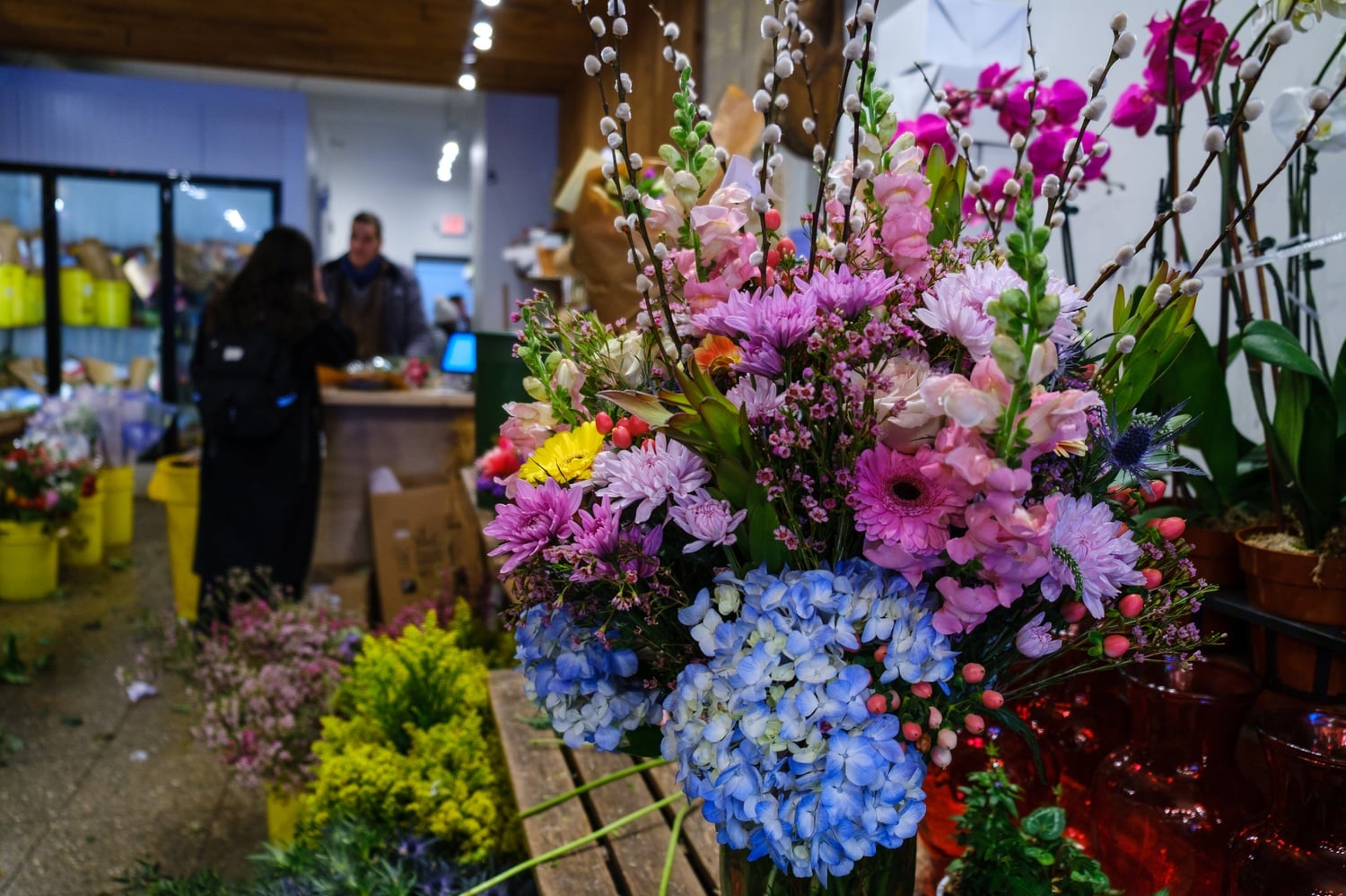
What Blooms on Brattle Street
Maintaining such a high standard of care for customers requires significant daily preparation and physical labor.
rattle Square Florist was on the brink of shutdown.
In 2022, a failed lease negotiation meant that the shop was bound to lose its historic location on 31 Brattle Street — a spot it had occupied for over a century.
The prospect of closure was met with wide outcry by the community and a shower of sympathy from customers to Stephen Zedros, the grandson of the original founders of the store.
With the help of a few local landowners, Zedros was able to secure a new location just 500 feet down the block.
Three years after the flash move, the new shop — with its exposed brick walls and mounted stone angel ornaments — continues to thrive.
“People were loyal and stuck with us,” Zedros says.
Despite undergoing a series of changes, Brattle Square Florist’s legacy has endured. Founded in 1917 by George Stavros and John Gomatos, the shop was originally named Gomatos Brothers Fresh Produce, dealing in fruits and vegetables as well as flowers.
The Gomatos Brothers’ original wooden sign still hangs in the new store. When we enter the shop, we push past the sign and into a sea of color — rosy pinks, verdant greens, creamy yellows.
Minutes after our arrival, Zedros emerges from the basement in blue jeans and work boots. As we chat, he stops periodically to exchange banter with his employees and greet delivery workers coming in with boxes of fresh flowers.
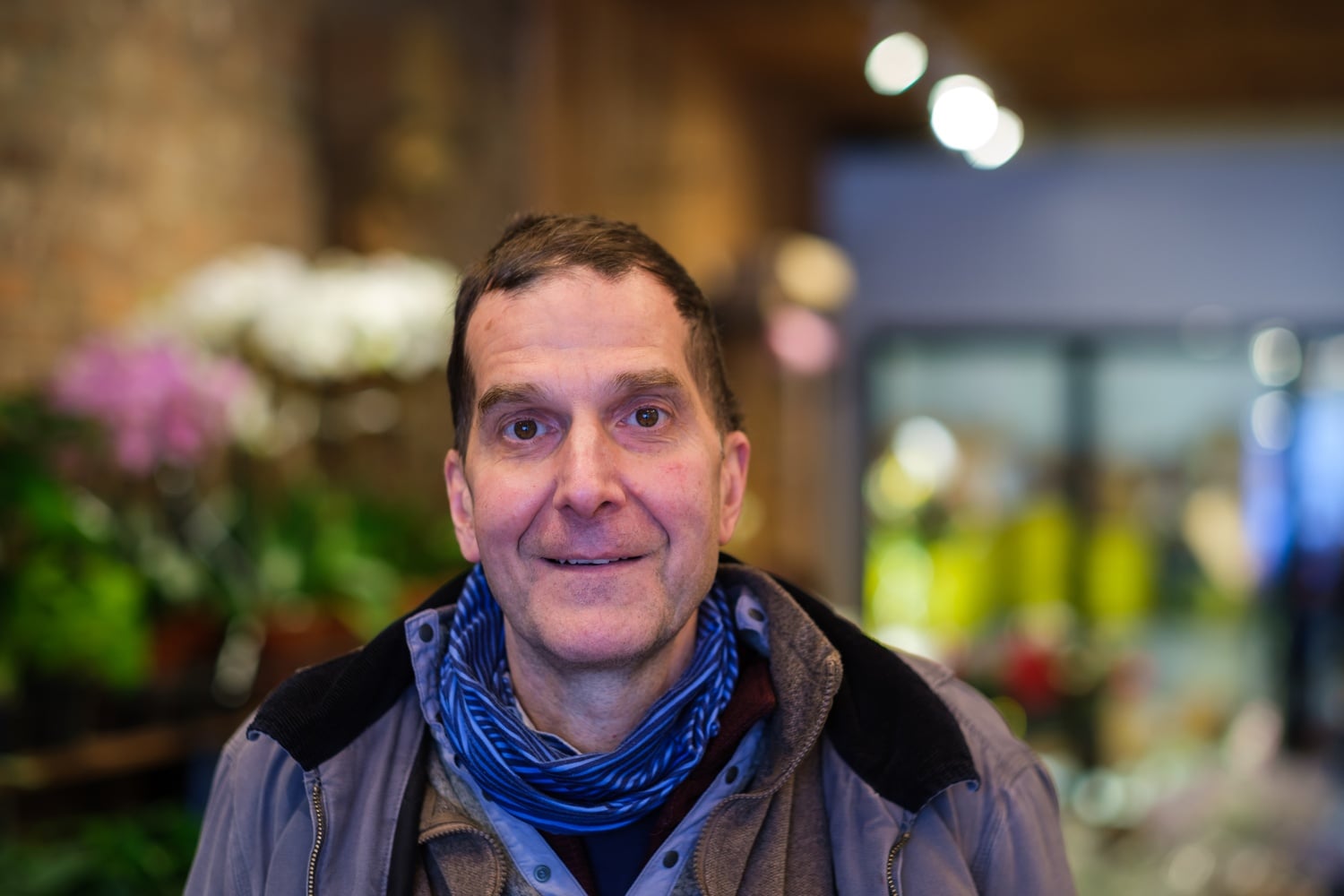
Today, Brattle Square Florist is one of few independent flower stores in Harvard Square, as other establishments like Christopher Flower Shop have come and gone over the years.
But what makes Brattle Square Florist different? And why has it stayed?
“Loyalty, quality, and the size and volume we give,” Zedros answers.
Maintaining this standard of care for customers, however, requires significant daily preparation and physical labor — from changing the water of the flowers and unpacking plant shipments to tending to blooms with different needs.
A florist also needs to be attuned to people’s preferences. Through decades of experience, Zedros has learned not only how to pair flowers for aesthetic appeal, but also how to read the customer in front of him. Although he asks for their preferences first, many customers have come to trust his judgement and grant him full creative freedom.
“If you see a person come in and they’re not exactly sure — they’re looking around — I think a mixed bouquet is the way to go,” he explains. “I like — myself — color, and combining all sorts of stuff that’s gonna last a long time and also look really nice. Brings people back.”
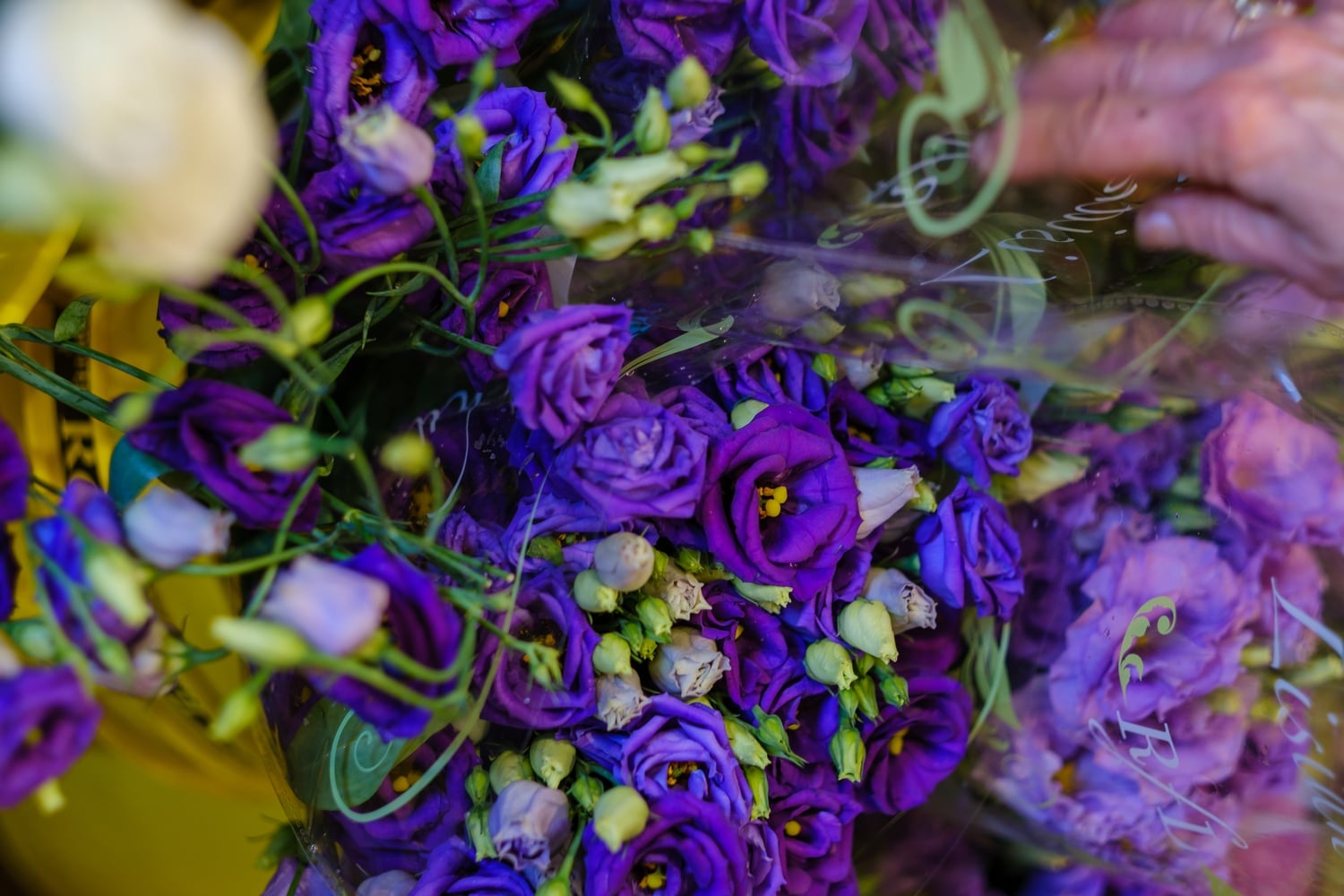
Kevin Houseman, a longtime employee, likens this approach to a game. “It’s kind of like 20 Questions,” he says. To build a custom bouquet, he’ll often ask customers about the occasion, the recipient’s favorite colors and flowers, or if the customer has pets.
The shop’s rhythms are deeply intertwined with Harvard’s community — Zedros makes it a point to keep track of university events, from commencements and reunions to club-sponsored events. During the Harvard Asian American Dance Troupe’s showcases, for instance, Brattle Square Florist teems with students who fill their arms with congratulatory flowers costing as little as five dollars.
Inside, small gifts hint at this close relationship between the shop and its community members. Golden Chinese calligraphy created by a Harvard alumna and longtime customer is fixed proudly to the wall by the counter. Just below sits a bright purple construction -paper drawing, given to Zedros by a little girl as thanks for a free flower posy.
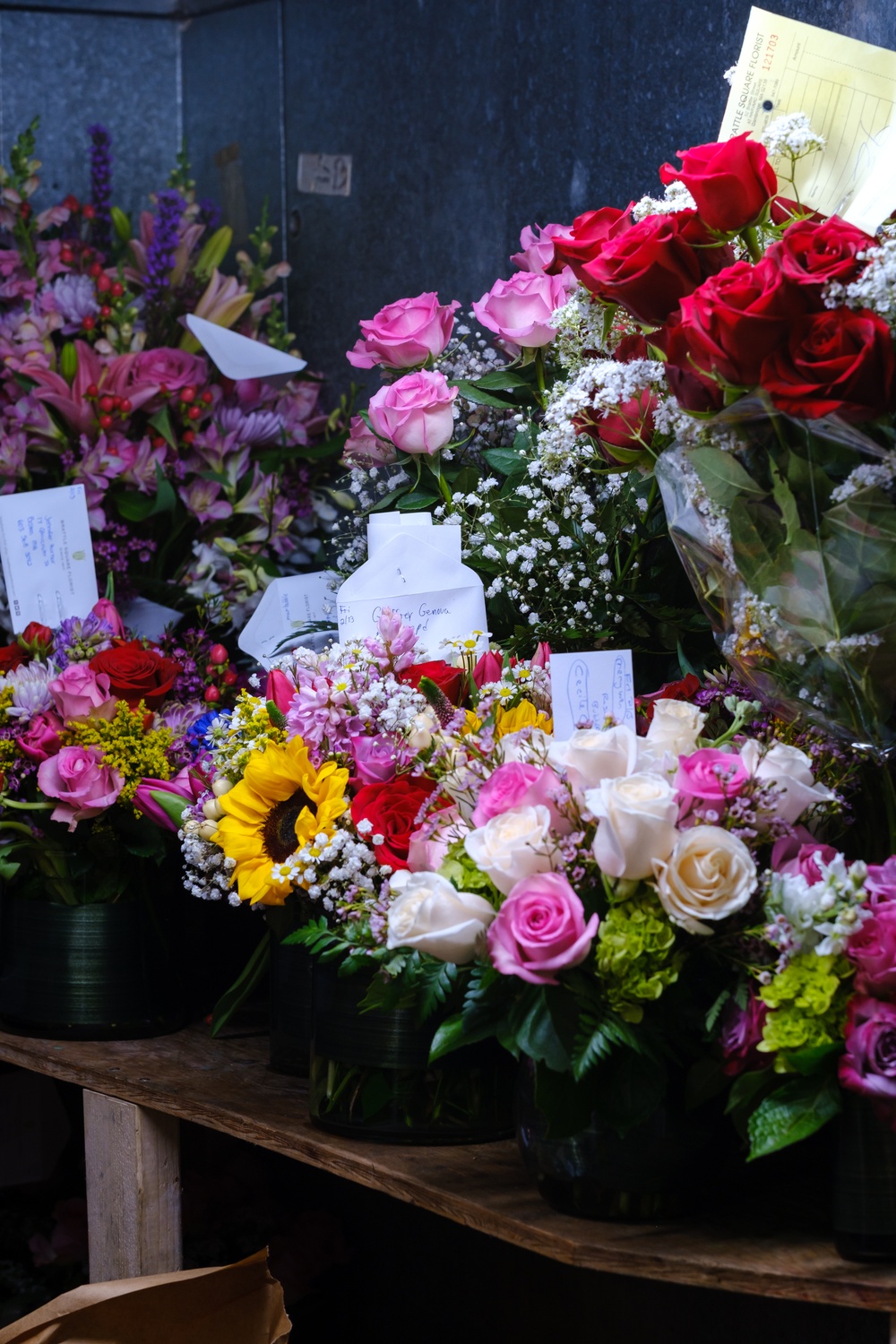
Ultimately, the role of a florist also requires significant individual skill and dedication. Houseman describes good florists as “people who have been there, doing it for most of their lives, and they have a passion for it.”
“It's not as fun as everybody thinks,” he tells us. “Though everybody thinks, ‘Oh, it’s my dream to work in a flower shop, it must be so much fun and relaxing because you’re playing with flowers.’ It’s a very high-stress job.”
“It’s a tough, tough business,” he admits of his work. But he still returns to the shop, working six days a week.
His employees say that he embodies the qualities of a passionate florist — remembering the names of his customers for years, and working within their budgets to ensure no one leaves empty handed.
“It’s the greatest thing in the world,” Zedros says of being the Brattle Square florist. “The day goes by very quickly.”
— Magazine writer Adrienne Fung can be reached at [email protected].
— Magazine writer Anne Sun can be reached at [email protected].