
Inside Harvard’s Student-Built Sexual Violence Archive
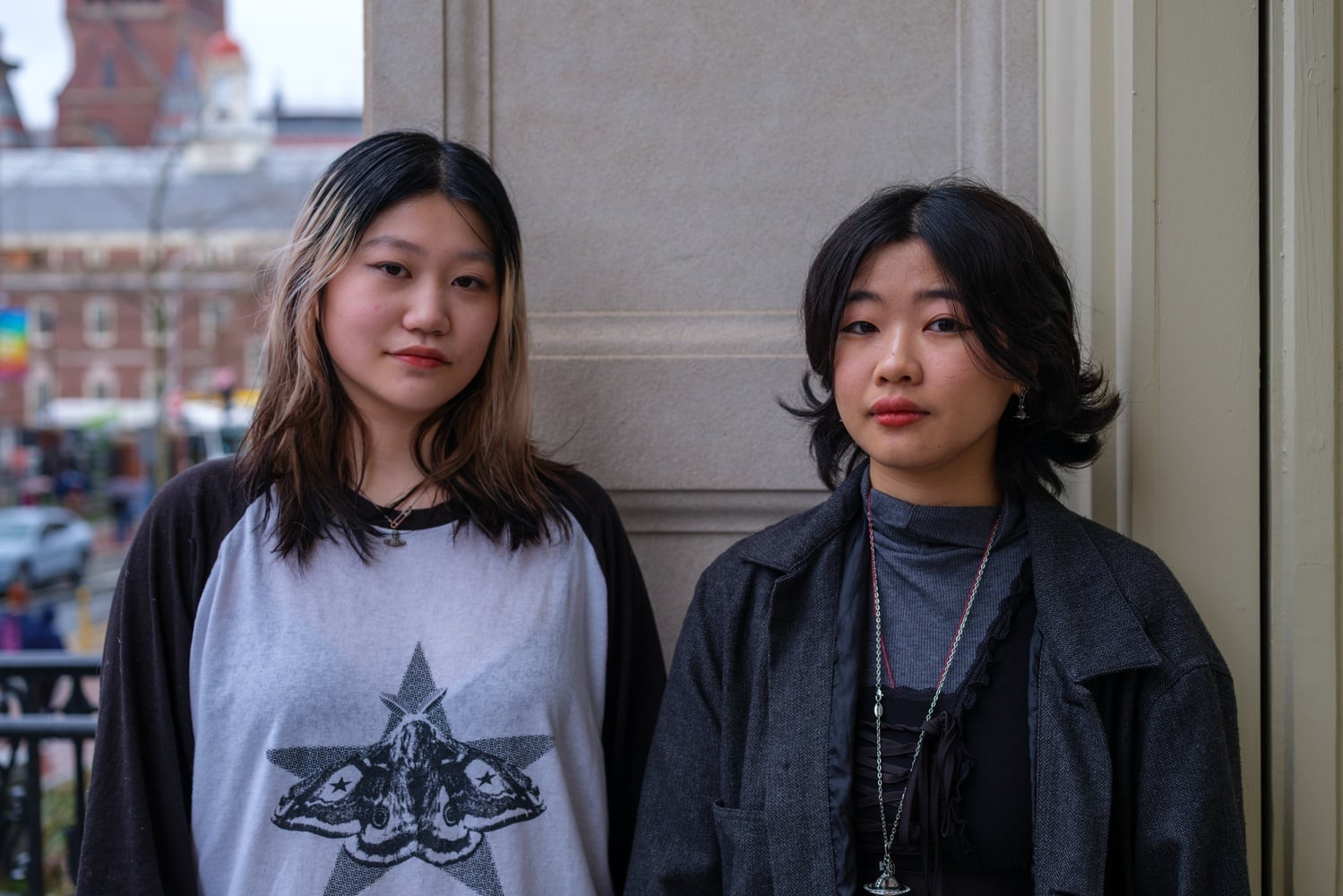
After collecting and processing records of gendered oppression, violence, and resistance to create Take Back Harvard, for Jessica Wang and Stella Lei, no place on the University’s campus is left without a connection to a moment long past, and, to most, long forgotten.
or Jessica Wang ’26 and Stella Lei ’26-’27, the sights of Harvard’s campus are not merely the red brick backdrop of social and academic life at the University, but a collection of moments from the past — incidents of gender discrimination, sexual assault, and the collective resistance to this violence.
In February 2024, Wang and Lei founded Take Back Harvard, a living “community archive” of documents cataloguing the history of sexual assault, gendered violence, and gender discrimination at Harvard. Since then, using previously published and publicly available information, the organizers have compiled more than 500 archival pieces, divided among five collections: “Harvard and Sexual Harassment,” “Harvard and LGBTQ+ Discrimination,” “Harvard and Gender Discrimination,” “Harvard and Sexual Assault,” and “Harvard and John Comaroff.”
The archive documents instances of violence and oppression, as well as moments of resistance and collective action against injustices they see at Harvard.
“I think a concern we had was that we want to ensure that this is a collective voice,” Wang says.
“There’s just a lot of ethics to grapple with, and I think recounting the history of organizing is just as important too,” she adds.
In the wake of the protests surrounding sexual harassment allegations against John L. Comaroff, a former Anthropology and African and African American Studies professor, Wang and Lei felt a call to action. Wang was involved with the protests and wanted some way to preserve the impact of this event, along with other acts of alleged sexual violence in Harvard.
“10 years later, will people still remember all the organizing and injustice and Harvard’s complicity around Comaroff?” Wang says. “How do we go about making that happen?”
Inspired by the University of Virginia’s Take Back the Archive, which documents and contextualizes sexual and gender discrimination on UVA’s campus, Wang set out to create a similar archive at Harvard. She knew she could not do it alone, so when Wang and Lei met through a mutual friend, they decided to tackle the challenge of documenting every instance of sexual violence in the nearly 400 years of Harvard’s history together.
Though UVA’s Take Back the Archive website and its downloadable code gave the founders a leg up in building Take Back Harvard’s platform, Wang and Lei say that the website programming was only one piece of a much larger puzzle.
The two soon began the long process of gathering materials to document. They conducted interviews with librarians, alumni, and feminist organizations. After reaching out to other archival projects, including the Digital Transgender Archive, they combed through public records and worked to secure funding from the Harvard College Research Program.
For Wang and Lei, collecting and processing these records of gendered oppression, violence, and resistance left no place on campus without a connection to a moment long past or long forgotten.
When possible, the locations of various archived events are incorporated into the website through a campus-wide map, allowing site visitors to see Harvard’s campus through the lens of these moments of its history. But for the creators of the site, these moments have been intrinsically tied to their experiences at Harvard.
“I don’t think there’s ever been a day since I started thinking about Take Back Harvard that I have not thought about either the materials on the site, the site itself, organizations, and stories, and incidences within,” Wang says.
Despite the discomfort of studying many of the events preserved in the Take Back Harvard archive, Wang and Lei’s knowledge of these moments also serves as a source of inspiration and pride, influencing their identities and coursework.
“Thinking about this history — becoming more aware, more engaged with it, and all of these things — has been really important for me, not just as a student or somebody interested in going into academia, doing research and such, but also just as a person living here and going about my life here,” Lei says.
Today, the content of the archival collections spans sexual assault cases from 1911 to current events at Harvard.
“I think we’re at the crossroads where we have a pretty big depth of work with a lot of interesting things covered,” Wang says. “We don’t just cover incidents of violence, we also cover organizing movements and responses to violence that have occurred.”
Yet, due to the site’s reliance on publicly accessible documents, the history of sexual assault and gender discrimination disproportionately highlights the voices of white, female students.
In the future, the founders hope the archive will continue to evolve. Wang imagines a potential extension of the project to include catalogs of existing organizations and affinity groups on campus and use archival information to make cases for funding to preserve this centralized institutional knowledge.
As the archive continues to grow, with new records entering the public domain and current events unfolding, Wang and Lei are no longer the sophomores who founded Take Back Harvard. Now preparing for graduation, they face an uncertain future for the project they built.
Although both Wang and Lei hope for Take Back Harvard to continue as a centralized database of gender violence, discrimination, and resistance movements, they are still trying to identify the next leaders to move the project forward. Difficulties with recruiting underclassmen to take over the project and preserve momentum for its future have made it hard to envision the next chapter of Take Back Harvard.
“I think my regret as I graduate is that I was not able to connect this more with underclassmen,” Wang says.
“It’s very limited, the amount of manpower we have,” she adds.
Even with the uncertainty, the founders believe in the project’s importance. Its influence first became apparent to Lei when another student in her class used the archive as a resource for their academic coursework.
That moment affirmed that Take Back Harvard could shape how people engage with the University’s past. But for its founders, the archive’s deeper purpose lies in what that awareness demands moving forward.
The founders say that their goal is that when the next incident of sexual violence occurs, people are informed about the incidents that came before.
“We have talked about this before, and we have fought for this before, and so Harvard can’t hide behind this veil of ignorance and not knowing better,” Wang says.
—Magazine writer Maahi A. Bose can be reached at [email protected].
—Magazine writer Valerie I. Ogboi can be reached at [email protected]