
MAHA’s Milk and Other Melodramas
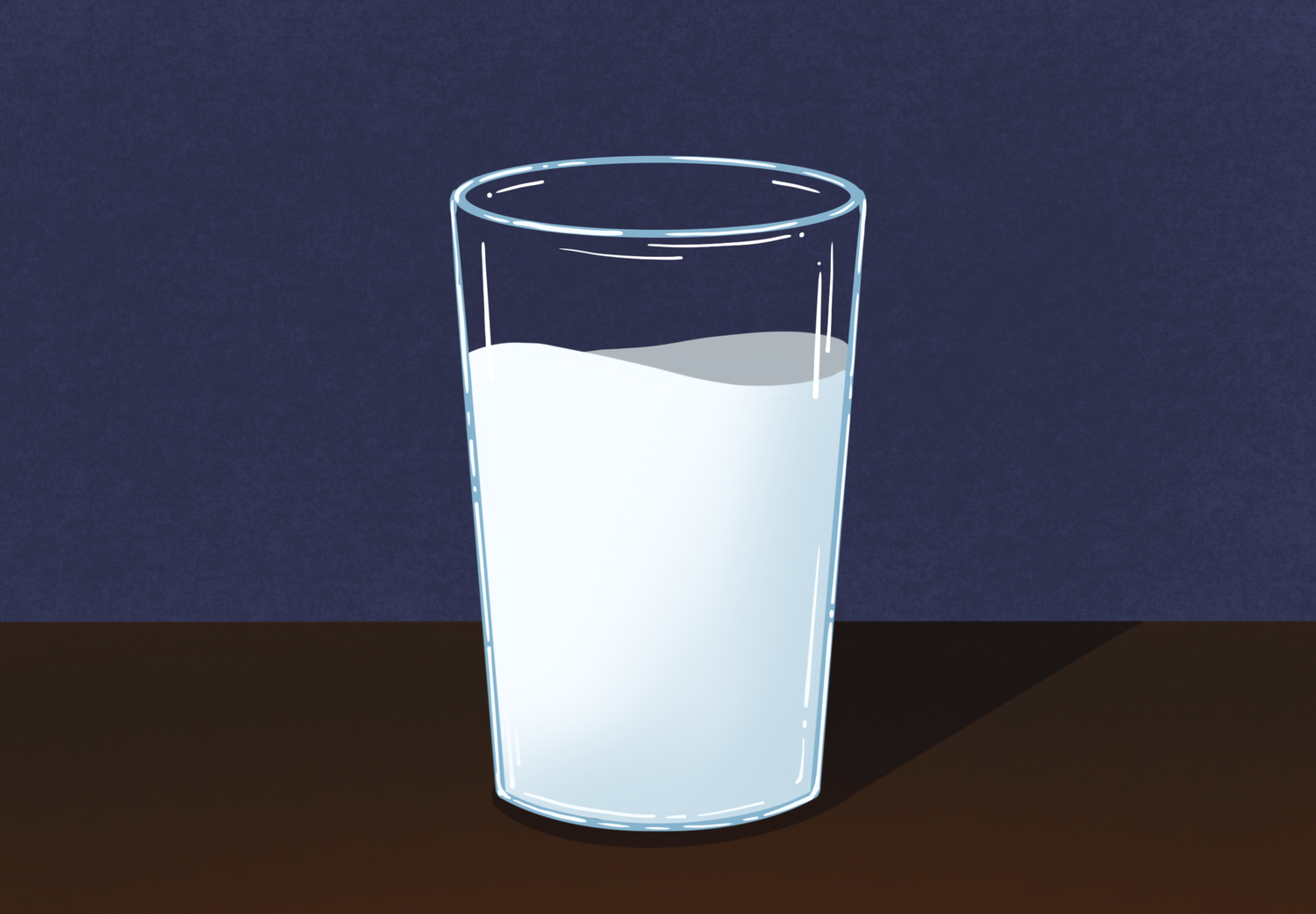
From gold toilets and red hats to Versailles-adjacent ballrooms, MAGA is recognizable as much through its imagery as through its politics. And for MAHA, one symbol rises above all others: whole milk.
very day, thousands of Harvard College students line up to squeeze milk into their coffees from the plastic teats of the multi-purpose, industrial machines in their dining halls. Perhaps it is this perversion of the mother’s divine liquid that Robert F. Kennedy Jr. ’76, President Donald J. Trump’s appointed Secretary of Health and Human Services, and the rest of the “Make America Healthy Again” movement are opposed to.
Under “Make America Great Again,” populism has taken root, and Trump’s appointed leaders, including RFK Jr., have become more showmen than policy-wonks. The MAGA movement, led by Trump, has found a great deal of success in co-opting various symbols to create its own, distinct aesthetic. From gold toilets and red hats to imperialist, Versailles-adjacent ballrooms, MAGA is recognizable as much through its imagery as through its politics.
And for MAHA, one symbol rises above all others: whole milk.
Milk has been the subject of metaphor for an egregiously long time. Like Eve’s apple and the snake, milk carries overt connotations. It is pure, it is innocent, it is submissive. The most obvious explanation for this is that babies — the token blank slates and purity connoisseurs — drink milk from their mother’s breasts. It denotes an inherent femininity. It’s the nectar of life.
The fatty liquid also has a rich connection to farmland wholesomeness. The peaceful country life. Young mothers waking up with the sun and milking the cows before breakfast. Children rolling down lazy, sloping hills. Picking wildflowers in the meadows. Sheep grazing on endless fields. Living on the fat of the land. The pastoral ideal.
But, at least in RFK Jr.’s retelling, soon the darkness comes.
Pasteurization: 1864. Louis Pasteur invents a technique to kill harmful bacteria in beverages. It is later introduced to milk. This, arguably, sparks the make milk raw again movement that would bleed into 21st century American culture and politics. RFK Jr. himself has included raw milk on a list of foods and drugs that he felt federal officials had unreasonably prevented from entering the market.
But let’s not get ahead of ourselves.
In the late 20th century, popular media and film seemed desperate to turn milk on its head — that is, to make milk cool.
The 1990s saw American milk consumption decline. This was bad news for Big Dairy. To combat the decline, advertisers started the famous, “Got Milk?” campaign.
The ad campaign wrangled together big name celebrities and sex symbols such as Jennifer Aniston, Stone Cold Steve Austin, and Kate Moss to pose in front of the camera with prominent milk-staches. Each ad poster featured the campaign’s slogan and a pithy answer to why the pictured celebrity drank milk. While the campaign did not succeed in raising milk consumption after the 90s, the famous “Got Milk?” slogan is still exceedingly recognizable to this day. In other words, the symbol of milk overtook the white liquid itself.
The film industry went even further in inverting milk’s symbolism. Look up “milk in film” on the internet and you will be hounded by Buzzfeed articles and culture magazines listing all the cinematic villains that drink milk.
One of the most extreme examples of milk consumption is present in Stanley Kubrick’s “A Clockwork Orange.” In the 1971 genre-bending film, Alex DeLarge (Malcolm McDowell) and his informal gang of “droogs” sip drugged milk —“milk-plus” — in the Korova Milk Bar, which supposedly induces an inclination towards violence. The film opens with a close-up shot on Alex’s asymmetrically lashed eyes. As the gang leader narrates over the scene, the camera slowly pulls out to reveal customers zonked out on milk, resting their feet and glasses on naked female mannequins with razor-sharp nipples — which are in fact milk taps — and erotically contorted bodies. Three body guards wear tight, bulge revealing onesies. Everything is sleek, white, and shiny.
There is no denying that many of Kubrick’s films, like a touch deprived teenage boy, are totally sex-crazed. But in this scene, Kubrick employs milk and its historic connotations to highlight a certain perversity. Through a manipulation of the female body, Kubrick transforms a pillar of motherhood (milk) into a symbol of domineering, masculine desire.
But where does RFK Jr. and his self-coined MAHA movement fit into the cultural history of milk? How does he utilize that most notorious symbol?
RFK Jr., in fact, mobilizes nearly every role milk has occupied to seduce target audiences. Firstly, the mothers.
In the 2010s, a new social media movement promoting an all-natural, wellness lifestyle emerged. This was dubbed the “crunchy” movement. The trend was spearheaded by mothers who were concerned about their children’s exposure to harmful chemicals and foods. This manifested in their promotion of screenless, outdoor play, natural childbirth, and organic foods. Within this sphere, milk – both whole and unpasteurized – took center stage.
For a number of reasons — social media’s penchant for the extreme, the increasing pressure to market a persona online, a general distrust in the government during the Covid-19 pandemic — a large portion of the crunchy demographic horseshoed from a group of left-wing hippies to what many now regard as right-wing conspiracy theorists.
This group is perhaps the strongest constituency of the MAHA movement, and RFK Jr. uses quite a few milk-tactics specifically catered to them.
He often posts animations on social media of whole milk defeating unhealthy foods and chemicals. In one, children’s voices cheer as an action figure RFK Jr. clasped in a kid’s hand knocks over a Red 40 monster.
“Watch out — Red 40 is in your kids lunch!” says the anonymous narrator. “Quick! Increase your strength with real whole milk.”
The video is clearly directed at parents of young children, specifically mothers. They play on mothers’ anxieties about their children’s wellbeing, make certain foods out to be the bad guy, and portray RFK Jr. as the human shield keeping everyone safe. One video takes inspiration from Super Mario Bros. and offers whole milk as a possible avatar to defeat a donut (though the player behind the screen ultimately chooses RFK Jr. himself).
But RFK Jr.’s milk-messaging doesn’t stop with crunchy moms.
In one Feb. 17 video he posted on X, RFK Jr. works out with musician Kid Rock. (For those confused, this video is not AI generated.) Throughout the video, the camera cuts to the pair’s other man-date activities, including a moment where they hold an American flag and one where they enjoy what is implied to be a MAHA approved meal. Midway through the video, both RFK Jr. and Kid Rock take off their shirts and do pushups together in a sauna.
The video ends with the hyper-masculine duo sipping glasses of whole milk together in a hot tub.
While the mise-en-scene of this work of art — Kid Rock’s wood cabin, explosive transitions, and surreal super-impositions of eagles and fighter-jets — is not comparable to the sleek perfectionism of Kubrick’s “A Clockwork Orange,” it has the similar effect of making milk a totem of masculinity. Like the film, there is an element of masculine sexuality mixed into the overladen propaganda post.
This fits well within the confines of another face of wellness: gym bros. A more recent development in the primordial soup that is social media brought macho men into the spotlight of the pre-industrial living trend. This movement places a heavy emphasis on eating healthy (often raw) foods, looksmaxxing (i.e. working out and performing strange bodily rituals in order to achieve physical perfection), and embracing a pseudo-stoic (Broicist) philosophy. Whole milk, and once again raw milk, is a vital symbol.
In drinking whole milk with manly-man Kid Rock, RFK Jr. appeals directly to this population. This version of MAHA’s milk is masculine, physical, and borderline homoerotic.
Perhaps the strangest video one can find on RFK Jr.’s Instagram Reels page is an AI-generated scene of the man himself drinking milk at a lively club. He seems to reach a milk-drunk state as he closes his eyes and grooves to “Turn The Lights Off” by the DJ Kato, imitating a popular social media trend of AI-generated people dancing alone at nightclubs. In adhering to the trend, it appears that RFK Jr. is trying to reach a whole new demographic — teenagers and young adults. Just as the milk-stached celebrities of the 90s made milk cool, so too does milk-stached RFK Jr. (at least in his mind).
***
The cultural history of milk is, on the surface, not the most serious of topics. Certainly, I was attracted to it because of its propensity for humor. However, that most holy of liquids provides an excellent case study of symbolism’s role in modern American politics.
And if my Instagram Reels analysis has not yet convinced you of milk’s power, let me adopt the voice of the pretentious Harvardian humanities concentrator for a second and argue that this kind of analysis will become increasingly paramount as aesthetics and populist, demagogic rhetoric replaces clear policy in the MAHA/MAGA regime.
In this world, milk’s innocence trumps milk’s health benefits, milk’s eroticism trumps milk’s production, and milk’s manipulability trumps milk’s consumption.
Conclusion: milk matters.
— Magazine writer Astrid S. H. Aggour can be reached at [email protected].