
Fifteen Questions: Kristi Jobson on Law School, ‘Legally Blonde,’ and Her Time as an FM Writer
The Harvard Law School admissions officer sat down with Fifteen Minutes to discuss her former life with the magazine — and her path to teaching and law school.
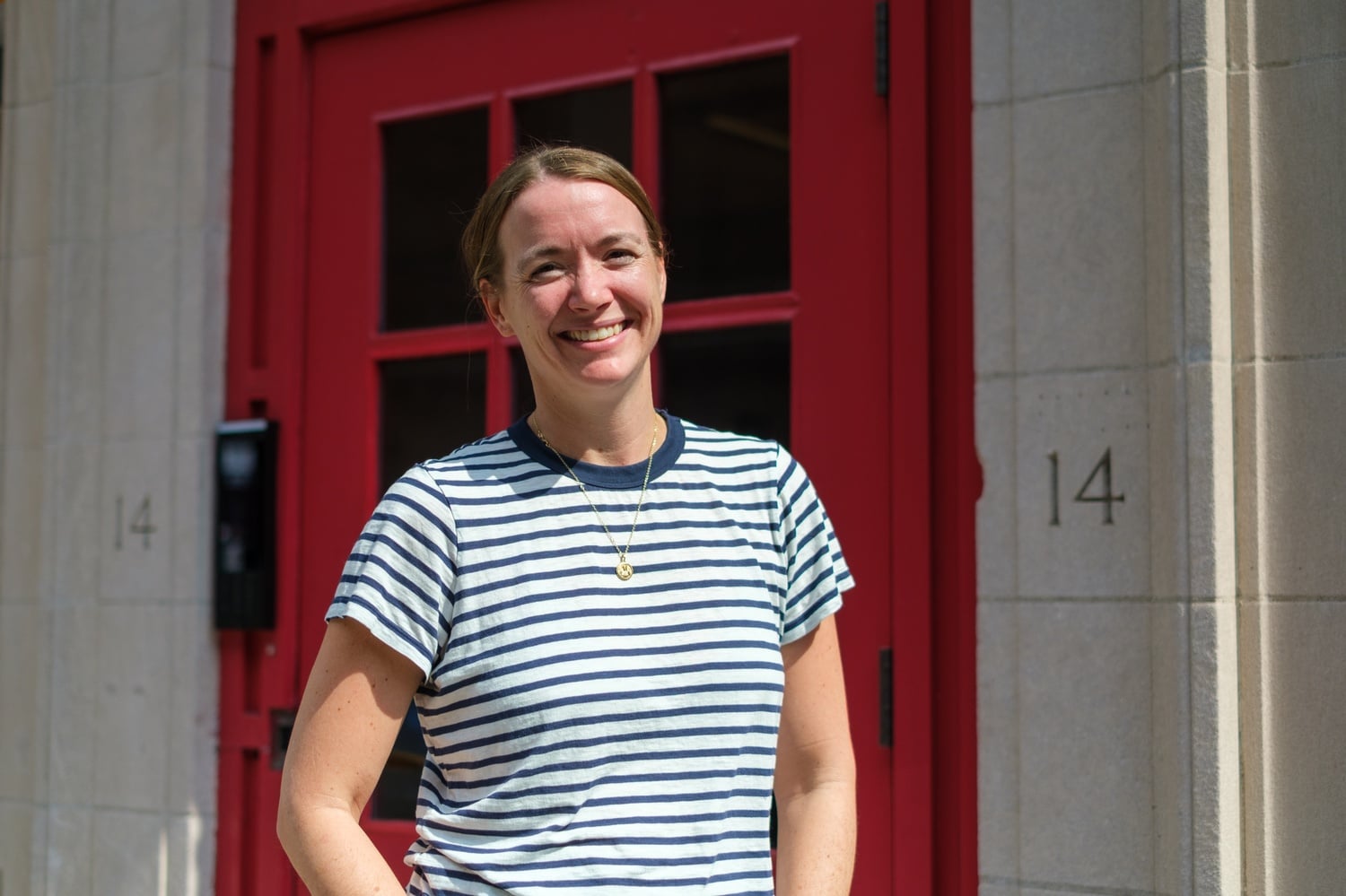
Kristi L. Jobson ’06 is the assistant dean for admissions and chief admissions officer at Harvard Law School. This interview has been edited for length and clarity.
FM: To begin, I know you came to this interview straight from the airport. Can you tell me what you were up to in Chicago?
KLJ: Sure. So last night I spoke in front of about 50 prospective students in the Chicago area. We were hosted by a law firm. I was actually connected to the law firm through a friend who used to work there, who’s a fellow Crimson alum.
FM: You spent your first years out of college teaching in New York City. I’m curious, what called you to teaching?
KLJ: My mother was a sixth grade math teacher for many, many years, and so I grew up watching her grading papers at the kitchen table, and also seeing firsthand the impact that a teacher can have on students. While I was in college, I spent a lot of time working with kids through CityStep and PBHA, which suggested to me that I might really like working with students in the future. So that’s what brought me to teaching, and I was a Teach for America Corps member in New York City for two years.
FM: For some it may not come naturally that someone interested in teaching would pivot to law necessarily. So, what is the relationship between these two fields, as you see it?
KLJ: I actually see a lot of symbiosis between teaching and being a lawyer. You are working with somebody — or groups of people — to help them understand concepts that are sometimes complex or challenging, and also listening carefully to individuals that you’re serving to think about how you can help them work towards their goals. We have a ton of former teachers — some of them are Teach for America Corps members like me, some have been teaching decades outside of such programs. We have a lot of former teachers come through HLS as students, and I think they find that the skills they developed in teaching actually serve them really, really well as law students and legal professionals.
FM: These days there seems to be a number of new and pressing challenges for law. You can think about rapid changes in the nation’s courts, or thoughts about AI threatening entry-level legal firm positions. In this day and age, why should someone go to law school?
KLJ: Not everybody should go to law school. I — and, perhaps this is an effort against interest — actually spend a lot of time talking to people who are considering law school, and I hope asking questions encourages them to really think carefully about whether this is the right move for them. It’s a huge investment in time and a huge investment of resources.
It’s not for everybody, but I do think for those who are still looking to tackle really complex, interesting problems, a legal degree is one of many, many ways that somebody could do so.
FM: May I ask why you decided to go to law school?
KLJ: In my years teaching, I became very interested in the concept of systemic change.
It’s something we talked about in Social Studies coursework, and then something that I thought a lot about and talked a lot about while I was teaching.
One thing I loved about teaching was being in a more (what a lawyer might call) client-facing setting, where you’re working individually with somebody — you are trying to understand what makes them tick, what their goals are, what they need from you, and helping somebody solve problems. That’s kind of a natural posture for me, and something I really liked in the teaching setting, and so I thought I might like it in a legal setting.
FM: While at HLS, you joined the HLS Parody Musical. Tell me what being part of the parody troupe consists of, or what kind of commitment is it?
KLJ: Every spring, the students at Harvard Law School put on a full scale musical extravaganza. The plot of the musical always draws on a TV show or story or movie that’s kind of in popular culture at the moment.
When I say full scale, I mean it’s completely conceptualized by students — it’s written by students all the way through. They do utilize pop music through the decades, but they change all the lyrics to be about Harvard Law School.
It’s a huge team effort, and that was actually what drew me to it when I was a 1L. Some friends I knew had suggested it would be a lot of fun: I loved dancing, I loved performing, so that was all great. But the big draw for me was the opportunity to be part of a big team like that and put something together that would allow the community to take a breath, laugh at itself.
I’ve gone every single year since I started in summer 2018, and I have been a cameo every year.
FM: What, for you, makes a good joke?
KLJ: Oh, what a great question! I think the best jokes are the ones where a community really recognizes itself in the humor — even when it makes you cringe a little bit, and you’re like, “what?” Sometimes there’s jokes about me, and I’ll listen to them and be like, “Yep, guilty. That is spot on.” So, for example, last year the theme of the parody was the Hunger Games — or, it was the “Hunger Aims” — and the student who played me, the Dean Jobson character, was Effie from the Hunger Games.
My line for the cameo when I jumped out was, “I’m not only the admissions dean, but your friend” — and that’s kind of my vibe.
FM: You’re a former associate magazine editor and contributor to FM. Tell me, what is your favorite piece you’ve written and why?
KLJ: By far my favorite piece I wrote was a profile of the Harvard dance team. I’m proud of the piece itself. I hope it’s a really wonderful testament to how hard the women of the Crimson Dance Team worked and what their experience was like, but it’s my personal favorite because of the experience that I had reporting on it. I had to convince the co-captains of the Crimson Dance Team that I was serious about doing a piece that wasn’t going to make fun of them or make light of them — that it was going to be an in-depth look at what it is to be a competitive dancer at a place like Harvard College. So they let me come to practices, I got to travel with them down to Florida for their championships, I got to interview a whole number of them.
It’s just a piece I’m proud of because I think it really showcased how much work and effort went into something that so much of the campus either didn’t think about at all or just thought about as, “Oh, aren’t they down on the basketball court during halftime of the basketball games.”
FM: Before then, had you been a dancer or had exposure to dance in any way?
KLJ: Yes, I love dancing. I am probably, even now, the first one out there when the DJ gets things started at the wedding. I had some dance background, but I was never at the level of Crimson Dance Team. So that was fun for me too, on a more personal note, to see what it was like to dance at that level.
FM: And do you still get to dance at all these days?
KLJ: In my kitchen, much to the dismay of my two children.
FM: I’m glad that’s the case, though.
In 2004, you wrote that the dumb blonde stereotype crept into The Crimson when an editor told you that you “look silly, young, and innocent.” But today, you control the judgments that do decide who makes it into the hallowed halls of Harvard Law School. How does one make judgments in a committee room?
KLJ: I think the most important part of doing something like admissions — but I’m sure the same is true for hiring team members or really any other type of selection process — is to do a lot of work in the front end to think about your criteria and what you’re looking for. Even to kind of write it down, whether it’s a rubric or a set of standards or a set of principles.
I’m a big believer in rubrics — I think it’s the teaching experience. That’s been a big project of mine over my years is developing a lot of good rubrics for: how do we assess that an interview was strong. What made it strong? How would one even decide it was strong? You need good criteria ahead of time, rather than simply the subjective viewpoint of the person who was there doing the interview.
FM: Have tropes — like we were discussing the dumb blonde — changed the way you think about judging other people or how people judge each other?
KLJ: I co-wrote with another Crimson editor on acapella groups on campus. It was a bit more of a news-slash-arts analysis. And the query was, are there too many acapella groups on campus, such that there’s going to be diffusion of audiences?
The applicant pool sometimes finds that piece, and they worry that it means that I don’t like acapella singers. But actually, I really do like acapella quite a bit, and I really respect applicants who sing acapella. It was just an arts analysis profiling a particular community at a particular point in time.
I think I feel more than ever that tropes and shorthands aren’t particularly useful if you’re somebody who’s interested in really trying to get to know individual people.
FM: In response to our conversation about blonde and tropes and law school and all of these things, it goes without saying that I have to ask, how do you feel about “Legally Blonde?”
KLJ: I love “Legally Blonde.” There’s a number of different movies that I can always watch on an airplane, and Legally Blonde is right up there. I think I watched it on an airplane last month. And stay tuned because the Harvard Law Communications Department is putting out a piece for the 25th anniversary of Legally Blonde on whether Elle Woods would have actually gotten into Harvard Law School in 2001.
FM: Whoa!
KLJ: Yes, I crunched the data. So I offer a definitive answer. It’ll be on YouTube soon.
FM: How does it feel to have a piece of yours resurface in front of you, in the admissions room or elsewhere? What is that sensation like?
KLJ: I think a particularly interesting one if you were someone on The Crimson in the late ’90s, early 2000s, where it did at the time feel like your Harvard world and your home world — or any other world — was pretty separate. The Crimson came out in print, and I think there was really an expectation that if you were writing something, it would be more internal, and then it would end up physically in the recycling bin. And yes, someone could go on a mimeograph in the library and dig it up, but it’s not quite as searchable or attributable.
People write and say things when they’re 19 years old, when their brains aren’t as developed and they haven’t really thought through fully who they are and how they want to express themselves. I do try to give myself and others a lot of good grace, especially with the passage of time. There’s limitations to that. I would put some guardrails and limitations on that if I was coming up with a rubric or a standard for it. But it is really true that the things you write when you are an undergraduate — and for almost every undergraduate, still really relatively young and really still figuring out who you are and how you want to express yourself — could have a lot of ramifications down the road.
FM: You graduated from Harvard College in 2006, Harvard Law in 2012. How is Harvard a different place than it was one or two decades ago?
KLJ: When I was on the flight this morning, if you can believe it, I actually was scrolling through different movies and I revisited “The Social Network,” which depicts Harvard in in fall of 2003, going winter-spring of 2004 — and I was there at the time and knew a whole bunch of those Facebook folks who are depicted in there.
It’s such an interesting moment because we had about a year and a half where you could be so much more anonymous than you were in my second half of college, due in large part to what was, then, the Facebook.
My sense of what college students experience today is maybe more of an innate understanding that you’re being monitored and observed, and maybe even recorded at all different points of time. Sometimes I’m nostalgic for my first year and a half of college, where you could kind of go out and do your thing. At the time, only a third of people I knew even had a cell phone. Most people didn’t even really take them out with them, so you could go out into the Square and see where the night took you.
—Associate magazine editor Christopher Schwarting can be reached at [email protected].