Guide to the Harvard Libraries: The Botany Libraries
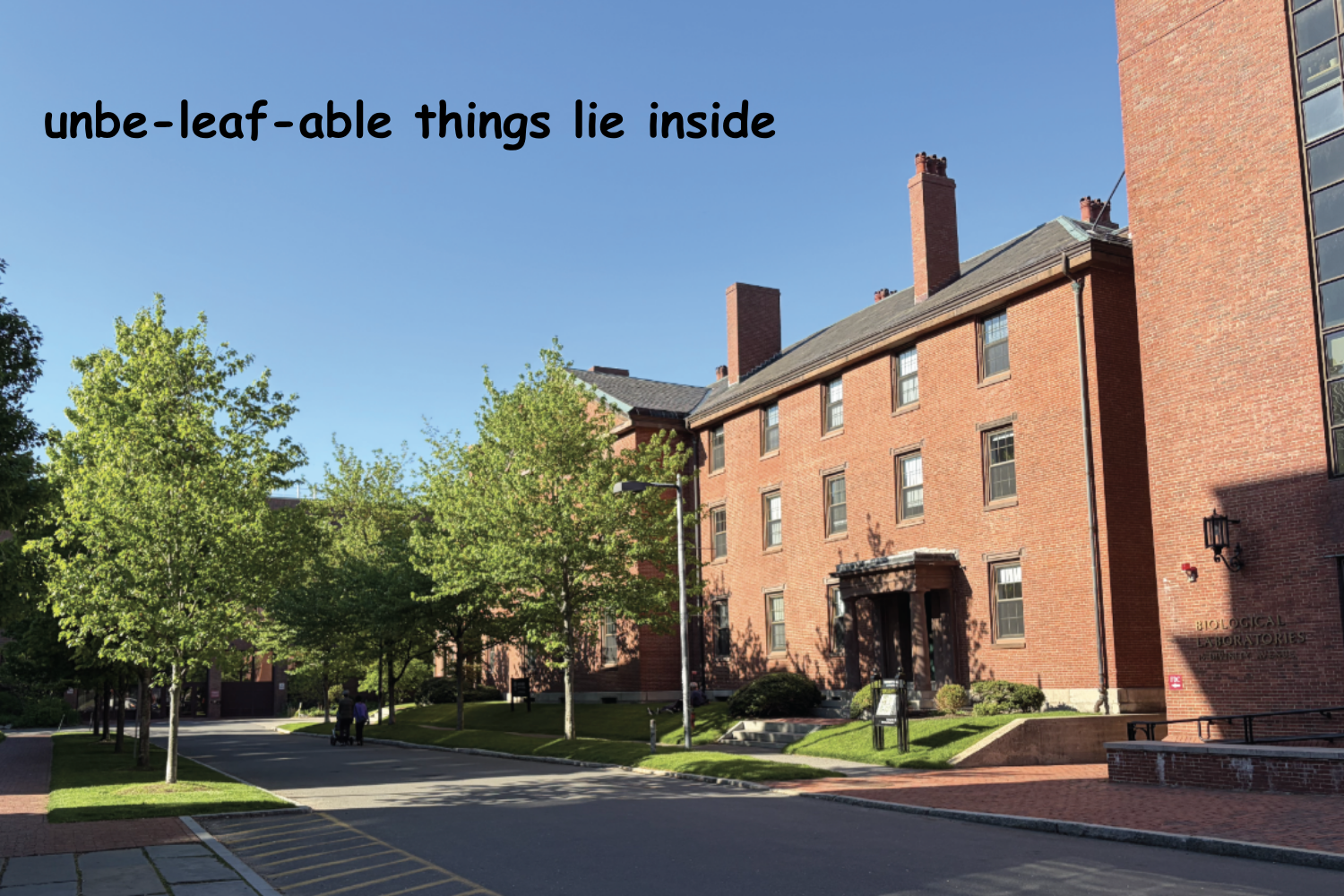
Hey you! Yes, I’m talking to you. Do you feel like the past semesters have just flown by before you could go Harvard-maxing? Are you a freshman clueless about the Harvard buildings other than the Science Center Zimmer Hall? Worry not, as Flyby has you covered again for special experiences on campus. For those who have only been to Cabot, Lamont, and Widener — which we know is most of you, it’s time to embark on a new adventure. Grab your dusty library passport: it’s time to fill those pages up with stamps. We are even telling you where to start: the Botany Libraries.
Trust Flyby — as one always should — and just go visit this place. Our jaws dropped as we said “OHHHHH” way too many times to count while looking at the library’s fascinating books and materials. Be prepared, as we had such a wonderful library tour with Reference, Collections, and Instruction Librarian Daniel Becker and Rebecca Parmer, the director of the Botany Libraries.
We have a Botany Library?
Yes, in fact, we have had the Botany Libraries at the current location since 1955, when the Harvard University Herbarium was built to centralize botanical specimens and library collections in a single space. The University Herbarium building is situated at the end of Divinity Avenue, between the Museum of Natural History. Walk into the building and go through the door that’s left of what looks like a seminar room. Inside, you will find a way up into the library that magically appears as you get closer — just like Platform 9 ¾.
(Chamber of) Secret Study Spot
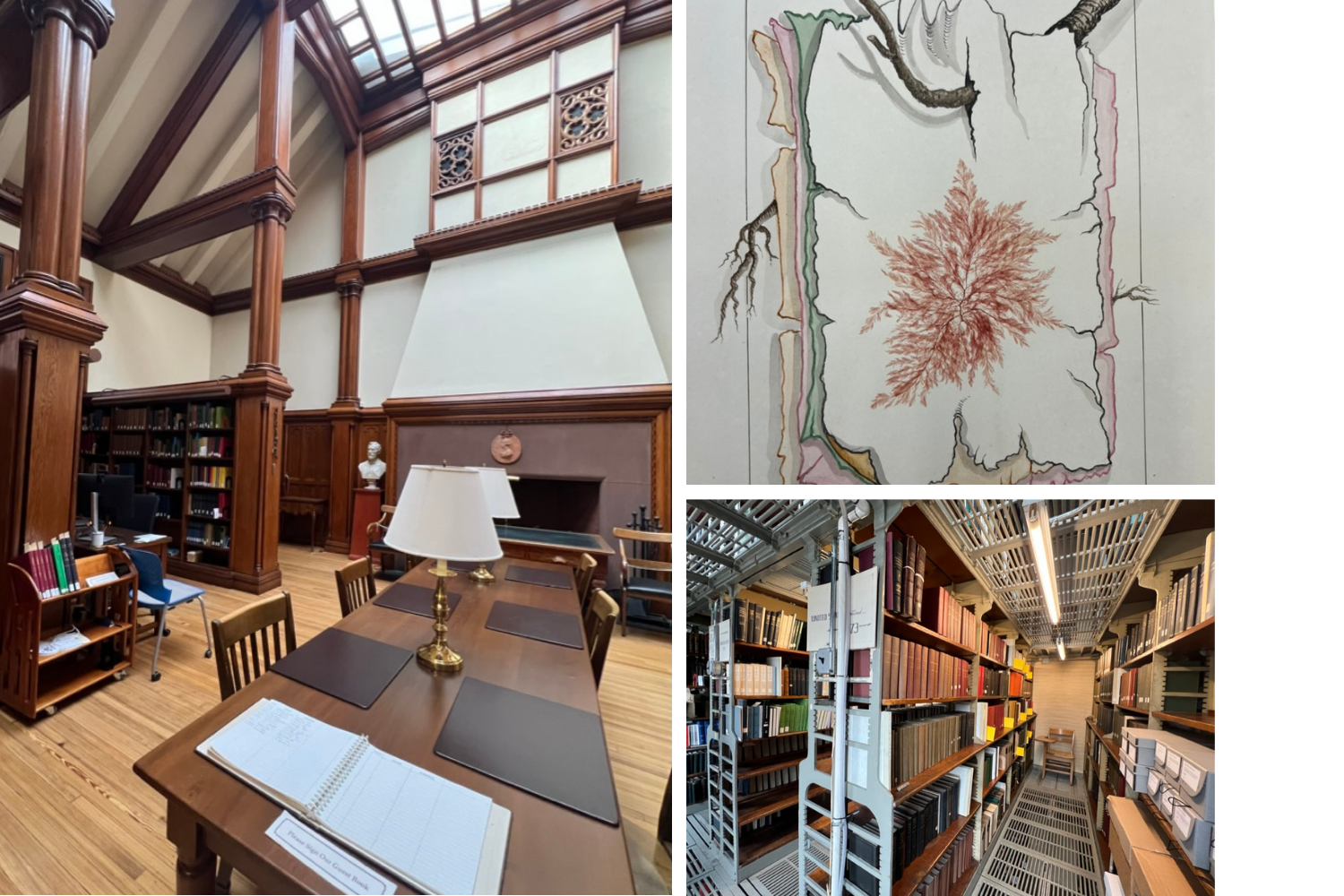
Let’s face it. Who wants to waste precious time trying to find an empty seat at a library? So we begin by revealing a cryptic study spot. Instead of a scary Basilisk, you will simply find its beauty. This is the Farlow reading room — located in the eastern part of the building. FYI, there was a guest book people could sign, and all we can say is that the entries were rather sparse. Isn’t that such a green flag for a secret study spot?
Parmer told us that the Farlow reading room was built after botanist William G. Farlow passed away in 1919. He left his collection to Harvard on the condition that the university provide a fireproof space to store his books. During the tour, we were able to take a peek at Farlow’s collection behind the reading room. Becker showed us one of his favorite books in the library, a Swedish book about using lichen dyes (Ask your local ESPP or Integrative Biology concentrator how cool lichen dyes are).
You can’t tie-dye your t-shirts with the lichens here, but you are more than welcome to use the Farlow reading room between 9:30 a.m. - 12:30 p.m. every Tuesday. “You don’t have to have a purpose for being here. You can just come and study,” said Parmer, welcoming anyone in the university to use the space when it is open. Why sign yourself up for murky gray dungeons, a.k.a the stacks of Widener, when you can enjoy the beauty of this tucked-away space?
Only at the Botany Libraries
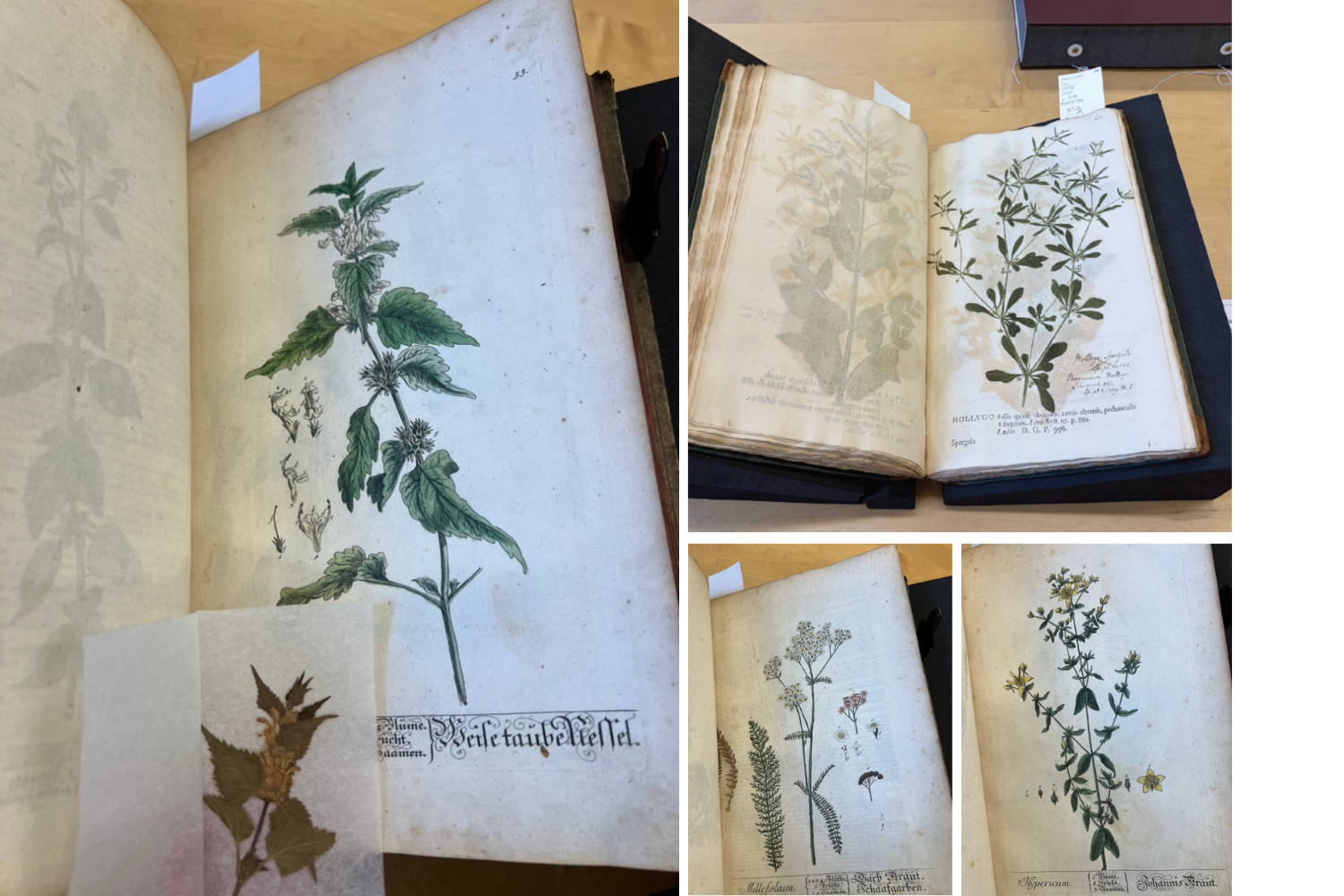
Books in the Botany Libraries are considered part of “a special collection or a closed collection”, according to Parmer. Fortunately, despite how the name sounds literally special, there is no gatekeeping (phew). Anyone can use the collection; just look up a book you want on HOLLIS and reach out to the Botany Libraries to set up a visit. You can literally flip the pages of books as old as those from the 16th, 17th, and 18th centuries this way. #harvardmaxing
Becker also introduced us to a category of books known as Floras. These are “records of all the plant life of a given location”, said Becker. They can cover a whole country with some hundred volumes or even be as specific as just the city of Boston! You can find many botanical illustrations that are on par with actual photos, but if you are going for something really authentic, the Botany Libraries also have books known as nature prints. These books contain prints of an actual plant that was inked and pressed, according to Becker. We were able to see one of these nature prints called Botanica in Originali by Johann H. Kniphof, published in 1758. TLDR: the book was super cool, and you should visit the library to just read and admire it! Dig through these books, and who knows? Someone from a long, long time ago maybe already found a crying mandrake, but hopefully while wearing earmuffs…
You can also see the OG marginalia on these books. Before iPads and PDFs, people left detailed annotations in the margins, and many even left plant samples that they carefully collected. It is so cool to see the plant specimens next to their drawings — we were incredibly impressed!
Ride a Time Machine
Nonetheless, from the painstaking illustrations of plants to someone’s pencil marks on these books, the library is waiting for you to visit and lift the veil on the wonders from the past. All you need is some sparkles of curiosity. For any History of Science concentrators, this is your calling: you might find your and your friend’s future theses here. On your way out, also make sure to check out the physical card catalog people used before the era of HOLLIS.
Really, just trust us and visit this place. The books are too amazing to think they sit right next to my section’s classroom. Oh, last thing: don’t forget to get your Harvard Library Passport stamped! After all, that’s how this wonderful journey began ;)