FM Staff
Latest Articles
Volume XXXIV, Glossy VI
Fifteen Minutes Magazine's December 2023 Print Glossy
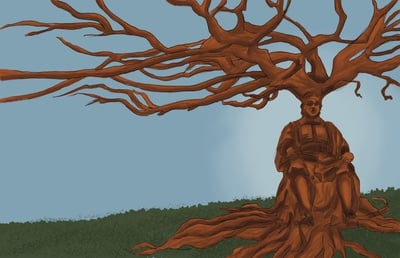
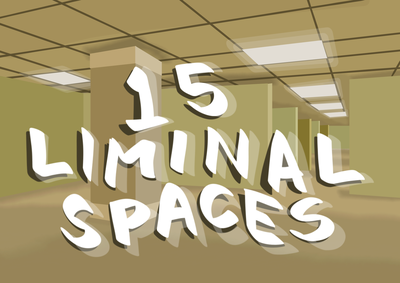
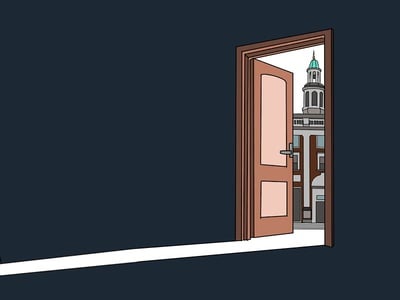
15 Liminal Spaces
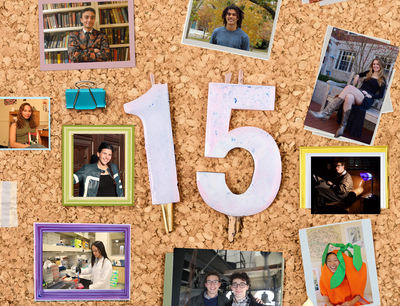
It is the time of year when we find ourselves floating within in-betweens. To capture this quality/state/feeling, FM set out to find 15 of the most liminal spaces on campus.
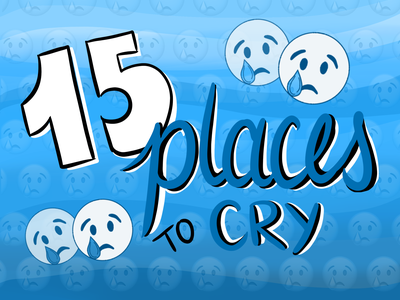
Fifteen Minutes’ Top 15 Places to Make Out on Campus
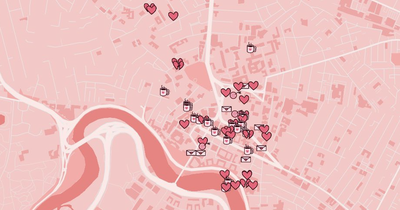
Here’s our intel on the top 15 places to make out on campus, just for you. Thank us later.
Latest Media
Volume XXXVII, Issue XIII
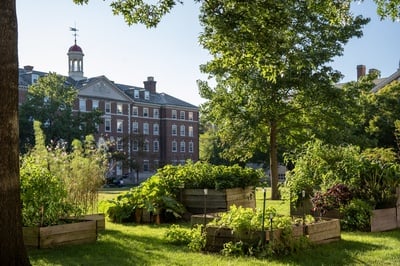
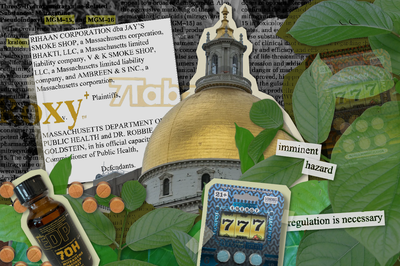
Dear Reader, One of our favorite parts of working for a student publication is the idealism of young journalists. It is observable in the standards we teach those joining the organization, in the conversations we have between writers and editors, and especially, in the dreams we carry for the future of our work. This week marked the beginning of a flurry of activity inside The Crimson: the Turkey Shoot. Each year, we ask reporters interested in leadership positions to take part in discussions and written statements where they imagine what the organization can become. It’s a time for outgoing leaders to share wisdom and insights about the job, sure, but more centrally, it’s a time for incoming leaders to refine their vision for how they will lead the publication through the coming year. The idealism we all inherited when we fell in love with this work, idealism we sometimes lose sight of but never wholly abandon, surfaces again in these visions and discussions. Witnessing the preparations for the Turkey Shoot has already been exciting. “Shooters” and outgoing leaders are all beginning to surface above the sludge of daily reporting and editing to take a bird’s eye view of this building we call home. What matters most about the positions we are preparing to replace? What purpose does the publication really serve — both to its readers and its members? Have we fulfilled that purpose in the past year? And if not, how can the newspaper do better for its readers, and for the incredibly hardworking people who fill its pages? Of course, even as Turkey Shoot gets underway, the daily grind continues. Turkey Shoot corresponds with an exciting time for the content of The Crimson and its magazine: welcoming compers to the Crimson. In their first month at The Crimson, they’ve learned many foundational skills of reporting, like how to track down sources, record interviews, and ask the right questions to the right people. More importantly, they’ve learned much of the moral foundation of journalism: unbiased fairness to all parties, a care for the human experience, and above all, a dogged pursuit of the truth. This week, compers began sourcing and drafting stories, putting those standards into practice. You’ll get to read a bunch of their work soon! We’re proud to welcome FM’s newest writers to our publication, and to the impossible — but ever necessary — pursuit of its ideals. In this issue: Megha Khemka writes a beautiful cover story about a little garden and the big, big hurdles to community environmentalism. Wyatt J. Meyer calls his brother; Micaela S. Arenas goes dancing; Jona P. Liu catches the shuttle; Megan L. Blonigen gets rained on; Hitishaa Goyal and Christine Yoo consider marriage and kids, respectively; Aneline C.M. Gulie works out; and Raphael Z. Niu does his laundry. Keep the old sheet flying. KJK + AJBS
Volume XXXVII, Issue XII
Dear Magazine, This weekend, we threw the magazine its 50th birthday party!! We welcomed alums to a new building, held a poignant focus group, hosted a star-studded panel, socialized at an evening mixer, woke up to a writing workshop with THE Matteo Wong and Marella Gayla, and much much more. More food, more conversations, more bonding, and more excitement for what the next 50 years may hold. One thing felt in abundance this weekend was the idea that magazines are, at their core, about humans, and about collaboration. In a somewhat bleak media landscape, hope remains in these artifacts as a place for creative people to come together and create something both for the world and themselves, and to collect the contributions of many — some named in bylines and some less pronounced — and to piece them together into a cohesive whole, so that each person looks at the finished work and sees their fingerprints on the canvas. This thesis about the core of what it may mean to be on a magazine is also what inspired our own motto this year: Every Issue is Everyone’s Issue. And this issue is no exception. Jack B. Reardon and Caroline G. Hennigan hit the ground running to report on one of our biggest stories yet, published with the incredible work of Olivia Zheng from Design. Betty Nguyen jumped in to take photos in the final hours for Anne Sun’s profile. Siena G. Devine Guzmán from News joined Fifteen Minutes for a night to help confirm quote translations for the interviews Victoria D. Rengel did in Portuguese for her piece on Brazilian voters in Cambridge. Wyatt J. Meyer edited his first piece as a recently onboarded exec, working closely with writers Maria Borrell Ferrero and Khadijah A. Olufayo on their look into a semi-socialist puppet library project that was accompanied by truly stunning photography from Ellen P. Cassidy. Maria Borrell Ferrero then stepped up to write a second piece for this issue, conducting this week’s 15Q on mere hours of notice to make the print deadline possible. Finally, Megan L. Blonigen and Hugo C. Chiasson teamed up to create a truly magical multimedia introspection, and Anna J. Guerrini hopped over from the Editorial Board to write this week’s endpaper. Behind the scenes, each of these pieces was also edited by one of our execs, proofed by another, read carefully by both chairs and the managing editor, and collaborated on with the design and photography boards — who do us more last-minute favors than we could ever sufficiently thank them for. As you can hopefully see, every issue really is everyone’s issue. And we are so grateful to everyone — from the beginning of the mag 50 years ago to now — who has made this possible. MagLove forever more, AJBS + KJK
Volume XXXVII, Issue XI
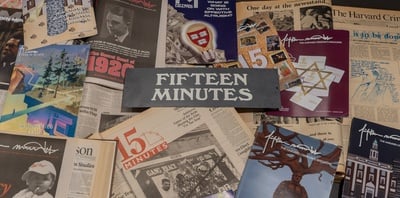
Dear Reader, Our beloved magazine is celebrating 50 continuous years of publication. So perhaps you’ll permit us some self-indulgence, both in our cover story and our Editor’s Note. Much has changed — for the magazine, and for the world it endeavors to document — since the very first issue hit the presses on September 30, 1976. As AWS argues in his sweeping cover story this week, the magazine has Ship-of-Theseus’d its way into something altogether unrecognizable from its original form. We’re a mostly digital publication now, and the permanence of the internet has prodded our work from frequently objectionable and absurd (and occasionally entirely fictional) stories to a kind of serious, slow journalism that would likely make early editors of the magazine scoff. We don’t even publish under the same title anymore; for the first 15-odd years of its life, the magazine was a weekly arts and culture supplement called What Is To Be Done? But for us chairs, now embarking on the second half of our terms at the head of this publication, a trip through The Harvard Crimson’s magazine archives primarily illuminates how much has NOT changed. For five decades, magazine writers have been writing the stories that our counterparts in The Crimson’s newspaper can’t or won’t publish. For five decades, magazine writers have been witty and cynical in their pursuit of all that is unknown, forgotten, and too complex to be easily captured in a headline. For five decades, magazine writers have been interviewing local strangers (as VIO does this week), profiling important characters (CS and WJM), documenting changes at Harvard (SLSY) and in Cambridge (JPL and NSK), and writing about their inner lives (CY, AS, JPL, MK, MLB, SG, WJM). And, for five decades, magazine chairs have taken various stabs at romanticizing the difficult conversations, editing sessions, and (extremely) late nights required to keep our weekly publication afloat. Many an Editor’s Note has included some touching reference to walking out of 14 Plympton, blinking bleary — and as often as not, teary — eyes in the early-morning light after finally publishing a particularly arduous issue. In 1991, in the final issue of the What Is To Be Done? before the name was changed to Fifteen Minutes, the outgoing leaders of the mag — Rebecca A. Jeschke ’92 and her two partners-in-publication, Stephen J. Newman ’92 and Liza M. Velazquez ’92, wrote about feeling some sense of responsibility to continue the tradition of magazine chairs trying to “prove that they have thought about, and maybe understand, this thing that has taken up so much of their undergraduate life,” as Jeschke put it. “To come up with a reason and a reward for it all,” as Velazquez added. But it’s unclear whether any of them found satisfactory answers. “When people ask me what I did at college, I will say ‘The Crimson,’ and know that through all my ambivalence, it was all I really wanted to do here, and perhaps the only thing I did well,” Jeschke reflected. After a summer away, the two of us are returning still slightly traumatized from the spring. We stormed through the red door of 14P at the end of August with some resolve to make this job a little…less…everything. Aurora swore off coffee and all-nighters, and Kate swore to stop proofreading pieces in the middle of class. (One issue into the semester, neither one of us has kept our oaths.) In Jeschke’s note, she added: “Yes, we spend a lot of time at The Crimson. Yes, our grades suck. Yes, we know not very many people read the magazine. Yes, despite all this, we spend our spare time here, hanging out until it is time to start the next mag.” We would argue that ‘anything worth doing is worth doing well,’ but it’s not even that we’re positive the work is worth doing. We can’t posit that there’s some inherent value that the publication has, or that it provides some irreplaceable public good to the students or the city. More than once, we’ve summed up all the trouble it takes to get even just a few stories published, looked at each other, and wondered whether everyone would be better off without it. What a relief it would be to unburden ourselves and every future Harvardian that might otherwise be lured in by the glossy gleam of FM! But this line of reasoning never really becomes appealing, because despite ourselves, we care too much. Every grinning exec that has helped a younger writer find their voice for the first time, every excited text we receive from an eager reporter tracking down a new lede, every phone call from a source and byline from a starry-eyed comper — the magazine “is just simply bigger than [all] of us and therefore,” as Velazquez wrote 35 years ago. “We had no choice.” Maybe it’s just because we are doing it, that it is worth doing well. Or, at least, as best as we possibly can. Velazquez came to a simple conclusion back in 1991: “And so we put out a magazine. A 24-page, weekly magazine.” So here’s to 50 more years of putting out a magazine. In print, online — whatever form it may take. What else are we to do? KJK + AJBS
Volume XXXVII, Issue X
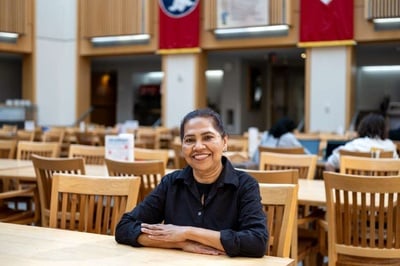
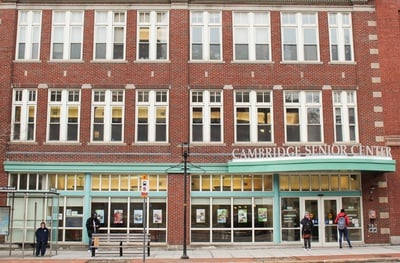
Dear reader, We bring you this final closeout of the semester in the midst of an attack by the dreaded army (read: finals) that was hiding inside the Trojan Horse (read: reading period). But fear not. In this issue, we come to you with true gifts, devoid of any nefarious surprises. In this final issue, our insightful endpaper writer JYX reminds us to appreciate the moment. Her central inquiry was provoked in large part by the perceptive Bo-Mi Choi, who pointed out to Xu’s class one fateful day — “You all worked so hard to get here, to Harvard. And now that you’re here, all you want to do is leave.” Bo-Mi Choi also happens to be the subject of one of this week’s 15Qs. Sitting down with the brilliant SG, Choi talks institutional dysfunction, learning to be zen, moving on from Harvard, and how she contemplates ethical decisions — including her own choice to leave. Also facing institutional dysfunction and a difficult Harvard-related decision are the undergraduate course assistants whose participation on the picket line (or lack thereof) is the subject of UBP and TV’s strike report. Maybe it is just that time of the year (or era of the world) but contemplative reflections fill the rest of this issue’s pages. AS and JES explore what it means to grow old in a city defined by youth. Through compassionate and descriptive reporting, these writers consider what it takes to thrive at every stage of life. A mile down Mass. Ave., CJ meets a few of these senior citizens, manning the final days of a stationary shop left behind by a recently deceased friend. Elsewhere in Cambridge, SBC skillfully profiles Jerold Kayden, a man who — from Juilliard to Harvard, Michael Jackson roadie to housing advocate — has lived many lives. Then in AF’s introspection, she places us inside the feeling of having many lives by tracing the artifacts of home that stay the same, even as she grows up. AWS takes on life, too, asking whether the flesh-and-blood author still matters in the age of acceptable AI prose. TFB and MMN also consider how AI is affecting human experience through a case study of a data center in Lowell, Massachusetts. But amid a particularly contemplative — and in some cases, even morose — set of stories, joy still surfaces. In our first audio 15Q, CSB’s conversation with Grace Mariappan brings her to “happy tears.” Meanwhile, CY shares a first-person report on the unexpected warmth of Harvard’s American Sign Language program, and CEB and VIO look into a program that is known for its lack of warmth — and the life-changing experience it provides. In the so-called humor magazine’s two appearances in this issue, WJM takes us on a zig zagging journey to find Kit Ketlle, and HG (in her magazine debut) makes us giggle with our first and only rhyming Venn diagram of the semester: “The Lampoon v. Mission to the Moon.” HGL similarly embraces the Sorrento-Square-spirit — that everything might not be *that* serious — in the final installment of his “Gastrocosm” column about the universe of processed food. And tackling the LITERAL universe this week, MBF and SL talked with composer David R. Ibbett and the astrophysicists he works closely with in his attempts to translate astronomical bodies like black holes into sound. Meanwhile, VIO and CEB bring us back down to earth and into our own bodies, exploring the universes created by the somewhat bizarre and undeniably intense Sensory Ethnography Lab. Finally, WJM leaves us with much to reflect on. If we are to extend JYX’s metaphor – that we are fish looking for the beautiful, blue, ocean, not realizing we are already in it – then WJM importantly reminds us that we also know how to swim. Good luck on your finals. You’ve all got this. And go pick up an AI glossy. AJBS + KJK
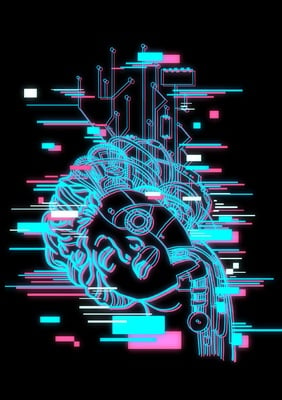
The AI Issue
“What hath God wrought?” asked Samuel F.B. Morse in the first successful telegraph message sent on May 24, 1844. Nearly two hundred years later, the world seems to be faced with a similar query. What hath God (or perhaps, Sam Altman) wrought this time? Mainstream media has spent the past year shoving two topics down our throats: Donald J. Trump and artificial intelligence. Last semester, our predecessors took on the first, rallying the troops to put together a brilliant Trump issue that tackled the ways the 47th President of the United States has impacted Harvard and Cambridge throughout his tenuous time in office. We’ve decided to take on the second. In doing so, we have wondered if we are simply adding to the noise of an already over-saturated news cycle. As WIRED editor Katie Drummond quips, the “worst thing about AI is that people can’t shut up about it.” Technology has inspired euphoria and despair — and most of all, RACKET — since before that first telegraph message. All the while, we humans (putting aside the catastrophic environmental impacts of our continued “progress”), have remained mostly fine. But among the pile-up of articles and think pieces, another, louder racket looms. Ads for chatbots seep into every sphere of daily life. Search engines preempt man-made results with AI overviews and no way to opt out. Professors ask us to turn to ChatGPT for math tutoring, book summaries, and essay edits. Billionaires continue to build data centers on top of small towns, whether they vote for them or not. As journalists, Harvard students, and creatives, we believe we have an obligation to investigate this phenomenon. Stories about AI are stories about our futures — futures we’re unwilling to arrive at by accident. Because likely, the worst thing about AI is not that people are talking about it, but what happens when the conversations stop. Just as Morse mistook his invention for divine intervention, we may similarly come to assume that this new technology is both natural and inevitable. But these inventions are not God, they are human. And thus, they are fallible. In this issue, writers demonstrate how AI is perceived through many different eyes: in one story, it’s the key to solving scientific problems that have stumped centuries of researchers, and in the next, it’s the coming of the antichrist. Yet every single article — the result of face-to-face interviews, pen-to-paper efforts, and arduous editing sessions — marks a commitment to thought. To sifting through the noise enough to question the world around us. They are a plea for you to do the same. AJBS + KJK