

News
Summers Will Not Finish Semester of Teaching as Harvard Investigates Epstein Ties

News
Harvard College Students Report Favoring Divestment from Israel in HUA Survey

News
‘He Should Resign’: Harvard Undergrads Take Hard Line Against Summers Over Epstein Scandal

News
Harvard To Launch New Investigation Into Epstein’s Ties to Summers, Other University Affiliates

News
Harvard Students To Vote on Divestment From Israel in Inaugural HUA Election Survey
Harvard Affiliates Praise HKS Commencement Speaker Pick Amid War in Ukraine
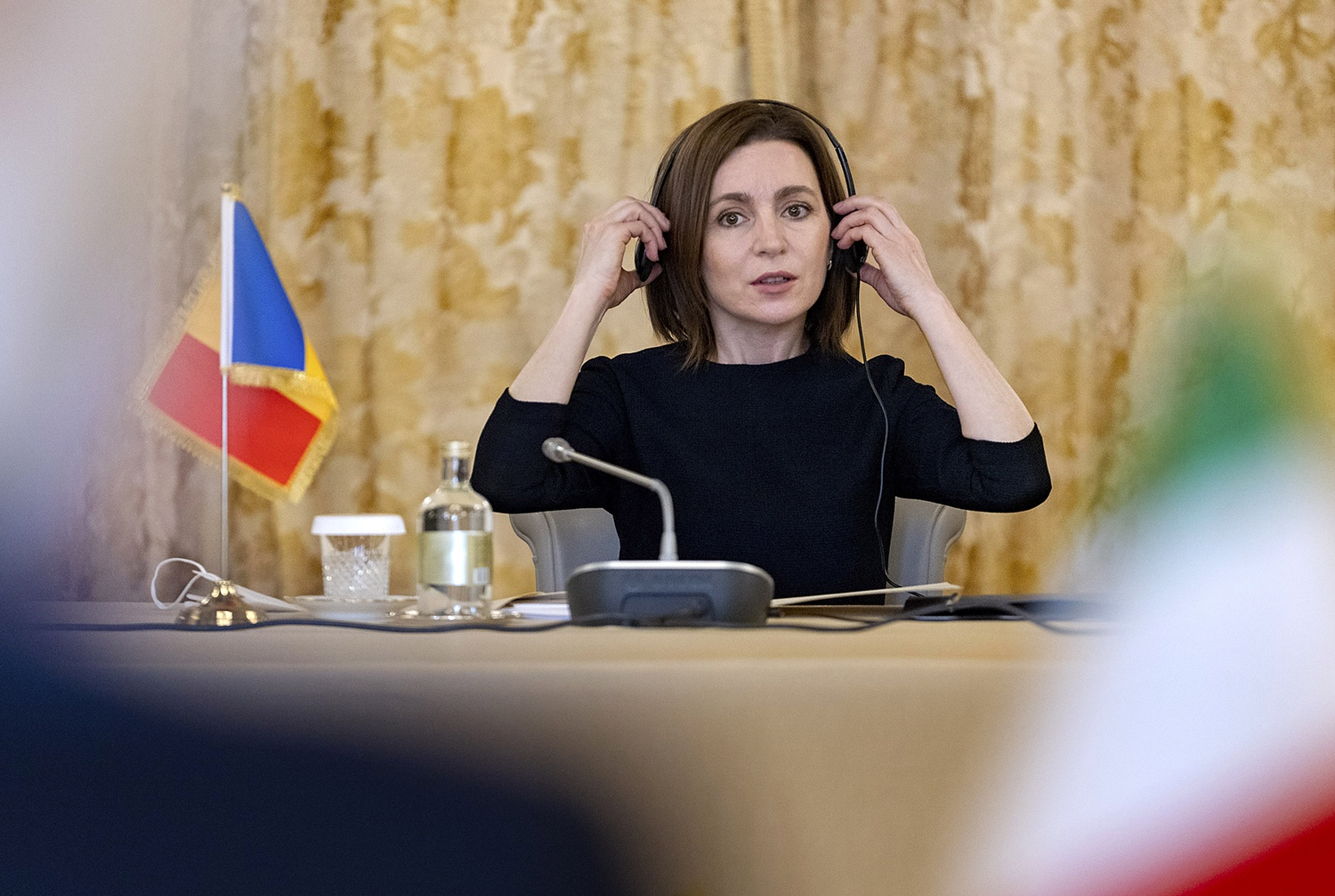
As war continues to rage in Ukraine, Harvard affiliates praised the selection of Moldovan President Maia Sandu to deliver the Harvard Kennedy School’s graduation address in May.
Moldova, a poor and small Eastern European country bordering Ukraine, has taken in over 100,000 refugees since Russia launched its invasion of Ukraine in February, despite having a population of less than 3 million. Sandu, who rode a pro-European Union and pro-democracy platform to win the presidential election in 2020, has led Moldovan efforts to provide humanitarian aid to those affected by the war.
Mariana Budjeryn, a Ukrainian research associate at the Kennedy School’s Belfer Center, pointed to U.S. President Joe Biden's promise to accept 100,000 refugees, calling it "incommensurable" for the United States and Moldova — a country one hundred times smaller — to welcome the same number of people.
“It’s an important story to tell the American people,” Ilinca Mazureac ’23, a Moldovan student. “That a country like Moldova, who's arguably one of the poorest countries in Europe, can take in so many refugees, and can find a place for them to live.”
“If Moldova can do that, it should be a lot easier for the U.S. to do that,” Mazureac added.
Ilya S. Timtchenko, a U.S. citizen of Ukrainian background and chair of the Ukrainian Caucus at HKS, said Sandu’s speech will hold “symbolic significance,” due to the leader’s long-standing solidarity with Ukraine.
HKS spokesperson James F. Smith wrote in a statement that the Kennedy School invited Sandu before the invasion of Ukraine.
“Clearly, her leadership since then makes it all the more appropriate for Kennedy School students to hear from her,” Smith wrote.
Mihaela Esanu ’23, a Moldovan student, said that both Ukraine and Moldova have struggled with “Russian aggression” since the collapse of the Soviet Union.
“One of the reasons why there was so much solidarity among Moldovans [was] because we related to Ukrainians,” Esanu said. “It was on a lot of Moldovan people’s minds that ‘Oh, it could have been us, and that it might still be us.’”
“That is not to say that Moldovans are going through what Ukrainians are now,” Esanu added. “But I think our similarities are anchored in a somewhat shared past.”
Budjeryn said she hopes Sandu’s graduation speech will remind HKS graduates of their own democratic values.
“As a Ukrainian, I hope these public policy leaders will be reinvigorated with some healthy dose of idealism about their own values,” Budjeryn said. “Or the values that their own country upholds, or claims to uphold.”
“We have somehow lost sight of the fact that these values are not something that belongs to the West exclusively,” Budjeryn added. “There’s something universal about wanting to have agency and to live with a voice in a political society.”
Budjeryn said the solidarity Eastern European countries are showing with Ukraine reminded her of the Kennedy School’s motto: “Ask not what your country can do for you, but what you can do for your country.”
“Maybe it’s not just so nationally focused,” she said. “Maybe it’s, ‘What you can do — not just for the country — but what you can do for the world to make it better.’”
—Staff writer Miles J. Herszenhorn can be reached at miles.herszenhorn@thecrimson.com. Follow him on Twitter @MHerszenhorn.
Want to keep up with breaking news? Subscribe to our email newsletter.