

Most Dynamic Duo: Kashish Bastola and Kawsar Yasin
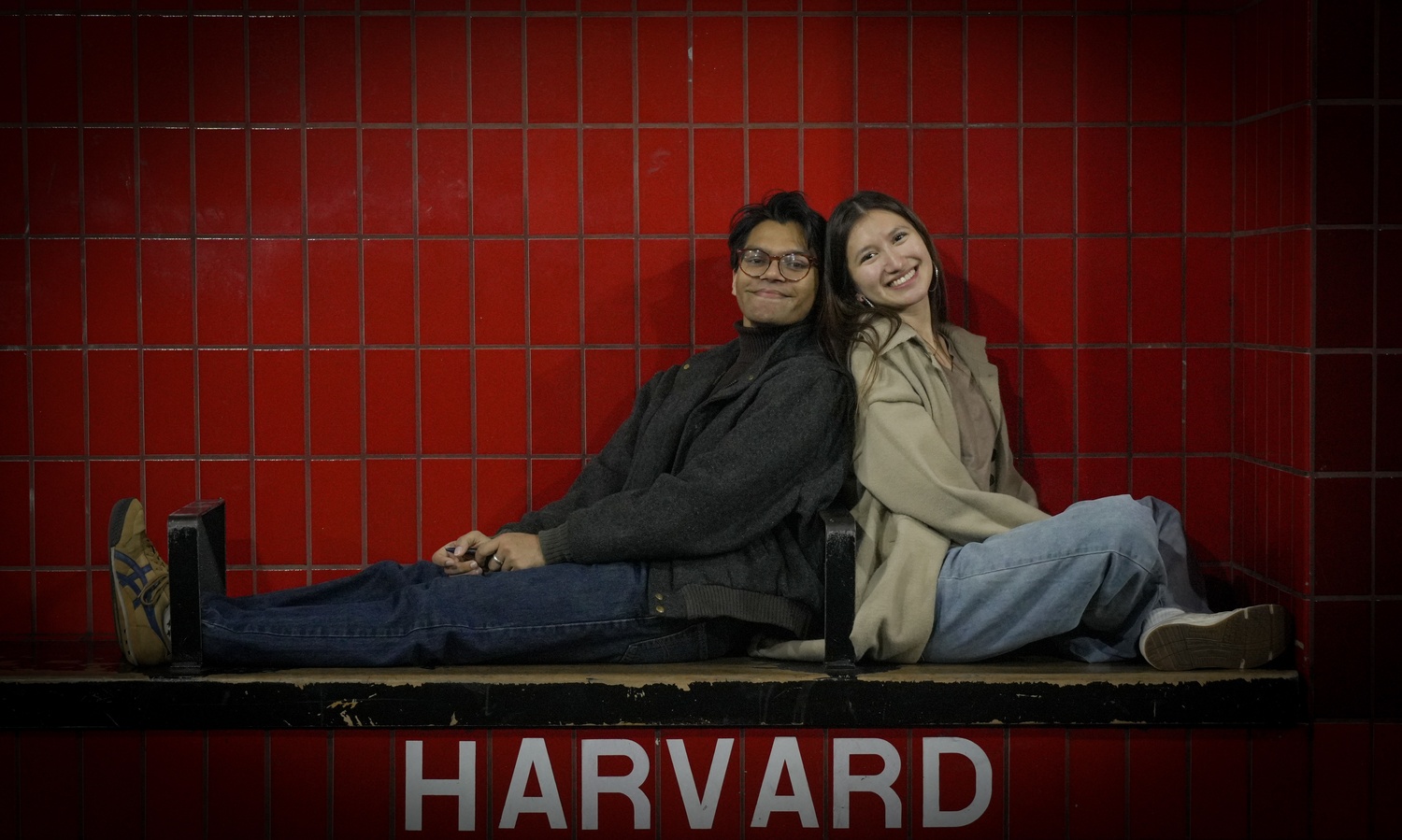
Though Kashish and Kawsar have followed different paths in their four years at the College, they’ve remained close both through intertwining advocacy work and a strong, supportive friendship.
ashish Bastola ’26 and Kawsar Yasin ’26 have known each other as fellow Harvard students longer than most of their classmates have even known they would be attending Harvard.
The very day Kashish and Kawsar received their acceptance letters in December 2021, Kawsar followed Kashish after a mutual friend in the Texas high school advocacy world told her about him. They two first met in-person in the Dallas Fort Worth International Airport, bonding while waiting for their plane to Visitas.
Since then, though the pair have followed different paths in their four years at the College, they’ve remained close both through intertwining advocacy work and a strong, supportive friendship.
And Kashish and Kawsar’s paths, parallel as they have stayed, have each wound into untrodden territory. Upon graduation, Kawsar will become the first student to earn a language citation in Uyghur from the College; Kashish the first to receive one in Nepali.
Kashish and Kawsar both see their language studies not only as connecting them to their broader cultures, but also as means of resisting oppression and erasure. “Each conversation” in Uyghur, Kawsar wrote in a 2025 op-ed in The Crimson, “within and outside of Harvard’s halls, is a testament to the resilience of a people fighting to keep their voices alive.”
The two have found solidarity in the other’s language and cultural work, as well as in their shared Central Asian roots. They even adopted “kitab” and “qalam” as nicknames for each other, since the two words mean “book” and “pen” in both Uyghur and Nepali.
Kashish and Kawsar have both ardently pursued advocacy on and off campus. In his first fall on campus, Kashish led a vigil outside University Hall for migrant workers who had died in the construction for the 2022 FIFA World Cup in Qatar. In the spring, Kawsar co-organized and Kashish attended a vigil for lives lost to gun violence outside Memorial Church.
When it came to these protests, the duo “were super invested in each other,” Kawsar says, “helping each other pub the event, attending, being in the front lines,” and taking videos of the other’s speeches.
The pair were staunch advocates for affirmative action policies, appearing together as freshmen in a Crimson photo essay and spending their first Halloweekend on the steps of the Supreme Court during the oral arguments for Students for Fair Admission v. Harvard, the case which ultimately struck down Harvard’s and most other colleges’ affirmative action programs.
Kashish and Kawsar also served as education and political co-chairs of the Harvard-Radcliffe Asian American association, running on a platform that highlighted their advocacy around the College.
Though the duo’s advocacy continues, the climate they’re operating in is changing. Today, Harvard’s smaller language programs, including those pioneered by Kashish and Kawsar, are in jeopardy or are already shuttered.
Kashish recalls that when he first came onto campus, he “couldn't go a few days without seeing a protest run through the Yard, and that was just the norm,” comparing it to the quieter Yard of the last couple years.
But Kashish and Kawsar haven’t let changing campus culture get in the way of their connection. “There was always something coming along reinvigorating our energy, our friendship,” Kawsar says. For the pair, this has looked like becoming close friends with a new Tibetan student,a forum at the IOP on Tibet, and even a trip to India, where they met the Dalai Lama.
Their advocacy work appears in their scholarship, too, especially in their senior theses: Kawsar is studying Uyghur women in Istanbul, hoping to move Uyghur studies into a middle-eastern geo-cultural context and away from the Chinese studies it has traditionally been grafted onto. As for Kashish, his thesis is about “a covert CIA program to train Tibetan refugees on American college campuses in the ’60s,” he explains. “It is pretty cool.”
The certainly dynamic duo make sure to point out, though, that their friendship is not predicated only on shared political, cultural, and scholarly interests, but also on constant mutual support and entertainment.
For example, the two remember joining a K-pop dance organized by the Harvard Asian American Dance Troupe with almost no prior experience in the genre. Another time in their sophomore year, when Kawsar turned 20, Kashish threw her a massive birthday party in the Eliot Grille in their sophomore year. A few months later, they signed up to work at the Grille together.
“We had so much joy in doing the most random, spontaneous things, but together,” Kawsar recalls of her years with Kashish. “It’s how we had fun.”
As they walk away from the interview — Kashish late to his work with the Harvard CIVICS program — the pair turn to each other, whisper something, and smile. Then, they embrace each other in a hug.
—Magazine writer Henry G. Levenson can be reached at [email protected].