Henry G. Levenson
Latest Articles
Trust the Ultra-Process
We Americans love to talk the talk, but we keep chomping on burgers, guzzling sodas filled with corn syrup or aspartame, and munching on fries. At this country-wide drive-through, my car is first in line.
The Stories We Tell About Food
One hopes that as we reach adulthood, these just-so stories about food become fuzzy — more nuances, spectra, and uncertainty. The world is complicated.
An Ode to Beli
Reviews as means to memorialize an experience are older than history.

Most Dynamic Duo: Kashish Bastola and Kawsar Yasin
Though Kashish and Kawsar have followed different paths in their four years at the College, they’ve remained close both through intertwining advocacy work and a strong, supportive friendship.

Why Are There Yiddish Napkins in Harvard’s Archives?
The Judaica Collection is in a league of its own, not just in its organizational structure, but in its scope and scale.
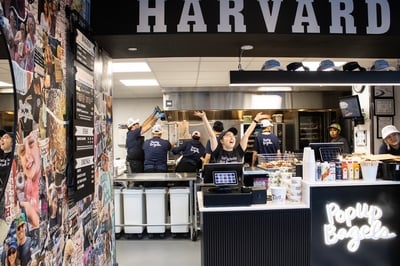
This is not a review of PopUp Bagels.
PopUp Bagels, the “not famous but known” bagel shop (whatever the hell that means), boasts the lightning-quick wait times of a Ray Kroc McDonald’s on steroids, serving customers nearly instantly by chucking their orders into brown paper bags.
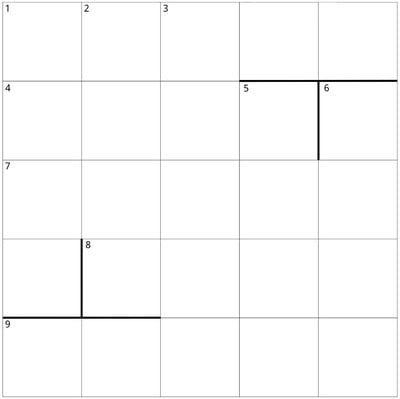
FM Mini Cryptic
Welcome to Fifteen Minutes first-ever cryptic crossword.

A New Quest for Consciousness
In the 10 minutes before the official start of class, Professor Anne Harrington somehow managed to cover descriptions of Gilbert Ryle’s classic “category mistake” critique of mind-body dualism, Richard Feynman’s self-experimentation on falling asleep, and the layout of her course’s Canvas site.

I Went to Every Event Pubbed To Me
Every pub email, every flyer, every overheard conversation in the dining hall — if the event fit in my schedule, I would attend it.

Flipping the Script on @askharvardstudents
Sean Park’s Instagram success seems almost obvious in hindsight. His content sits at the intersection of short-form street interviews and online college advice — two genres that have exploded in popularity in recent years. Add in the allure of the Harvard brand, and it seems a bulletproof concept for virality.
Latest Media
FM Mini-Cryptic 10/23/25
Dear Reader, Welcome to Fifteen Minutes first ever (to my knowledge) cryptic crossword. Cryptics are the trickier and weirder British cousin of normal crosswords. Whereas a normal crossword’s clues only have a definition (e.g. “Time magazine?” for “Fifteen Minutes”), cryptic crosswords clues have both a definitional clue and a word play clue in them. You might think that having two clues for every word would make things easier, but the hard part is that cryptics don’t tell you which part of the clue is which! Cryptic crossword clues usually look like normal sentences, but looks deceive. Most cryptic crossword clues actually have three separate components, the “definition” (like a normal crossword clue, but usually more vague), the “fodder,” and the “indicators.” Indicators tell you in a “cryptic” sort of way what word or letter play to perform on the fodder (e.g. reversal, anagram, etc.) to reveal the word hinted at by the definition. An example might be helpful: Suppose our clue was “Dr. Rahav confused John (7)” [The (7) just indicates we’re looking for a seven letter word for our answer]. In this case, the definition is “John,” the fodder is “Dr. Rahav,” and “confused” is an anagram indicator. So we’re looking for an anagram of “Dr. Rahav” that could mean “John.” After a minute, we realize “Harvard” is the correct answer. (Seem complicated? This is actually pretty tame by cryptic standards, but don’t worry, practice makes perfect!) As you may have noticed, punctuation can usually be ignored in a cryptic. Ready to jump right in? Try the mini-Cryptic below! Enjoy, Henry