

News
Summers Will Not Finish Semester of Teaching as Harvard Investigates Epstein Ties

News
Harvard College Students Report Favoring Divestment from Israel in HUA Survey

News
‘He Should Resign’: Harvard Undergrads Take Hard Line Against Summers Over Epstein Scandal

News
Harvard To Launch New Investigation Into Epstein’s Ties to Summers, Other University Affiliates

News
Harvard Students To Vote on Divestment From Israel in Inaugural HUA Election Survey
Stop Chatting With ChatGPT
As we begin a new school year, artificial intelligence in education is yet again a hot topic. What should classroom AI policies be? How will AI impact the post-college job market? Is learning how to write even important anymore? These questions and others percolate through the minds of students, professors, and more than a few Crimson opinion writers.
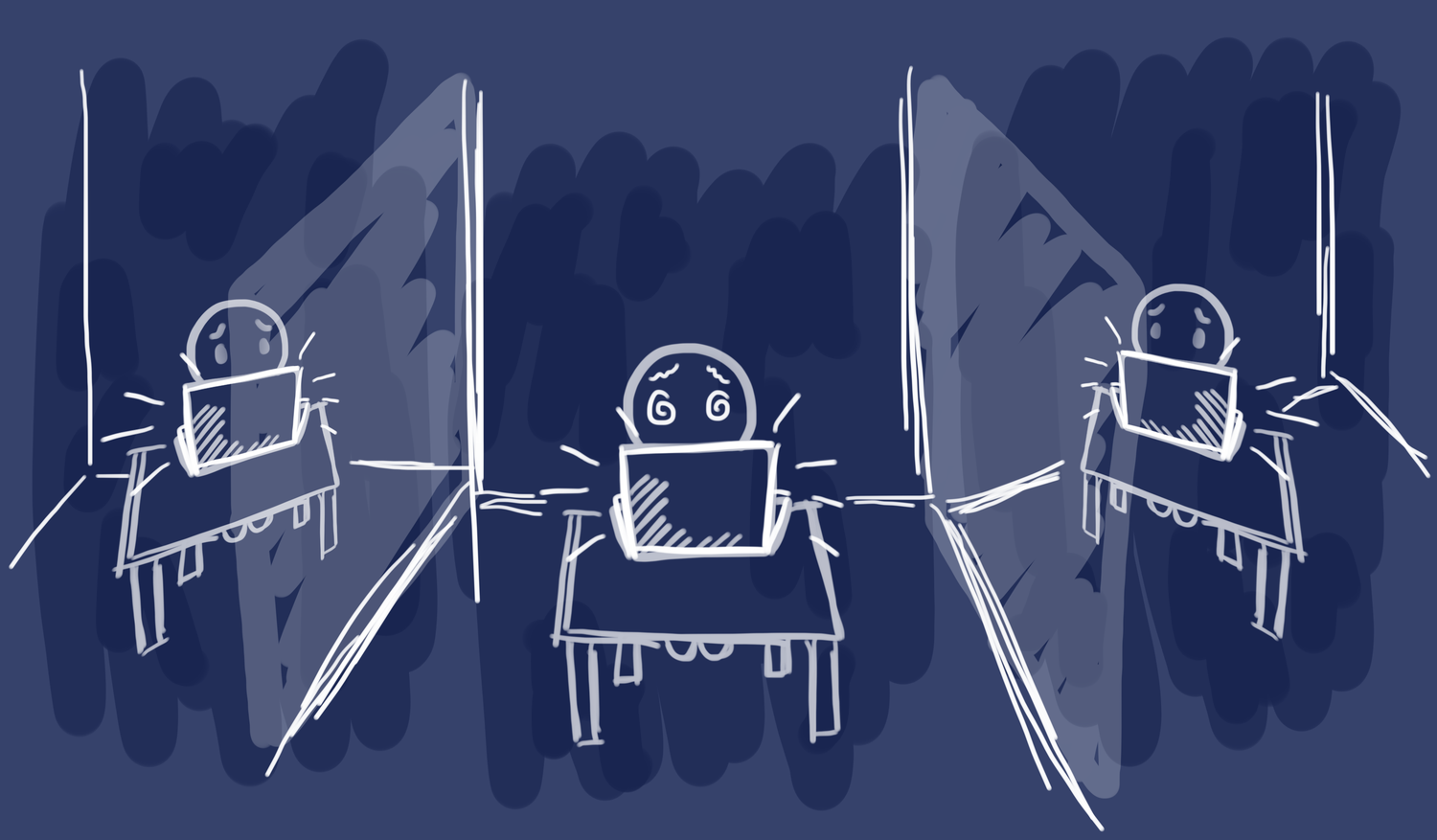
A crucial aspect of the AI conversation on college campuses is often overlooked: AI is being used to replace human interaction. This shift bodes ill for both students and campus community alike.
In small daily decisions, students replace human interactions with AI. A recent Harvard Business School study found some of AI’s top use cases include “companionship and therapy” — domains traditionally dominated by humans.
Research notwithstanding, I have anecdotally observed this amongst my peers at Harvard. I see my friends ask ChatGPT personal questions rather than sharing with a peer or family member. A friend of mine opted to ask ChatGPT for a banana bread recipe instead of calling her mother. Students skip office hours or elect not to speak with their professor and instead use large language models for classroom assistance. Situations that once were opportunities for connection have become solitary pursuits.
I catch myself falling prey to this mode of thinking too: Why would I bother someone else if I can figure out the question myself — or with GPT? This logic is a natural outgrowth of an artificial intelligence era where all knowledge feels accessible. But we lose something immaterial when we turn to a computer — deeper learning and community.
College has long been an environment conducive to flourishing friendships. Over four years, students live in close proximity, eat meals together, and encounter similar life experiences. In a world increasingly devoid of face-to-face interactions, the function of college as a social environment becomes increasingly important. Interactions should be preserved, whether they be with friends or professors.
Relying on AI will affect learning outcomes, too — when we turn to AI rather than peers for help with schoolwork, we prioritize the acquisition of knowledge over learning itself. A recent study from MIT suggests that using ChatGPT can result in decreased brain engagement. Recently, I’ve noticed the deleterious effects of AI on my own learning. When I use AI for help, I often catch myself forgetting to assess a solution before simply accepting it as fact. Have enough of these experiences and one’s understanding of the material will surely be undermined.
On a communal level, our society functions because of human beings feeling responsible for one another. We opt into systems of law, help our peers, and work together to form a functioning society. If we no longer feel a sense of responsibility to our fellow neighbors because we turn to AI for all of our challenges, this too may whither away.
Alongside impeding the social function of college and impacting learning outcomes, reliance on AI deprives us of relationships and opportunities for reflection. If we rely on machines rather than our peers, what type of people will we become? Nascent AI technology may replace our kind, thoughtful friends with unfeeling machines. Under such circumstances, will our character be negatively impacted? If friends do away with reaching out and opt for AI instead, will our relationships suffer?
I am not arguing for a wholesale proscription against AI. It is a part of our world and, in many cases, can be used for good. Rather, we should be intentional in preventing AI from replacing our human connections. If we do so, we will lose so much good.
So make eye contact with the people around you, listen attentively, laugh together, ask questions, and be curious. Don’t be shy to ask your friends or professors for help, and seek out study groups where you can discuss class material with friends. We cannot allow AI to supersede the human connection that comes from deep friendship, face to face conversations, and genuine care for our peers.
Miriam E. Goldberger ’28, a Crimson Editorial Editor, lives in Dunster House.
Want to keep up with breaking news? Subscribe to our email newsletter.