
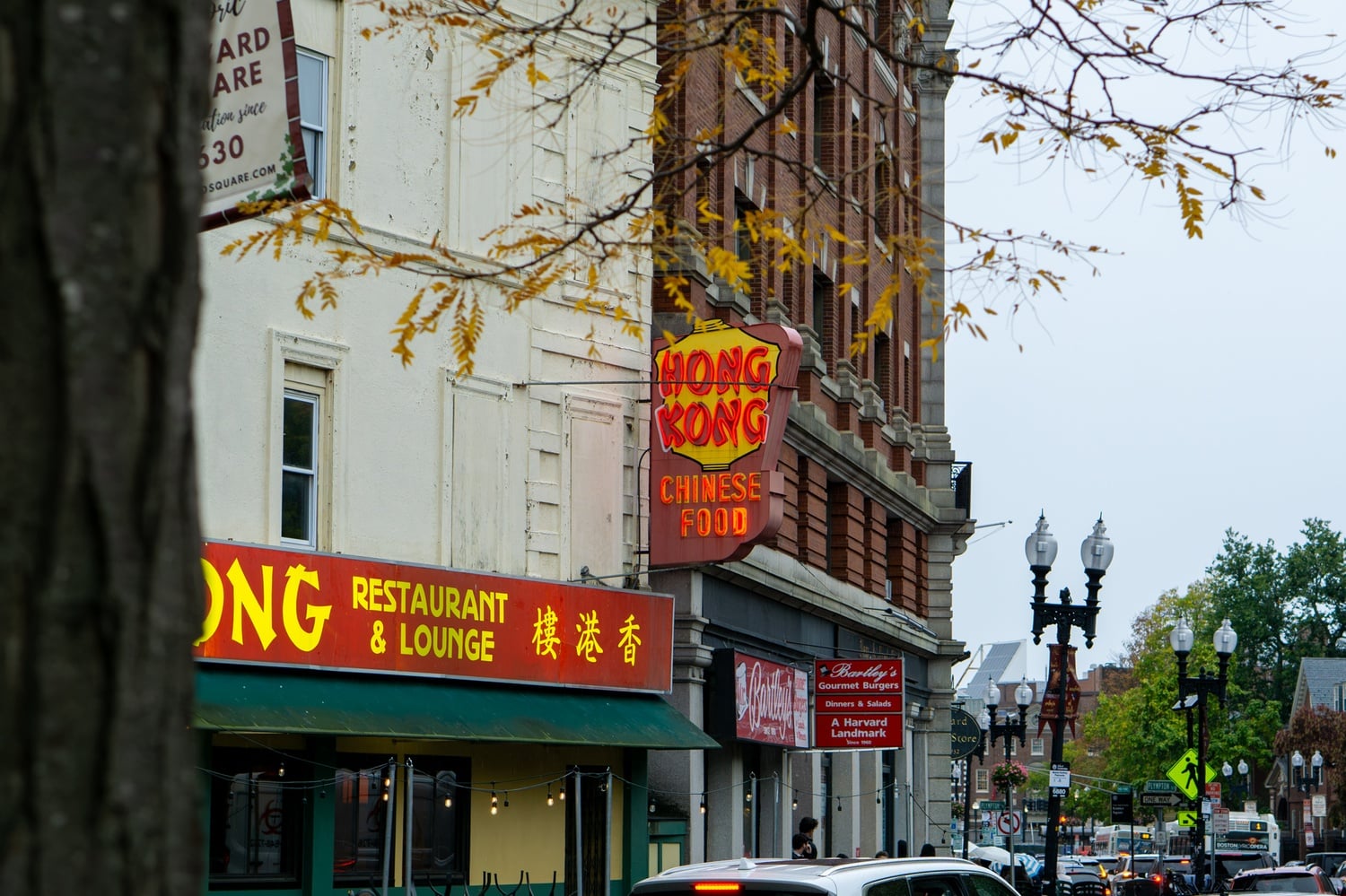
A Generational Legacy, Served Fresh at the Hong Kong
If not for the sporadic chimes of an Uber Eats tablet at the front of house or the re-runs of “NCIS” playing beside the bar, the restaurant’s swinging doors could have very well been a portal to the ’80s.
t 6:45 p.m. on a Thursday, the first floor of the Hong Kong restaurant presents us with a sudden serenity, a reprieve from the students, tourists, cyclists, and cars clamoring along Massachusetts Avenue.
Inside, unlit Christmas lights frame the vast ceiling, Chinese good-luck lanterns line the windows, and white LED bulbs covered by basket-like shades cast a warm glow over framed images of mountains, waterfalls, and other landscapes. Speakers mounted around the softly-lit dining area play sentimental American classics — “Centerfold,” “Holding Out for a Hero,” “Don’t Stop Believin.’” If not for the sporadic chimes of an Uber Eats tablet at the front of house or the re-runs of “NCIS” playing beside the bar, the restaurant’s swinging doors could have very well been a portal to the ’80s.
Besides ours, only two other tables are occupied. Jeffrey A. Moy, who’s managing the front of house, juggles the steady stream of takeout orders beneath cabinets lined with sticky notes that mark the details for this week’s reservations.
The first floor, caught between the nostalgia of the 20th century and the modern digital age, remains a second home to a consistent clientele. Moy’s cousin Paul Lee, the owner of the restaurant, says the Hong Kong has always served those looking for “a filling meal for an affordable price.”
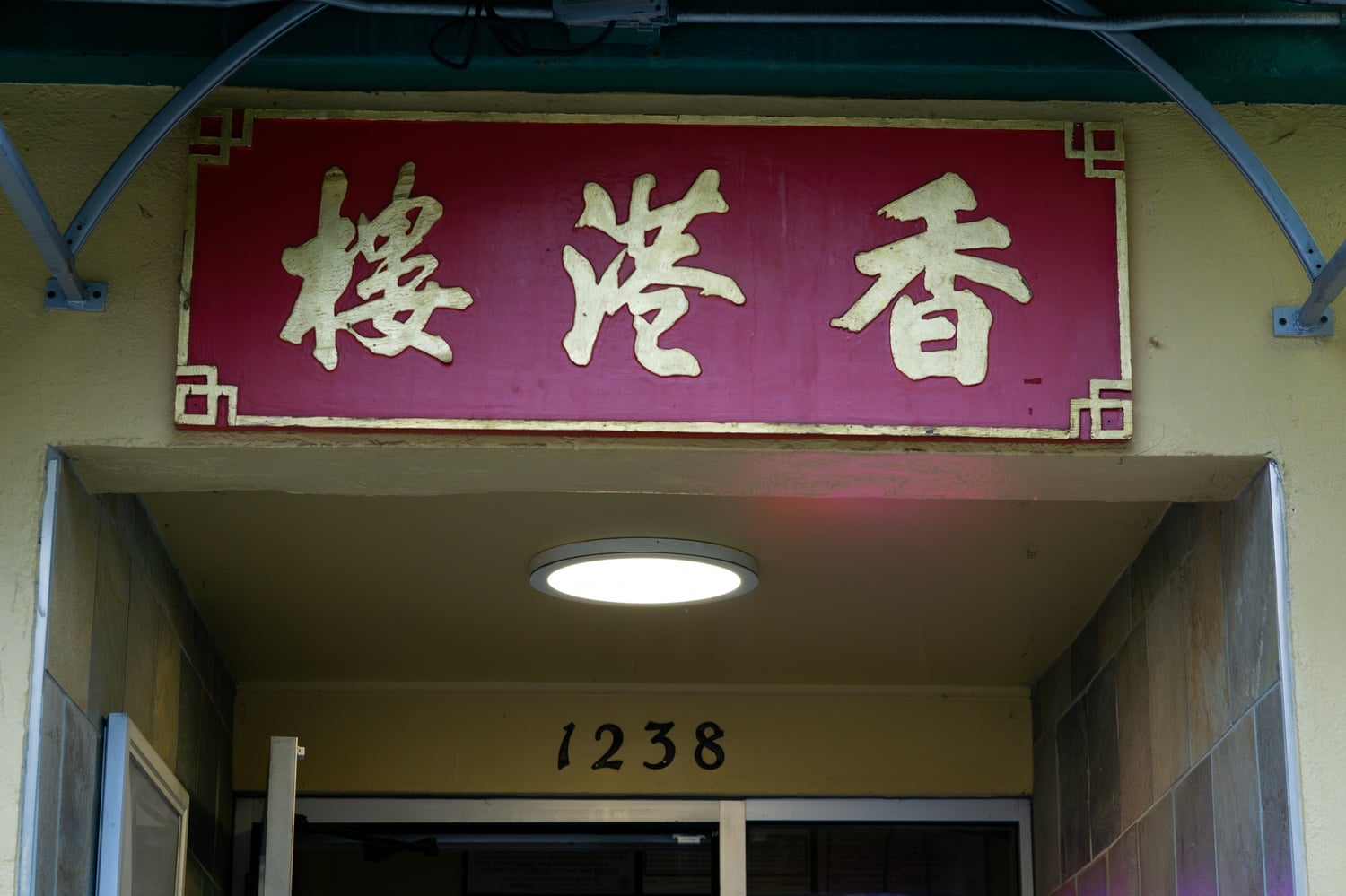
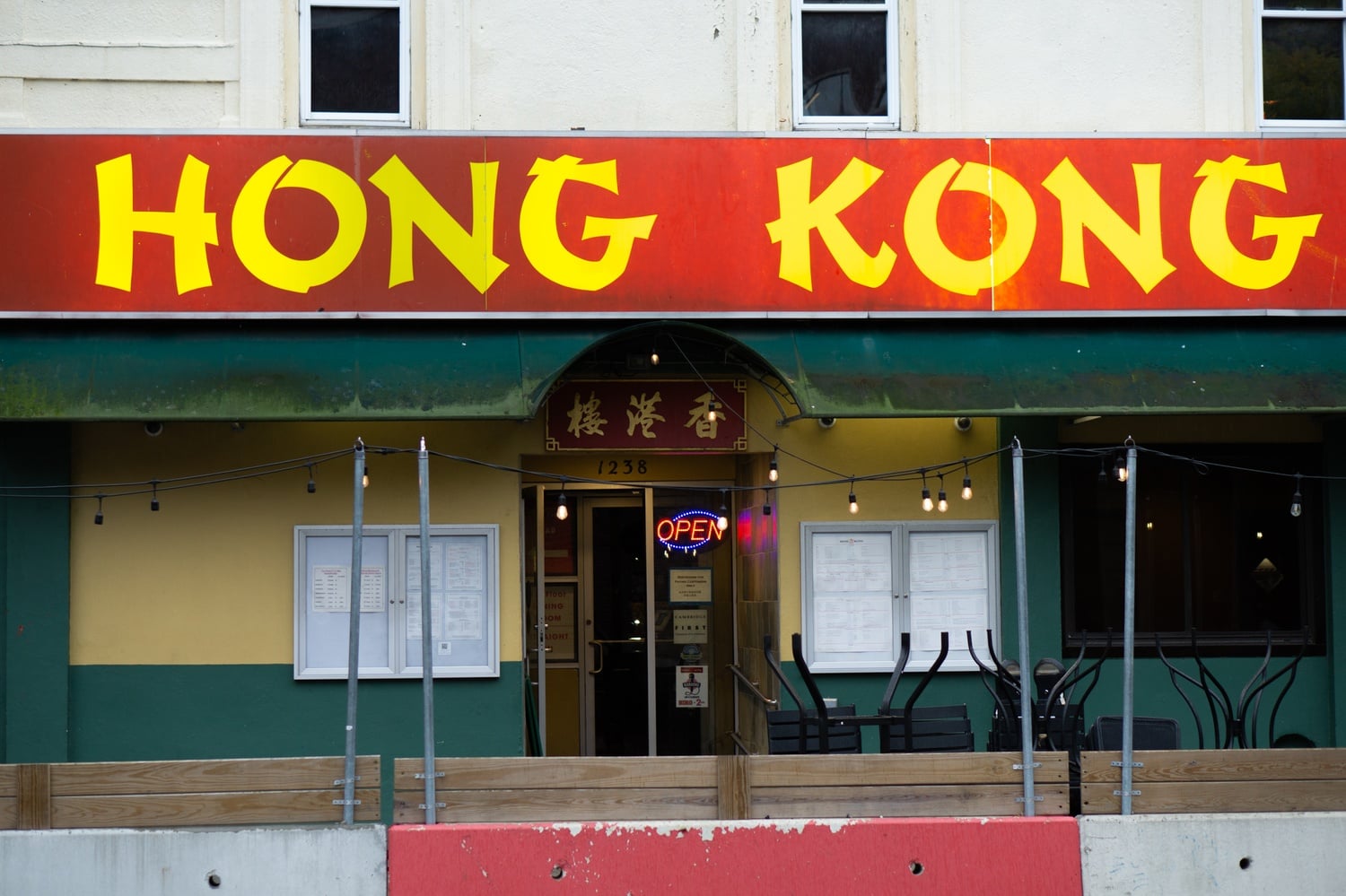
Ever since Lee’s parents Jimmy (Sen) and Mary (Buoy) Lee opened the doors of 1238 Massachusetts Avenue in 1954, the family-run institution has boasted a mixed menu of “American Classics” like sweet and sour chicken alongside traditional Chinese staples, like the beef chow foon we enjoyed.
Across the room from us, Roberto Cortez and Matthew R. Barron have already cleaned their plates when we approach them for an interview. Cortez tried the chicken with broccoli after their waitress insisted that they eat their vegetables, while Barron ordered orange chicken and wontons, noting that the “serving size was insane.” He also lauds the quick service and fair pricing.
Cortez and Barron, who met in Miami, are only passing through Cambridge, and their Scorpion Bowl caps off a full day of kicking around Harvard Square. Cortez, a trauma surgeon, came to Boston for an advanced endoscopy course, while Barron, a product designer studying the relationship between consumer behavior and voting patterns, is visiting as part of a weekend trip.
For the two friends, the Hong Kong offers a temporary home before they head to Albany to reunite with some old acquaintances, whom they call their honorary parents.
Of course, their meal isn’t complete without a hefty Scorpion Bowl, the Hong Kong’s signature drink. The large communal cocktail comes with absurdly long straws that reach around the table, adding a new twist to “family-style” dining. The two recount raising their straws for a toast before digging (slurping?) in.
For Boston native Shane A. Feldman, whom we bump into in front of the Hong Kong later that week, the Scorpion Bowl holds a deeper significance as one of his first drinks after he turned 21. At the time, he thought of the restaurant less as a place to eat than as a club, its main attractions being music, dancing, and drinks.
Years later, Feldman still remembers the restaurant as a rite of passage that marked his official entrance into Cambridge’s social life. “I just felt like you couldn’t live in Cambridge and be part of the Cambridge community without getting drunk at the Hong Kong,” he tells us.
To Feldman, the restaurant’s continued presence in Harvard Square is a tangible reminder of the good old days. As Cambridge changes and longtime businesses are priced out, he finds comfort in seeing the Hong Kong’s familiar facade.
Lee, too, sees in his family’s restaurant the history of the Cambridge community.
“People have had first dates here. People have had first drinks here. People have gotten married that have met here,” Lee says. “There are so many firsts when they’ve come here, and it really is an honor to be here for so many years and to witness that.”
That historical significance isn’t just limited to Harvard Square. Qingjian “Q.J.” Shi, who runs the Asian Business Empowerment Council at the Boston Foundation’s Asian Community Fund, says Lee has become an important voice for Asian-owned businesses across Massachusetts.
Founded in 2022, the council supports a network of roughly 800 businesses by connecting them to mentorship, networking opportunities, and capital. Lee has participated in the council’s surveys and focus groups, spoken on panels about entrepreneurship, and now mentors other Asian restaurant owners. “He’s a wonderful role model for the Asian entrepreneurial community,” Shi says.
In April, Lee hosted a kickoff for the council’s second restaurant accelerator cohort. The event brought together Asian restaurant operators for coaching, networking, and, of course, featured a specially catered meal at the Hong Kong.
For all that it has been a steady presence in Cambridge, though, the restaurant has not been immune to change.
During the Vietnam War, for instance, Lee recalls protestors inadvertently hitting the restaurant’s windows as they threw rocks targeting banks and bigger businesses. Shortly after, his parents renovated the building, opening the second floor dining area, and replaced the first floor’s full-length glass windows with a cinder block facade.
Just a few years later, the family obtained a liquor license and opened the Hong Kong’s bar. This, Lee says, is when “Harvard discovered us.” Soon, the restaurant’s staff grew fully accustomed to Harvard students climbing up the stairs to embark on long nights out.
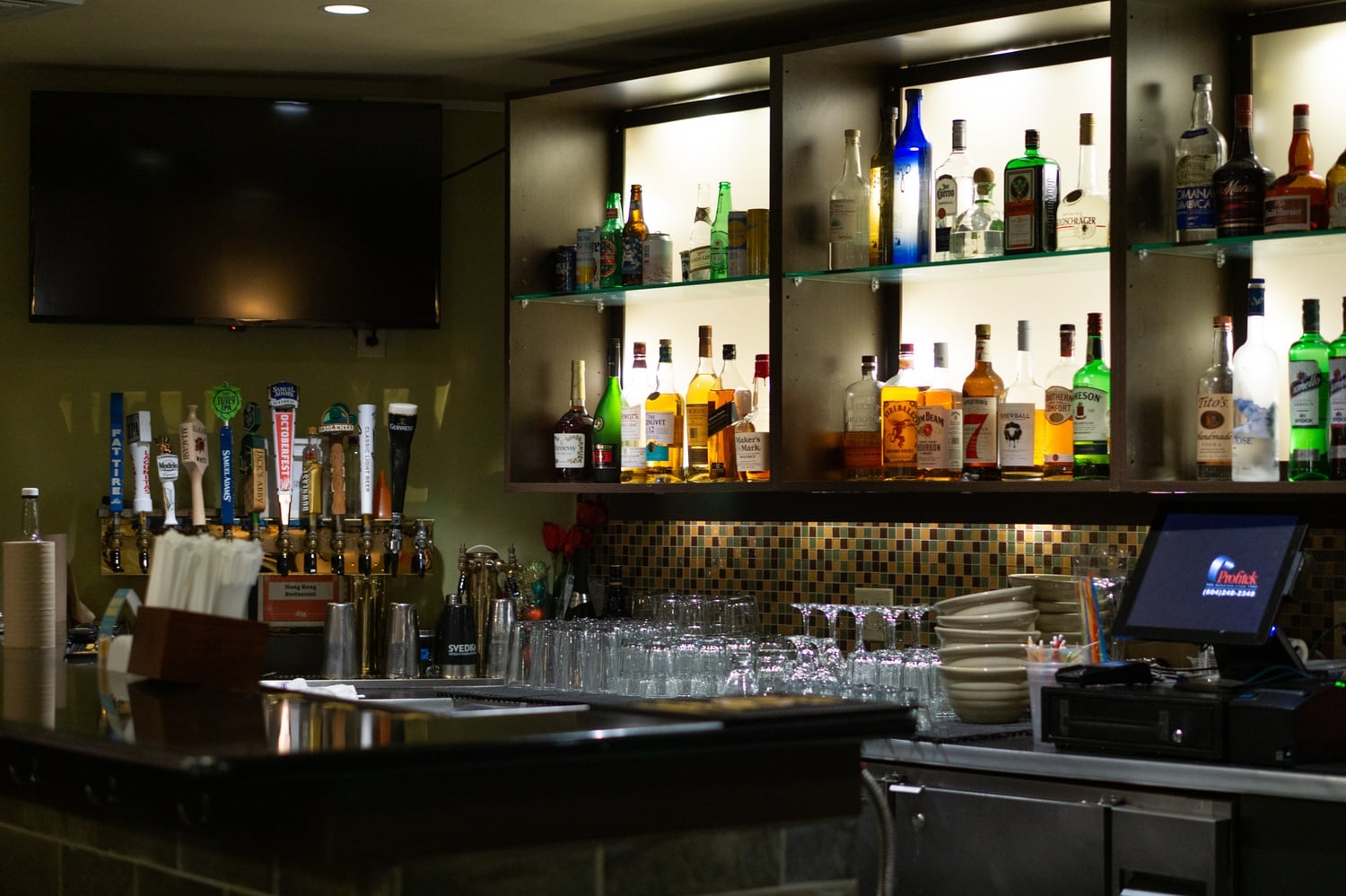
Ever since, the Hong Kong has remained a staple for undergraduates, even serving as a common reunion rendezvous for alumni, who are welcomed as familiar faces when they return.
“Some of the waitresses downstairs are like, ‘Oh yeah, I remember you used to order this,’” Lee says. “So it was like a safe space for people, for the students as they came over the years.”
The restaurant continued to make small adjustments to keep pace with the times, shifting prices and updating their point-of-sale system with new technology. But ever since the pandemic, Lee has found it harder to adapt to an evolving restaurant industry. Covid-19 changed the rhythms of Cambridge nightlife, and the restaurant was forced to shorten its hours accordingly.
Even after lockdowns ended and pre-pandemic routines crept back into society, Lee has found himself in a changed world — particularly with younger adults consuming less alcohol than ever before.
“I think it’s a different era,” he says. “I mean, the trend now is not drinking as much alcohol as they used to be, and I don’t think that’s going to change back.”
But through it all, the Hong Kong tries its best to remain recognizable by preserving its iconic menu.
“I feel we have to stay true, at least somewhat true, to our roots,” Lee says. “Because that’s who we are.”
As we head out for the night, Moy points us toward the plaque across the street dedicated to his uncle Sen, erected in 1997 just beyond the gates of Harvard Yard. Just like the room we’re standing in, it’s stood through decades of change and uncertainty.
“The future of the Hong Kong is yet to be determined,” he says. “We hope to be here for another 100 years.”
We swing open the front doors of our little time capsule. The crisp autumn air rouses us from a fever-dream of an evening before the commotion along the street rudely reminds us of the world we’ve left behind. Before we leave, Moy asks us one more question: “What year are you?”
We tell him we’re freshmen, and he lights up with a smile. “Well, welcome to Harvard. We’ll be seeing you guys.”