
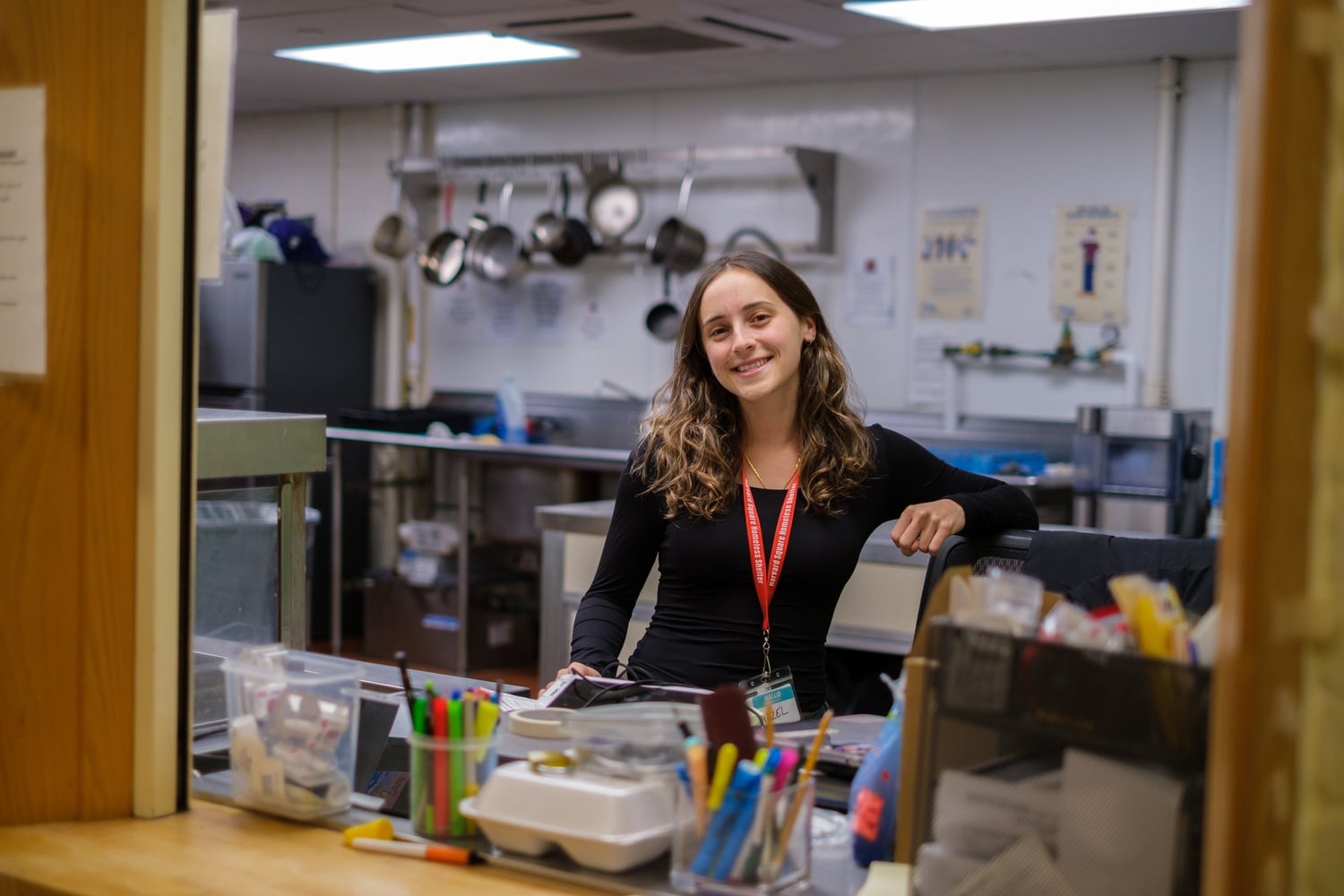
Unsung Hero: Hazel Genieser
The Harvard Square Homeless Shelter also continues to operate during winter break, and Hazel has scheduled herself for the hard-to-fill holiday shifts — once on Christmas and twice on New Year’s.
When I first email Hazel M. Genieser ’27 that she’s been nominated as the senior class’s Unsung Hero, she hesitates to accept her superlative. “I don’t feel heroic in any way about my work,” she writes back, referring to her position as staff director for the Harvard Square Homeless Shelter.
If anything, she tells me later, she is grateful to the shelter for keeping her grounded, and helping her avoid a familiar story: student does service work in high school, student goes to Harvard to change the world, student comes to campus and realizes that consulting is the way to go. Like many freshmen, Hazel signed up for everything in the fall, struggling to find her place in a landscape of student organizations she found exclusionary and disconnected from reality. During orientation week, the prevalence of homelessness in Cambridge shocked her. She developed a firm conviction to be part of the solution, instead of becoming “just one of the people walking by.” Having volunteered with a street outreach charity in her home city of London, she added the HSHS street team to her list of clubs. It ended up being one of the only ones she stuck with.
HSHS is located in the basement of University Lutheran Church in Harvard Square. During winter and summer months, it is open from 7 p.m. to 8 a.m. every night, staying open until 9 a.m. on Saturdays. The shelter provides up to 18 long-term guests with daily breakfast and dinner and weekly case management meetings. Students can volunteer to take weekly shifts, work for the street outreach team (which provides meals and supplies to homeless people outside of the shelter), or take on administrative responsibilities as shelter staff, supervising shifts and voting on shelter policy.
Hazel applied to join the staff after a semester on the street team at the encouragement of one its directors, not realizing that the position would require committing to overnight shifts. Once she got the role, though, she decided she needed to see it through, and quickly became excited to join a horizontal leadership structure of students all dedicated to the shelter’s mission. “I walked into my first staff meeting, and I was like, ‘Who’s running this?’ And then I kind of was like, ‘Oh wait, like everyone here,’” she recalls. “I didn’t know something like this could exist.”
Hazel has stayed on staff ever since, and thinks of her work there as a part-time job. Beyond her weekly shift, she and her co-staff director handle hiring and training staff, scheduling meetings, responding to incidents at the shelter, and generally ensuring staff accountability.
This means that, in addition to working nearly all day Sunday, Hazel is on call at all times, often responding to messages as soon as she wakes up and texting staff under the table in her no-tech classes. “When we’re in season, there’s not one moment when I’m not thinking about the shelter. And how could you not? Because there’s 18 people in your care,” she says. “Unless I’m asleep, I’m locked in.”
Hazel, a Government and East Asian Studies concentrator pursuing a concurrent master’s in Regional Studies-East Asia, is also working on a thesis exploring memory culture in Taiwan. “Senior year is the best because you really understand what is your genuine priority,” she says. For her, that means the shelter, academics, and friends.
Of course, the three can sometimes be hard to juggle. Constantly answering messages can be a distraction from her classes, and working Sundays means she is rarely able to take weekend trips with her roommates. HSHS also continues to operate during winter break, and Hazel has scheduled herself for the hard-to-fill holiday shifts — once on Christmas and twice on New Year’s — cutting into family time during the holidays.
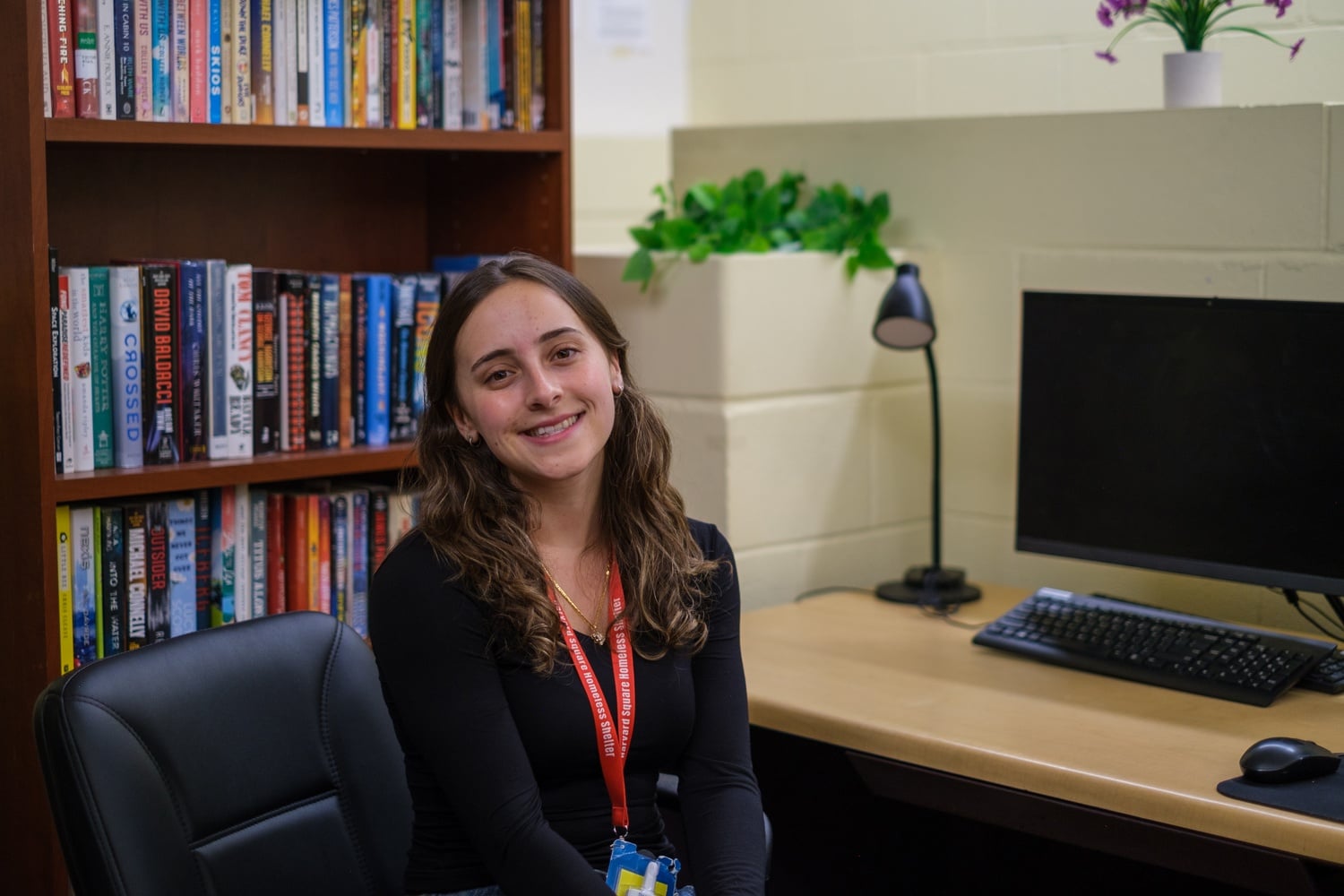
These decisions reflect Genieser’s commitment to and genuine love for the work she does, but they also mean that she sometimes struggles to define herself outside of her commitments.
“For this interview, I was like, I’m gonna sound so jank,” she says. “Like, does she have any other hobbies? Well, okay, I do have hobbies.” For example, she likes to do “normal stuff” with her friends, including getting meals, watching TV, and “generally chilling.” She later texts me to add that she also enjoys thrifting and sports. Her LinkedIn profile lists her as a former vice president of Harvard Club Squash. Her roommate, Olivia H. Park ’27, says they became close friends sophomore year when a walk to Whole Foods revealed they shared the same taste in “overly protein-ful yogurts.”
Olivia adds that Hazel is “always happy to be the life of the dance floor,” and suggests that she should also be honored as “unsung dancer.”
Though acknowledging she has made some sacrifices for HSHS, Hazel remains uncomfortable with the idea that any of this makes her an “unsung hero.” For one, she emphasizes that she’s not unique in her commitment to the shelter; running it is a team effort, with around 45 staff members — not to mention hundreds of student volunteers — keeping the operation going. She also doesn’t consider herself “unsung” — she’s vocal about her work, and those close to her know how much time she dedicates to it.
Most of all, though, she doesn’t think that we should call people “heroic” for dedicating their time to helping others. “It should be mundane,” she says. For many of the shelter staff, it is. “It’s just a sad reflection that maybe we’re few enough that others are like, wow.”
Other staff members share that perspective. Alana M. Lewis ’27, an administrative director and case manager at HSHS, says getting to know the shelter’s guests and their struggles intimately means that the job, however difficult, feels like an appropriate and necessary use of one’s time at college. “It doesn’t feel like you’re giving too much. It feels like you’re giving what you should be giving,” she says.
Hazel is particularly wary of what she sees as a prevalent idea at Harvard: that students should aspire to make money and then donate it if they want to do good. “I think that a lot of people delude themselves into thinking that their best impact is to kind of distance themselves from a problem,” she says.
Hazel says she often encounters ignorance among her peers about homelessness in Harvard Square. She says guests at the shelter have told her that passersby rarely speak to or even look at them, and she hears classmates attribute homelessness to laziness. “Every day I see the very real-world consequences of treating people like numbers on a spreadsheet,” she says, “and not really seeing — recognizing their humanity or recognizing that they have multi-layered and real issues that need to be addressed by going to talk to them.”
After graduating, Hazel envisions a life and career that apply this ethos of service at a larger scale, perhaps using her East Asian Studies degree to work in international relations. Her dream job would have been working for USAID before it was dismantled by the Trump administration; now, she hopes to work in diplomacy.
She’s not sure whether all the skills she’s developed by working at the shelter — from having community conversations and navigating housing policy to administering overdose medication and efficiently cleaning bathrooms — will transfer, but she holds onto the moral weight of her work.
“Sometimes I do complain on the minor scale, like because I’ve had a particularly tough shift,” she says about her work at the shelter. “But yeah, this has been the best thing that has ever happened to me.”
—Associate Magazine Editor Megha Khemka can be reached at [email protected].