
An Ode to Beli
Reviews as means to memorialize an experience are older than history.
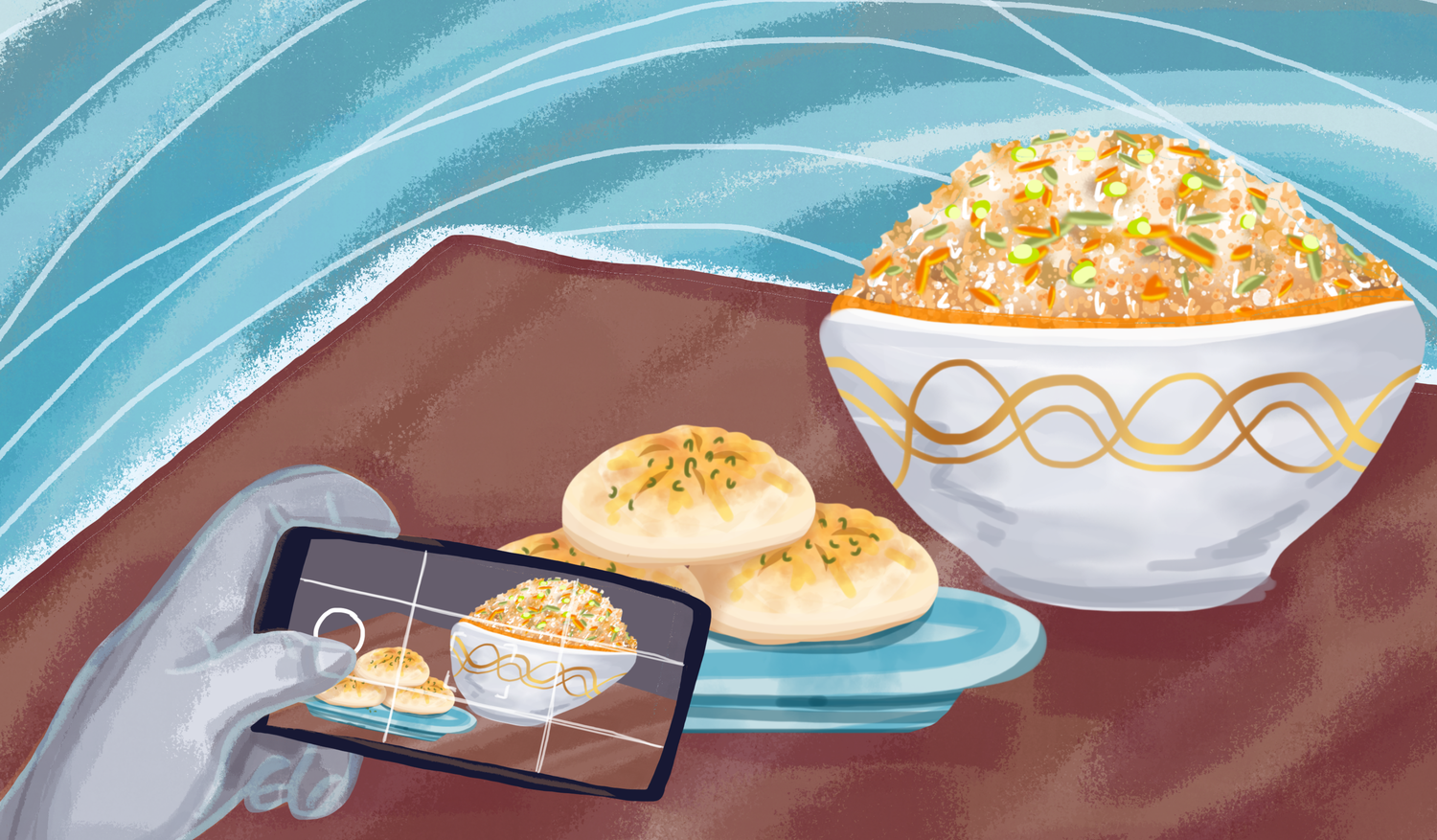
ast week, I went out for a birthday dinner at a newly opened restaurant that I will refrain from naming here. It was not great. Specifically, as I opened up Beli, the viral app that lets users rank and rate the restaurants they have dined at, I decided “it was fine” (the description for the yellow button I first pressed, between a green “I liked it!” and a red “I didn’t like it”). The app then prompted me to get specific: Was it better or worse than the skimpy tasting menu I had had two birthdays prior? What about that touristy British pie shop I had visited last summer?
After I judged these head-to-heads, the app decided that the restaurant was exactly a 6.2/10 (around a B+, for Harvard College students), which made the establishment my 76th top rated restaurant. (There are separate categories for bars, bakeries, coffee shops, and ice cream parlors).
For millions of users who have flocked to Beli since its founding in 2021, rating restaurants 1–10 is now their primary interaction with food — besides eating it, of course. It’s easy to slot Beli and its users into any number of easily-panned categories: It sure seems like a dumbed-down millennial foodie blog for a social-media addicted populace who’d rather experience the quantified simulacra of a meal through their phone than just share one together.
I could take such cheap shots, but in truth I think Beli is a great app, and I use it rather frequently. I don’t think Beli is a symptom of our collective decline into “brainrot.” I think it is — and I apologize for the Substackism — a much-appreciated conduit for transcending our short-lived human memories.
***
Beli is often analogized to Yelp — another giant of the food review app space. The two are seen in direct competition, with the New York Times writing that Beli has grown enough to “devour” Yelp and become the new king of the foodie jungle. But brushing off Beli as just the new Yelp is a mistake. Unlike Yelp, individual Beli reviews are not publicly accessible, and are not meant as feedback for the restaurant itself per se; they are an indication of the users’ own experiences, meant mostly for their (real) friends and future selves.
I myself have 12 measly friends on Beli, who could each see my 6.2 rating on their “feeds” (I doubt the pun escaped Beli co-creators and Harvard Business School alums Judith “Judy” M. Thelen and Eliot P. Frost). I myself can see my friends’ recent ratings, along with their optional “notes” (don’t call them reviews) and photos of their recent meals out. Beli influencers exist, but the app as a whole feels more personal and personalized — “boutique” you might say.
Rather than a Yelp competitor, Beli is better grouped among the many specialized, hobby-measuring apps like Letterboxd (for movies), Serializd (Letterboxd for TV shows), Goodreads (for books), Fable (also for books), StoryGraph (there are a lot for books), Strava (mainly for running), and AllTrails (for hiking) that have exploded in recent years. Each of these apps, though they differ in form and function, are designed for one to share their own experiences through quantified ratings and metrics with others.
How did we get here? To hopelessly oversimplify: to rank, rate, or quantify is a luxury, and we live in luxurious times. It is really only in the last 200 years — sometime after the French Revolution seems to be the consensus — that the Western bourgeoisie got real choice when it came to food, to say nothing of books, movies, or exercise. Ratings and quantification emerge from a need to control the chaos of such choice. Abundance necessitates ranking: infinite movies to watch, books to read, restaurants to visit, each of us trying to both inform others and make sense of our own unprecedented luxury.
Combine this broader existential need with historical contingencies — the internet’s democratization of content, the “enshittification” of conventional social media, and Covid-19 — and you have a fine recipe for the explosion of these social media apps.
Beli is distinguished from these other hobby-measuring apps by its distinctive rating method. Restaurants are rated by pitting them head-to-head with other restaurants you’ve been to, using their pre-existing ratings to nestle your new qualitative experience between two points on the scale. I would call the idea groundbreaking, but it is at least the second Harvard-incubated one-on-one-rankings app to go viral, following Mark E. Zuckerberg’s own infamous Facemash. If I had a nickel…
Should I be worried that with every button I press on Beli, every rating algorithm deployed on the backend, I am boiling down the vast, subjective joys and minor annoyances of a meal into a single number? How can one number encompass my every sensation that accompanied that mediocre birthday meal I had: the fishiness of the sauce, the priciness of the duck, the dread of turning 20?
What does a meal being a “6.2” even mean?
But as the many discussions around grading have repeatedly reminded us in these past months, sometimes it is necessary to have a singular ranking that stands in for the vast complexity of an experience. Rather than reducing the act of dining to a rote calculation, a Beli ranking generates a symbol that encapsulates an experience, a symbol that does not replace the symbolized. My experience at the 6.2-rated restaurant is not reduced to a 6.2. Rather, that 6.2 becomes a representation of and index to the rush of sensations that led me (and Beli) to assign such a rating.
While Hollywood has turned the embittered or merciless food critic into a trope in films like “Ratatouille” and “The Menu,” I do not think there is anything inherently wrong with reviewing, ranking, and rating cooking, or any other craft for that matter. For every Anton Ego there is an Anthony Bourdain. Reviewing makes the temporary experience of tasting food into something timeless. Your parents kept diaries. Isn’t an app just a bit more convenient?
And when compared to traditional ranking sites like Yelp, which require the user to directly input a score, Beli has hit the evolutionary-psychology nail on the head: humans are remarkably bad at determining objective values in a vacuum, but quite good at choosing the better of multiple options: The classic 1–10 pain scales hospitals use are a notorious case. I remember the story of a woman who thought her pain was about a third of the worst pain she could possibly imagine, and so only put down a 3 on the pain scale. Now providers are experimenting with relative tests (as much pain as…) or even Beli-like head-to-head hypotheticals (would you rather…).
Belification may be coming to a hospital near you. And perhaps rankings that acknowledge that they are relative, not objective measures of “excellence” will be coming to a grading system near you soon too.
***
As a young and pretentious teenager, I visited Iceland with my grandparents. Judgmental of my peers’ cellphone addictions, their constant half-face communications, every moment of their life uploaded online, I decided I would truly live in the moment, not taking a single photo, rating a single restaurant, or collecting even one keepsake.
What a terrible idea! I hold now but a fleeting sense of that otherworldly place. The aftertaste of a waterfall with none of its awesome rage. A flat tire somewhere, but who knows where? An incredible buffet in a tiny fishing village, the name of which would take me hours to search for. Scared of a world where our every second is preserved for all eternity (if not actively incorporated into the training data of an ostensibly omniscient program), I overcorrected.
Why did I want my memories to fade? I should have grasped them, hoarded them. To let my memories slip into oblivion, with no attempt to preserve them outside of my fragile brain seems foolish.
Most of the meals I eat are not as pretty or as memorable as Iceland. But to let them go feels as much of a crime. A library archive begins by collecting the classics, but soon searches for every missing piece of doggerel or ephemera, lest it leave a lacuna. (The certainly apocryphal story is that every ship docking in Alexandria was searched for any scrolls to copy for the city’s famous library.) So too do I now feel the need to log even my stale Dunkin’ donut on Beli, so that even this quotidian moment is preserved.
Beli lets me efficiently turn the evanescence of food into something permanent, without the embarrassment of blogging or the effort of collecting and sorting my old receipts.
I think my and other users’ need to preserve every last sensation for all of time is not a contemporary phenomenon, nor abnormal hoarding. Before Beli, people used spreadsheets. Before that, people kept diaries. In societies without writing, people pass down their legacies through oral tales and Dreamings, an impermanent permanence.
Reviews as means to memorialize an experience are older than history. Opinionated travelogs were an established genre in Song Dynasty China. Ancient Roman tourists scribbled “I admired” on the walls of ancient-er Egyptian tombs. And the original food reviews, I contend, were cave paintings.
Some archaeologists theorize that the flowing frame-by-frame motifs of prehistoric beasts found in Chauvet Cave and elsewhere were a sort of summoning ritual — a depiction of the hunt-to-come. They’d tell you that the art preceded the experience. I think they’ve got it backwards:
More likely, in my admittedly uninformed opinion, humans painted scenes of beasts to memorialize a fleeting moment, their memory of the chase and subsequent meal. After they feasted on the great beasts, they headed for the caves, spending countless hours under torchlight turning ochre into vivid designs — their fleeting experience forever colored on the stone.
Times have changed; humans haven’t much. We no longer need to paint our prey on walls. If the cavemen had had Beli, preserving the experience of their meals would have been a lot easier. They could have just rated their Paleolithic feast a 6.2.
—Magazine writer Henry G. Levenson can be reached at [email protected]. His column “Gastrocosm” explores food, culture, and his strong opinions on both.