
The Stories We Tell About Food
One hopes that as we reach adulthood, these just-so stories about food become fuzzy — more nuances, spectra, and uncertainty. The world is complicated.
ast Wednesday (and probably Thursday too — it’s confusing) began the Jewish holiday of Passover. The festivities revolve around a ritual feast, the sort enjoyed in every world culture, though mostly relegated to Thanksgiving and sometimes Christmas in America.
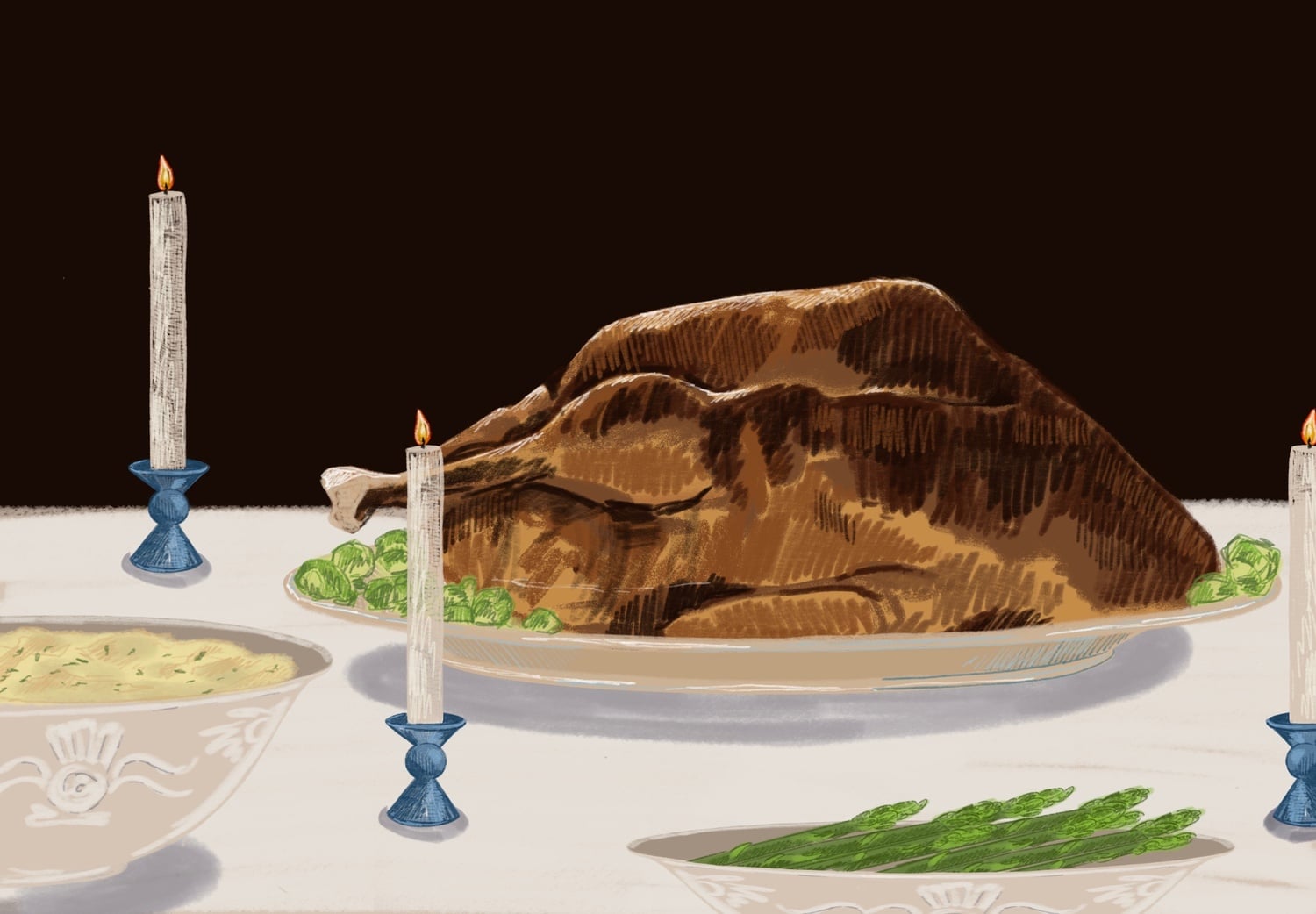
The Passover Seder is framed as one long explanation of the foods on the table. Each food on the table has a symbolic meaning, many representing the story of the Israelites’ exodus from Egypt. We direct our explanations especially towards children, who ritually ask questions of the meal of the form “why is this night different from all other nights,” to which we give simple responses: “Why do we eat bitter herbs tonight?” “To remember the bitterness of slavery,” for example.
The whole thing is one big aetiology, an explanation for why things are the way they are.
The meaning, origins, and stories the Passover Seder assigns to the foods are particularly explicit, but all cultures assign some meaning to their food. At Passover, we consciously address our simplistic stories about the food we eat to children. Simplistic because children need simple, sturdy stories about the world to build a foundation for their worldviews.
Newborns’ literal vision begins blurry; it takes many months before they can see in full color and clarity. Yet, children’s conceptual vision of the world around them progresses the opposite way. Rather than begin with a blurry picture focused over time, children’s education begins with clear facts, hard truths, and simple tales.
Aetiological stories are a quintessential children’s genre. Take Kipling’s classic “Just So Stories” or my beloved copy of “D’Aulaires’ Book of Greek Myths,” which both answer real-world questions with folklore and mythological stories. How did the leopard get his spots? How were the constellations formed?
Even if we draw a clean line between these fictional tales and true aetiologies (not easy to do with religious stories), the scientific or rational stories we tell children are still full of simplistic binaries: true/false, wrong/right, etc.
What happened first? The Big Bang, end of story. When did World War I begin? Simple, 1914. There’s a reason that Guiness World Records, originally published by the eponymous brewing company to settle barstool disputes, has morphed into a beloved children’s series. Never mind that these “true” tales may be just as conjectural as myth (who knows what caused the Big Bang?) or skip over messy fact-finding and history (sure World War I officially began in 1914, but when did prior factors make it inevitable and how do we know?).
Yet, one hopes that as we reach adulthood, these just-so stories become fuzzy — less binaries and more nuances, spectra, and uncertainty. The world is complicated. Even if high school textbooks are still filled with crisp, simplistic narratives, by the time we get to college, we are ready for nuance. We learn that there is much we don’t know, and what we do know is both more complicated and has more rickety scaffolding supporting it than we’d like to imagine. What was once a fun fact in a kid’s book alongside 1,000 others might become a citation trail back to a 19th century German dissertation of unclear veracity.
This is a harsh world, the world of fuzziness. It’s hard to live without clear, simple answers to our factual and moral dilemmas. It is only fair we should wish to return to our Edenic adolescence, where we can frolic in simple tales and clear-cut reality without having eaten from the forbidden fruit of the tree of knowledge (which — in the spirit of this discussion — I feel I must point out was probably not an apple).
We seek clarity in God and religion. We seek it in normative ethics. And we seek it on the dinner plate.
While being educated today means knowing how to differentiate between a nation’s messy histories and a memorized list of presidents, or between a “just-so” aetiology and a winding, fuzzy true origin, we fail to apply such critical thinking to the food we eat and where it comes from.
I do not mean where our food literally comes from, though we certainly cast a blind eye there as well. Plenty before me have explained why it is not great that our slaughterhouses are black boxes to the consumer, that our farming practices are ignored by consumers, and that many Americans are uncomfortable with unfamiliar tastes and textures in their diets. I do not wish to repeat them. No, I mean we do not think critically about where our food has come from: how dishes developed, why we eat what we eat and do what we do.
Take the myths that crop up when a dish becomes a cultural symbol. Perhaps you’ve heard that potato chips were invented to spite an ungrateful customer, or that Thomas Jefferson invented mac and cheese, or that croissants’ crescent shape had something to do with the Ottoman’s flag. These stories are wrong, false, and incorrect, respectively.
We need not go far to find these overly-simplistic narratives: Massachusetts is disproportionately filled with them. The state has been a hotspot for uncritical culinary aetiology at least since the national near deification of the original Thanksgiving feast in the 1860s.
Our own venerable Crimson repeats uncritically that the Boston cream pie and Parker House rolls were invented at the Parker House Hotel in Boston. Then there’s the famous chocolate chip cookie, supposedly invented by Ruth Wakefield at the Tollhouse Inn in Whitman, Mass.
Stella Parks, however, in her James Beard award-winning part-cookbook-part-history of American food “BraveTart,” shows that these narratives, along with many other American food origin stories, are oversimplified at best, and flat-out wrong at worst.
Instead of mystical or accidental origins, Parks finds that many of America’s most popular desserts came from highly educated American women who worked behind the scenes as food scientists at major corporations, including as personifiers of the made-up character Betty Crocker.
The further back in time we go, the higher the odds that the narrative around our foods’ origins becomes wildly distorted. A particular favorite form of aetiology is the “accidental invention.” You’ve surely heard these before: An early pastoralist stores milk in a stomach, and voilà, cheese; bread gets mixed with water and, oops, beer; corn falls in a pot of ashes, and nixtamalization, a process which extracts nutrients from corn and creates the masa used for tortillas is fortuitously discovered.
These are all fun stories, don’t get me wrong. They may seem harmless. Perhaps the reason we adults (try to) relinquish simple narratives about most of the past, while we leave food history alone, is that these food stories are cocktail party banter. Real history, we think, starts wars; who cares whether an old pastoralist discovered coffee when his camel ate the berries or Aunt Sally invented the key lime pie by mistake, so long as they’re good stories and seem true enough?
For one, these stories are not as harmless as they may seem. Food is a potent symbol, and easily figures into nationalist debates. In the late aughts and early teens, Israel and Lebanon fought metaphorical “hummus wars” over which country could rightfully claim the garbanzo spread as their own. Though there were no reported casualties, the history behind the hummus war and the hummus conflict itself is inseparable from larger culture wars — and war wars — between the countries.
Even when national reputation is not at issue, simplistic historical narratives of food, especially “accidental invention” narratives, can strip agency away from historical actors — the ones who don’t get the funny BuzzFeed story about them. Believing that prehistoric people must have accidentally stumbled upon every invention disregards the real possibility that ancient peoples invented, hypothesized, and thought.
Across disciplines and domains, scholars have begun to question these agency-destroying accounts. While popular writers still often refer to the development of agriculture and early domestications as an “accidental invention,” with little to no human choices or agency, North American archaeologists have highlighted the active and self-aware work of female farmers and male shamans who worked against unfavorable environmental conditions to domesticate North American varieties of gourds and corn.
Rather than revel in simple stories, let’s tell the interesting, messy, and fuzzy stories of food — whether invented 100 or 10,000 years ago — as we should for any other historical subject. Of the pecan pie, for example, let us tell of the Algonquin tribes who first ate pecans, of the enslaved man who first grafted the pecan tree, of the Hispanic women who shelled pecans until their jobs were automated away, of the Texas housewives who made early pecan pies, and of the Karo company, who popularized modern recipes made with corn syrup. Why strip even this already-simplified account into a single “when,” “where,” and “how”?
Does this mean we must give up our traditions steeped in these myths? No more apple pie on the Fourth of July because a similar pastry was actually referenced in the 14th century cookbook “The Forme of Cury?” No more Thanksgiving because the Pilgrims had neither green bean casserole nor particularly convivial relationships with the Native American tribes surrounding them? Must one only attend a Passover Seder if they accept every historical allusion as literally true?
I sure hope not. I love apple pie as much as the next guy who likes it slightly less than average. But wouldn’t it taste even better knowing how it became a distinctly American symbol, not just accepting it as such? Thanksgiving can still be a day of giving thanks, even when we make the history fuzzy. A fuzzy Thanksgiving would not erase history, only provide more of it: We would tell of the Pilgrims and Native Americans’ trials and tribulations, of Sarah Josepha Hale, who made Thanksgiving into a national holiday (and also wrote “Mary Had a Little Lamb”), and the stories behind national side dishes and family specialities.
As for Passover, the Seder is still structured around an aetiology for children, whether they are “wise,” “wicked,” “simple,” or do not know how to ask. Yet, the Passover liturgy commands that even if everyone at the table were already wise and knew everything there was about the story of the Exodus, it would still be required to retell the story. Even for the learned, it is still worth retelling, questioning, and explicating our feast and its connection to the past.
The same holds true of all food. As we grow up, the stories we tell about the food we eat should not stop; they should get fuzzier.
—Magazine writer Henry G. Levenson can be reached at [email protected]. His column “Gastrocosm” explores food, culture, and his strong opinions on both.