FIFTEEN MINUTES
The Trump v. Harvard Issue
Harvard’s Funds Are Back. Can Its Scientists Trust the Government Again?
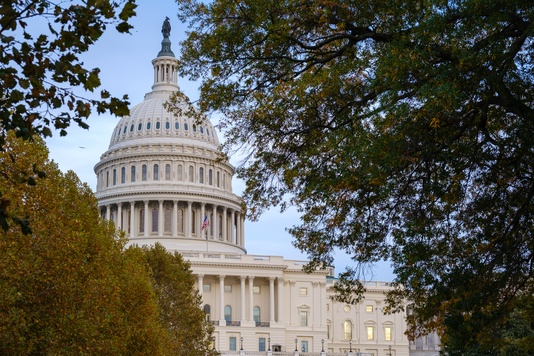
With funding at a constant risk of revocation, Harvard is not out of the clear — and researchers are still fighting for their futures.
Editor's Note
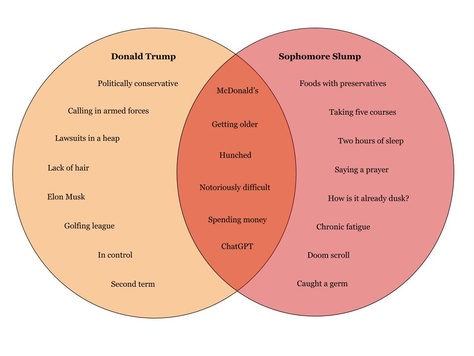
Dear Reader, Just over a year after the 2024 Presidential election, we bring you a first-of-its-kind themed issue, focused on the fallout of the Trump administration’s ongoing attacks against Harvard. In this issue’s cover story, MLB and JPL explore the human cost of the Trump administration’s funding cuts. Last spring, the Trump administration froze billions of dollars in federal funding to Harvard. The University terminated research projects and laid off workers in droves. Most of Harvard’s funds were restored this fall, but researchers are still dealing with the irreversible damage. If federal funding can be revoked at the whims of the White House, how can Harvard comfortably rely on the government again? OJ and TV examine more aftershocks of federal funding pressure. In October, Harvard’s School of Engineering and Applied Sciences laid off 25% of staff represented by the Harvard Union of Clerical and Technical Workers. Many of these staff members worked in student-facing roles as lecturers and advisers. Through a series of profiles, OJ and TV tell the stories of those lost in the layoffs. ASM reports on the changes to the First-Year Urban Program, a preorientation program for freshmen interested in organizing and public service. Founded amid a surge of student activism in the early ’80s, FUP has long been known for its activist and anti-institutional spirit. But this year, in the wake of the federal government’s attack on broadly-defined DEI initiatives, staff altered FUP’s core programming. Staff say the revisions signal a new direction for the program; student leaders and program founders see the changes as a betrayal of FUP’s values. ASM asks how a preorientation program for activists can continue to exist at a university cracking down on campus activism. To understand how Harvard may continue to change under pressure from the Trump administration, CGH and MMN go westward to Stanford’s Hoover Institution. Though it formally identifies as nonpartisan, the Hoover Institution is widely understood as a center for conservative thought at a predominantly liberal university. CGH and MMN explore what a similar center could look like on our own campus. Elsewhere in this issue, RAD interviews Susan B. Glasser, a staff writer at The New Yorker who authors a weekly “Letter From Trump’s Washington.” In one of her signature venn diagrams, MEL compares Donald J. Trump to the dreaded sophomore slump. A pair of personal essays close us out: MEL writes about how political polarization has split her family apart, and SG explores her personal ties to scientific research. For the past year, Harvard’s conflict with the federal government has been a fixture in the national news. This issue illuminates the stories behind those headlines. FMLove, YAK+MTB
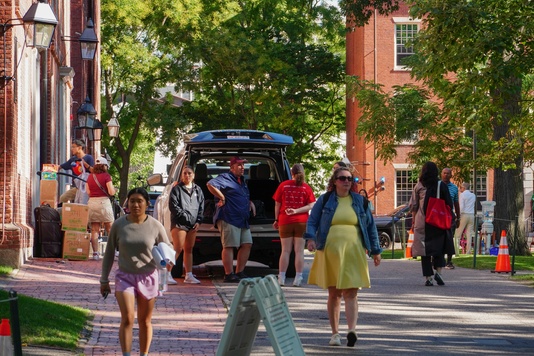
Where Does Harvard’s Orientation for Activists Fit In Now?
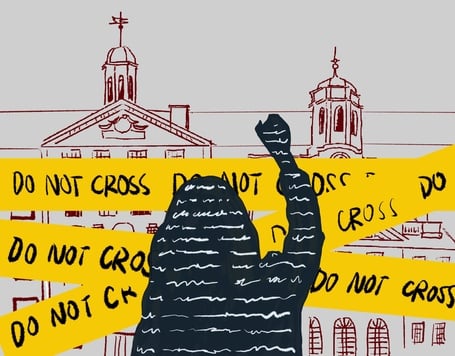
With the Trump administration cracking down on diversity initiatives and administrators showing less tolerance for campus activism, it is unclear whether the program — as decades of students knew it — has a place in Harvard College’s future.
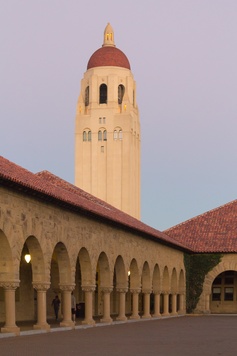
Could Harvard Have a Hoover Institution?
Within discussions about creating an institution like Stanford’s Hoover, Harvard faces a challenge to balance pressure from too many interests — including a dual mandate of nonpartisanship and support of conservative students.
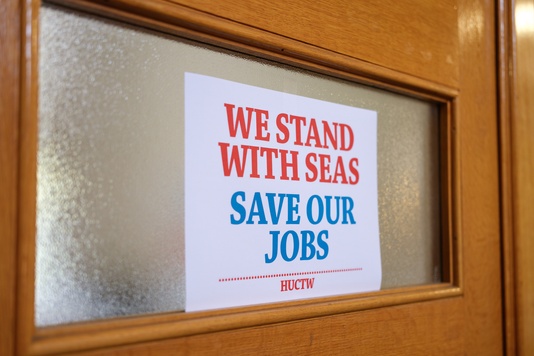
What Was Lost in the SEAS Layoffs
The news of the layoffs came in a scheduled message from the dean. Around 7:40 or 8 a.m., Yoon received another email from his manager requesting a meeting — he took it as another bad sign. He’d been setting up equipment for his course when he had to step away for the Zoom call.
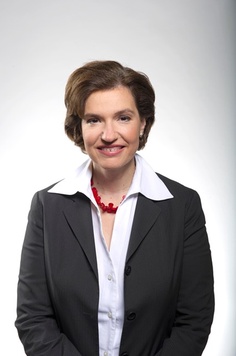
Fifteen Questions: Susan Glasser on Her Harvard Thesis, Trust, and Reporting on Trump’s Washington
The New Yorker politics writer sat down with Fifteen Minutes to discuss the current media ecosystem, cookbooks, and her time as The Crimson’s managing editor.
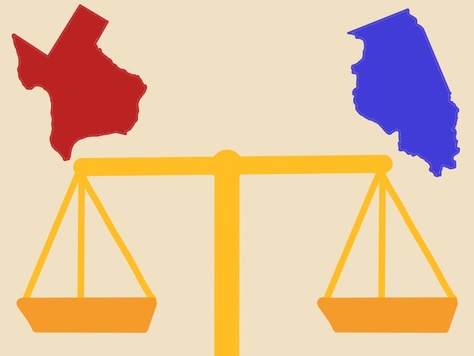
Across State Lines
A polarized nation bled into the fabric of my family — left and right wing politics separating us more than our physical distance.
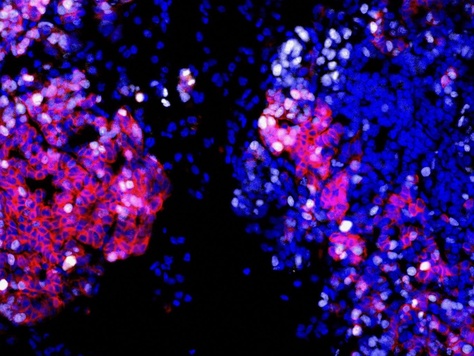
The War on Science
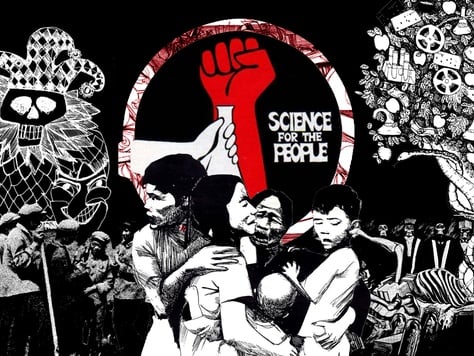
For a school project, I once asked my dad why he came to the United States. “For the science,” he told me. And then, as an afterthought: “And for a better life, obviously.”
Where Does Harvard’s Orientation for Activists Fit In Now?
With the Trump administration cracking down on diversity initiatives and administrators showing less tolerance for campus activism, it is unclear whether the program — as decades of students knew it — has a place in Harvard College’s future.
Could Harvard Have a Hoover Institution?
Within discussions about creating an institution like Stanford’s Hoover, Harvard faces a challenge to balance pressure from too many interests — including a dual mandate of nonpartisanship and support of conservative students.
What Was Lost in the SEAS Layoffs
The news of the layoffs came in a scheduled message from the dean. Around 7:40 or 8 a.m., Yoon received another email from his manager requesting a meeting — he took it as another bad sign. He’d been setting up equipment for his course when he had to step away for the Zoom call.
Fifteen Questions: Susan Glasser on Her Harvard Thesis, Trust, and Reporting on Trump’s Washington
The New Yorker politics writer sat down with Fifteen Minutes to discuss the current media ecosystem, cookbooks, and her time as The Crimson’s managing editor.
Across State Lines
A polarized nation bled into the fabric of my family — left and right wing politics separating us more than our physical distance.
The War on Science
For a school project, I once asked my dad why he came to the United States. “For the science,” he told me. And then, as an afterthought: “And for a better life, obviously.”