FIFTEEN MINUTES
Volume XXXVII, Issue XV
A Precarious Haven
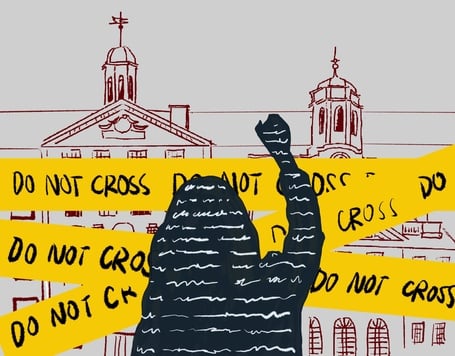
Harvard and the U.S once took pride in their international academic ties. The renewed debate over academic freedom and nationalist loyalties suggest that the country, and its college campuses, are not untouched by the very dynamics that drive scholars to seek refuge here in the first place.
Editor's Note
Dear Reader, Writing, in case you didn’t know, is really flipping hard. I look back through rose colored glasses on moments when words and ideas have poured out of my fingers, nearly fully formed. When a day isn’t like that, it feels like the world is nearly ending, and it takes everything in me to hope against hope that the words will come back. The ideas drift by like stirred dust in a shaft of sunlight — weightless despite suggesting something solid, immaterial despite catching on my eyelashes. This week, with midterms and deadlines and stories all piling up, has not been a good week for my own writing. I have something to say, I think, about a protest orchestra in France playing the Hunger Games theme song. And there is a point, somewhere else, about how bittersweet goodbyes teach me the ways I’ve grown, but it is just on the tip of my tongue. Unfortunately, the cavern in my head is rather cluttered, and I haven’t sorted through it. Writing is really flipping hard — a fact perhaps proven by the rather small ratio of stories published in this issue compared to articles in the pipeline. Brilliantly sourced pieces of magazine journalism can still require more time than a weekend can offer. All the good intentions in the world can’t make a narrative click into place, or an idea become solid. It’s a craft, and it’s a lot of work. Often, it’s a lot of frustration. Writing is really flipping hard, and the pieces in this issue are proof of just how much all that hard work can pay off. Every word in Victoria D. Rengel’s scrutiny changed from the first draft to the second, and the prose simply glistens because of that care and revision. Wyatt J. Meyer’s second column installment did actually make me tear up — and the extensive bullet points from his editor Christopher Schwarting demonstrated the collaboration it took. Theresa F. Bartelme’s endpaper, which might be one of the best examples of a woven essay we’ve ever had the privilege of publishing, has a word count that seems miniscule beside the tally of abandoned paragraphs and half-written sentences that weren’t included. The CHSI and Cultural Revolution stories (by Maria Borrell Ferrero and Suhani Singh, and X. Vanessa Huang and Sophie Y.S. Chong, respectively) both took some significant head-scratching — and came out all the better for the thought that went into them. And the Venn? Well, that’s hard too. If it is not clear, I find it really annoying that writing is so freaking difficult. But when it works, when the pressure of someone’s heart and soul refines a scattered first draft into a polished, gleaming story, there is nothing more beautiful. And getting to click ‘publish’ on those words, when every single one has been chosen with such intention, is among the greatest honors I can imagine. KJK + AJBS
Eugenics and Gorilla Suits: Harvard’s History Through Objects
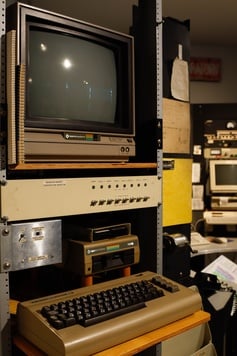
Harvard’s collection of scientific instruments used to be a niche gallery for specialists. Post-renovation, the collection is reinventing itself as a public educational resource by highlighting the stories behind its objects.
The Cultural Revolution’s Trash is Harvard Library’s Treasure
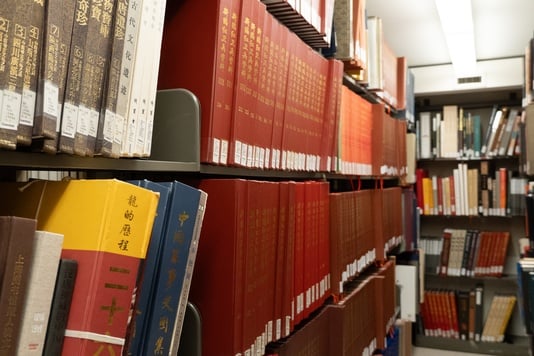
Scholars gathered their finds from the piles of roadside debris in post-Mao China and brought them to Cambridge, a salvaging practice that would earn the name “garbology.”

I’m Still Crying, Wilmer Flores
Sports fandom is one of the few arenas where people are permitted to forget themselves. For this, they need only belief — and for players to maintain it.
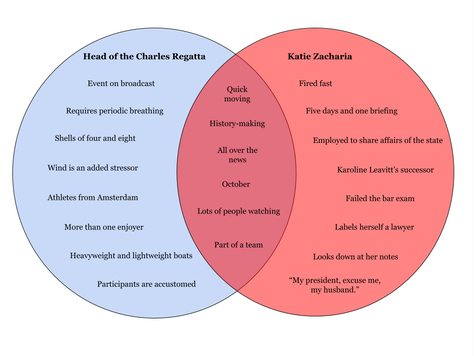
Venn Diagram: Head of the Charles Regatta, Katie Zacharia
All over the news.
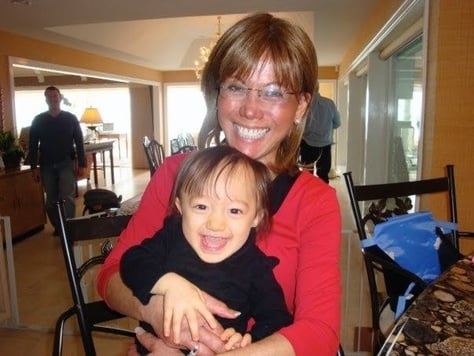
On Inheritance
My grandmother’s story is hard to tell because it spans continents. It is surrounded by people, yet incredibly solitary; she was widely known in my town, but kept few close friends. It’s even harder to tell because I never knew her, and because we share the same name.
Eugenics and Gorilla Suits: Harvard’s History Through Objects
Harvard’s collection of scientific instruments used to be a niche gallery for specialists. Post-renovation, the collection is reinventing itself as a public educational resource by highlighting the stories behind its objects.
The Cultural Revolution’s Trash is Harvard Library’s Treasure
Scholars gathered their finds from the piles of roadside debris in post-Mao China and brought them to Cambridge, a salvaging practice that would earn the name “garbology.”
I’m Still Crying, Wilmer Flores
Sports fandom is one of the few arenas where people are permitted to forget themselves. For this, they need only belief — and for players to maintain it.
Venn Diagram: Head of the Charles Regatta, Katie Zacharia
All over the news.
On Inheritance
My grandmother’s story is hard to tell because it spans continents. It is surrounded by people, yet incredibly solitary; she was widely known in my town, but kept few close friends. It’s even harder to tell because I never knew her, and because we share the same name.