FIFTEEN MINUTES
The AI Issue

Harvard Students’ AI Usage: By the Numbers
A survey of over 300 Harvard students shows more than a third of students use AI in ways they identify as against course policies.
Editor's Note
“What hath God wrought?” asked Samuel F.B. Morse in the first successful telegraph message sent on May 24, 1844. Nearly two hundred years later, the world seems to be faced with a similar query. What hath God (or perhaps, Sam Altman) wrought this time? Mainstream media has spent the past year shoving two topics down our throats: Donald J. Trump and artificial intelligence. Last semester, our predecessors took on the first, rallying the troops to put together a brilliant Trump issue that tackled the ways the 47th President of the United States has impacted Harvard and Cambridge throughout his tenuous time in office. We’ve decided to take on the second. In doing so, we have wondered if we are simply adding to the noise of an already over-saturated news cycle. As WIRED editor Katie Drummond quips, the “worst thing about AI is that people can’t shut up about it.” Technology has inspired euphoria and despair — and most of all, RACKET — since before that first telegraph message. All the while, we humans (putting aside the catastrophic environmental impacts of our continued “progress”), have remained mostly fine. But among the pile-up of articles and think pieces, another, louder racket looms. Ads for chatbots seep into every sphere of daily life. Search engines preempt man-made results with AI overviews and no way to opt out. Professors ask us to turn to ChatGPT for math tutoring, book summaries, and essay edits. Billionaires continue to build data centers on top of small towns, whether they vote for them or not. As journalists, Harvard students, and creatives, we believe we have an obligation to investigate this phenomenon. Stories about AI are stories about our futures — futures we’re unwilling to arrive at by accident. Because likely, the worst thing about AI is not that people are talking about it, but what happens when the conversations stop. Just as Morse mistook his invention for divine intervention, we may similarly come to assume that this new technology is both natural and inevitable. But these inventions are not God, they are human. And thus, they are fallible. In this issue, writers demonstrate how AI is perceived through many different eyes: in one story, it’s the key to solving scientific problems that have stumped centuries of researchers, and in the next, it’s the coming of the antichrist. Yet every single article — the result of face-to-face interviews, pen-to-paper efforts, and arduous editing sessions — marks a commitment to thought. To sifting through the noise enough to question the world around us. They are a plea for you to do the same. AJBS + KJK

Meet the Digital Wellness Expert With an AI Doppelganger
Michael Rich’s decision to turn his work into an AI persona promises a future where people access patient care not through doctors’ appointments, but through artificially intelligent digital interfaces.

Lessons From Lowell: How a Data Center’s Expansion Has Choked a Small Town
Less than an hour away from Harvard’s gates, a data center in Lowell, Massachusetts encapsulates the local stakes of expansion.
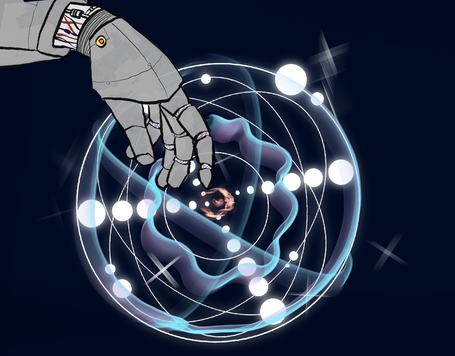
AI Wrote A Harvard Physicist’s Most Recent Paper. No One Knows What It Means for Science.
As LLM calculation skills advance, theoretical fields of science are reckoning with the possibility that they could be replaced. And maybe they want to be?
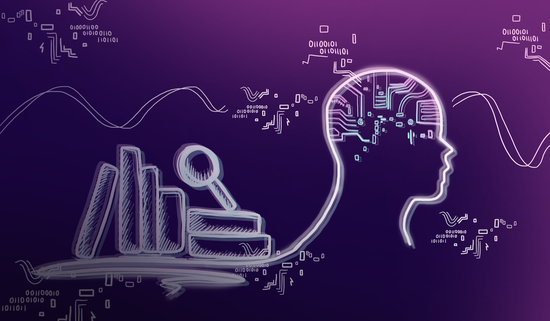
How the Tug-of-War Between Industry and Academia is Shaping AI Research
Experts in AI and technology want to maximize the impact of their work. To do so, they must weigh the merits of two paths: pursuing research in academia, or moving to industry.
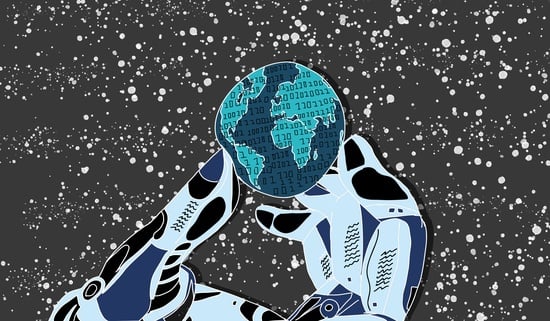
Prepping for the AI ‘Singularity’
AI safety-focused clubs share papers and host high school bootcamps, preparing to face ‘catastrophic’ dangers.
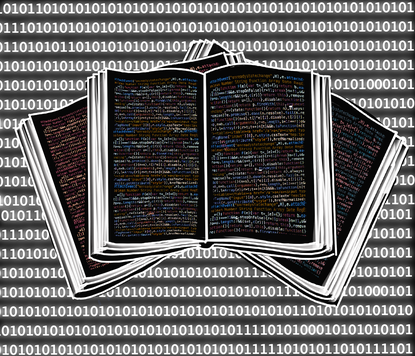
Chucking Out HOLLIS: Harvard Library's New AI Tool and the Mess of the Research Process
Undoubtedly, the Collections Explorer exposes me to the nooks and crannies of Harvard Library’s vast collection in ways that would have taken me hours to uncover on my own. Yet there is something troubling about how the tool smooths over the entire research process. Not only does it surface sources for you, it interprets them with tidy AI summaries that make it dangerously easy to accept, skim, or skip over a source entirely.
How AI Is Seeping Into Cambridge Classrooms
In August, Cambridge Public Schools’ superintendent was asked to design a district-wide policy on artificial intelligence. As its use has grown in classrooms across the district, stakeholders weigh the future of education in the age of AI.
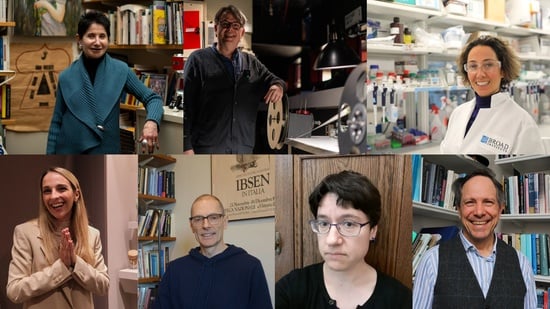
7 Harvard Affiliates on How AI Has Changed the Meaning of Their Work
Seven Harvard affiliates told Fifteen Minutes their answer to the same question: “How does AI change the meaning of your work?”
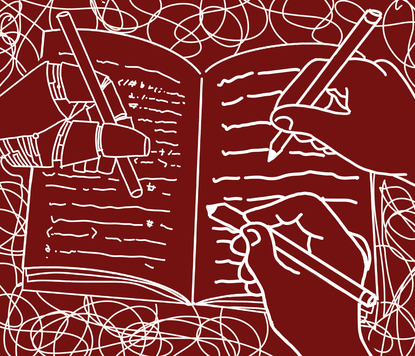
Will AI Make Peer Notetakers Obsolete?
Even with the rise of artificial intelligence platforms that can instantly turn slideshows or recordings into a set of notes, Harvard students find that the DAO’s program offers an essential, human component that AI still cannot replicate. At least for now.
Meet the Digital Wellness Expert With an AI Doppelganger
Michael Rich’s decision to turn his work into an AI persona promises a future where people access patient care not through doctors’ appointments, but through artificially intelligent digital interfaces.
Lessons From Lowell: How a Data Center’s Expansion Has Choked a Small Town
Less than an hour away from Harvard’s gates, a data center in Lowell, Massachusetts encapsulates the local stakes of expansion.
AI Wrote A Harvard Physicist’s Most Recent Paper. No One Knows What It Means for Science.
As LLM calculation skills advance, theoretical fields of science are reckoning with the possibility that they could be replaced. And maybe they want to be?
How the Tug-of-War Between Industry and Academia is Shaping AI Research
Experts in AI and technology want to maximize the impact of their work. To do so, they must weigh the merits of two paths: pursuing research in academia, or moving to industry.
Prepping for the AI ‘Singularity’
AI safety-focused clubs share papers and host high school bootcamps, preparing to face ‘catastrophic’ dangers.
Chucking Out HOLLIS: Harvard Library's New AI Tool and the Mess of the Research Process
Undoubtedly, the Collections Explorer exposes me to the nooks and crannies of Harvard Library’s vast collection in ways that would have taken me hours to uncover on my own. Yet there is something troubling about how the tool smooths over the entire research process. Not only does it surface sources for you, it interprets them with tidy AI summaries that make it dangerously easy to accept, skim, or skip over a source entirely.
How AI Is Seeping Into Cambridge Classrooms
In August, Cambridge Public Schools’ superintendent was asked to design a district-wide policy on artificial intelligence. As its use has grown in classrooms across the district, stakeholders weigh the future of education in the age of AI.
7 Harvard Affiliates on How AI Has Changed the Meaning of Their Work
Seven Harvard affiliates told Fifteen Minutes their answer to the same question: “How does AI change the meaning of your work?”
Will AI Make Peer Notetakers Obsolete?
Even with the rise of artificial intelligence platforms that can instantly turn slideshows or recordings into a set of notes, Harvard students find that the DAO’s program offers an essential, human component that AI still cannot replicate. At least for now.