
Trust the Ultra-Process
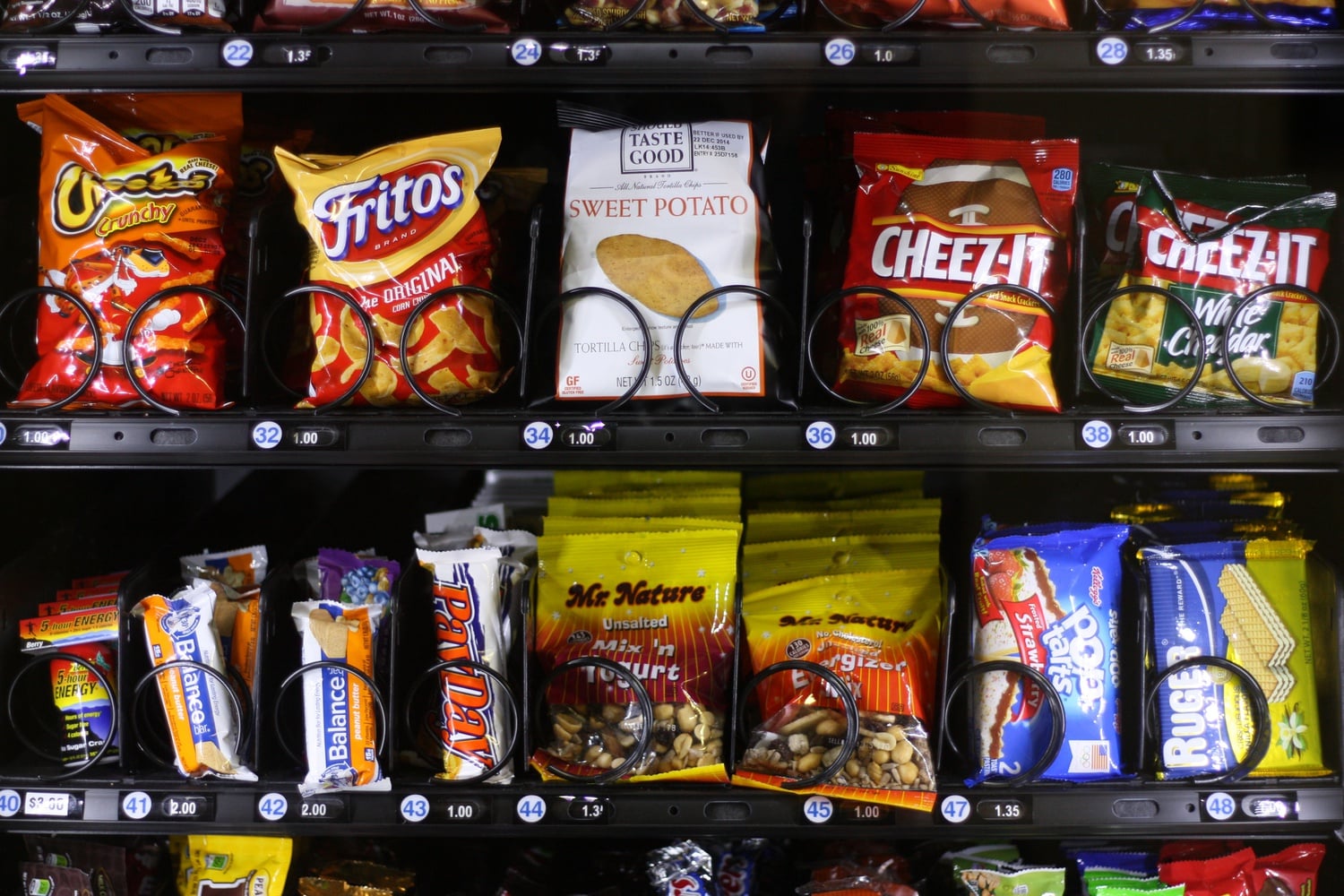
We Americans love to talk the talk, but we keep chomping on burgers, guzzling sodas filled with corn syrup or aspartame, and munching on fries. At this country-wide drive-through, my car is first in line.
ood can make for strange bedfellows — er, tablemates.
California recently passed Assembly Bill No. 1830, requiring manufacturers to fortify their corn tortillas with folic acid in an effort to prevent hundreds of low-income Latina mothers’ babies from dying of otherwise avoidable birth defects. Opposed: Robert F. Kennedy Jr. ’76 — unsurprisingly, if you know anything about RFK Jr.. Folic acid is a food additive and California is a blue state. The bill, he X-ed, was “insanity;” and California was “waging war on its citizens” by mandating a processed ingredient in its food.
Joining him on team infant mortality were also a number of left-wing Californians. The law, they argued, was “colonizing” indigenous cultural practices “all over again.” It was Big Ag and big government forcing processed chemicals into an otherwise pure, indigenous foodstuff. An editorialist for the “Los Angeles Times” wrote that “asking Latinos to accept a fundamental change to something that’s part of our very essence in the name of a supposedly greater good is little better than culinary imperialism.”
The gravamen for RFK Jr. and the anti-imperalists was the same: Tortillas are all natural; folic acid is not. Natural foods are healthy; processed foods are not. Q.E.D.
Never mind that nixtamalization — the process that turns corn into masa, which is then used to make tortillas — is already a form of added chemical processing. In order to make masa, corn kernels are soaked in a caustic alkali bath to break down their hemicellulose and convert their nutrients. Nixtamalization breaks down the natural/artificial food divide right alongside the corn.
But RFK Jr. and the armchair public health experts didn’t care about the nuances of processing, the diets of low-income people, or the structural issues underlying America’s fortification guidelines. They wanted a Manichean fight: good natural tortillas against bad government interference.
But since California passed the law, no one really cares. The tortillas taste the same, and people keep eating them.
See, Americans love to complain about processed foods almost as much as we love to still eat them. And as we saw from the RFK Jr. alliance with the far-left of the Golden State, our love to complain transcends political boundaries.
It’s taken as a given in many circles these days that the modern American food system creates cheap, processed trash that people only eat either because they have no other options or because they are sinful and gluttonous.
In class last week, a peer told me she was most excited to leave America because she “miss[ed] real food.” She told me she was “tired of eating chemicals.” I repressed my assholistic urge to inform her that, actually, all food is chemicals.
We Americans love to talk the talk, but we keep chomping on burgers, guzzling sodas filled with corn syrup or aspartame, and munching on fries.
At this country-wide drive-through, my car is first in line. Yesterday, a box of soggy Cane’s chicken tenders had me literally foaming at the mouth.
As a response to this processed obsession, Americans have spent the last decades developing a culinary counter-culture, one which prioritizes adjectives like “natural,” “organic,” and “farm to table.” Many in this movement’s latest obsession is — as you’ve probably read — raw milk.
As a processed food aficionado myself, what do I think of this latest counter-attack? I’m conflicted. See, I know raw milk can be contaminated, and is especially dangerous for vulnerable populations. Louis Pasteur — who first made milk not-raw — is a demigod of modern safety and public health.
But raw milk also tastes really damn good. It’s non-homogenized, so the cream slowly rises to the top, coating the tongue in irregular unctuousness. Raw cheese is also delicious. Ditto raw eggs, raw flour, and raw cookie dough. Raw fish is delightful too, as is raw meat, when you eat it as Genghis Khan intended — diced into a neat mince with mustard, capers, and crostini on the side. I’ve never tried raw water, but maybe the giardia gives it a little je ne sais quoi.
So why should I not be allowed to drink my delicious fresh raw milk or any of these other delicacies just because it’s a little dangerous to me and a lot dangerous to others?. Lots of things are dangerous. And plenty of victuals once banned for their danger are now consumed.
Absinthe was banned in the United States for almost 100 years for its purported psychedelic properties, but now it’s making a comeback amongst, presumably, those for whom scotch or mezcal somehow isn’t pretentious enough.
And who’s the government to tell us what to do? This is the land of the free, where you can buy a 32 oz. soda and Ron Swanson of “Parks and Recreation” can consume a T-bone, a porterhouse steak, whiskey, and a cigar all at the same time because he is a “free American.” (The waiter soon arrives to tell him the cigar is not allowed inside.)
I’m not the only one with this impulse to live free and die (more quickly from clogged arteries). Whenever efforts to move diets away from processed foods come to America, they’re inevitably met with our libertarian streak. New York City Mayor Michael Bloomberg tried to take away huge sodas, and the city rebelled. RFK Jr. is trying to regulate Dunkin’s sugar-filled drinks, and Boston is up in arms.
Largely ignoring all this noise, I and most of America keep finding ways to drink astounding quantities of sugar.
The standard view on this is that this processed food obsession is largely confined to the lower-class. It’s certainly true that food deserts, limited time, and limited capacity to care all beset the diets of many lower-income Americans with calorie-packed, nutrient-deprived meals. But foodies with medium to high incomes and high taste are often just as obsessed with processed foods.
Christina Tosi, founder of Milk Bar, one of the trendiest bakeries of the 2010s, got her start with products like “cereal milk ice cream,” where the milk was infused with ultra-processed Frosted Flakes. Milk Bar currently offers a Skippy® Peanut Butter Crunch Pie on their website.
Likewise, nascent celebrity chef Mason Hereford went on a national press tour a few years ago for his cookbook “Turkey and the Wolf” — chock-full of processed ingredients. Hereford’s signature bologna sandwich recipe calls for some ultra-processed meat, Duke’s mayonnaise, white bread, and store-bought salt-and-vinegar potato chips. His “McCaviar,” calls for 1. McDonald’s hashbrowns fresh from the drive-through and 2. caviar.
And in the truly fine dining world, even if chefs have not yet taken to regularly serving pre-bought junk food to their customers (although the author of “Unreasonable Hospitality” suggest they should start), many are more than comfortable using chemicals that, were they in the supermarket aisle instead of a Michelin kitchen, would make the food egregiously “ultra- processed.” Scary-sounding ingredients like transglutaminase, Ultra-Tex 3, and gellan gum make possible dishes at some of the world’s fanciest restaurants. Some American chefs even use tonka beans in their food, which are classified as a dangerous and illegal food additive by the FDA.
While the loud-mouthed public decried Subway for including azodicarbonamide in its bread (largely because it was also used to make yoga mats), Nathan Myhrvold, a member of the literal Epstein class gastronomic elite, defended its use in his five volume, $625 tome of a cookbook “Modernist Bread.”
Subway ended up removing azodicarbonamide from its products, but every few years some new story comes out claiming Subway’s sandwiches are particularly processed and fake: the Footlong isn’t a foot long; the bread is cake; the tuna fish doesn’t have tuna. Meanwhile, Subway has the most locations of any restaurant chain in the United States. And despite all the negative publicity, I still eat Subway on a semi-regular basis.
So, with a public-health-crisis angel on one shoulder urging America to get healthy and a delicious processed devil on the other, reminding us how great a good chicken nugget is, whither ought we turn?
Maybe the path ahead lies somewhere between a nanny-state and an Upton Sinclair-esque dystopia of toxic ingredients and exploitative industry.
Let the consumer have choice, but give the consumer the freedom and education to make real choices. Let my Froot Loops cereal (yep, it’s spelled with two “o”s) stain my raw milk bath crimson with its red 40 dye. But before you do that, make sure Americans can afford something more than sugar, corn, and petroleum-based dye to start their days. And make sure they know the risks raw milk poses to their health.
Because from sea to shining sea there’s room enough in this country for twinkies, fresh fruit, and raw milk.
As for California’s tortillas, the ratified law includes exceptions for small-scale tortilla producers, so that the majority of the food supply will have more folic acid, but the traditional recipe will still be available from artisanal tortillerias.
Sometimes we can have our ultra-processed cake and eat it too.
—Magazine writer Henry G. Levenson can be reached at [email protected]. His column “Gastrocosm” explores food, culture, and his strong opinions on both.