FIFTEEN MINUTES
Volume XXXVII, Issue VI
Decoding the Harvard Dropout
Harvard’s indefinite leave of absence policy makes it possible to go big, or go back to the best school in the world. What comes next for the Harvard dropout — and what happens to the University they leave behind?
Editor's Note
Dear Reader, Here at the magazine, we often talk about what we call the ‘angle’ of a piece. How does an assignment go from a topic to a story? What is the difference between Fifteen Minutes and Wikipedia? How, as a writer, can you take a short description for a pitch and breathe thousands of words of life into it? As you can tell, finding an angle is no small feat. But this issue presents six stories that are each, in their own ways, masterclasses in developing unique angles. Our cover story for the week is “Decoding the Harvard Dropout,” a scrutiny that weaves together the experiences of a dozen Harvard dropouts with the perspectives of professors, venture capital firm partners, and current students. What began as a story explaining how the College’s policy supports young startup founders became an almost existential exploration of what it might mean to have this new age of AI led by college dropouts, and how (and whether) the University should change its offerings to meet this new entrepreneurial demand in order to keep future leaders interested in a college degree. AWA, CSB, and MK have worked tremendously hard to produce a story that is compelling and critical while remaining empathetic and evidence-driven. We’ve been beyond impressed at their work, from the thoroughness of their reporting to the clarity of their sentences, and it’s been a privilege to watch their angle emerge over the past month. In addition to the cover story, JPL interviews the film projectionist John Quackenbush — a 15Q revealed to be a scheme for settling the Quackenbi Conflict. IYKYK. Next, SLSY writes about the growing popularity of Substack, and her article becomes a brilliant dissection of the pitfalls that come with the increased accessibility of publishing writing. After that, AWS (whose pitch simply began as “write something about river run plzzzzz”) digs up the true, multi-decade history River Run through incredibly in-depth reporting… and by undergoing the ritual himself. Then, NURC takes you to Harvard Boxing Club’s annual Fight Night, where she uncovers Harvard’s long history with boxing — and the unexpectedly wholesome culture that comes with it. And to close out our issue, YTSM’s introspection (which if you must know, dear reader, we in the newsroom have dubbed the “pedophile endpaper”) takes on the topic of growing up by telling a hilarious tale of being mistaken for a creepy adult. So reader, we hope you enjoy this issue — not only for the interesting stories these writers have found, but the unique angles they’ve employed to tell them. Thank you to our incredible Multi and Design teams for making this issue beautiful. And special shoutouts to OWZ and SM for creating some especially stunning designs in the final hours. MagLove, KJK + AJBS
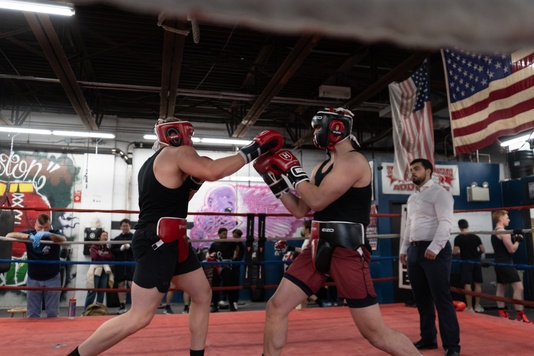
There Are Only Winners At Fight Night
With 20 seconds left in the final fight, hollering spectators drown out the sound of red gloves striking against skin. It’s Fight Night with Harvard’s Boxing Club.

The Art of Appeasing the River Gods
Three decades after Harvardians first conducted a ritual sacrifice to avoid being Quadded, what do the River Gods want now?

Fifteen Questions: John Quackenbush on the Art of Film Projection
The AFVS projectionist sat down with Fifteen Minutes to discuss Super 8, movie theaters, Instagram, and the other John Quackenbush.

I Love Kids. No, Not Like That!
It was inconceivable that, in the great universal divide between Adorable Child and Creepy Adult, I could be on Team Creepy Adult.

To Substack Or Not to Substack
What brings all of these people to this platform for writing? Are we witnessing the emergence of a new public forum? A newly accessible location for language? What does the popularity of Substack as a less established, institutional space for writing, even at so established an institution as Harvard, mean?
There Are Only Winners At Fight Night
With 20 seconds left in the final fight, hollering spectators drown out the sound of red gloves striking against skin. It’s Fight Night with Harvard’s Boxing Club.
The Art of Appeasing the River Gods
Three decades after Harvardians first conducted a ritual sacrifice to avoid being Quadded, what do the River Gods want now?
Fifteen Questions: John Quackenbush on the Art of Film Projection
The AFVS projectionist sat down with Fifteen Minutes to discuss Super 8, movie theaters, Instagram, and the other John Quackenbush.
I Love Kids. No, Not Like That!
It was inconceivable that, in the great universal divide between Adorable Child and Creepy Adult, I could be on Team Creepy Adult.
To Substack Or Not to Substack
What brings all of these people to this platform for writing? Are we witnessing the emergence of a new public forum? A newly accessible location for language? What does the popularity of Substack as a less established, institutional space for writing, even at so established an institution as Harvard, mean?