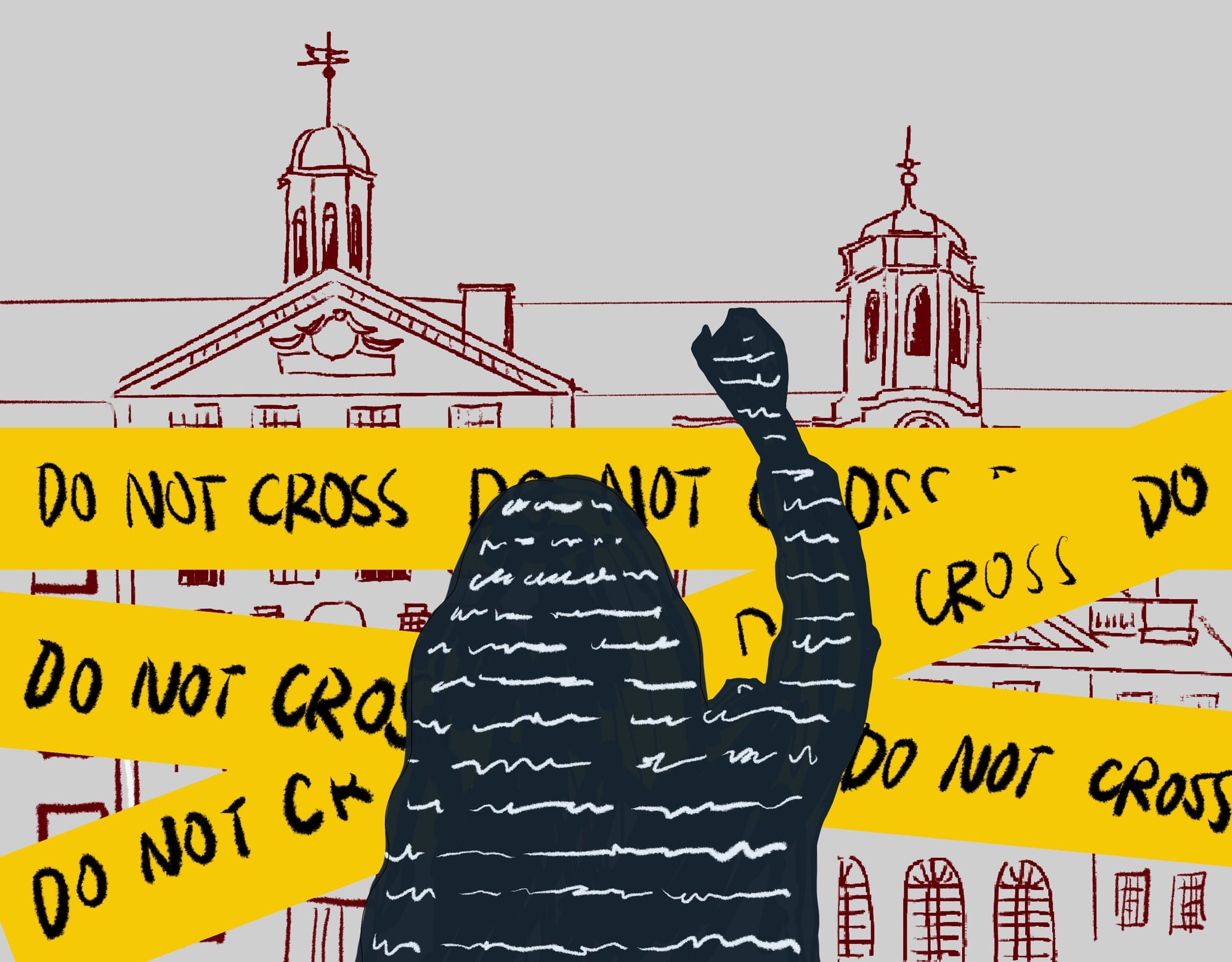
n August of 1925, Gaetano Salvemini hastily packed for what was supposed to be a temporary trip. Departing from Genoa, Italy, he traveled lightly, carrying with him a small personal bag in one hand and a heavy, expanding file in the other. Its walls protected 350 pages of documents recording charges levied against fascists in Italy — the cause of Salvemini’s sudden departure.
Prior to his exile, Salvemini was a member of the clandestine periodical “Non Mollare” that publicly opposed Benito Mussolini’s fascist regime. Suspecting Salvemini’s involvement, the government arrested him.
After a month of imprisonment, the court postponed Salvemini’s case, still lacking the testimony of the prosecution’s main witness, and provisionally released him. Followers of the regime were enraged by the decision, and fascist supporters attacked his defense attorneys. One reportedly died from his injuries.
Salvemini took a meticulously curated path to France and managed to leave Italy undetected, landing at a friend’s apartment in Paris. From there, he mailed the damning documents back to Italy, where they were printed by antifascist publications — much to the consternation of the authorities. He left most of his belongings behind, believing that Mussolini’s regime would soon be overthrown and he’d be allowed to return to Italy. But as foreboding news from Italy continued to reach Paris, he reluctantly accepted the permanence of his exile.
Salvemini’s exile forced him to temporarily abandon the site of his most beloved vocation: the classroom. He taught modern Italian history at the University of Florence for eight years. Now he had no choice but to write a letter of resignation to the university’s rector. “The Fascist dictatorship has suppressed in our country those conditions of liberty without which the teaching of history in the university — at least as I understand it — loses all its independence, and therefore, all its dignity.”
Salvemini spent the next eight years floating between campuses across England, France, and the U.S., and in 1933, impressed with his work, top universities across the U.S. reached out. Salvemini accepted a position in the history department at Harvard that same year.
But his appointment was conditional. Some Harvard affiliates sympathetic to Italian fascism sought to prevent his hiring, as did the Italian consulate of Boston. Though they failed to prevent Salvemini’s arrival, his appointment came with one restriction: not to use the classroom to spread political propaganda. The independence he had spent nearly eight years chasing — from the stone-lined Florentine streets to red-bricked Harvard Square — again eluded Salvemini.
Salvemini’s experience is representative of the complex politics of academic freedom that push many scholars to flee persecution and seek refuge elsewhere. The United States’ fluctuating willingness to receive international scholars is itself a reflection of ever-morphing national anxieties and governmental priorities.
The arrival of displaced European scholars like Salvemini to the U.S. in the 193os and 1940s is now celebrated, but their hiring was controversial at the time amid nativism, antisemitism, and competing political priorities. After World War II, as the nation descended into anti-communist paranoia, universities were framed as training grounds for political subversion by government officials and even members of their own faculties. Professors who advocated for the arrival of displaced scholars and celebrated globalism were easy targets. Displaced scholars themselves, living in the U.S., recognized as red flags the policing of campus dialogue and the harassment of political opponents, leading some to return to Europe.
The 21st century has seen a similar plot play out.
In 1999, the Scholars at Risk program was born out of an era championing human rights, and in response to the growing global persecution of scholars. Since its founding at the University of Chicago, SAR has grown into an international network of universities that relocate vulnerable scholars. Harvard’s chapter — marking its 25th anniversary this year — has provided 10-month residential fellowships to 172 scholars from 37 countries.
But the assumption that Harvard, and indeed the whole of the United States, is a safe haven for bold, courageous, and innovative scholars has once again been turned on its head in the current political climate.
Since taking office in January 2025, the Trump administration has pressured universities over what it has described as left-leaning, socially progressive, and “anti-American” ideologies. Professors and students have faced scrutiny for their speech.
Amongst the institutions that have lost federal funding in disputes with the administration, Harvard has been hit particularly hard. While some regard Harvard’s legal battles as evidence of a commitment to academic freedom, critics argue that University administrators have also made changes aligned with the federal government’s demands.
Due to the national environment cultivated by Trump, some scholars based in the United States are now considering themselves scholars at risk in a similar way. While some contemplate relocating, others have already left.
Harvard and the U.S once took pride in their international academic ties. The renewed debate over academic freedom and nationalist loyalties of Harvard suggest that the country, and its college campuses, are not untouched by the very dynamics that drive scholars to seek refuge here in the first place.
Ripples Across the Atlantic
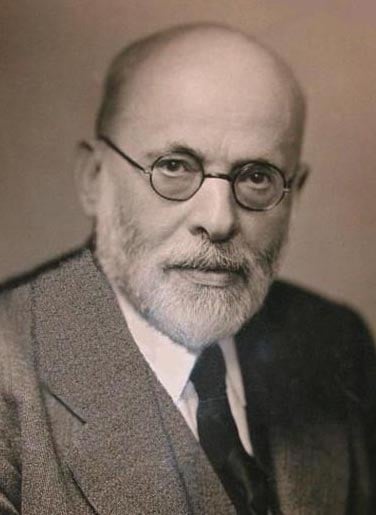
ou may be assured that never my lectures or my seminar will be used for political propaganda,” Salvemini wrote in 1933 to Harvard’s newly appointed President, James B. Conant, Class of 1914. “The wishes of the donor who made possible my appointment are sacred to me.”
Salvemini’s tumultuous path to Harvard began five years earlier when in 1928 Arthur Schlesinger Sr. — a former chair of the History Department — asked Salvemini to teach at Harvard for a semester. A. Lawrence Lowell, Class of 1877, who was Harvard’s President at the time, intervened, instructing Schlesinger to rescind the offer because of opposition to Salvemini from Mussolini sympathizers on Harvard’s governing board and faculty.
It took five years, but the appointment of President Conant — who was more liberal and internationalist than his predecessor — finally enabled Salvemini’s hiring. Still, the hiring remained controversial.
Jeremiah D.M. Ford, a professor of Romance Languages and Literatures and an open admirer of fascism, worked with Italian diplomats to oppose Salvemini’s appointment. Ford repeated an unsubstantiated accusation that Salvemini had orchestrated a failed assasination attempt against the Italian crown prince in Belgium.
Ford even went so far as to request a private meeting with Conant to discuss the matter. Conant informed Ford that his efforts came too late as he had already authorized Salvemini’s appointment.
Opponents of Salvemini’s appointment nevertheless won on a restriction on his classroom speech. Harvard based his hiring on the condition that Salvemini would not spread antifascist propaganda in his lectures. Salvemini accepted these terms, believing that Harvard could still offer him the refuge he so longed for.
“My loyalty to Harvard University and the respect I owe myself as a scholar would alone be sufficient to prevent me from using the classroom for any other but scholarly purposes,” he wrote in a letter to Conant accepting the job.
The same year Salvemini took his position at Harvard, Adolf Hitler was appointed chancellor of Germany. In April, Hitler’s Nazi regime barred both Jewish and other non-Aryan individuals from working for any state-run institutions, which included universities. Nearly 1,200 scholars based in Germany were fired. Others were targeted for their ideas that stood in opposition to Nazi and fascist regimes.
European scholars sent letters to their U.S. American counterparts, detailing how their universities were overtaken by fascism In response, a group of intellectuals, doctors, lawyers, and philanthropists came together to create the Emergency Committee in Aid of Displaced Foreign Scholars in May of 1933. They first worked to help relocate Germans and connect them with U.S. based institutions before, but later broadened the scope of their work during World War II to include other European countries.
Of the 23 founding educators of the Emergency Committee, two were Harvard professors: Harlow Shapley, professor of astronomy, and Sidney B. Fay, class of 1896, a professor of history. Though the pair was eager for Harvard to participate, out of the first fifteen universities the committee reached out to, Harvard was the only institution not to select a scholar.
The nation was in the middle of the Great Depression, and nearly 10 percent of faculty members at universities across the country were laid off. Some U.S. Americans argued that the committee would allow displaced European scholars to fill positions that could otherwise go to American academics.
Laurel Leff, a professor emeritus of journalism at Northeastern University who has studied debates at U.S. universities around the hiring of refugees from Nazi Europe, says that the Emergency Committee was “very sensitive about not appearing to take positions away from American professors,” and so emphasized that the relocation was temporary.
U.S. universities also had their own problems of antisemitism. Leff says that many universities placed Jewish applicants through a series of filters: “Do you seem Jewish? Do you look Jewish? Do you have Jewish mannerisms? Literally, how Jewish are you? Did you convert? Did your family convert? Can we present you as not appearing to be Jewish?” Other universities flat out refused to hire any Jews at all, or else implemented a ‘one-Jew rule.’ In 1922, Harvard’s President Lowell proposed a 15 percent quota for Jewish admissions, though a College committee rejected his proposition.
Nationally, the U.S.’s immigration quotas allowed greater numbers of immigrants from Western Europe, but still not enough to accommodate the volume of people seeking refuge.
In the media, Leff says displaced scholars were discussed “a little bit more favorably” than other kinds of immigrants at the time. Many were highly educated and hailed from renowned European universities, and thus it was harder to portray them as inherently dangerous, uneducated, and inferior.
Nevertheless, universities were hesitant to accept them. The same repressive logic that caused scholars to flee also manifested in U.S. college administrators, who did not want to hire communists and were unenthusiastic about socialists or leftists.
Thus, while some scholars were welcomed into the land of the free, many others were turned away, left to face persecution — and in many cases, death — at the hands of fascism. “It is not just a story of Americans’ beneficence and how these scholars helped the United States,” Leff says. “It is also a story of American universities being infected with, or maybe even more subject to the anti-Semetism, the anti-foreign, the anti-immigrant, the xenophobia that was prevalent through American society.”
In its 12-year duration, the Emergency Committee received solicitations from nearly 6,000 affected scholars. It successfully relocated a mere 335. Harvard never joined.
Instead, by 1945, Harvard had hired 45 displaced European scholars through internal processes. Aside from the New School — an institution established partly to receive such scholars — Harvard accepted more than any other university in the U.S. Nonetheless, Harvard did not become such a haven overnight. Student and faculty advocacy helped drive the change.
Conant, who was Harvard’s president from 1933 to 1955, was ambivalent in his responses to the onset of World War II and the persecution of Jews. During the early years of his tenure, the University maintained close ties to Germany, which by the time Conant took office, was already controlled by the Nazis. In 1934, Conant welcomed the high-ranking Nazi official Ernst F. S. Hanfstaengl, Class of 1909 to Harvard’s Commencement ceremony.
The following year, the University allowed Nazi Germany’s consul in Boston to contribute a wreath to Memorial Church for four German Harvard students who died in military service. The wreath adorning the chapel was embellished with a swastika.
The University’s official policy on exiles radically changed after Kristallnacht. On Nov. 9 and 10, 1938, a massive wave of state-sponsored violence terrorized Jewish people living in Nazi Germany. The vandalization of businesses, the destruction of synagogues, and the arrest of nearly 26,000 Jewish men sent ripples across the Atlantic.
Student groups across the College came together in response to Kristallnacht to create a plan for relocating Catholic and Jewish victims of Nazi persecution to Harvard. They formed the Harvard Committee for Refugees, which set out to host 20 displaced students. This required the group to raise a minimum of $10,000 from students and faculty and $25,000 from alumni. While these funds would only cover room and board, the committee entreated Harvard to provide scholarships to finance tuition.
Unable to escape this pressure, Conant agreed to present the committee’s demands to the Harvard Corporation, the University’s highest-governing body, in late November. The Corporation responded positively to the appeal, agreeing to fund 20 $500 scholarships for qualified refugee students — either upperclassmen or of the graduate level — regardless of religious or racial identity. “Nazi oppression has presented a challenge to each of us,” said Robert E. Lane ’39, head of the committee, in a 1939 interview with The Crimson. “The Corporation has met this challenge.”
In a public statement following the corporation’s decision, Conant also praised the work of the Harvard Committee for Refugees. “This endeavor of the Harvard College students to raise money by their own efforts to aid refugees is of importance primarily as a symbol of the determination of the younger generation to show by deed as well as by words that the humanitarian basis of democracy is not dead.”
Shapley was one of the most outspoken faculty members. In addition to contributing to the Emergency Committee, where he helped relocate scholars to other universities across the country, he frequently fought Harvard administrators for their support of international scholarship. He is given credit for 16 temporary professorships, seven appointments with the prospect of tenure, and the establishment of Harvard-run asylum fellowships for 12 scholars.
Beyond his classroom, Salvemini continued to organize against fascism, despite his pledge to Conant. When not teaching Italian history, giving talks on Italy’s fight against facism to packed lecture halls, or meeting with other antifascist intellectuals living on this side of the Atlantic, he was in perpetual awe of his favourite place on campus. For the 15 years he taught at the University, he visited Widener Library nearly every day from 8:3o a.m. to 12:30 p.m. and from 3 p.m. to 7:30 p.m. He loved losing track of time in the library’s endless bookstacks and promising titles. In a letter to a close friend, he admitted — “I am the richest man in America because I am the proprietor of Widener and do not pay taxes.”

McCarthyism reaches Harvard
n November 1946, Shapley — the Harvard professor who helped turn Harvard into a temporary home for displaced scholars during WWII — received a menacing subpoena demanding his appearance in the nation’s capital before the House Un-American Activities Committee.
The committee was created in 1938 to investigate the influence of subversive ideologies, mainly communism, in the United States. As the nation grew more anxious over the simmering Cold War, national security and halting the spread of communism became top priorities for politicians in Washington.
Shapley was ordered to testify and provide documentation about organizations with which he was affiliated — which the Committee viewed as suspect. Those groups included the Joint Anti-Fascist Refugee Committee and the Massachusetts Independent Citizens Committee of the Arts Sciences and Professions, and the Congress of Industrial Organizations.
Shapley refused, but he did not do so alone. Nearly 200 met in Emerson Hall to stand in solidarity for Shapley. At this meeting, the president of the Harvard Liberal Union — William G. Bozman ’46 — presented Shapley with a petition that amassed 1,200 signatures from Harvard affiliates sympathetic to his cause.
Addressing this packed lecture hall, Shapley offered an example to make sense of the attack against him. Every time he tried to get a foreign visitor to understand the U.S. and its customs, he found himself ashamed by two national situations. “One is the pogroms that the hypothesis of ‘white supremacy’ tolerates and even encourages, and the other is the operation of the Wood-Ranking Committee which simulates the medieval inquisition and the modern Gestapo,” he said.
In the spring of 1950, Shapley was once again targeted, but this time, by the U.S. Senator Joseph R. McCarthy.
The U.S. was haunted by the specter of communism following the Russian Bolshevik Revolution of 1917 and the communist victory in the Chinese Civil War of 1949 — and alarmed by tensions over foreign policy and nuclear weapons with the Soviet Union. The stage was set for McCarthy.
McCarthy gained fame when in 1950 he alleged that communists had infiltrated the State Department, building on existing fears that federal employees were of divided loyalties. Three years earlier, President Harry S. Truman created a Loyalty Program through an executive order that allowed investigations into the political affiliations and loyalties of federal employees.
McCarthy’s accusations led to a thorough and far-reaching series of investigations that targeted government employees, journalists, activists, artists, and intellectuals. His tactics of fear-mongering and making public allegations of communist influence without substantiation helped give rise to the term “McCarthyism.”
Clay Risen — journalist and author of “Red Scare: Blacklists, McCarthyism, and the Making of Modern America” — says that as the best-known university in the nation, Harvard was the “ripest for attack.”
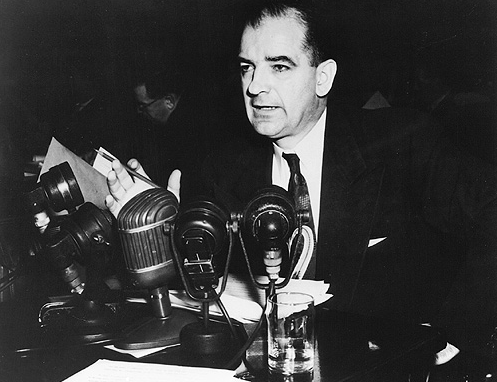
A McCarthy-led subcommittee named Shapley as a pro-communist figure, alleging that the Harvard professor had ties to at least 36 separate communist-front organizations. In response, Shapley called the accusations “a complete absurdity and a slanderous lie” and argued that their baseless propagation brought “disgrace” to the Senate.
Frank B. Ober — a Harvard Law School alumnus and donor and former chair of Maryland’s Commission on Subversive Activities — threatened in 1949 to withdraw his financial support for Harvard over what he considered its leniency towards communism. Ober raised concerns about Shapley and English instructor John A. Ciardi’s involvement with organizations he associated with communist ideology.
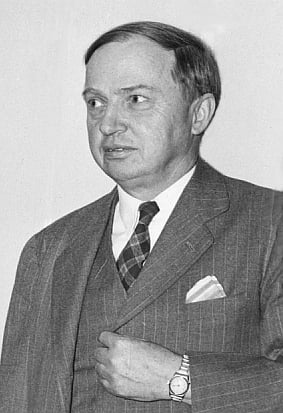
In his response to Ober, Conant wrote that the University had not historically and would not begin to discipline its faculty on account of their political speech outside the classroom. Greenville Clark — a Fellow of the College — also pushed back against Ober’s proposed approach to professors’ political associations.
Clark rooted his response in what he viewed as Harvard’s long-standing tradition of academic freedom. “For Harvard to take the course you recommend would be to repudiate the very essence of what Harvard stands for — the search for truth by a free and uncoerced body of students and teachers,” he wrote. “It would be to make a mockery of a long tradition of Harvard freedom for both its students and its faculties.”
He looked as far back as 1869, citing the inaugural address of former Harvard President Charles W. Eliot, Class of 1853, as a testament to the University’s historic commitment to free inquiry. “This University aspires to serve the nation by training men to intellectual honesty and independence of mind. The corporation demands of all its teachers that they be grave, reverent, and high-minded; but it leaves them, like their pupils, free,” Eliot said.
Though Clark and Conant’s correspondences with Ober capture some resistance to McCarthyism, the University still conformed to this anti-communist mission in many ways. Harvard had a widely acknowledged rule that members of the Communist Party could not teach — parallel with countless other educational institutions across the nation. Risen explains that while very few members of Harvard’s faculty were openly communist in 1952, a handful of them had been members or sympathisers in the past. “What do you do as a university president if someone is shown to have once been a party member?” he says. “It became very sticky.”
Conant’s successor, Harvard President Nathan M. Pusey, Class of 1928, tried to establish some boundaries that would protect Harard from McCarthy’s purge. In a defiant telegram to McCarthy, Pusey wrote that “Harvard is unalterably opposed to communism. It is dedicated to free inquiry by free men.”
At the same time, however, like his predecessors, he argued that a member of the Communist Party was certainly “not fit” to be on the faculty as he did not have the “independence of thought and judgment” required by the job.
The atmosphere affected campus culture, not just at Harvard but across the nation. Some academics left their positions; others faced diminished opportunities or pressure to keep controversial views to themselves.
However, the biggest consequence, Risen argues, was for the people that stayed. Though more intellectuals decided to stay in academia than leave, their position within the academy was contingent on their ability to conform or stay quiet.
“One of the real intellectual impacts of the Red Scare was that through the 50s and early 60s, you did not have as robust an intellectual debate around foreign policy, around government policy, at least coming from the academic world, as we could have used,” he says.
For the scholars who had arrived during World War II, the tense political environment raised doubts about whether the U.S. still offered refuge. Risen says some experienced the change as a sudden reversal of the welcome they had received a decade earlier. Now able to return home, a number of them said goodbye to the U.S..
“For those people who had fled fascism in the 30s and 40s, it was also a difficult time to go through this and to experience the whiplash of being welcome and then suddenly being told, ‘oh wait, the academic freedom is costed by national security concerns,’” he says. “You can say certain things, but other things you can’t say because suddenly we’re in this new situation and we have to police everything that’s said for fear of, I don’t know, giving support to the enemy or educating the children.”
While globalism and academic freedom in the U.S. were contested when displaced scholars arrived, the Red Scare represented a radical shift of values from this earlier period.
This historical moment forced the Harvard that had welcomed displaced European scholars in WWII to decide whether this same academic and political freedom would extend to their faculty who were actively questioned by the government.
This would not be the last time. Still, the freedoms extended to foreign scholars in WWII would be continual points of reference for future actors as they encountered this dilemma.
Scholars at Risk
athterine Trumpener, former professor at University of Chicago, was following her usual weeknight routine in December 1997. As she set her dinner table and monitored the temperature of her stove, her attention shifted to the radio in her kitchen. The National Public Radio was airing a special segment celebrating International Human Rights Day. As the radio announcers surveyed ongoing human rights abuses, they listed a group with particular relevance to Trumpener. Faculty and students at universities around the world were framed as both frequent targets of human rights abuses but also as frequent defenders. Trumpener took the message to heart.
“Depending on what kind of society you’re in, the poorest of the poor — who are working for a pittance and trying to survive the best they can — may not have the bandwidth, the time, the influence to protest their conditions,” she says. On the other hand, she sees intellectuals as privileged. Trumpener argues that they have time not only to contemplate questions about the fairness and morality of the organization of societies, but also to act on their conclusions. Yet the very same position that empowers them to fight for human rights, also makes them targets.
That night, as the NPR segment concluded, Trumpener drafted an email from her kitchen table to the provost and president of the University of Chicago, pitching an idea to help vulnerable scholars around the world.
“If one of our dearest-cherished values is academic freedom, and if we pride ourselves on being one of the world’s greatest universities, which could potentially hire anyone in the world, if they were intelligent and interesting enough (although very often we hire much more parochially than that), then why couldn’t we make it possible for professors-in-exile to come teach here?” Trumpener wrote.
In her view, the collaborative nature of academia means that scholars have a direct responsibility towards the safety of others scholars as they form part of a global web of knowledge, publication, and discourse that is predicated on the involvement of other scholars around them, those who came before them and those they’re training to come after. As a member of this collaborative web of intellectuals herself, Trumpener argues that when scholars come under active threat anywhere in the world, other scholars should jump to their defense, as “we would hope to be helped in turn.”
She also emphasizes that due to the ways the University benefited from intellectual contributions of displaced European scholars in the 1930s and 1940s, it owes it to them to continue this tradition.
However, her appeal to the university was not just based on ideals. She made a similar argument to advocates from the 1930s and 1940s, who framed the arrival of European refugees as an acquisition of intellectual talent that would benefit the nation. By the early 20th century, German universities were recognized as some of the most prestigious. Tumpener’s plea also advanced self-interest, arguing that the hiring of displaced foreign scholars was beneficial to the university and nation. “There is a lot to be gained by hiring the bravest and smartest people coming out of their societies,” she says.
After drafting her email, Trumpener called her friend and colleague, Jaqueline Bhabha. Bhabha founded the Human Rights Program at the University of Chicago in 1997 and supported Trumpener’s proposal. She helped secure funds to launch the program first at the University of Chicago in 1999 and later at Harvard in 2001, when she was hired as a lecturer at the Harvard Law School.
Since its official founding in 1999, Scholars at Risk has grown into an international network that champions academic freedom. It is composed of partner universities who internally review applications, organize fellowships, and generate funding for 10-month fellowships.
The same fundamental belief still drives Bhabha’s work today; universities should “provide a safe haven, a place where scholars could be scholars again, and do their research, their writing, their thinking in safety, and also connect or reconnect with the scholarly community,” she says.
Robert Quinn — the executive director of Scholars at Risk — emphasizes just how much the program has grown. What began as 20 schools with just two based outside of the U.S. has grown to a massive network of 650 universities, 70 percent of which are located beyond U.S. borders.
Despite this growth, the program cannot help everyone who applies. Harvard’s chapter is under administrative oversight of the Office of the President and Provost, and is run by a committee of twelve faculty members, a staff member, and a director. Though Bhabha — who formerly co-chaired the committee with English professor Stephen Greenblatt — says assessing a scholar’s risk level is complicated, it is nonetheless an essential task. “If your life or your freedom to do your research or to publish are threatened or you lose your job because of what you write or because of what you do,” she says, “then you’re at risk.”
The committee also tries to select a diverse group of scholars in terms of discipline and career stage. Bhabha says that they want both well-established intellectuals and also junior scholars who are unable to advance their career due to the prosecution they face. The program is meant to cater to and promote buy-in from all kinds of disciplines and schools, not just the human rights experts at Harvard. Anybody involved in the university — faculty, students, staff — could nominate scholars, says Bhabha.
Jane Unrue, the current Harvard SAR director, says that the University’s selection process stands out from other chapters because it endorses a broader view of what counts as a scholar. Harvard’s selection criteria spells out that “writers, artists, thinkers, and independent intellectuals who pursue scholarly work may count as ‘scholars,’ even if they are not employed at an academic institution.”
This emphasis is due to Unrue’s involvement in the program. When she taught an expository writing course in 2006 called “The Voice of Authority,” Unrue invited a writer at risk to her class. Unrue did not identify the writer when recalling this moment, but says they talked to her students about the repression they had faced in their country under an authoritarian regime. Soon, they would be forced to return.
Though Unrue desperately wanted to help this writer, Harvard’s SAR program only hosted scholars, not writers, at the time. Compelled by his story, Unrue conducted a tremendous amount of outreach and worked with a donor to change this so they could offer the writer a SAR fellowship at Harvard. This victory led her to join the committee, which has since hosted roughly one writer a year. In 2019, Unrue was made the director of the program.
While the fellowship is not permanent, the 10 months awarded to scholars at risk help them develop a post-fellowship plan by providing them with the space, community, and resources to figure out how to continue their work afterwards.
‘Harvard was for me a real sanctuary’
hrishantha Nanayakkara was working as an academic and engineer in the Sri Lankan Ministry of Defense when he was forced to flee his country. His job was to develop mine detection technologies, but as he logged more hours at the Ministry and was assigned to a broader range of projects, he gradually found himself at odds with certain military initiatives.
Increasingly, the government put Nanayakkara on projects that he says were far removed from the mine detection he had originally agreed to work on. When asked to sign approval documentation for these programs, Nanayakkara refused. “I couldn’t sign some,” he says. “I couldn’t agree to some things that the ministry or secretary of defense was suggesting.”
This decision changed everything. After being the only one to refuse such projects, his identity was leaked to the press and he was portrayed as a dissident. He soon received death threats and realized his family’s safety was at stake. Nanayakkara, his wife and two children relocated after he received a Scholars at Risk fellowship.
Upon arriving at Harvard in 2008, Nanayakkara quickly found himself in an environment that would allow him to continue his mine detection work, safely and creatively. “There was no caging or framing and you are free to connect with people you think you can benefit from. That allowed me to go beyond labs and then go beyond boundaries,” he says of his time at Harvard.
After spending long mornings engineering robots from recyclable materials that detect mines, he would exchange ideas with scholars working in a range of fields — from molecular biologists to philosophers. Nanayakkara also frequented the Harvard Business School, where he pitched his robotics research and learned how to best spike investors’ interests. Following the Charles River, he would often visit the Massachusetts Institute of Technology, where he got feedback from and was inspired by the work of other researchers.
The connections Nanayakkara made on the SAR fellowship eventually led him to the Imperial College in the United Kingdom, where he still develops robotic technologies, in a socially conscious framework, which he says is inspired by the humanists he met at Harvard. He warmly recalls conversations with such scholars where he discussed the relationship between “broader societal problems” and “diversity and privilege.”
Claudia Escobar — a Guatemalan judge and a former Scholar at Risk fellow from 2015 to 2o16 — found herself in a similar situation when she relocated to Harvard.
Escobar says she faced threats after reporting an attempted political bargain involving her judicial appointment in Guatemala. According to a 2015 Harvard Gazette account, political intermediaries offered to support her appointment for the appellate court if she backed-then Vice President Roxana Baldetti for a party position. Escobar refused and later publicized the encounter. As threats escalated, international human rights advocates encouraged him to leave Guatemala with her family.
Leaving Guatemala overnight, Escobar left most of her life behind, unable to pack it all into the luggage restrictions spelled out by airlines. Escobar made sure to pack a photo album that commemorated her 25th wedding anniversary. The youngest of her six children was four at the time, and was adamant that her stuffed animal puppy accompany them on their trip out of Guatemala.
The small, fluffy carry-on item was the spitting image of the family dog they had to depart without.
During her time at Harvard, Escobar investigated the importance of an independent judiciary, analyzing the role judges have in preventing corruption. Outside of her academic accomplishments, she describes Harvard as a place that allowed her to stand up again after being uprooted from her home.
Unaccustomed to Cambridge’s long, cold, and snowy winters, Escobar’s family turned to rich steamy cups of hot chocolate from L.A. Burdick and gathered for cozy family meals at Dumpling House. Over time, they began to embrace the cold, and their absolute favorite tradition soon became getting ice cream at Toscanini’s.
“Harvard was for me a real sanctuary and a place to recover,” she says. “The fellowship allows you to live there and to kind of heal.”
As she could not return to Guatemala at the end of her time at Harvard, Escobar secured a fellowship at the National Endowment for Democracy in Washington D.C. Today, she works as an ambassador and permanent representative of Guatemala for the Organization of American States — where she continues her anti-corruption work.
Bihon Achimba — a Nigerian poet who was a Scholar at Risk Fellow from 2019 to 2020 — also came to Harvard after a monotonous two years living in a safe house.
In 2017, Achimba published an essay in response to Nigeria’s anti-gay law and violence targeting LGBTQ+ populations. Local authorities abducted him and Achmiba was held for three days until Amnesty International intervened. After his release, he spent two years in a safe house.
The walls of his safe house protected him from the outside world at the price of his isolation. He lived the same day over and over again in his solitude, performing menial tasks like doing laundry or distracting himself from the monotony of it all by looking out into the horizon from his backyard. Achimba’s contact with the outside world was limited to a barber — who would come to cut his hair every once in a while — and his family and friends whom he called.
After two years, Scholars at Risk offered Achimba a fellowship. He quickly got in touch with his sister who lived in Laos at the time, to ask how far the U.S. consulate was from her home, which he visited to apply for a visa.
Upon arriving in Cambridge, he felt “fully embraced.” The poet says he found companionship with Scholars at Risk affiliates and other members at Harvard. When he was invited to a potluck with the residents of Peabody Terrace — which included graduate students and other SAR fellows — he was intrigued by the snap peas included on a vegan charcuterie board brought by another guest. It was his first time encountering the strange vegetable, and he used it to strike up conversations. (Not a fan of legumes, Achimba still found the snap pieces delicious when paired with the hummus dip.)
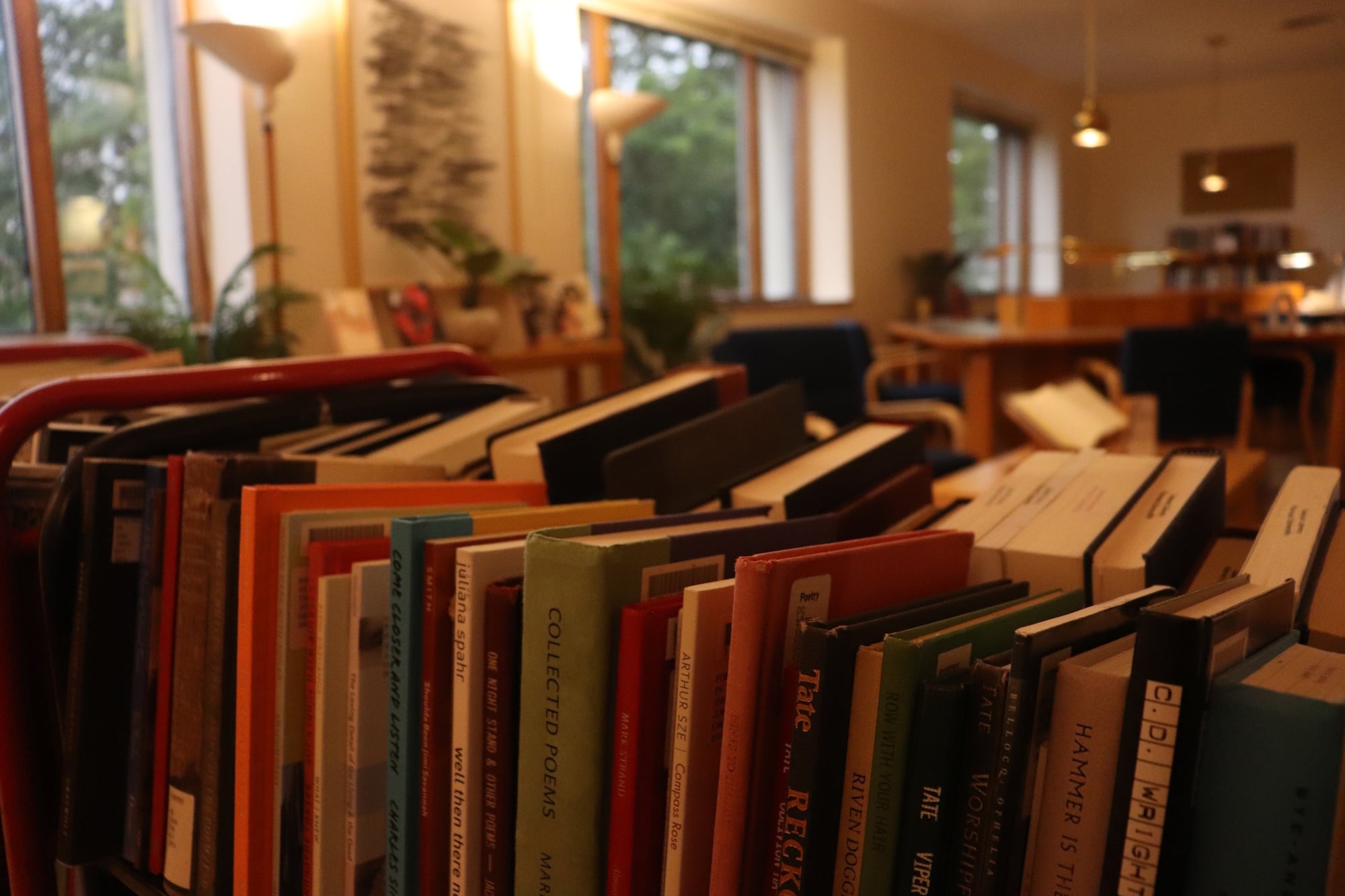
His favourite place on campus became the Woodberry Poetry Room at Lamont Library. The warmly lit room with big glass windows became his second office. He compared the extensive poetry collection housed in the room to what he described as “the modest collection” in his mother’s bookcase back in Nigeria. As a self-proclaimed nerdy introvert, Achimba challenged himself to read everything in the room. He finished his fellowship with a “biblical greed that makes you want to extend the 24 hours in a day” just to give himself the time necessary to finish the collection.
In this time, he finished a collection of poems about the events leading up to his abduction that he would submit as a part of his application to Brown University’s MFA program. Soon after, he was admitted.
“The year at Harvard was instrumental in shaping the kind of writer I wanted to become,” he wrote in an email to The Crimson. “They gave me the room to think and freed up so much mental space to imagine building an intellectual life. It felt as if Harvard, this great institution, had my back — literally. That awareness became a source of confidence at some very critical moments.”
Universities under Trump
he Harvard that these scholars came to love — pluralistic, welcoming, and humanitarian — has come under attack, much like other universities across the nation.
Since spring 2025, the Trump administration has purged funding for universities across the country on grounds that these institutions were mishandling a plethora of issues: student protest culture, international student enrollments, and diversity, equity, and inclusion policies. Across more than 600 universities, the administration has withdrawn awards and grants valued between $6.9 billion and $8.2 billion.
In a survey conducted immediately after that first wave of cuts, the science journal Nature asked scientists across the country whether they have considered leaving the U.S.. Of the 1,600 polled, 75.3 percent said they were considering leaving the U.S. because of slashes to research funding
In the 2026 edition of SAR’s annual report, “Free to Think,” which discusses the global state of academic freedom, the organization also cautioned against decreased academic freedom in the U.S. “The U.S. administration and some state legislatures pressured universities into political or ideological compliance,” SAR wrote. The report argued these government actors have effectively “undermined university autonomy,” resulting in restrictions on content and expression on campuses.
“These actions created an enabling environment for monitoring, covert recording, and scrutiny of classroom expression that triggered widespread faculty self-censorship and contributed to several dozen cases in which faculty members and staff were disciplined for statements or publications made inside or outside of the classroom,” SAR added.
SAR’s findings are consistent with those of the Academic Freedom Index. According to the Index, the U.S. was rated “fully free” in 2019, but “moderately restricted” in 2025, close to the threshold for “severely restricted.” University autonomy has seen a similar decline. In a ten year period, from 2015 to 2025, university autonomy in the U.S. depreciated by 50 percent.
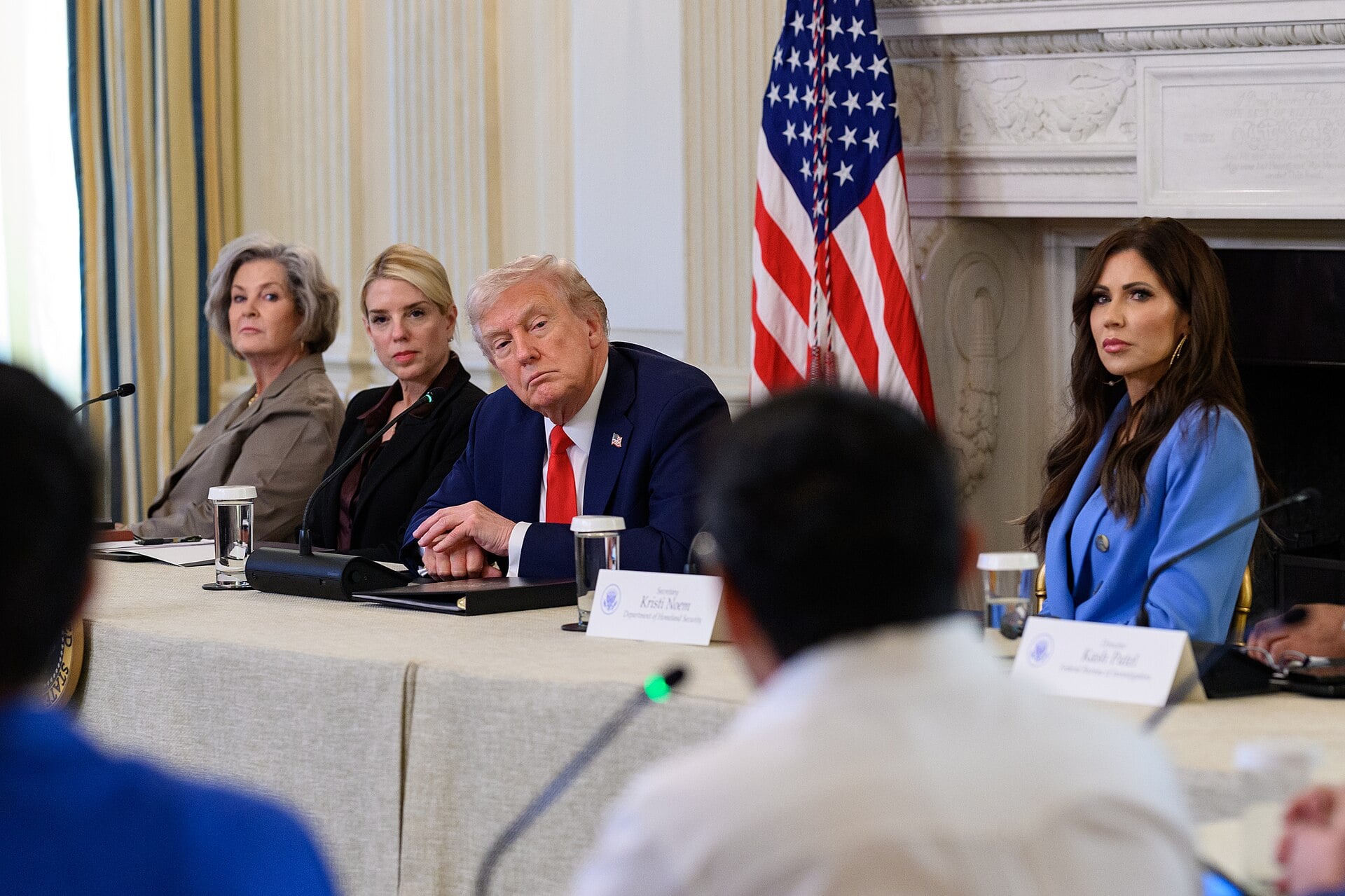
Among the universities affected, Harvard has been hit particularly hard. The University lost nearly $2.7 billion in research grants. However, in September of 2025, the Trump administration was ordered by a district court to restore what was cut, ruling that the freezes were unconstitutional. In October. 6, the Trump administration argued that the court lacked the authority to make this decision last fall and continues to make its case for the termination of Harvard’s funding in the First Circuit.
Trump has attacked the University’s globalist commitments, which were historically a site of pride. In a Truth Social post, published back in April 2025, Trump wrote that Harvard is “an Anti-Semitic, Far Left Institution, as are numerous others, with students being accepted from all over the World that want to rip our Country apart.”
Rather than viewing the influx of international talent as beneficial to the nation — like many did in the 1930s and 1940 and when funding SAR — Trump sees it as a threat. “The place is a Liberal mess, allowing a certain group of crazed lunatics to enter and exit the classroom and spew fake ANGER AND HATE,” he wrote in the same 2025 Truth Social post.
This national climate has seeped into the walls of Harvard classrooms. Some faculty members are conscious that their syllabi’s content may be misinterpreted within this climate. Others are afraid of possible retribution for expressing progressive points of view, both from the campus community or from social media.
In The Crimson’s 2026 Faculty Survey, respondents were pessimistic about academic freedom. When asked how they felt about the “current state of academic freedom at colleges and universities in the U.S.,” 39.3 percent of faculty responded feeling “somewhat negatively” and 39.3 percent feeling “very negatively.” The faculty’s view of academic freedom at Harvard was marginally better. Of those surveyed, 33 percent reported feeling somewhat negatively and 18.8 percent said they felt very negatively.
Three Harvard researchers have already chosen to leave the U.S. this past September. Drawn to the Canadian government’s $1.21 billion effort to recruit top researchers from around the world, these former Harvard affiliates have begun to pack up their offices and head north. The cohort includes Harvard Medical School professor Peter Caravan, former Kennedy School Arctic Initiative director Jennifer Spence, and Harvard School of Public Health associate professor Curtis Huttenhower. They cited the current political climate and instability as factors motivating their move.
They form part of a larger trend where leading universities across the world are specifically recruiting U.S. based researchers. This contrasts the movement of scholars facilitated by Scholars at Risk. Today, scholars are seeking refuge from the country that has served as a sanctuary for others.
Quinn, the national director of SAR, places scholars particularly threatened by the changing political climate into three categories. The first set is a group of scholars that chose to leave the U.S. for “better opportunities.” Another subset is a group of scholars who are “really at risk” — those who are exceptionally vulnerable because of “the particular ideas they work on, and because their budgets have been eliminated.” The final and smallest set of scholars are those in “physical risk.”
Mark Bray, professor of history at Rutgers University who moved to Spain, faced direct threats. After the killing of conservative activist Charlie Kirk, the Trump administration issued a September 2025 executive order purporting to designate antifa as a domestic terrorist organization. The order defined antifa as a “militarist, anarchist enterprise that explicitly calls for the overthrow of the United States Government, law enforcement authorities, and our system of law.”
Antifa, short for anti-fascist, generally refers to a loose collection of groups and activists who oppose fascism and far-right ideologies, rather than a single organization. Trump has also used the term to describe political opponents.
Bray, who studies and opposes facism, became a target of threats, largely due to his book titled, “Antifa: The Anti-Fascist Handbook.” After the executive order, he received an email at his university email address from a sender who wrote: “i’ll kill you in front of your students.”
This email was just one of the many death threats levied against Bray and his family. A few days later, he received another email, this time including his home address. After this threat, he decided he and his family must leave.
On Oct. 8, 2025, they waited to board their flight to Spain, they received news that their reservation had been canceled, even though they already had received boarding passes, checked their bags, and passed airport security. Bray found the unexplained cancellation alarming, but was able to leave the U.S. soon after.
Quinn hopes the categories for designating risk are helpful when evaluating the level of risk certain scholars in the U.S. face when compared to some of their foreign counterparts. He does not “want people to think that all scholars in the U.S. are at risk as much as the scholars in Sudan and Ukraine right now.” This assumption may lead other universities to give a position to a threatened U.S.-based scholar, when other scholars applying to the same position are at higher risk. Quinn hopes institutions outside of the U.S. do not “eliminate positions for the scholars who really have life-threatening or freedom-threatening risks as well.”
That the U.S. can be hostile to its own scholars while also offering a comparatively better environment for some foreign scholars, does not surprise him. “One of the nuances is that the same country can be a source and host,” he says. Quinn recalls SAR’s work with Iraqi scholars who had to relocate to Egypt due to the targeted killing of intellectuals in their home country, while, at the same time, helping Egyptian scholars safely exit Egypt. Similarly, SAR relocated a Mexican scholar to Colombia just as they helped a Colombian scholar find refuge in Mexico.
Within this global context, Quinn fears that “other countries will emulate the strategies that the U.S. is using.”
He looks to Harvard’s response to the Trump administration as a model for promoting academic freedom across the world. “It’s really important that people understand how vital the role of Harvard’s not succumbing to federal extra legal pressures has been. From our point of view, that stopped what was the beginning of a flood, and showed that standing up for rule of law is possible,” he says. Quinn says Harvard has resisted the administration more forcefully than other universities.
However, the reality of the situation on campus raises questions about the extent to which Harvard’s strategy is working.
Kirsten A. Weld — professor of history and president of Harvard’s chapter of the American Association of University Professors — cautioned against this overly optimistic narrative in an op-ed published in The Crimson in time for Harvard’s Commencement ceremony this year
While Harvard is still fighting legal battles against Trump in the name of academic freedom and autonomy, the campus “looks more like what the Trump administration wants than it did a year ago,” she wrote.

Weld points to Harvard-led initiatives to restructure the campus, such as the discontinuation or rebranding of diversity, equity, and inclusion initiatives, recruitment of conservative faculty to promote ideological diversity, centralization of student discipline, and the decision to fire academics that hosted events on Palestine. “Protests have largely disappeared from our campus,” she also wrote.
“Repression works, after all.”
In September of 2024, Harvard students conducted a pro-Palestine study-in at Widener Library. Roughly 30 students sat in the Loker Reading Room and wore keffiyehs and worked silently on their laptops. Some displayed slogans criticizing Harvard’s ties to Israel and its response to the war in Gaza, including read: “IMAGINE IT HAPPENED HERE” and “ISRAEL BOMBS HARVARD PAYS.”
The University soon disciplined the students, revoking their access to the library for two weeks on grounds that they violated the library’s use rules.
Some 25 faculty members jumped at the defense of these students, conducting a similar silent study in. Professors silently parsed through texts on free speech as they sat in the library’s long wooden tables, which were covered with documents detailing University policy. They too were met with disciplinary sanctions from the University that banned them from entering the library for two weeks.
The Widener, known so warmly to Salvemini, nearly a century later became a site of contested speech.
The New McCarthyism?
o make sense of the university under Trump, many have turned to history.
Quinn argues that the Trump administration’s relationship to academic freedom represents a divergence from a previous tradition. “Up until the last five years or so, the U.S. was by and large one of the leading proponents of academic freedom in the world,” he says. But now, the government is “reorienting the understanding of the university not as serving the public, but as serving the state, or the government, or the party.”
Though he points out that the U.S. has had a contentious relationship with academic freedom at other historical moments, he still sees something unique in the present. He points to Florida as an example.
Though it was overturned by the U.S. Court of Appeals for the 11th Circuit in July of 2026 on grounds of unconstitutionality, Governor Ron DeSantis signed the “Stop WOKE Act” in April of 2022. This bill prevents educators who are state employees from teaching about “woke” concepts such as critical race theory and “Marxist-inspired curriculum,” in the words of Lieutenant Governor Jeanette Nunez.
Quinn says some of Florida lawmakers’ attempt to “control every word” uttered in classrooms is representative of a “radically anti-democratic, anti-knowledge position,” not seen in this scale and intensity “even during the McCarthy era.”
Risen sees eerily similarities between Trump and McCarthy’s tactics.
“President Trump uses McCarthyite tactics all the time, whether it’s in the name of a new Red Scare or not. He often attacks people without evidence,” Risen says. “He uses the political limelight to destroy reputations. He does all these things, and it’s no coincidence that he was tutored by Roy Cohn, who had worked for McCarthy early on.”
Risen cites book bans as an example. While books are not being banned because they necessarily espouse communism, they are being banned because they celebrate LGBTQ+ issues, civil rights, and discuss the struggle of Black Americans against slavery. “The idea that those books should be banned, teachers who talk about those things should be fired — that is a direct copy of what we saw happening during the Red Scare,” he says.
John McCumber, professor emeritus of philosophy at UCLA, appreciates the comparison between McCarthy and Trump. But he goes further.
“This is not the new McCarthyism. It’s much worse,” says McCumber. While communism was at the center of McCarthy’s spectacle, he notes, Trump’s political theatre hinges on antisemitism.
The Trump administration could not be reached for comment.
McCumber brought up how the University of California, Berkeley gave the Trump administration a list of 160 staff, students, and faculty and their potential connection to antisemitism in September 2025. A spokesperson for the university wrote in a written statement that the list was sent in compliance with its legal obligations after the U.S. Department of Education’s office for Civil Rights opened an investigation into the ways U.C. Berkeley addresses complaints of antisemitism and discrimination, and that the individuals included in the list were notified.
McCumber, however, called it a level of cooperation between universities and the government that “simply did not exist in the McCarthy era.”
A similar list — of unknown authorship — was also circulated to the Department of Justice in April of 2025 listing Harvard affiliates. The document, titled “Addressing Antisemitism and Anti-Americanism at Harvard University,” included a roster of faculty, staff, students, and groups culpable. The publicly accessible document is redacted, concealing the identities of the Harvard affiliates it names.
In the same month, the U.S. Equal Employment Opportunity Commission subpoenaed the University of Pennsylvania to disclose a list of all Jewish and Jewish-affilated groups on campus and involved members — even demanding contact information for the names on the roster. The University denied this request. The American Association of University Professors and their UPenn chapter filed a motion to intervene against the commission, arguing that the subpoena would establish a frightening precedent.
“As our motion notes, to demand that Penn create and compile lists of Jewish people—particularly those active in political causes disfavored by the government—evokes the disturbing history of twentieth-century antisemitism,” the national chapter of AAUP wrote. “The government does not have the right to demand the private, personal information of religious minorities.”
Still in March of this year, a Pennsylvania district court ordered that the University must comply with these demands.
While still acknowledging the role national security concerns played during the Red Scare, Risen views the invocation of ‘Americanism’ as a continuity between these two historical moments.
He reframes the Red Scare as being a “fight over the idea of America post New Deal, a more cosmopolitan, more tolerant, more secular, embracing the power of a larger government.”
During this period, just as today, Risen argues that society was fighting over “what did it mean to be American.” He points to the House Un-American Activities Committee’s name. In his view, some conservatives’ conception of Americanism was “very conservative, very white Christian, male patriarchal idea about what society should look like.”
This fight did not die down with the end of the Cold War. In its twenty-first century debut, it remains just as alive and polemic.
“Today we are having that same sort of fight, with a lot of the same tools, over what kind of country are we,” Risen says. “Are we a country, a truly multi-ethnic country with broad diverse populations where everyone’s treated equally, or are we going to try to push against that sometimes violently in order to erase this kind of white patriarchal Christian ideology?”
In his 2016 Republican National Convention speech accepting the presidential nomination, Trump drew cheers from the crowd with a defense of Americanism.
“Americanism, not globalism, will be our credo,” he pronounced.
The work of Scholars at Risk, however, continues to provide a counternarrative of who and what values universities should serve, not just in the U.S., but across the globe.
—Associate Magazine EditorVictoria D. Rengel can be reached at [email protected]. Follow her on X @VictoriaRengel_.
Want to keep up with breaking news? Subscribe to our email newsletter
Have a tip for The Crimson? Share it confidentially