The Cultural Revolution’s Trash is Harvard Library’s Treasure
Scholars gathered their finds from the piles of roadside debris in post-Mao China and brought them to Cambridge, a salvaging practice that would earn the name “garbology.”
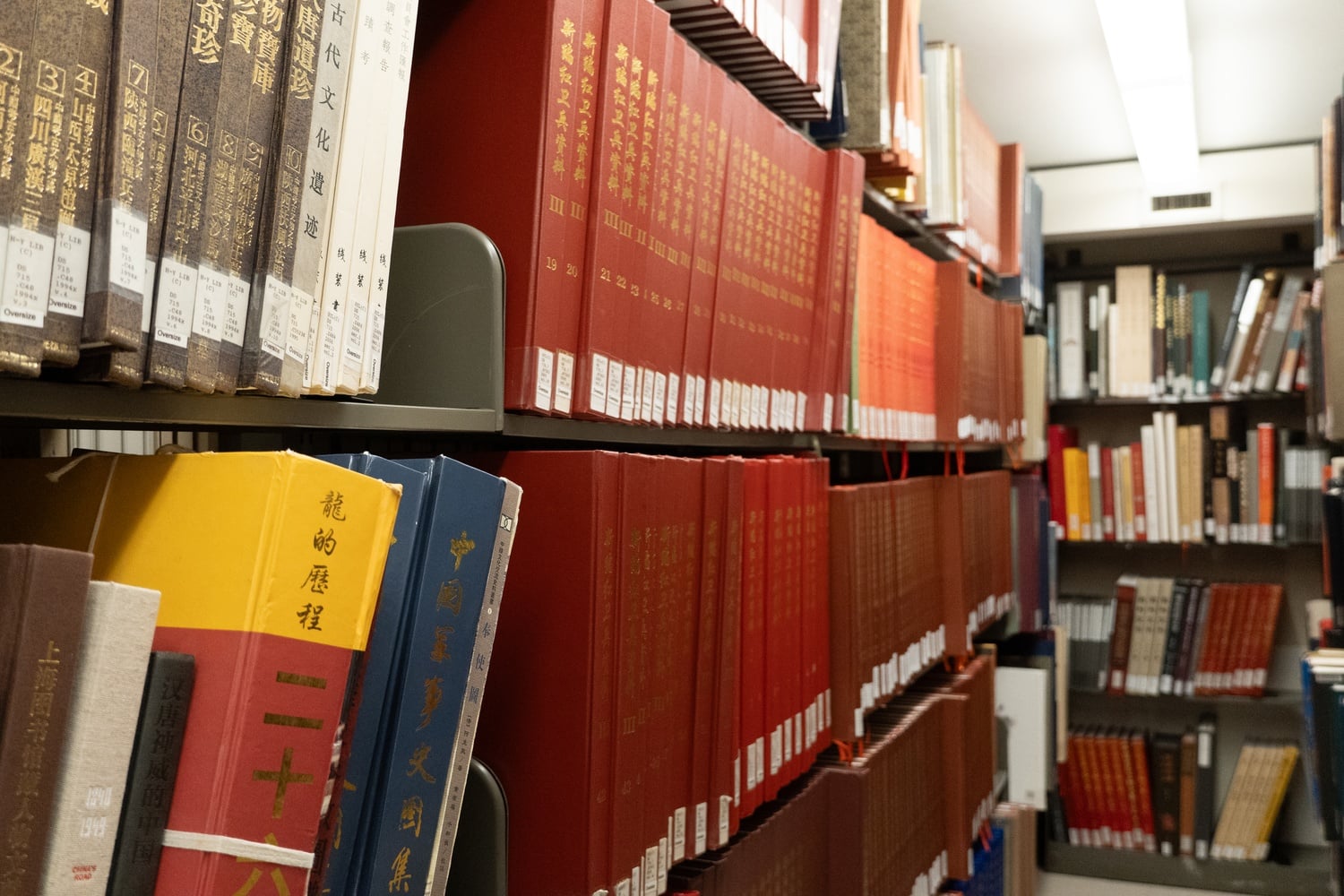
s everyday urban life gradually resuscitated in post-Mao China in the early 1980s, visiting scholars from Harvard venturing onto the mainland found themselves drawn to piles of roadside debris in provincial morning markets. There, amid the detritus, they uncovered scraps of cheap newsprint scrawled with bold, hasty calligraphy: Down with the counter-revolutionaries, with names circled in crimson ink.
These scraps were the remains of the Great Proletarian Cultural Revolution, the turbulent decade from 1966 to 1976 engineered by then-Chinese Communist Party Chairman Mao Zedong to enforce radical ideological conformity by purging the “Four Olds”: old customs, old culture, old habits, and old ideas. Mobilized by propagandistic rhetoric, millions of Red Guard youth turned on their teachers and neighbors, unleashing political violence that paralyzed schools and government bodies across the nation while systematically destroying priceless historical artifacts.
Only a few years earlier, a sheet of newsprint like this, known as a “big-character poster” (dazibao), could cost someone their job, their home, or even their life. But following the death of Mao, the revolutionary zeal faded and succeeding leadership condemned the mistakes of the Cultural Revolution. These once-feared posters wound up in the hands of scrap dealers and market vendors, or were simply discarded. Scholars gathered their finds and brought them to Cambridge, a salvaging practice that would earn the name “garbology.”
Nancy Hearst was hired as the first full-time librarian for the Fung Library’s Fairbank Center for Chinese Studies Collection when such materials arrived. Back then, the library archive comprised little more than a mess of books stashed in a bathtub in Coolidge Hall, then still an apartment building. Hearst was tasked with expanding and cataloging Harvard’s Chinese archives, a mission that tested both her shrewdness and luck.
The liberalization of Chinese policy following the Cultural Revolution had allowed an influx of backlogged studies, memoirs, and long-suppressed journals to pour into the public sphere. Many books vanished as quickly as they were printed, produced in limited runs.
Starting in the 1980s, Hearst made regular trips in search of niche and unique pieces, combing through publishing house sales, annual bookfairs, and book stalls. These trips became known as “guerrilla book shopping.” And, since she had no time to linger at a stall and read an entire volume at a time, judging a book by its cover — or rather its footnotes and table of contents — became a practical necessity.
Hearst also recalls that materials would enter the collection through unmarked, unnamed donations. “It wasn’t systematic,” she explains. “One day I’d come in, and there’d be a big box from an unknown.” Some of these avenues, she says, “were more useful than others, but that’s sort of how it started.”
Back at Harvard, faculty members further bolstered the development of Fung Library materials. In particular, Roderick MacFarquhar, the Fairbank Center’s former director and an expert in the study of the Cultural Revolution, was a huge supporter of the library’s expansion. In fact, MacFarquhar was the one who told Hearst to “go and just see if you can buy books,” sparking her “guerrilla shopping” expeditions.
Hearst’s discoveries often became references for MacFarquhar’s field-defining work, particularly his book trilogy, “The Origins of the Cultural Revolution,” and his 900-student Gen-Ed course, Foreign Studies 48: “The Cultural Revolution” — one of the only Cultural Revolution classes in the world at the time, garnering the attention of Chinese students and academics alike. After MacFarquhar died, he donated part of his own vast collection to the Fung Library.
“I worked hard to go to unusual places,” Hearst says. She often worked in tandem with Harvard scholars visiting China, who, like her, spent their visits exploring book fairs and engaging in garbology to find treasures that had lost their value in the eyes of the Chinese populace.
Hearst wasn’t alone in her endeavors. Western academic coalitions such as the Center for Chinese Research Materials, a U.S.-based consortium of librarians, had been systematically collecting Red Guard materials since the late 1960s; its “New Collection of Red Guard Publications” — a collection of Cultural Revolution-era Beijing newspapers — can now be found across the street at the Harvard-Yenching Library, which houses its own collection of Chinese archival materials.
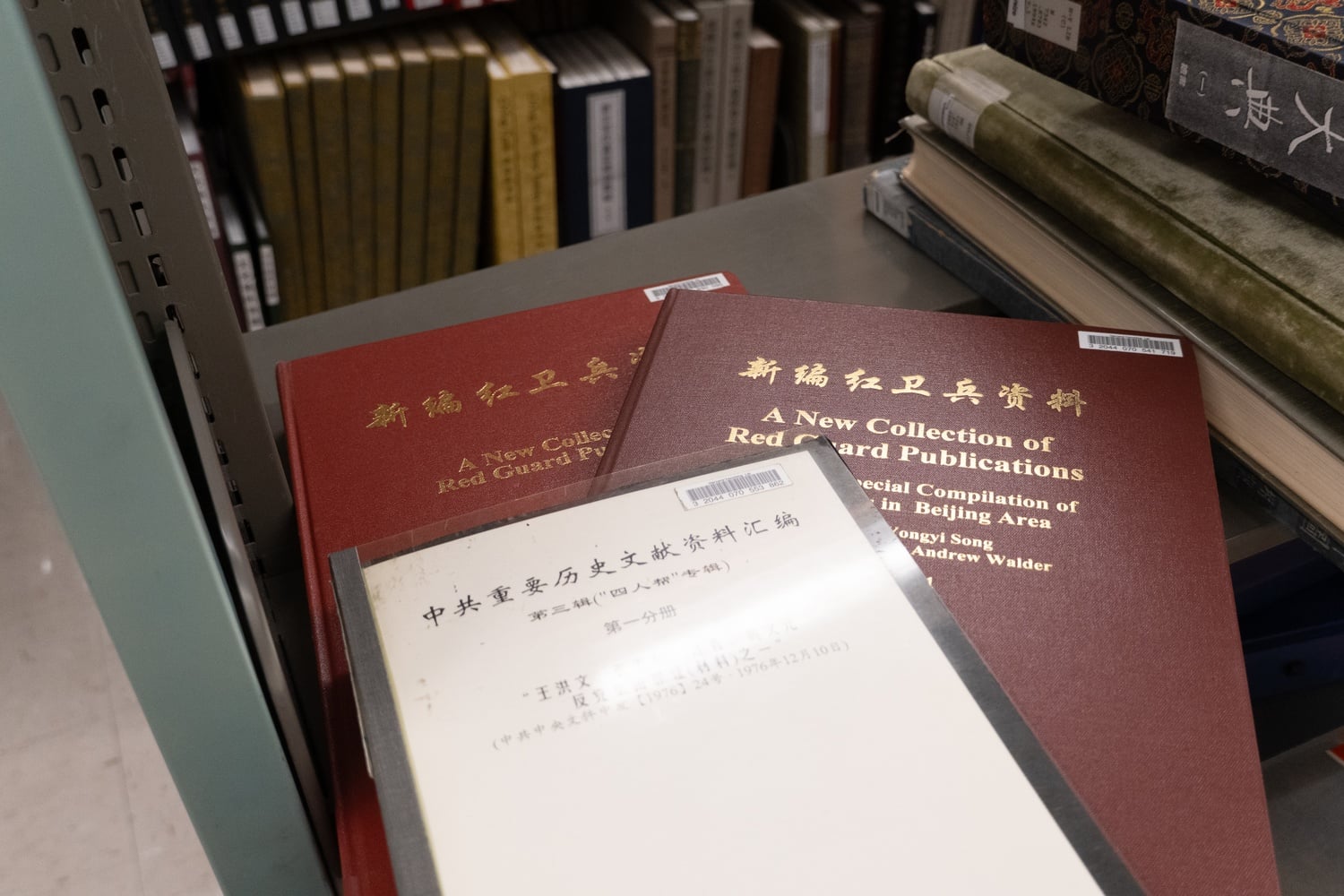
Other documents have been harder to come by. The Los Angeles-based Service Center for Chinese Publications, for instance, continues to offer classified, internal Chinese Communist Party documents from the late 1970s and 80s — acquired through back-channel networks. It operates under strict anonymity to protect its contributors. The center is a key vendor for Ma Xiao-He, the Chinese Collection librarian at the Harvard-Yenching Library.
Neither Ma nor Hearst knows how these sensitive files cross the Chinese border — and they don’t ask. “You don’t want these people to get in trouble,” Hearst explains.
Sixty years after the start of the Cultural Revolution, both librarians are adamant that their work remains vital. Ma lived through the Cultural Revolution, which delayed his college studies by ten years because the Red Guard shut down universities and targeted intellectuals. He first arrived at Harvard as a visiting scholar in 1989, before assuming his post as librarian at the Harvard-Yenching Library in 1999.
“Historical memory, it can be said, is an endlessly repeated process in which those in power reclaim control of the narrative on their own terms,” Ma explains in Chinese. “China’s history is no exception.”
In an era dominated by online databases, the digital age has introduced a paradox: memories of the past have become both infinitely replicable and difficult to preserve in their unaltered forms. For Hearst, physical preservation is an irreplaceable defense against state censorship. “There are a lot of faculty here, even, who think that we should go completely digital, and I don’t think so,” she says. “There’s real value in keeping at least one hard copy, because you don’t know what’s going to happen.”
Hearst says, for instance, that journals in China National Knowledge Infrastructure, the largest Chinese academic database, sometimes disappear or are retroactively altered due to censorship. In this sense, Harvard’s libraries, along with other independent collections in the U.S., serve as important sanctuaries for researchers to access unredacted primary sources.
Access to China waxes and wanes with the state of U.S.-China relations, and China studies follow suit. When Hearst first arrived at Harvard, few Americans were permitted to set foot on the Chinese mainland.
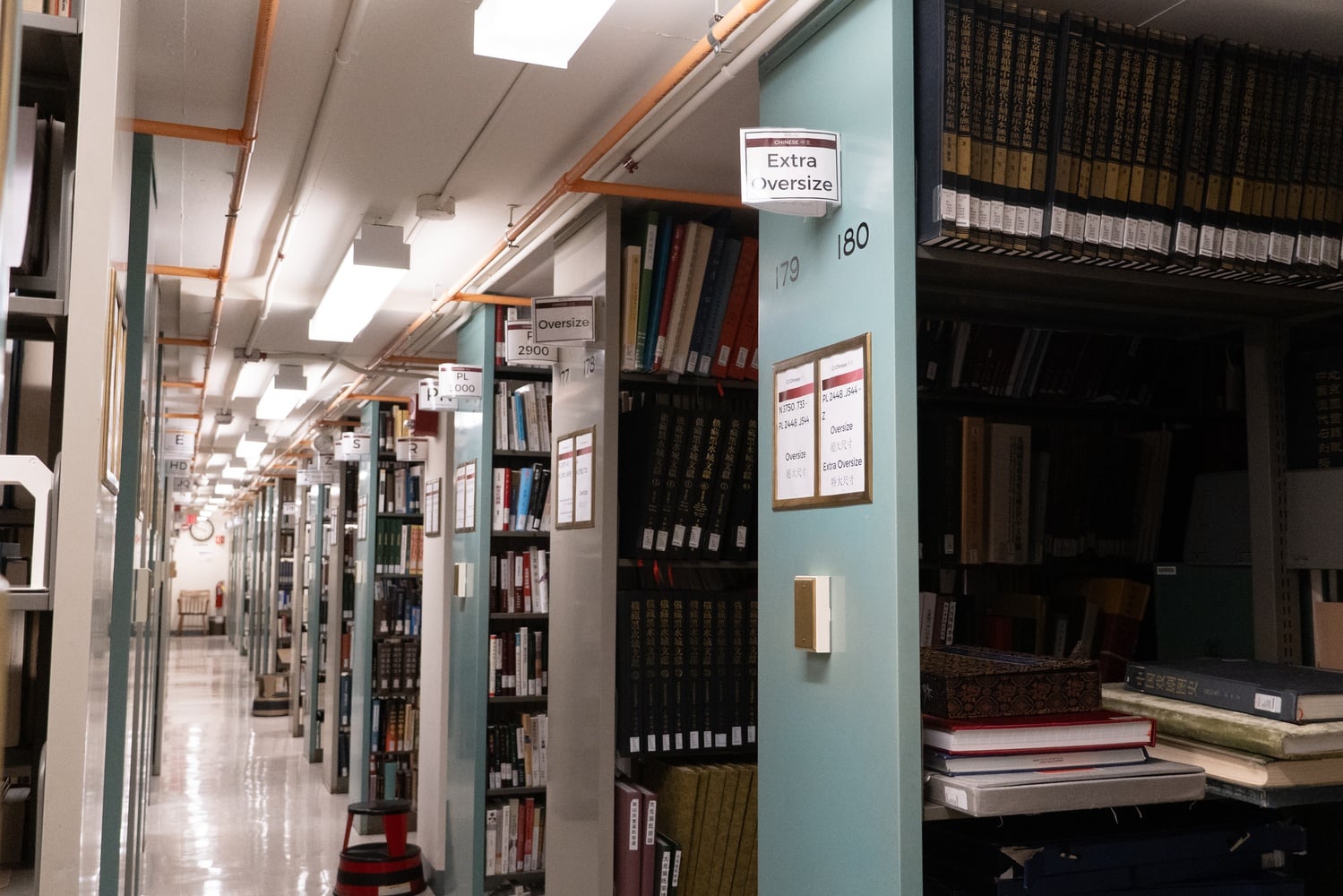
As China’s doors opened, burgeoning scholarship on the Cultural Revolution, including MacFaquhar’s, drew a new generation of students to the field, and Hearst’s materials were gradually reclassified from junk to “treasure.” Since the 2010s, the climate for retrieving historical materials from China has grown more precarious — such a change, to her, “reflects Sino-U.S. relations.” She adds that while customs officers in the 1980s never once detained the contents of her luggage, today’s authorities enforce export restrictions on archival materials with far greater vigilance, making it much harder for such resources to leave the country. Recently, political tensions between China and the U.S. have escalated as the White House has threatened to deny or revoke Chinese visas and dwindling exchange programs pose new obstacles for American researchers.
What future generations seek in an archive depends as much on the unpredictable currents of history as on the selective nature of memory. This makes the art of collecting, whether through “garbology,” guerrilla book shopping, or more conventional means, ultimately a wager on time. “We hope to provide readers with whatever resources they need, to the best of our ability,” Ma says. Librarians like Ma and Hearst remain aware that the importance of their efforts may only become clear as history takes its course.
Their efforts, therefore, are akin to formulating history before history happens — curating how people will look at the past before people even know where to look.
Tucked among the Fung Library’s collections today is a photocopied version of Chinese President Xi Jinping’s unpublished doctoral thesis on agricultural economics and reform, alongside a 1980s volume detailing impressions of America by then-Fudan professor Wang Huning, who now sits on China’s Politburo Standing Committee, the Communist Party’s most elite group of leaders. “I just bought books that seemed interesting,” Hearst says. “On occasion it would turn out that later on these people became high-level party leaders.”
Hearst retired this February after 51 years at her post. Nevertheless, she remains connected to the collection as a Fairbank Center Associate, continuing to advise and collaborate with scholars in Chinese Studies. Even as the window into China narrows and political rifts widen, the work of Harvard’s Chinese librarians continues in hopes that the new archives they stumble upon will prove to be the treasures of tomorrow.
Want to keep up with breaking news? Subscribe to our email newsletter
Have a tip for The Crimson? Share it confidentially