FIFTEEN MINUTES
Volume XXXVII, Issue XI
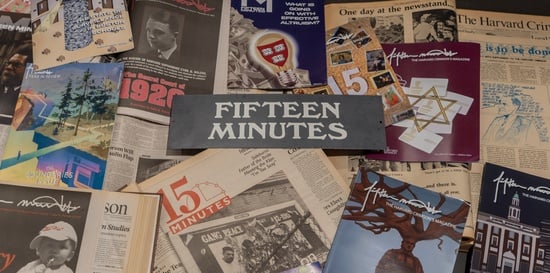
50 Years Later, What Is Our Magazine?
Though a tired analogy, the Ship of Theseus is apt for the case of our magazine: can it really be said to be the fiftieth anniversary of something that has undergone so many reinventions?
Editor's Note
Dear Reader, Our beloved magazine is celebrating 50 continuous years of publication. So perhaps you’ll permit us some self-indulgence, both in our cover story and our Editor’s Note. Much has changed — for the magazine, and for the world it endeavors to document — since the very first issue hit the presses on September 30, 1976. As AWS argues in his sweeping cover story this week, the magazine has Ship-of-Theseus’d its way into something altogether unrecognizable from its original form. We’re a mostly digital publication now, and the permanence of the internet has prodded our work from frequently objectionable and absurd (and occasionally entirely fictional) stories to a kind of serious, slow journalism that would likely make early editors of the magazine scoff. We don’t even publish under the same title anymore; for the first 15-odd years of its life, the magazine was a weekly arts and culture supplement called What Is To Be Done? But for us chairs, now embarking on the second half of our terms at the head of this publication, a trip through The Harvard Crimson’s magazine archives primarily illuminates how much has NOT changed. For five decades, magazine writers have been writing the stories that our counterparts in The Crimson’s newspaper can’t or won’t publish. For five decades, magazine writers have been witty and cynical in their pursuit of all that is unknown, forgotten, and too complex to be easily captured in a headline. For five decades, magazine writers have been interviewing local strangers (as VIO does this week), profiling important characters (CS and WJM), documenting changes at Harvard (SLSY) and in Cambridge (JPL and NSK), and writing about their inner lives (CY, AS, JPL, MK, MLB, SG, WJM). And, for five decades, magazine chairs have taken various stabs at romanticizing the difficult conversations, editing sessions, and (extremely) late nights required to keep our weekly publication afloat. Many an Editor’s Note has included some touching reference to walking out of 14 Plympton, blinking bleary — and as often as not, teary — eyes in the early-morning light after finally publishing a particularly arduous issue. In 1991, in the final issue of the What Is To Be Done? before the name was changed to Fifteen Minutes, the outgoing leaders of the mag — Rebecca A. Jeschke ’92 and her two partners-in-publication, Stephen J. Newman ’92 and Liza M. Velazquez ’92, wrote about feeling some sense of responsibility to continue the tradition of magazine chairs trying to “prove that they have thought about, and maybe understand, this thing that has taken up so much of their undergraduate life,” as Jeschke put it. “To come up with a reason and a reward for it all,” as Velazquez added. But it’s unclear whether any of them found satisfactory answers. “When people ask me what I did at college, I will say ‘The Crimson,’ and know that through all my ambivalence, it was all I really wanted to do here, and perhaps the only thing I did well,” Jeschke reflected. After a summer away, the two of us are returning still slightly traumatized from the spring. We stormed through the red door of 14P at the end of August with some resolve to make this job a little…less…everything. Aurora swore off coffee and all-nighters, and Kate swore to stop proofreading pieces in the middle of class. (One issue into the semester, neither one of us has kept our oaths.) In Jeschke’s note, she added: “Yes, we spend a lot of time at The Crimson. Yes, our grades suck. Yes, we know not very many people read the magazine. Yes, despite all this, we spend our spare time here, hanging out until it is time to start the next mag.” We would argue that ‘anything worth doing is worth doing well,’ but it’s not even that we’re positive the work is worth doing. We can’t posit that there’s some inherent value that the publication has, or that it provides some irreplaceable public good to the students or the city. More than once, we’ve summed up all the trouble it takes to get even just a few stories published, looked at each other, and wondered whether everyone would be better off without it. What a relief it would be to unburden ourselves and every future Harvardian that might otherwise be lured in by the glossy gleam of FM! But this line of reasoning never really becomes appealing, because despite ourselves, we care too much. Every grinning exec that has helped a younger writer find their voice for the first time, every excited text we receive from an eager reporter tracking down a new lede, every phone call from a source and byline from a starry-eyed comper — the magazine “is just simply bigger than [all] of us and therefore,” as Velazquez wrote 35 years ago. “We had no choice.” Maybe it’s just because we are doing it, that it is worth doing well. Or, at least, as best as we possibly can. Velazquez came to a simple conclusion back in 1991: “And so we put out a magazine. A 24-page, weekly magazine.” So here’s to 50 more years of putting out a magazine. In print, online — whatever form it may take. What else are we to do? KJK + AJBS

Fifteen Minutes of Summer
FM writers share fifteen- minute snapshots of the summers they spent around the globe.
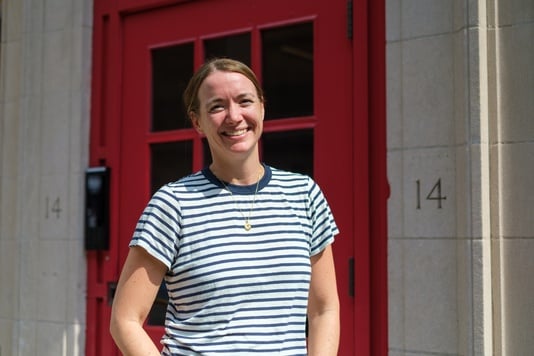
Fifteen Questions: Kristi Jobson on Law School, ‘Legally Blonde,’ and Her Time as an FM Writer
The Harvard Law School admissions officer sat down with Fifteen Minutes to discuss her former life with the magazine — and her path to teaching and law school.
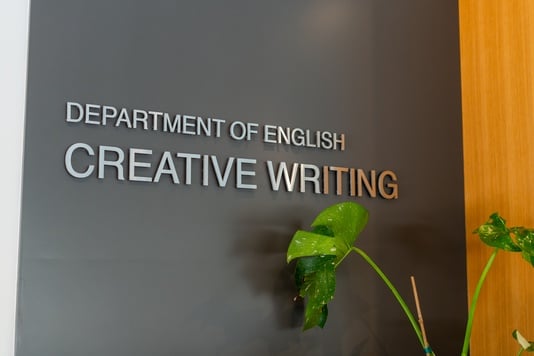
Emphasizing the Creative
Historically, the path to a creative thesis has not always been clear.
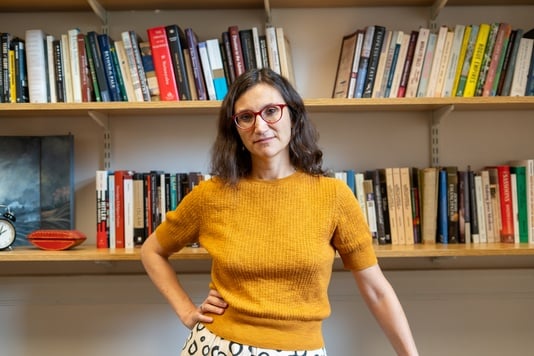
Fifteen Questions: Jessica Marglin on Jewish Studies, the Dudley Co-Op, and Campus Protest Culture
The Near Eastern Languages and Civilizations professor sat down with Fifteen Minutes to discuss what’s changed — and what hasn’t — on her return to the College 20 years after graduating.
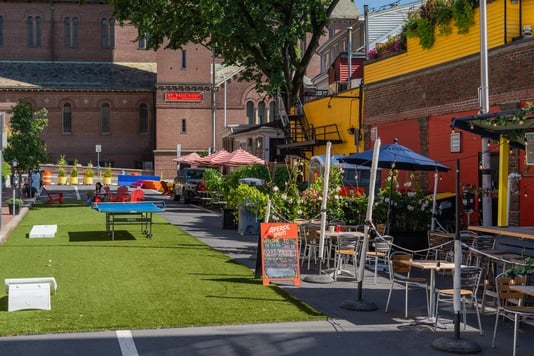
When a Street Stops Being a Street
Nearly a year after the Cambridge City Council greenlit pedestrianizing lower Bow Street, the block closed to traffic and has since been a place of outdoor respite for students and locals alike.
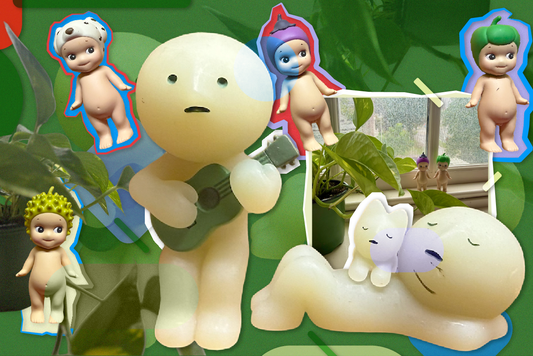
Fifteen Minutes of Summer
FM writers share fifteen- minute snapshots of the summers they spent around the globe.
Fifteen Questions: Kristi Jobson on Law School, ‘Legally Blonde,’ and Her Time as an FM Writer
The Harvard Law School admissions officer sat down with Fifteen Minutes to discuss her former life with the magazine — and her path to teaching and law school.
Emphasizing the Creative
Historically, the path to a creative thesis has not always been clear.
Fifteen Questions: Jessica Marglin on Jewish Studies, the Dudley Co-Op, and Campus Protest Culture
The Near Eastern Languages and Civilizations professor sat down with Fifteen Minutes to discuss what’s changed — and what hasn’t — on her return to the College 20 years after graduating.
When a Street Stops Being a Street
Nearly a year after the Cambridge City Council greenlit pedestrianizing lower Bow Street, the block closed to traffic and has since been a place of outdoor respite for students and locals alike.