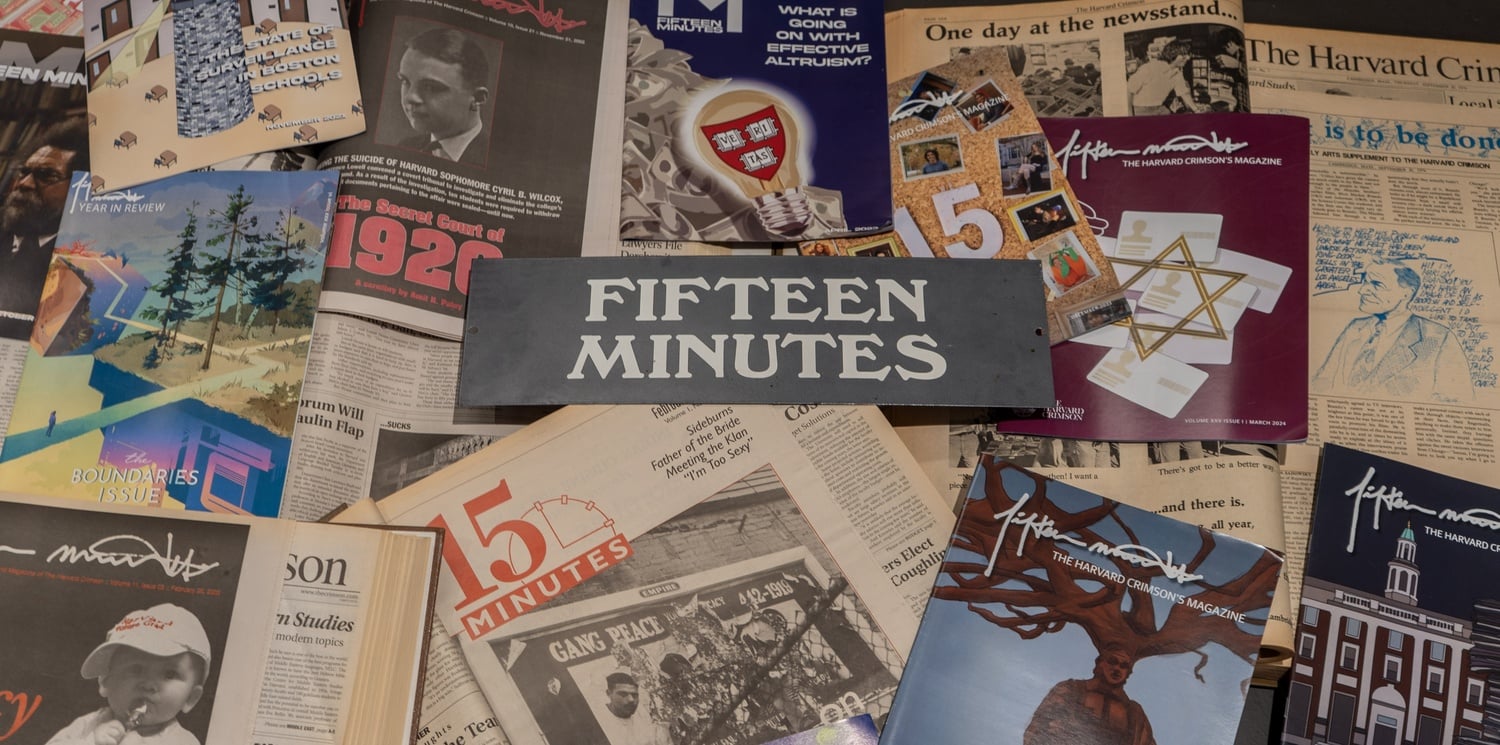
50 Years Later, What Is Our Magazine?
Though a tired analogy, the Ship of Theseus is apt for the case of our magazine: can it really be said to be the fiftieth anniversary of something that has undergone so many reinventions?
hat magazine do you read to accompany your morning coffee in the dining hall?
“Read? At breakfast?” I hear many of you saying. “I don’t even read my texts.” And from some others: “Magazine? You mean, like The New Yorker? Or The Atlantic?” Some of you might recognize a few other names: Time, Vanity Fair, perhaps Playboy or People.
These few are what remains of what was once a prosperous print ecosystem, a great diversity that has since been culled by the vicissitudes of a changing media landscape to a few wavering survivors.
Life, National Lampoon, and Gourmet have entirely folded, while others like Seventeen, Teen Vogue, Popular Science, and Entertainment Weekly exist now only as digital shells against their previous glossy grandeur. Where print succeeds today, it is most often in niches.
Few publications — many of them backed up by large corporations — have weathered the culling of American periodicals driven by precipitous drops in advertising revenue and readership. The U.S. Census Bureau found that between 2002 and 2020, revenue from print periodicals dropped by some 40 percent.
Magazines were once the short-form content of their day. In line at the post office, between classes, before going to bed late at night, in the waiting room at the dentist’s office, while crossing the street, sitting on the train or the plane — people used to read magazines, redundant as such an utterance might sound.
There were soap operas and late-night talk shows, certainly, but one could not bring a personal television set with them to lunch at Quincy House, or on the Red Line. Nor, save word of mouth or a chance encounter with a flyer, could one know what shows were playing without print publications.
Magazines were a way to stay up to date. Primitive social media platforms like AOL chat rooms ascended through the 1990s, and the 2000s saw the one-time superstar Myspace and the adolescence of Facebook, but these online forums were nothing like the modern-day algorithmic behemoths of Instagram or TikTok — nor were we yet chained to the internet by our smartphones and Apple Watches.
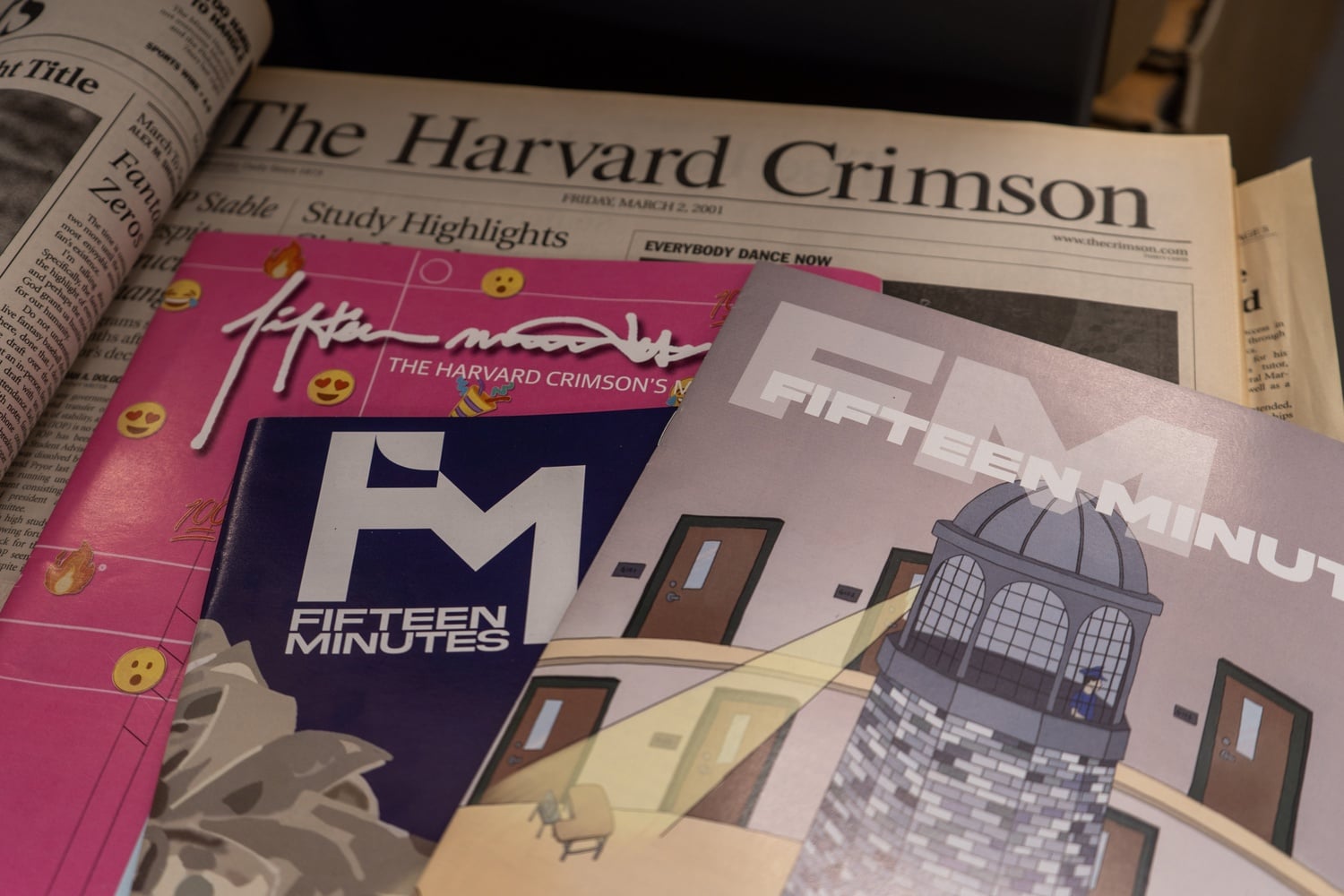
As late as the early 2000s, Thursday mornings could still find newsprint copies of The Harvard Crimson’s Fifteen Minutes magazine in the clammy hands of many a breakfasting Harvardian. There was a time when if you wanted to know what was going on at Harvard, reading Fifteen Minutes was among your better bets.
This year, Fifteen Minutes magazine — to us, “the mag” or “FM” — turns 50 years old. In that half-century it has changed its name, its format, its ambitions, and its readers — adapting, again and again, to survive the goose-stepping advance of media technology.
The Crimson’s Fifteen Minutes bears little resemblance to the Fifteen Minutes of 25 years ago, and even less to its first iteration, What Is to Be Done?, which debuted from hot presses in the fall of 1976.
In the 50 years since that first production night, the magazine has been buffeted by the same forces that thinned the ranks of its professional counterparts — and has responded by reinventing itself in pursuit of the ever-shifting attention of its readers.
What place does the magazine have in this new landscape? And if the publication is to survive another 50 years, what is to be done?
The What
hey’re making so much fucking money, I can’t take it anymore,” James “Jim” J. Cramer ’77, president of The Crimson in 1976, remembers feeling about the success of the Boston Phoenix.
The 1960s and 1970s had seen an explosion in countercultural alternative weeklies that stood in opposition to the mainstream dailies. Beyond the Phoenix, there was the Real Paper, the Village Voice, Boston After Dark, SF Weekly, the San Francisco Bay Guardian, Chicago Reader, and Washington City Paper — hundreds of pulpy, advertisement-plump publications that reviewed local arts scenes and reported on the indie fringes of cultured society.
Their model eschewed expensive subscriptions for cheap (sometimes free) distribution via thick coffeeshop stacks and streetcorner kiosks, relying on thorough events listings (what, when, and where?) to attract readership.
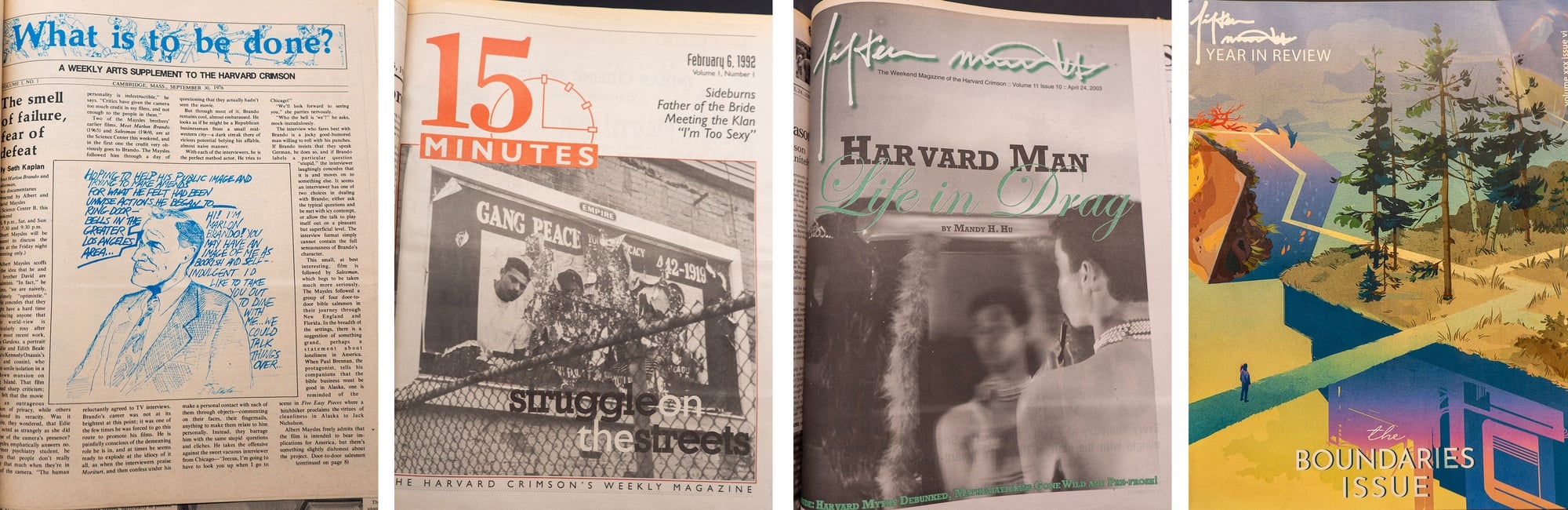
Cramer and The Crimson’s advertising manager at the time, Steve A. Ballmer ’77, saw the alternative weekly model as a “gold mine,” an opportunity to make a considerable profit for The Crimson. With the help of founding magazine editor Seth A. Kaplan ’77, so was conceived the What Is To Be Done?, billed to readers as “The Harvard Crimson Arts Weekly.”
The name had a double meaning: practically speaking, as editor Anthony “Tony” Y. Strike ’78 tells me, it really answered the question “what should I do this weekend?”
But “What Is To Be Done?” is also the title of a famous 1902 political tract written by Marxist revolutionary Vladimir I. Lenin. Cramer told The Crimson in 1998 that choosing it as the name of The Crimson’s new magazine was meant to satirize the paper’s left-wing reputation. “I loved the irony of it — to poke fun at ourselves,” he said.
That Cramer — now the host of CNBC’s “Mad Money,” a stock-market show that attempts to help viewers “become better investors” — was the one to bestow the publication with its Marxist name, also remains an amusing irony.
From its content alone, What Is To Be Done? (often referred to by its editors simply as The What) was only remotely identifiable as a Harvard publication. For just 15 cents, one could purchase a quasi-encyclopedic guide to the dates and times of every sort of arts and entertainment affair that might occur that week, alongside luscious, usually sardonic reviews.
Expressly published as a competitor against alternative weeklies like the Boston Phoenix and the Real Paper, The What was distributed far beyond Harvard to the campuses of MIT, Brandeis, Tufts, Wellesley, and Lesley — and offered free advertising space for party promoters enrolled at any one of them, giving even the most anti-literati of pupils reason to pick up a copy of The What.
“We really modeled it on the Village Voice, where it was an arts and commentary magazine that had a solid backbone of advertising and listings,” Errol T. Lewis ’84 tells me. Lewis, who edited the periodical with future U.S. Secretary of State Antony J. Blinken ’84, says The What was prolific in his time — circulating 10,000 copies — and most definitely profitable. “We made a ton of money,” Lewis says.
In this pre-internet world, readers relied on listings from weeklies like The What not only to know which theaters were showing “Taxi Driver” and when, but whether it was worth seeing the Scorsese film at all.
As magazine editor, Seth Kaplan was responsible for gathering reviews of that week’s listings from Crimson editors. “The arts were the engine that drove the magazine,” Kaplan, who passed away in 2009, told The Crimson in 1998.
Such reviews, however, are more aptly termed as “criticism.” At The What, undue kindness was rather liable to waste readers’ time.
Yes, you might want to know where to find Lou Reed, Aerosmith, and The Doobie Brothers (all advertised in the same issue!), but were they any good? And Michael S. Dukakis might be chatting with freshmen at the Union on the 20th, but why should you go? “If you haven’t seen Harvard government concentrators in action, this is your chance,” The What answered.
Critics exuded an intimidatingly vast knowledge of the arts. Cramer penned an adoring weekly jazz column, Richard “Rich” S. Weisman ’78 an animated and highly self-referential rock column.“It got a lot of really talented arts writers who were very serious accomplished musicians,” Lewis says of The Crimson during The What.
“You had to know Chaucer, but you also had to know Coltrane,” Cramer says. “I thought that we were Renaissance warriors.”
Crimson Editorial Board reviews, in Tony Strike’s view, were “stodgier” and “pretending to be the New York Times,” whereas The What, somewhat cooler and edgier than The Crimson’s daily paper, was “a little more underground newspaperish.”
The rise of alternative weeklies coincided with the rise of New Journalism, a style that encourages the incorporation of the narrative techniques of fiction into reported non-fiction pieces. Writers like Tom Wolfe, Truman Capote, and Hunter S. Thompson (who pushed the tenets of New Journalism so far as to create his own brand, “Gonzo Journalism”) were highly influential to young editors at The Crimson — particularly Thompson’s drug-fueled 1971 Rolling Stone feature “Fear and Loathing in Las Vegas.”
“We all wanted to be Hunter,” Cramer remembers.
Prose in The What was full of voice and personality, at times esoteric and vaunting, and it rarely failed to entertain. William “Bill” E. McKibben ’82, now a frequent contributor to the New Yorker, says of the magazine (or “maggot-zine,” as McKibben remembers the overburdened production supervisor Patrick R. Sorrento calling it) that “one of its great virtues was that it was a place where people could learn to write at length.”
In 1988 — and 1988 only — the question mark dropped from What Is To Be Done. An Editor’s Note urged that “this should not be construed to imply” that “we are wondering any less about what actually is to be done, but rather that now we have redoubled our efforts to tell you this information with greater certainty.”
World Famous for Fifteen Minutes
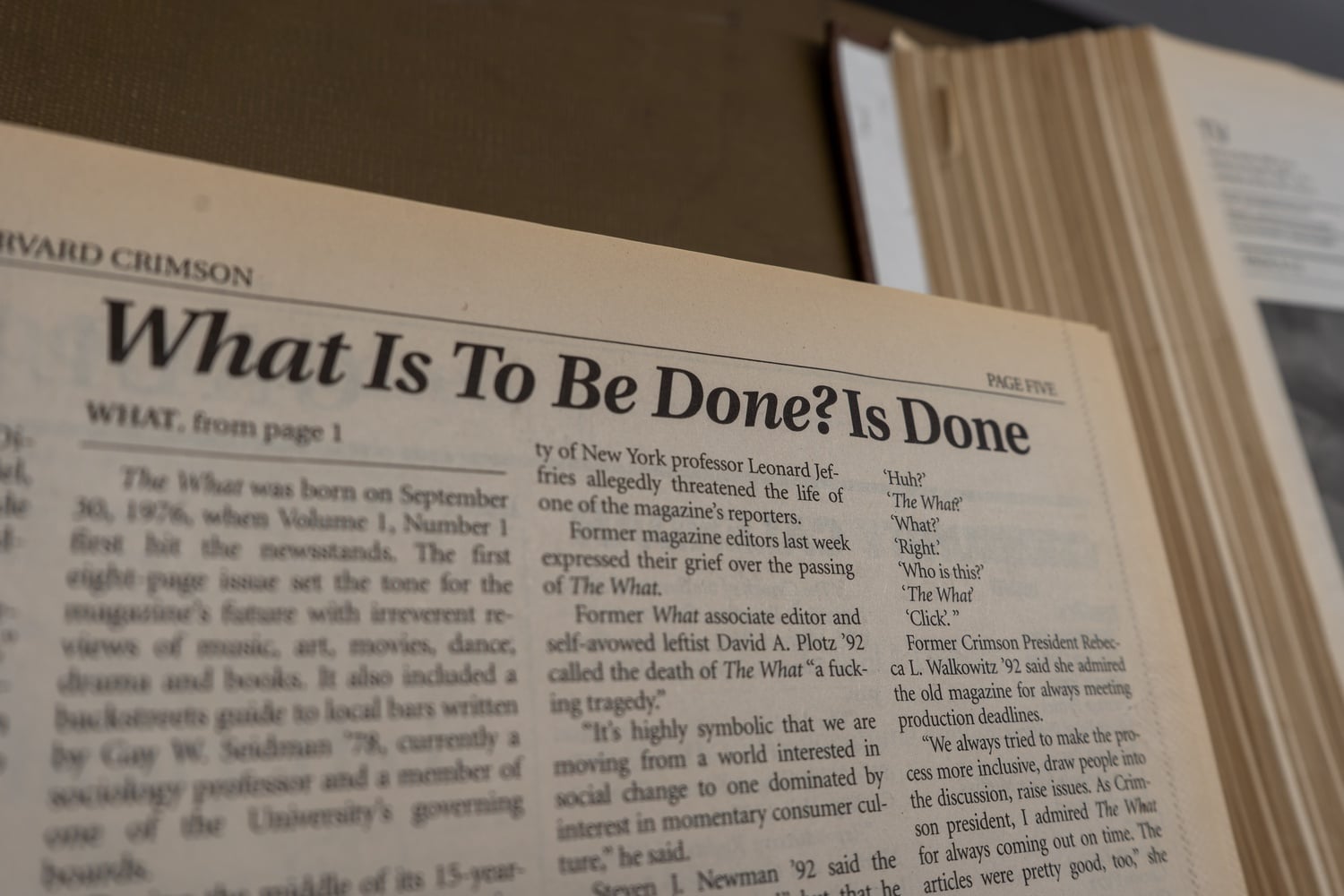
he What Is Done,” The Crimson declared on the fifth of February, 1992 — and so The What was no more.
The Cold War was over and the joke wasn’t funny anymore: as the Eastern Bloc caved in upon itself and Francis Fukuyama declared the end of history, what did Lenin matter anymore? “It had to be done…” magazine editors wrote in defense of the decision.
“Besides, no one really got the pun anyway.”
From its ashes, under the co-editorship of Eryn R. Brown ’93 and Philip M. Rubin ’93, arose the Fifteen Minutes magazine. The name derived from an Andy Warhol quote which for years would serve as an epigraph of the mag: “In the future everyone will be world-famous for fifteen minutes.”
The transition from arts supplement to a magazine proper had predated the formal name change, says Julian E. Barnes ’93, who was The Crimson’s president during the name change. Politics was explicitly added to the purview of The What in the late 1980s, and the cover story had shifted from an arts focus to investigative scrutiny.
“Fifteen Minutes arose out of fifteen days of labor,” the mag declared in its first issue, and offered a list of some several hundred alternative names that were supposedly considered, including “Of Rats and Mutants,” “Achtung Boston,” “Fear of Old Stuff,” and “Neurotic Blurbs.” The name was at first thrown out as a joke, says June Shih ’94, who would take over from Brown and Rubin as FM’s second chair — but it stuck.
In the lead-up to the renaming, the magazine also faced rough financial seas. Barnes tells me that the economic recession in the early 1990s wiped out much of The Crimson’s advertising revenue. The magazine for a time faced extinction at the hands of a prudent Business Board: The Crimson could ill afford to distribute thousands of copies a week if no one was buying ads to fund them.
Reader interest had also diminished. More and more, it had become a publication specifically for Harvard students. It was known around campus, David A. Plotz ’92, assistant editor of The What in 1990, tells me — but “I wouldn’t have said that I felt that the work was reaching an audience that thought it was really valuable.”
Moreover, halfway through 1991 The Crimson switched from a medieval production process involving hot wax and X-acto knives to running Quark, a digital production software, on early Macintosh computers.
The editors quickly realized that it was impossible to reproduce the previous look of The What, and decided to effect a complete redesign, one that would take advantage of new computer software and unleash a wholly new magazine.
Dante E. A. Ramos Jr. ’93, who was the design editor of the magazine during the change, tells me that the new technology allowed them to do “a lot more adventurous things with layout,” and the reborn magazine offered “a bit of a playground” to experiment with splashy, nouveau designs.
But not all were thrilled with the name change. Plotz told The Crimson soon after the decision was made that the change was “a fucking tragedy” and “highly symbolic that we are moving from a world interested in social change to one dominated by interest in momentary consumer culture.”
In Fifteen Minutes, arts and entertainment occupied less and less space as the 1990s drew to a close, coinciding with the creation of separate magazine and arts boards at The Crimson, each with their own staff writers.
Shih remembers a concerted effort to make the new incarnation of the mag a little “edgier,” drawing inspiration from the teen magazine Sassy and the style section of the Washington Post, and including more short and fun pieces at the front and back — pieces that wrote and commented on the Harvard social scene.
Michael R. Colton ’97 inaugurated the “Gossip Guy” column, which he described as something “of questionable value, but of lasting value.” “Gossip Guy” satirized the absurdities of Harvard’s social culture and gave “virgin updates” on the sexual developments of (fictional?) freshmen. Another week, Gossip Guy announced that O.J. Simpson would become a visiting lecturer, and, in another, that an undergraduate had landed an internship as the Prime Minister of North Yemen.
Colton’s column at times landed him into trouble: one edition describing a female friend flirting with then-University President Neil L. Rudenstine at a party incited threats of violent retribution from her boyfriend.
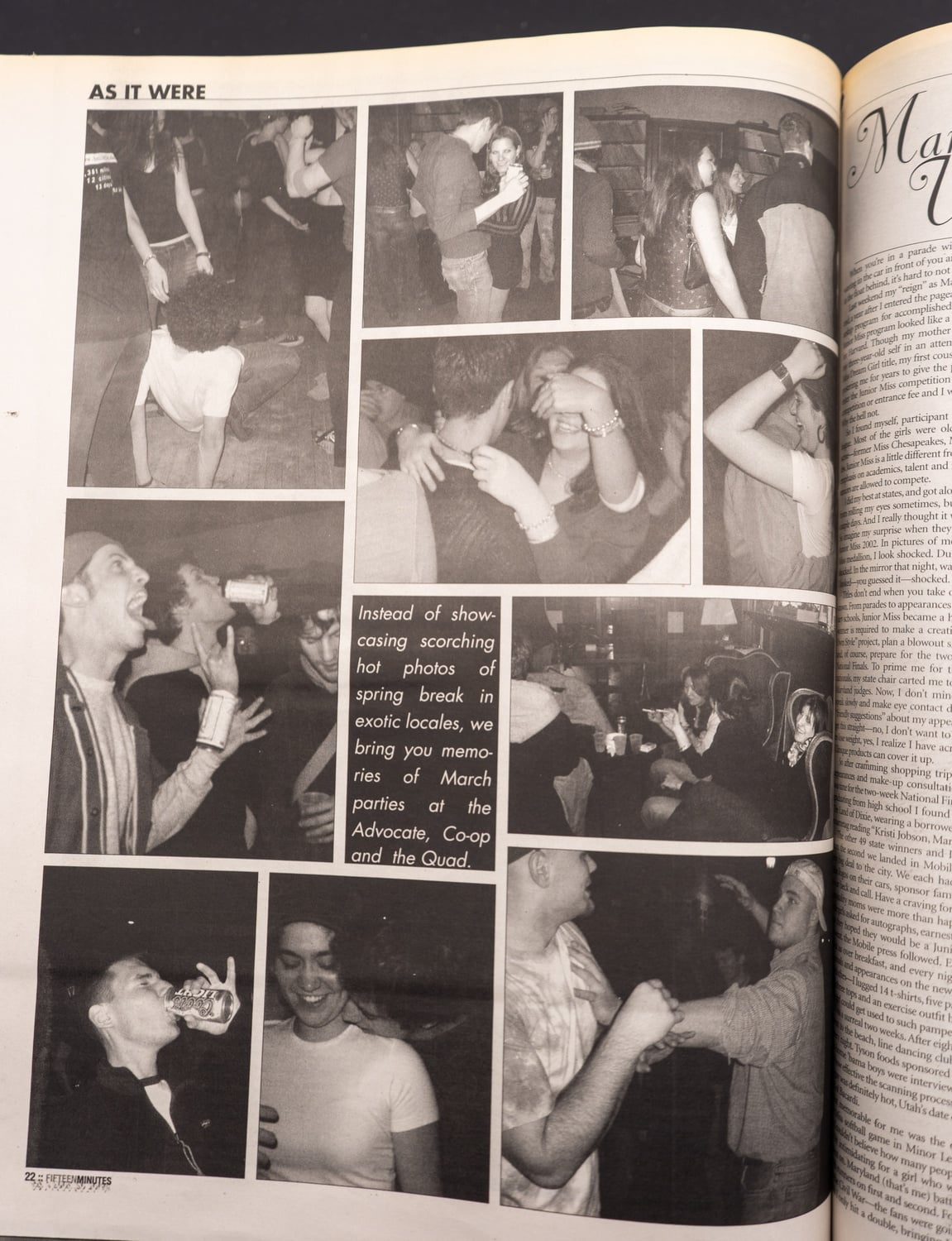
Later on, under co-chairs Jonathan S. Paul ’00 and Aaron R. Cohen ’00, FM began to publish party photos in a feature called “As It Were.” Freshmen compers were sent to parties — to which, some stressed, they were generally not invited — with a disposable camera to capture canoodling and consorting drunkards in the corner. (Paul remembers one critic calling the photos “masturbatorial.”)
This was not the highbrow, knowing, aloof and sardonic criticism of The What. Instead, what it was was funny and engaging, and what it did was capture the attention of Harvard students even as — perhaps even because — it made fun of them.
Magophilia characterized the FM staff in this era, which coincided with a new golden age of magazines. Esquire, Cosmopolitan, GQ, McSweeney’s — all were lasting influences on the character of the mag. “Magazines were just flush with ads and huge and glossy and beautiful and inspiring,” Paul says. “There was no social media, and so people loved magazines.” Editors from this epoch of FM describe the gratifying sight of nearly everyone reading the new issue of Fifteen Minutes in the dining halls on Thursday morning.
FM sought to do for Harvard’s elitist society what New York Magazine did for New York’s high society, Jennifer “Jenn” Y. Hyman ’03 says. The influence of these leading-edge glamour magazines is nowhere more manifest than in 15 Hottest Freshmen, perhaps the most infamous (alternatively famous) of the magazine’s legacies.
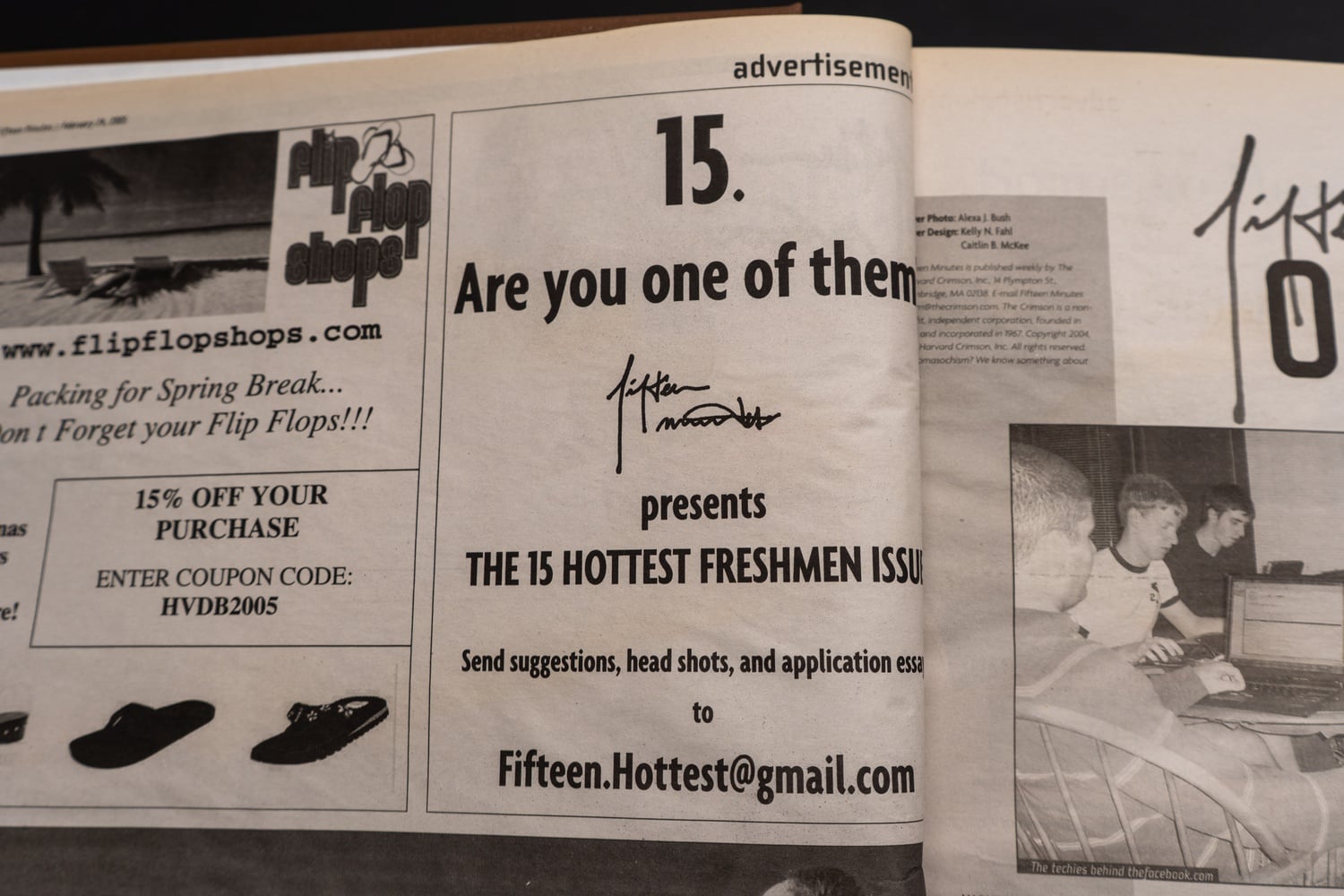
“I was basically the Anna Wintour of campus,” says Hyman, who ideated the hit FM feature in her sophomore spring. Hyman, who went on to found the multi-million dollar dress rental company Rent the Runway, remembers leafing through the freshmen facebook to select the 15 freshmen who would be photographed and interviewed for the spread.
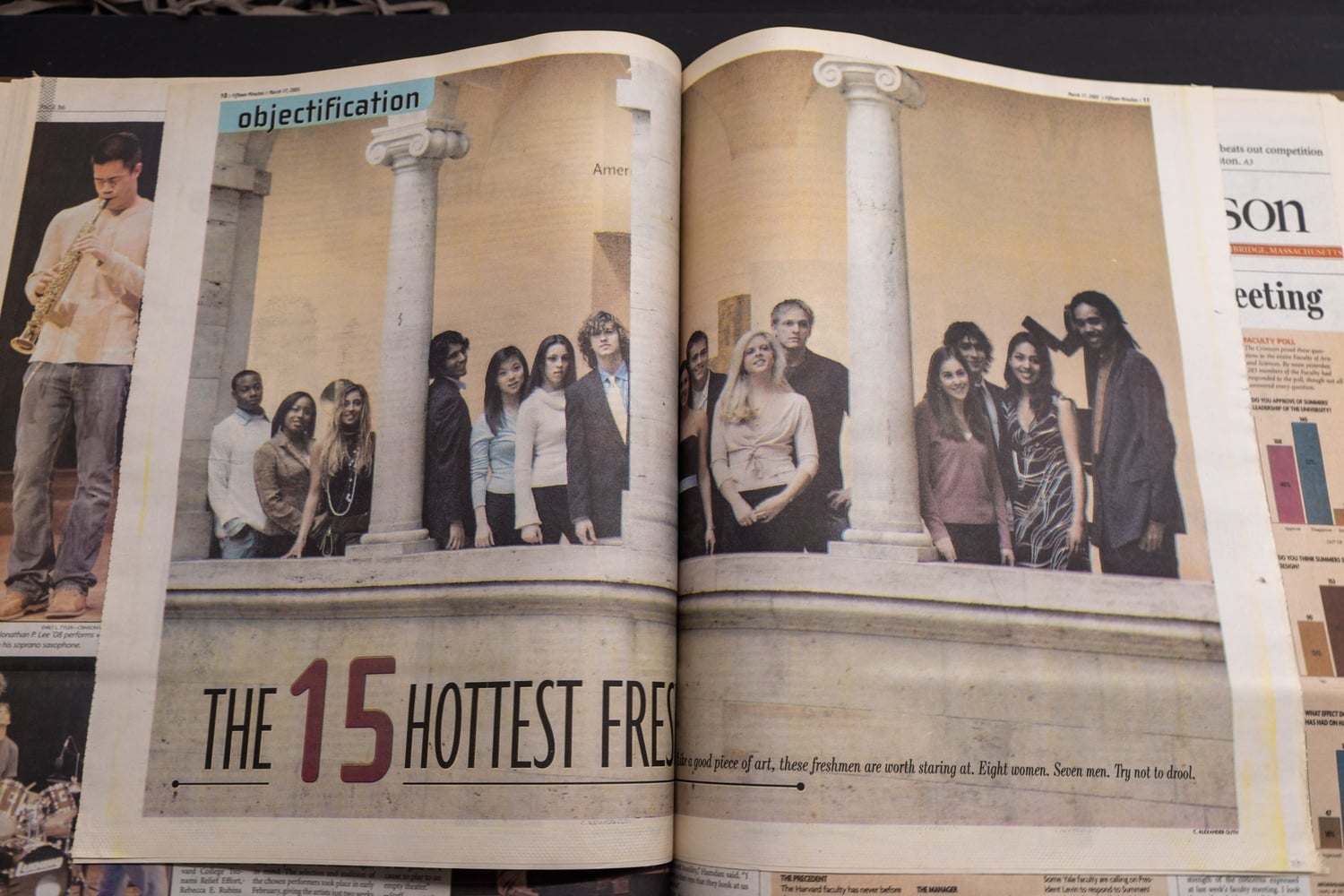
“I was choosing who became popular,” she recalls, “and that’s what was so funny about FM, that I knew that I shouldn’t have been in this position to choose, but like, why not?”
Hyman thought of the magazine as conducting a sociology of Harvard, a practice that required an intimate understanding of just what makes Harvard such an absurd place.
“She wanted the magazine to be something like Vanity Fair or Vogue, and portray life at Harvard as this kind of glamorous, upscale activity,” Benjamin “Ben” D. Mathis-Lilley ’03 tells me.
A spirit of gonzo, prankster journalism thrived within the mag. James Y. Stern ’01 describes the mood at FM during this era as a “tremendous sense of FOMO about a party that you were actually at.” If the editors thought something might be funny, Stern tells me, they did it.
It was an ethos of “just go, do something good, no rules, just get there,” Stern says, and so he signed off on the “wacky” ideas of Hyman. When Hyman arranged for the staff to get makeovers for one week’s issue, Stern assented. Why not?
“A major part of it for me too is just like I wanted to supply something that would be fun to read for people who are waking up bleary eyed, sitting on the toilet in the morning,” Stern says. Irreverence became the essence of the magazine.
“Who Cares?” Cohen asked of Harvard-Yale in 1999. “Take Us to the Commander,” Adam M. Taub demanded in 2000 as he interrogated the staff of the Sheraton Commander, hoping to find out who exactly the commander was. In 2001, B.J. Novak ’01, Poonster and later star of “The Office,” reviewed a fake band for FM, and throughout this era, FM published a “mail bag” of readers’ letters that were largely fictitious.
“Dear FM, I have taken the liberty of analyzing your magazine’s design accoording[sic] to the principles of feng shui. Good: Blurry logo on the cover promotes long life,” wrote one pretend reader. “Bad: Full-page class ring advertisement will create much tension...in bed.”
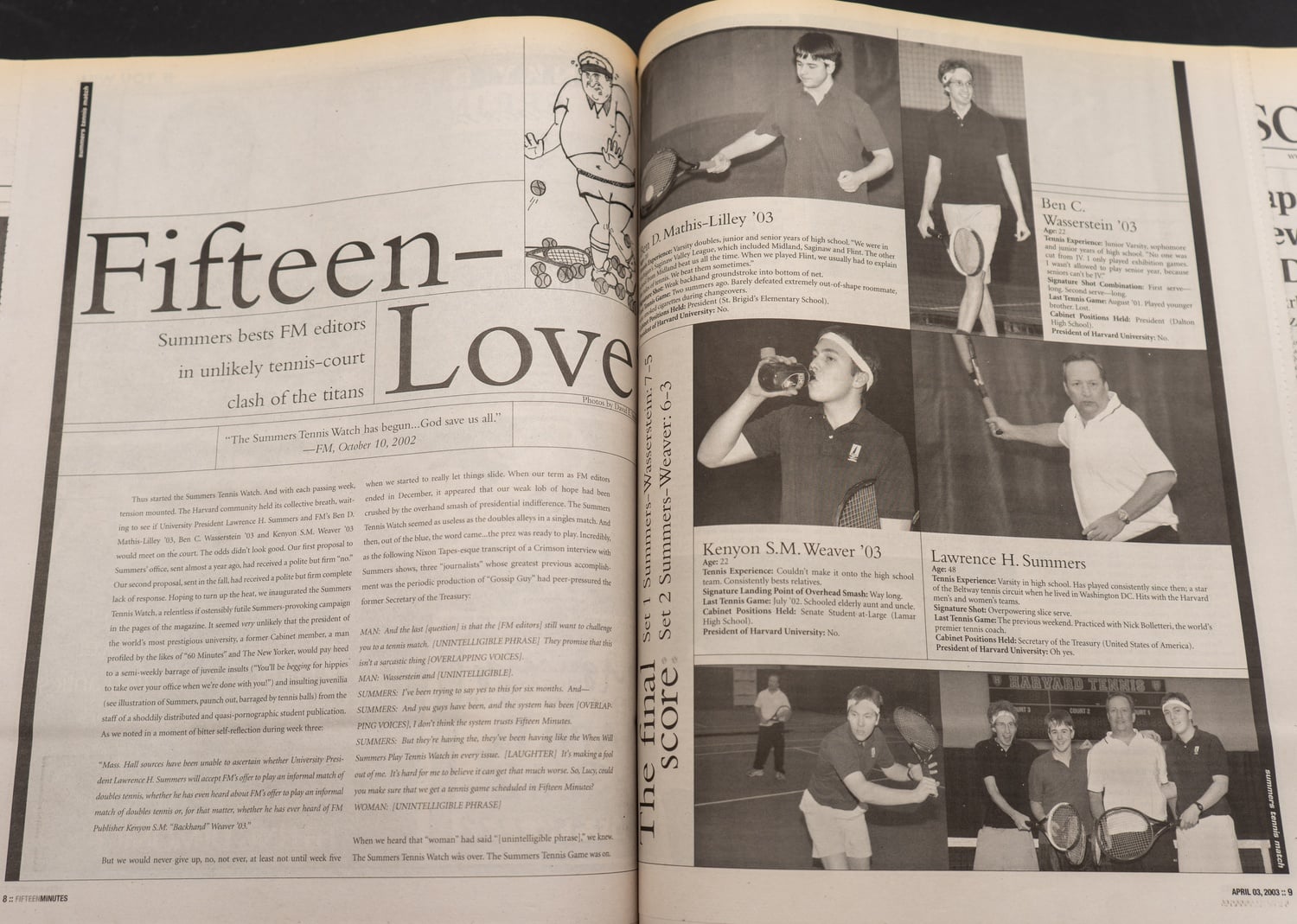
FM chairs Ben Mathis-Lilley and Ben C. Wasserstein ’03 (“the Bens”), and FM editor Kenyon S. M. “Backhand” Weaver ’03, challenged then-Harvard University President Lawrence H. Summers to a match of tennis — which, after weeks of taunting (via FM’s ephemeral “Summers Tennis Watch” feature), Summers finally agreed to. “I was told directly by a family friend to ‘kindly let Summers win,’” Kenyon wrote. “I told them that wasn’t going to be necessary.”
Mollie H. Chen ’05, an FM co-chair in 2004, says of the piece that it was “something that could be done in the pre hyper-internet age, where with enough tenacity, two magazine chairs can get the President to agree to a tennis match with them.”
Summers, dressed in “a matching black and white Nick Bolletteri Tennis Academy warm-up suit,” apparently promised the FM editors that they would graduate with honors if they lost. Summers won handily. (All three later graduated cum laude.)
But for all of its scandalous and unserious content, FM also prided itself on producing serious investigative journalism.
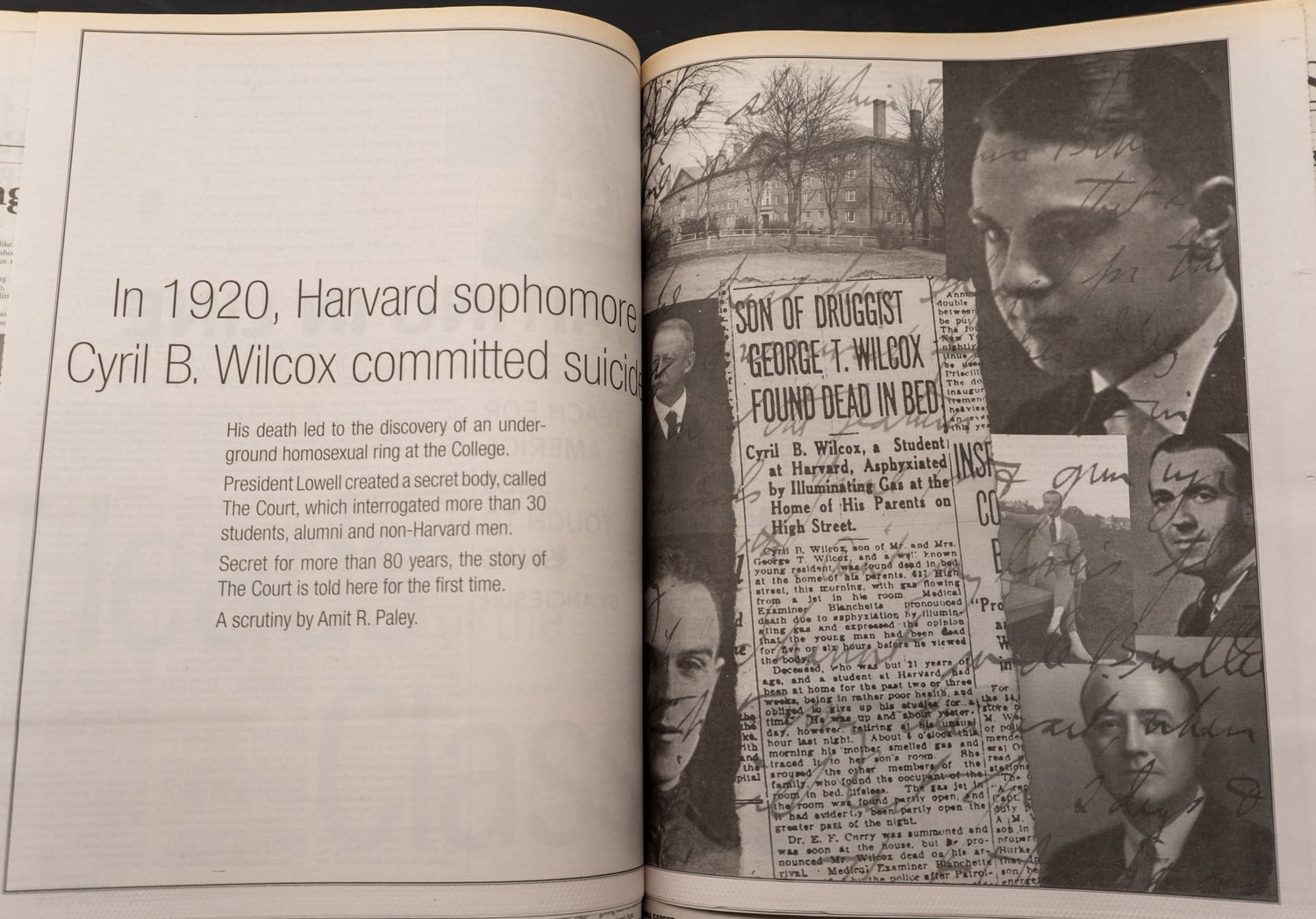
In 2002, FM published perhaps its most renowned investigative scoop in the form of a two-part scrutiny written by Amit R. Paley ’04 about the Secret Court of 1920. Paley drew from long-buried archives to detail how Harvard, under the direct auspices of former University President A. Lawrence Lowell, secretly persecuted a number of gay Harvard students.
Paley’s investigation received national attention and drew an apology from Harvard.
“We’d have really serious pieces like that,” Paley tells me, “then there might be a cover story on the Fifteen Hottest Freshmen.” To accurately capture Harvard meant rendering both the tragic and the irreverent, the grave and the absurd — and such was the character of FM.
Digital Panopticon
hat were you guys thinking?”
Stephen M. Fee ’07 recalls The Crimsons’ legal counsel asking him something along these lines after a particularly scandalous cover landed them in hot water. Crimson leadership, Fee tells me, “for good reason, didn’t really trust us.”
But, Fee reminds me, this was an era before Twitter. If the magazine made a mistake, not many people were liable to hear about it, and so the “undersexed, underdrugged kind of nerds” that ran FM had the freedom to experiment.
FM was long relegated to virtual crawl-spaces in The Crimson. Fee recalls the weekly production as “cheek to jowl” in a “crusty office” in the back of 14 Plympton with an electric bong in the corner.
Fee adds that the magazine was a “comfortable resting place” for students who were good writers, but thought that The Crimson’s newsroom was “full of a bunch of nerds who wanted to work for the Wall Street Journal.” After all, FM always demanded that its content, however depraved, was at least well-written.
Fee acknowledged that in hindsight, antics like 15 Hottest Freshmen might make the magazine editors look like “a bunch of misogynistic jerks.” To them, however, it was meant to be satiric, a mockery of contemporary magazines.
FM of the late 2000s was racy and scandalous, unabashedly lowbrow in its colloquial, gossipy appeal to the mass-market Harvardian. The party photos were lurid and candid, the digs at Harvard students sardonic, and the gossip indiscreet — but then again, this was before the advent of the social media digital panopticon.
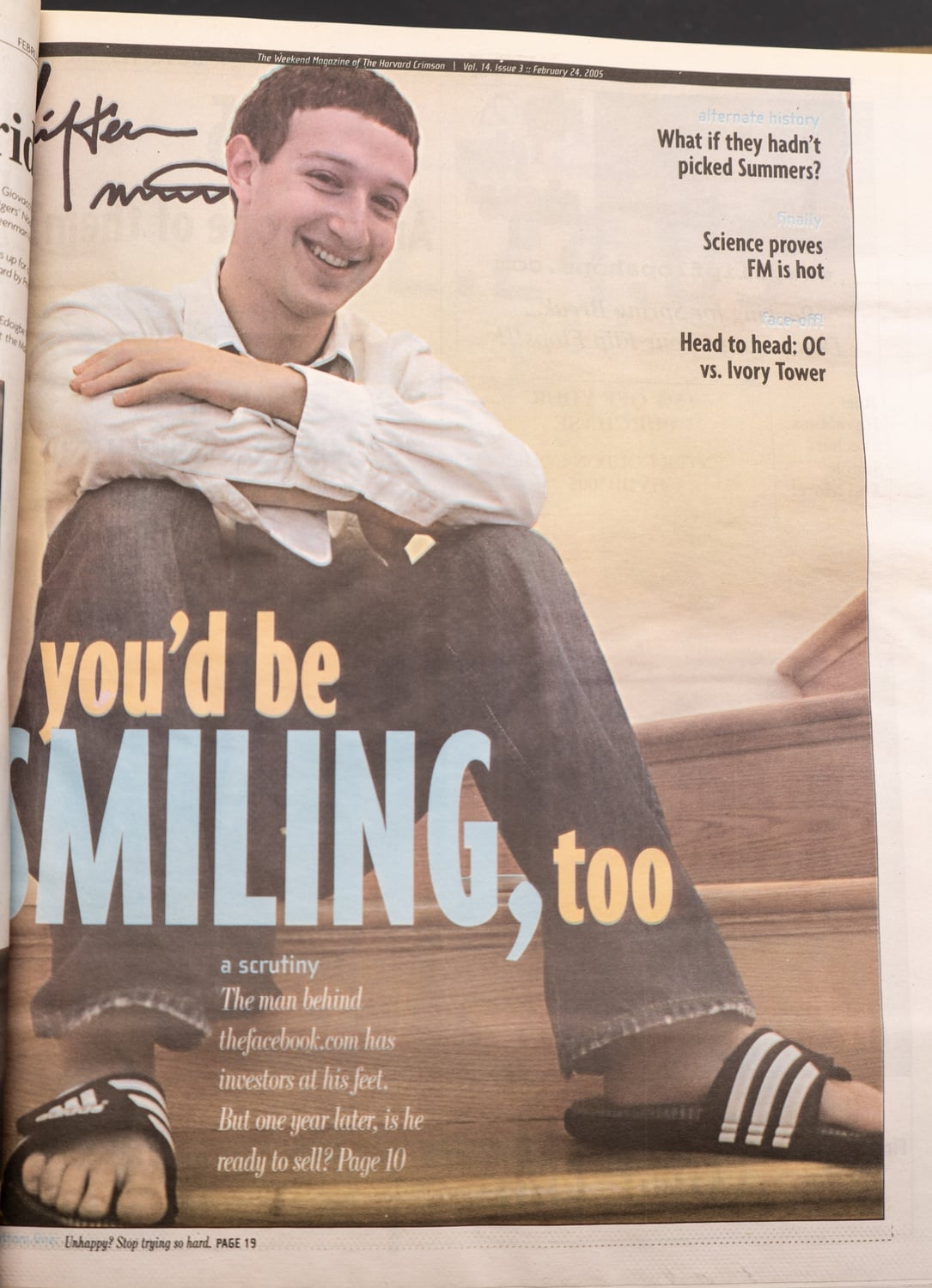
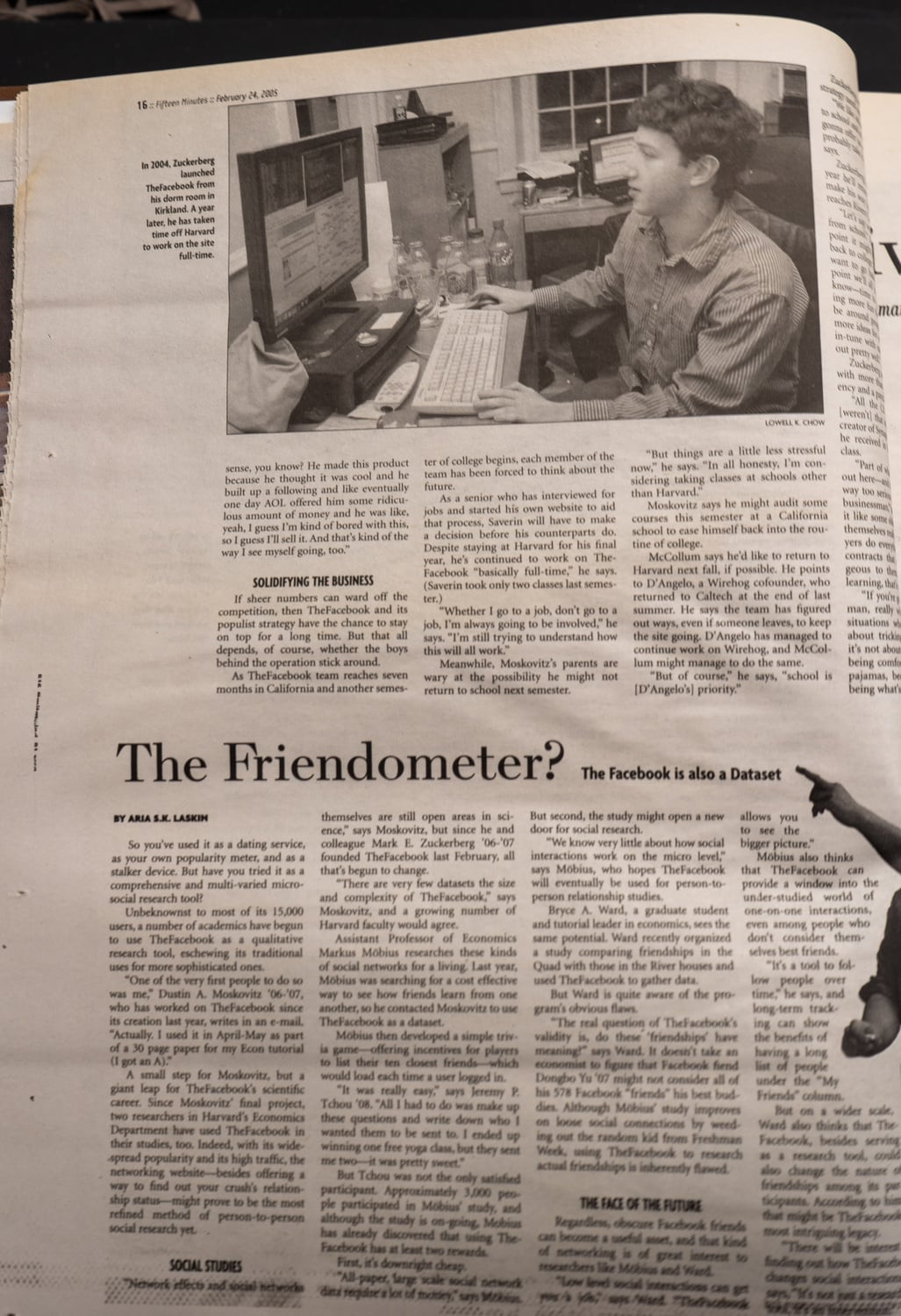
There is a certain irony to the fact that FM was one of the first publications to report on Facebook. (Such was the volume of Facebook-related pitches at Writers’ Meetings that a categorical ban was enacted.)
In 2005, Kevin J. Feeney ’08 wrote a 4,700 word in-depth report on the then year-old website phenomenon and its 20-year-old founder for the magazine. The profile followed Mark E. Zuckerberg through a December in Los Altos, California, capturing the company’s volatile first year of investments and the beginning of the rift between the Facebook founders later dramatized by “The Social Network.”
Elizabeth W. Green ’06, who commissioned and edited Feeney’s Facebook piece, recalls that FM was widely distributed at the time and “had the command of the campus’s attention.”
“Facebook became the place where party pictures were posted instead of FM,” Green tells me, but “we kind of created it first.”
For years, The Crimson’s website had taken a proverbial backseat to its print content. The magazine was no exception: editors in the 2000s vaguely remember publishing to the web, but considered it secondary to the pressing publication of the newsprint edition each Thursday morning.
Over time, however, as digitization accelerated, people became more conscious of their digital footprint. In much the same way a student might temper their passions on the dance floor out of fear that some incriminating snapshot would forever haunt them on the internet, a magazine writer might consider that their name would be permanently attached on a searchable database to a particularly scandalous piece of prose.
It didn’t happen all at once, but the magazine became more self-serious.
By the 2010s, humorous, zany writing that one would never find in the daily could still be found in FM, but it was of a decidedly more tame breed when compared to the content FM previously printed.
Much of the lighter fare began to migrate online, including to The Crimson’s “more-than-daily” blog FlyBy, launched in 2009, and with the near-universal adoption of smartphones came the end of the monopoly over the Thursday-morning-toilet-sitting-market which FM had long enjoyed.
The niche that remained for publications like FM, as for many other magazines, was so-called “slow journalism,” the difficult and unglamorous investigative work that didn’t interest or was beyond the scope of bloggers and social media influencers.
Maia R. Silber ’17, an FM chair in 2016, describes moving the magazine away from BuzzFeed-style “listicles” and “towards stories that really allowed writers to exercise reporting and narrative abilities,” like one piece that profiled picketing dining workers, and another about fighting climate change in the Harvard Forest.
The latter half of the 2010s saw the coalescence of a magazine that did serious journalism, but didn’t take itself too seriously. There was still the need to fill space on the page, hence the continued multitudes of low-stakes zany pieces that also served to counterbalance sobriety, but they were no longer quite so affrontive.
The last Fifteen Hottest Freshmen were anointed in 2014. FM editors had grown uncomfortable with the feature. Over the years, the notion of poking fun at glamour magazines had been somewhat lost as such magazines themselves went out of vogue.
Killing Print
ven reading The Crimson in print, in general, felt retro by the time I was in college,” Marella A. Gayla ’19 tells me.
Gayla, who was FM chair in 2018, says that by the time she arrived at Harvard, relatively few people still read the print magazine, though investigative pieces performed well on social media. (FM editors resented that the Quincy Grille used their newsprint magazines to line trays.)
But it wasn’t nearly so important that FM was popular to this generation as it seemed to be to editors a decade prior. “I think the idea that I was making something that could potentially be kind of obscure felt exciting,” Gayla tells me.
In 2019, the last full pre-pandemic year of FM, magazine chairs Abigail L. Simon ’20 and Norah M. Murphy ’20 had initiated a shift towards publishing fewer newsprint magazines in favor of several glossy magazines each year. For the first time in its history, the mag no longer printed an issue for each week of the semester.
“No one wants to be the one to kill print,” Murphy reflects, but the magazine could no longer avoid the digital world it now inhabited.
When Covid-19 descended upon Harvard in the spring of 2020, Harvard sent thousands of students home and print production of The Crimson’s paper was abruptly suspended. Though FM was forced to retreat online, the pandemic presented “a rich reporting environment,” as FM chair Andrew W.D. Aoyama ’21 remembers, full of many injustices and tribulations ripe for reporting. The magazine leaned into its developing investigative journalism identity.
FM published a piece that exposed how Harvard had neglected the safety of custodians against the virus, and another on the lack of internet access for rural and low-income students to participate in online classes.
After the pandemic, newsprint never came back in the same way. The Crimson’s daily newspaper shifted to a weekly print schedule in 2022, and Fifteen Minutes, save for a few glossy magazines each year, became a primarily digital enterprise.
Sometimes, print pages just needed to be filled with something, anything; the same is not true of websites. The pressure of filling a weekly printed edition, which had always influenced the magazine’s content, was now gone.
With newsprint editions, FM was able to count on a certain omnivory in readership. That is, FM had high and low brow entry points alike, and a certain “cross-over” occurred: maybe you were only there for the party photos, but you’d stay for the hard-hitting cover story. Nowadays, the internet enables one to travel directly to their intended content without ever catching a glimpse of what the algorithm thinks they won’t like.
Ship of Theseus
tudent publications differ from ordinary periodicals on one facet in particular: an inherent lack of continuity.
Whereas in an “adult” publication, staff writers preserve many decades of memories, and editors have years over which to implement their vision, student publications like The Crimson turn over their entire staff every four years. Magazine chairs are replaced each December.
The memory of FM is short. What the magazine is has a great deal to do with what any given set of leaders wishes it to be, and the character of the magazine has a great influence over whom it attracts. In The Crimson’s leadership election process there is a certain inherent incentive to differentiate oneself, to advocate for changes to the magazine.
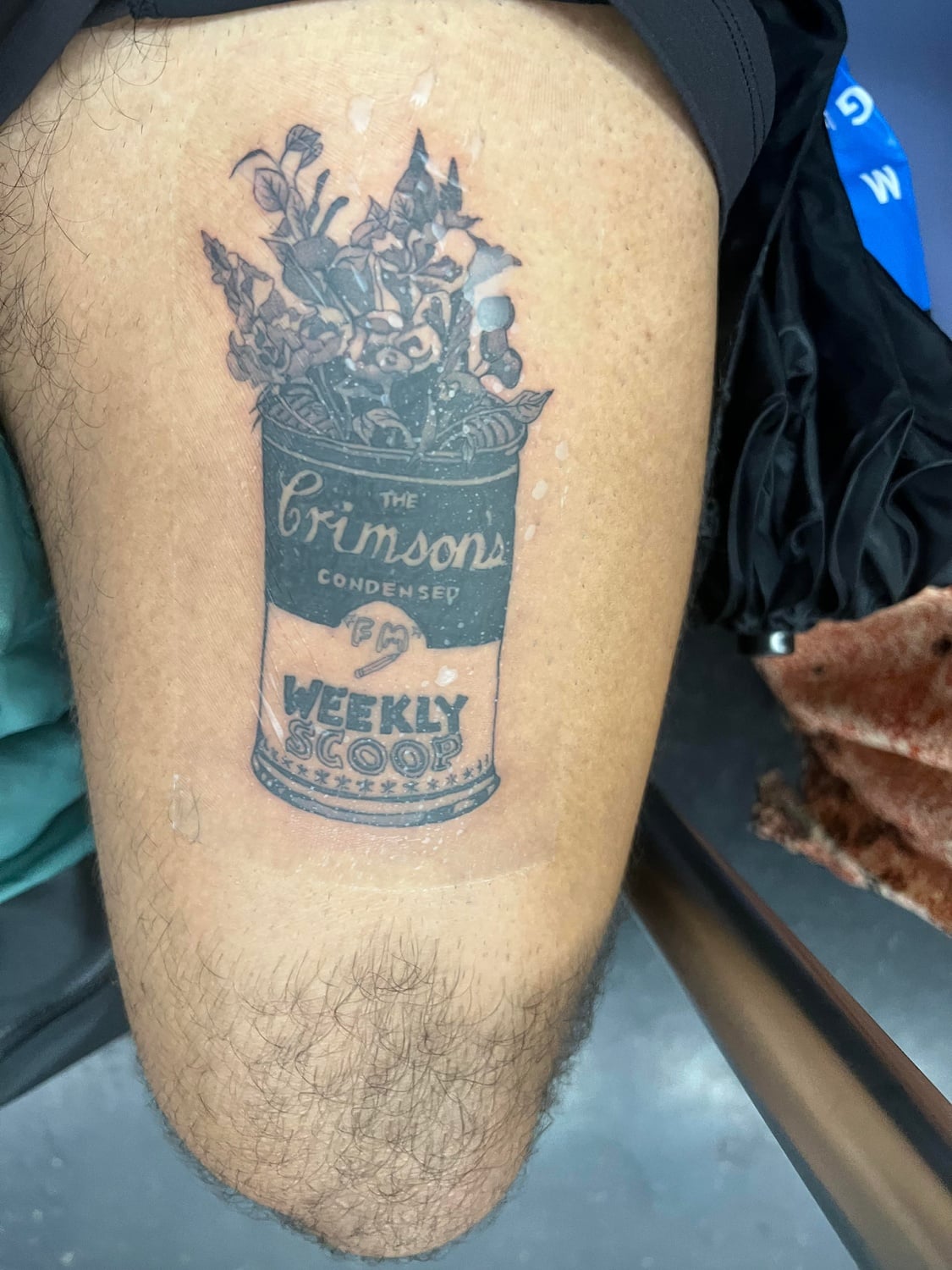
Though a tired analogy, the Ship of Theseus is apt for the case of the magazine: can it really be said to be the fiftieth anniversary of something that has undergone so many reinventions? Surely, it cannot be considered the same magazine. What has been preserved?
But on the question of what is to be done, how to keep FM alive for another 50 years, perhaps this constant reinvention is the closest thing the medium has to an answer. Fifteen Minutes has never survived by staying the same — so what will it become next?
—Associate magazine editor Andrew W. Shlomchik can be reached at [email protected].
Want to keep up with breaking news? Subscribe to our email newsletter
Have a tip for The Crimson? Share it confidentially