By Removing Bassett, Harvard Chan Is Abandoning Its Mission
Harvard claims to educate leaders and pursue truth as a guiding value, yet last week it demonstrated how easily those ideals are abandoned when political pressure mounts. On Tuesday, the University showed us exactly what kind of world it prefers: one where truth is tolerated only when it is quiet, where justice is reduced to a performance stripped of its political truth, and where those who name structural violence are escorted to the door.
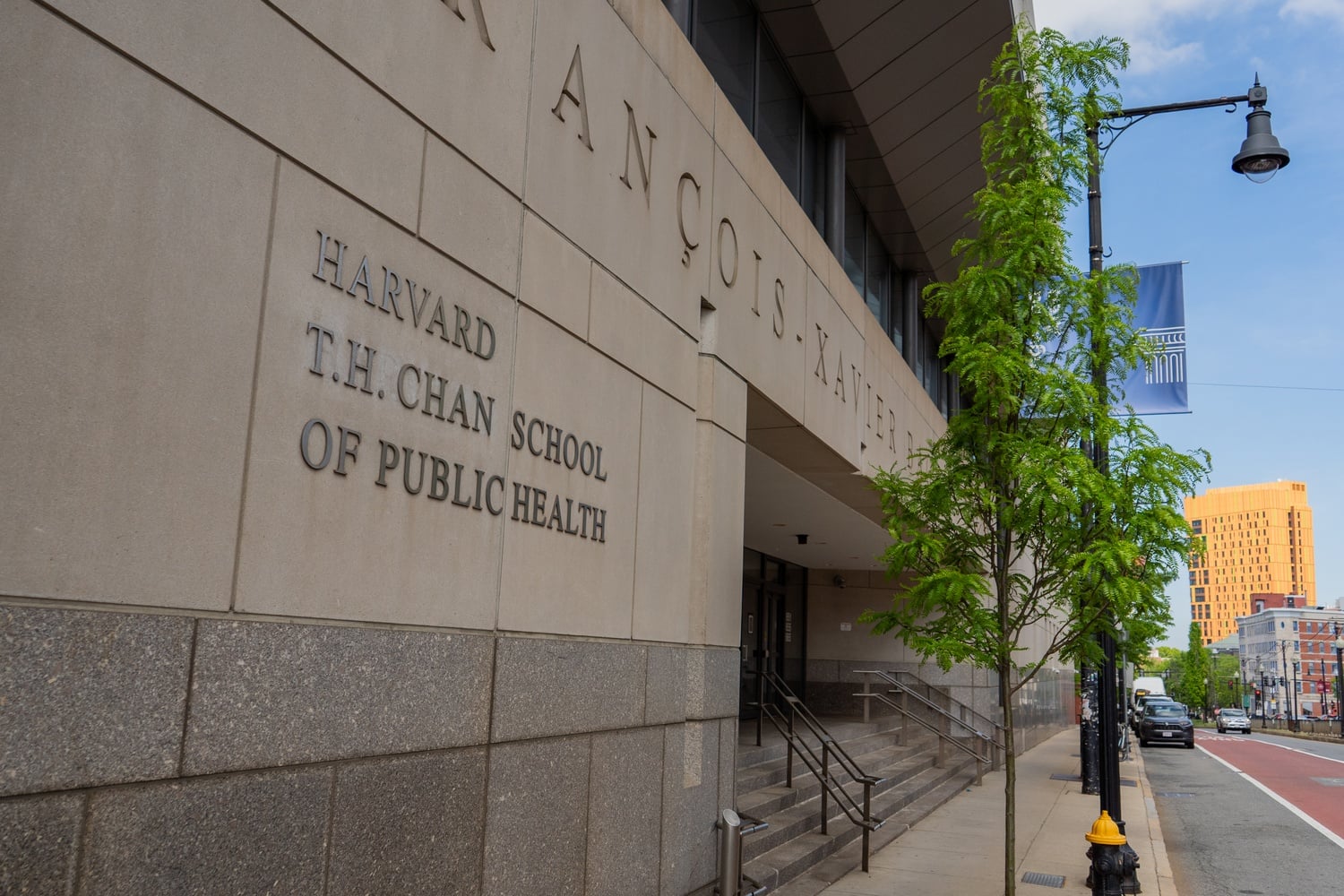
The abrupt removal of Mary T. Bassett ’74 as director of the François-Xavier Bagnoud Center for Health and Human Rights is not the neutral transition Harvard presents. Rather, it is a profound betrayal of the Harvard School of Public Health’s stated commitments to health, dignity, and justice. Harvard’s leadership is seemingly capitulating to donors and the federal administration, who demand a version of “veritas” stripped of dissent, critique, and critical analyses that interrogate structural violence, including against Palestinians.
To remove Bassett and “focus” FXB on children’s health suggests a chilling reversal: Harvard has moved from naming structural inequities to disciplining anyone who insists on exposing them.
As Black doctoral students, all three of us decided to attend Harvard because it professed a shift toward justice, even as we understood this institution’s longstanding legacy of harm to our community. Two of us entered Harvard following the tragic killings of George Floyd, Breonna Taylor, and Ahmaud Arbery. At that time, the University claimed a renewed commitment to racial justice. Another one of us began in Fall 2023, as the genocide in Gaza unfolded in real time.
Across these years, we have witnessed how swiftly Harvard’s stated commitments dissolve when justice demands political courage. Harvard’s post-George Floyd commitment to justice has given way to a posture shaped by political expediency and institutional self-preservation. This distortion of truth has moved beyond an abstract problem; it has laid the groundwork for dehumanization and harm against those of us who are most marginalized.
Under Bassett’s leadership, FXB has long addressed the most urgent determinants of children’s well-being: displacement, racism, climate change, war, policing, hunger, and state violence. FXB already houses a renowned child protection certificate program, backed by the center’s decades of pedagogy, research, and global partnerships. Dean Andrea A. Baccarelli presenting Bassett’s dismissal concurrently with a renewed focus on “children’s health” for FXB is bewildering, yet sadly unsurprising.
Harvard’s rhetoric forces us to ask: whose children matter? The children whose health is jeopardized by structural racism, militarized borders, forced displacement, genocide, or political violence are conspicuously absent from this new vision. Pretending that children’s health is a new priority — while removing a leader who has supported FXB’s existing focus on child well-being — is morally bankrupt.
Over the last two years, FXB has weathered intense scrutiny largely because of its program focused on Palestinian health. The University’s response to public criticism exposes that a center dedicated to health and human rights can only exist so long as it excludes an analysis of the harms done to Palestinians. Meanwhile, other programs at FXB appear sidelined — from its advocacy for reparations to the descendants of enslaved African people, to its defense of the rights of Roma communities, to its work on behalf of unhoused people and immigrant communities of color currently weathering state-sanctioned violence.
The removal of Bassett leaves FXB’s work hanging in the balance. It signals that HSPH’s care and commitment to humanity should only be extended to certain people and communities. This action contradicts the Universal Declaration of Human Rights, which is framed inside the FXB Building and handed to every HSPH graduate at Commencement.
In Bassett’s own words, one of her commitments is “to continue to build the pipeline of scholars who see human rights as important to health.” The FXB doctoral cohort embodies that commitment, serving as a rare space where students can build the kind of intellectual community that too often remains out of reach, especially for students of color.
The cohort bridged us across departments, schools, and career stages, opening doors that otherwise did not exist at HSPH. Bassett’s vision empowered us to organize community-focused internships and ground our training in the lived realities of the communities we aim to serve. In short, she offered what Harvard so frequently promises but so rarely delivers: a genuine home for collective learning, knowledge production, and public-minded scholarship.
Bassett was an important mentor, and her leadership of FXB has facilitated our retention in the University. Her dismissal reflects an emerging trend both at this University and across the nation of failing to protect Black women in leadership, as well as Harvard’s longstanding history of anti-Blackness.
Dean Baccarelli and Harvard leadership’s decision to dismiss Bassett sends a message about whose knowledge is welcome and institutionally tolerable. The University must reinstate Bassett as director of the FXB Center and confront the truth — no institution can claim to champion justice while removing those who name it.
Jasmine D. Graves is a fifth-year Ph.D. candidate at Harvard T.H. Chan School of Public Health. Sirad A. Hassan is a third-year Ph.D. candidate at Harvard T.H. Chan School of Public Health. Artair J. Rogers is a fifth-year Ph.D. candidate at Harvard T.H. Chan School of Public Health.
Want to keep up with breaking news? Subscribe to our email newsletter
Have a tip for The Crimson? Share it confidentially