Harvard Is Too Old
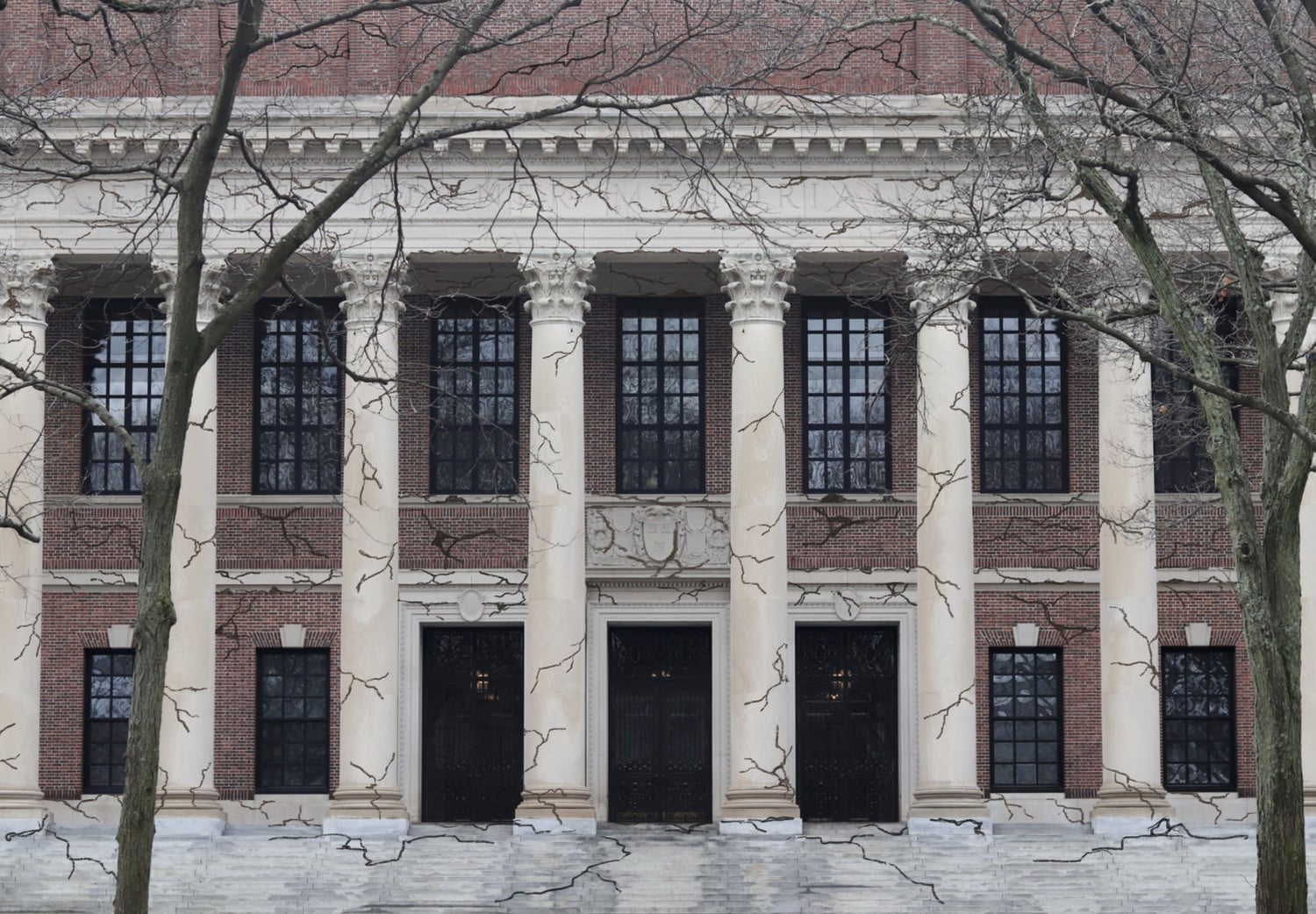
Being old is Harvard’s brand. On its website, the very first thing that the University mentions about its governing Corporation is that it is “the oldest corporation in the Western Hemisphere.” But it’s among America’s oldest universities in another, less flattering sense.
Nationally, as of 2018, 13 percent of tenure-track faculty members were ages 65 or older, relative to just 6 percent of all American workers. In 2023, by contrast, 37 percent of Harvard’s tenured faculty were 65 or older.
Harvard, ever the overachiever, has managed to outpace not just academia, but many of America’s most notorious gerontocracies. In 2025, roughly 37 percent of congressional Democrats were 65 or older, along with 29 percent of congressional Republicans. In 2024, nearly 18 percent of Fortune 500 CEOs were aged 65 or older. In 2020, about 14 percent of American lawyers and 24 percent of state judges had crossed the same threshold. By the numbers, Harvard appears among the most entrenched gerontocracies in American life.
That’s an issue. I’ve studied under faculty well over the age of 65, and benefited greatly from it. But the issue at hand is not their individual competence. It’s that academic gerontocracy has all but foreclosed career pipelines for junior scholars. It hindered universities’ efforts to diversify their faculty while maintaining a commitment to meritocracy. And it risks preventing a generation of new approaches and methodologies from taking hold at Harvard.
First, at Harvard and elsewhere, academic gerontocracy has broken the academic job market. When senior faculty delay retirement, they foreclose opportunities for early-career scholars.
As such, the proportion of non-tenure-track scholars in the United States has ballooned. According to the American Association of University Professors, the proportion of faculty in contingent positions — adjuncts, lecturers, postdocs — rose from roughly 47 percent in 1987 to over two-thirds in 2021.
At Harvard, while exact figures on contingent faculty are hard to come by, the Harvard Academic Workers‑UAW represented roughly 3,600 non-tenure-track faculty and postdoctoral researchers in 2025. Non-tenure-track faculty shoulder comparable teaching and student-facing obligations to tenured faculty — but often with little prospect of career advancement. The problem, put simply, is that the top of the pipeline is clogged.
Second, the collapse of junior faculty hiring has rendered elite universities’ dual commitments to meritocracy and diversity irreconcilable.
Nationally, aging faculty remain overwhelmingly white, and the diversity, equity, and inclusion initiatives that swept through elite universities in the 2010s largely failed to dislodge them. As the writer Jacob Savage demonstrated in a viral essay in December, efforts to remedy elite institutions’ lack of racial diversity fell not upon older white men, but upon incoming hires.
Case in point: the Survey of Earned Doctorates found that white candidates earned 66 percent of all doctorates awarded to US citizens and permanent residents in 2022, and 53 percent of all recipients were men. Assuming gender distribution holds constant across racial groups, that means roughly 35 percent of new PhDs were white men.
But by Savage’s count, just 14.6 percent of Yale’s tenure-track assistant professors hired since 2018 have been white men, and only 7.9 percent in the humanities. That’s likely because Yale is a gerontocracy — 16 percent of its tenure-track faculty are 70 or older — and any efforts to diversify a gerontocracy can only touch the new blood.
It’s a lose-lose arrangement: young white men are squeezed out of the academic pipeline, even as the aging white men entrenched in tenured roles remain firmly in place.
Lastly, gerontocracy comes at a cost to intellectual life. Junior scholars are more likely than their elders to challenge established paradigms, introduce new methodologies, and ask questions their elders haven’t considered. A 2022 study in the Journal of Human Resources found that scientists’ most innovative work often comes early in their careers and declines thereafter. When aging scholars dominate their fields, they crowd out those most likely to advance them.
In addressing its academic gerontocracy, Harvard does not have a free hand. The University once could enforce a mandatory retirement age of 70, but Congress prohibited the practice in 1994 when it amended the Age Discrimination in Employment Act. But Harvard has options, if it chooses to use them.
To its credit, the University has — to little avail — established meaningful retirement incentive programs that make stepping back financially attractive. But it can do more.
Harvard should set formal term limits for endowed chairs and major committee positions. It could expand its faculty lines specifically to hire early-career scholars, committing to a meaningful increase in tenure-track positions rather than continued reliance on an ever-growing lecturer class. Most importantly, Harvard could reconceive what it means to be an emeritus faculty member, creating robust post-retirement roles that maintain intellectual engagement and connection while freeing up positions and resources for the next generation.
In any case, one thing is clear — Harvard’s status as the oldest university in America shouldn’t also describe its professoriate.
Alex Bronzini-Vender ’28, a Crimson Editorial editor, is a double concentrator in History and Government in Lowell House.
Want to keep up with breaking news? Subscribe to our email newsletter
Have a tip for The Crimson? Share it confidentially