Garber Calls Harvard Legal Fees “Mind-Boggling” as Federal Fight Drags On
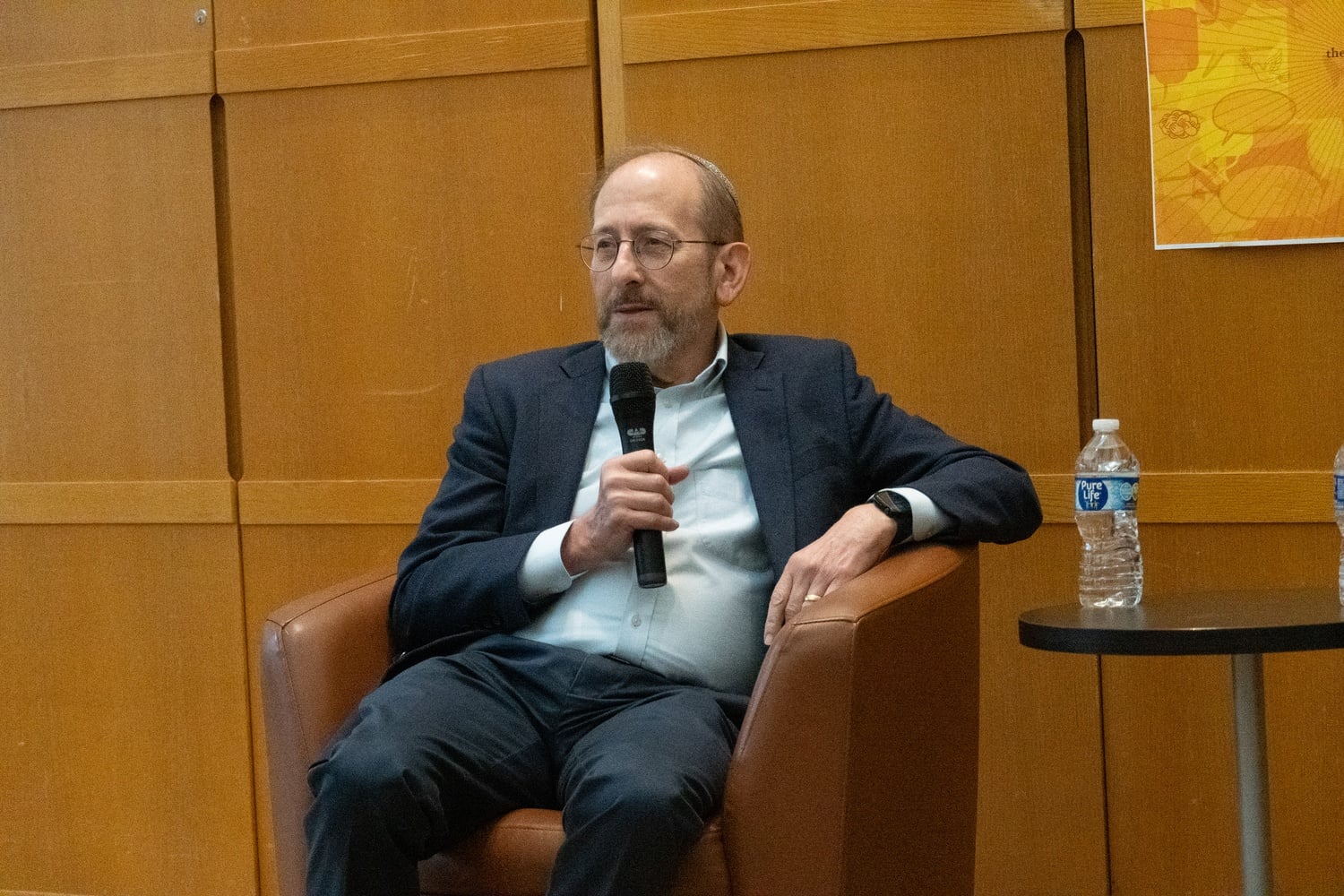
Harvard President Alan M. Garber ’76 said Sunday that Harvard’s legal fees are “mind-boggling,” calling them the “price” of defending the University against a barrage of federal investigations and lawsuits.
At a Harvard Hillel event to celebrate the launch of YARID, a new journal of Jewish thought, Garber said that while he does not “speak publicly about this,” the fees are the “the price of defending yourself against all kinds of investigations, lawsuits, congressional investigations, other investigations from the current administration.”
But he said Harvard weighs how each of its decisions will affect the rest of higher education.
“In the attacks on us, there have been explicit statements that the hope of our critics is that if we fall into line, everybody else will,” Garber said. “When you see what’s at stake, and you think what this means about Harvard, we do have to be held to a higher standard.”
Harvard’s legal fees, which historically sat around $20 million annually, rose to more than $126 million in fiscal year 2025. In 2024, the University reported roughly $80 million in legal fees.
Garber said Harvard strives to be “that city on a hill” and that its choices carry weight well beyond its campus.
Speaking for the Harvard Corporation and the Board of Overseers, the University’s
governing bodies, Garber said Harvard’s leaders weigh every decision by its potential impact on other schools.
“For every decision we make, we ask how will what we do or don’t do affect the rest of higher education,” he said.
Garber said people had warned that if Harvard gave in on certain issues, “everybody else will have to cave.”
Get The Crimson in your inbox.
“If we don’t cave, that doesn’t mean nobody else will cave,” he added. “Different institutions have different strengths, and they’ve got different financial worlds.”
Billions of dollars of Harvard’s federal funding were frozen after the University rejected a list of conditional demands from the Trump administration. A federal judge struck down the freeze in September 2025, declaring the cuts unconstitutional and restoring most of its funding.
Although most of its funding has been restored, Harvard’s finances still hang in the balance. The Trump administration appealed the decision in December and urged the First Circuit last week to overturn the fall ruling.
The University is also facing a slew of broader legal challenges from Washington. The Department of Homeland Security moved last spring to revoke Harvard’s ability to enroll international students under the Student and Exchange Visitor Program. A judge blocked the administration from enforcing the move after Harvard sued.
The Department of Justice sued the University in February, demanding that Harvard turn over requested admissions records as part of a federal civil rights review of Harvard’s compliance with a 2023 Supreme Court ruling striking down race-conscious admissions.
The Justice Department sued Harvard again in March, alleging that the University violated federal civil rights law by failing to protect Jewish and Israeli students from campus antisemitism.
And last week, Vice President JD Vance said that the Trump administration is investigating Harvard and eight other universities for potential J-1 visa fraud, alleging that the institutions are using foreign researchers to undercut American researchers’ wages.
At the event, Hillel’s undergraduate president Miram E. Goldberger ’28 asked Garber a series of questions about how Garber’s Jewish upbringing affected his leadership style as president, and about the impact his leadership has had beyond Harvard’s confines.
Goldberger drew parallels between Garber’s role as Harvard President and the role of Biblical character Moses leading the Israelites through uncertainty; Garber remained modest about the challenges of his role.
“When you think about Moses, actually, when you think about Old Testament leaders of the Jewish people, they have one thing in common: they’re all flawed,” Garber said.
He added that he could learn little from a flawless leader.
“Would I actually be capable of doing the right thing if you need to be the equivalent of a saint?” he said.
Garber also said Harvard’s age allows its leaders to take a longer view.
“I don’t ask how a decision that I need to make will go over in the next year. I ask what the impact will be in, say, five years for a year longer,” he said.
—Staff writer Alma T. Barak can be reached at [email protected] and on Signal at almabk.54. Follow her on X @almabk_.
—Staff writer Theresa F. Bartelme can be reached at [email protected] and on Signal at theresabartelme.15. Follow her on X @theresabartelme.
Want to keep up with breaking news? Subscribe to our email newsletter
Have a tip for The Crimson? Share it confidentially