From the Charles to the Thames: Harvard Alums Take on the Boat Race
early half a century before The Game was first played, another intercollegiate rivalry was already underway across the Atlantic. In 1829, crews from Oxford and Cambridge Universities raced each other on the Thames for the first time. Now, almost 200 years later, the event still draws enormous crowds each April, packing spectators up and down the riverbank. Increasingly, it also entices Harvard rowers who want to cut their teeth alongside the United Kingdom’s very best.
Today, the event, known as the Boat Race, is not one, but several races in a single afternoon. The women’s race, first held in 1927, has been rowed on the same day and the same course as its male counterparts since 2015. On top of this, each university fields reserve crews, Isis and Goldie on the men’s side and Osiris and Blondie on the women’s, which also race over the same course as the Blue Boats.
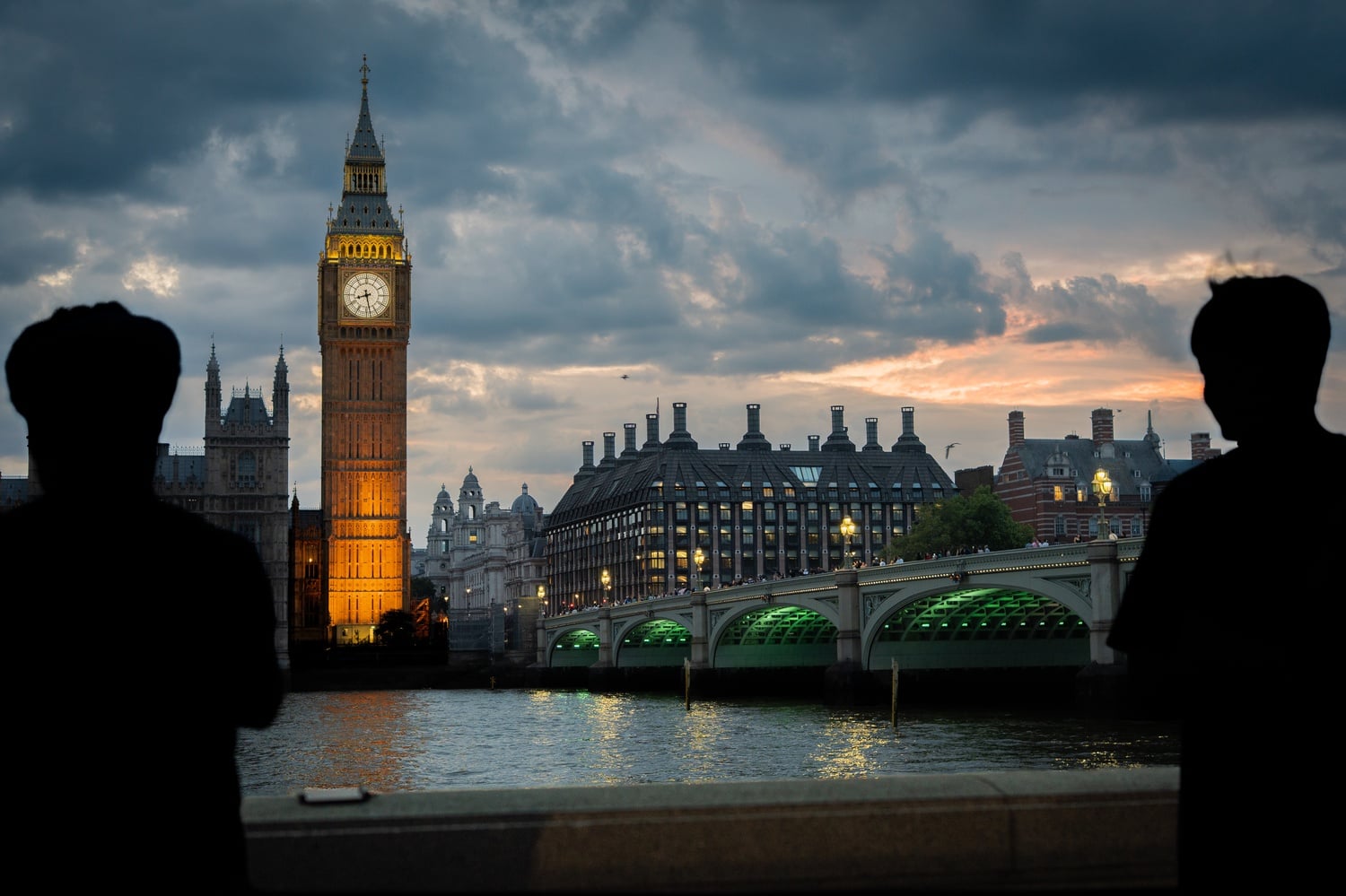
The Boat Race is conducted over a 4.2-mile stretch of the Thames in West London, and it is the river itself that makes the event unlike any other. The Thames is a tidal river, leaving much of the tactics up to the coxswains who steer the boats. The coxswains spend months learning how to best navigate the bends of the river, hunting for the fastest-moving stream to gain every possible second of advantage.
As opposed to the head-racing style of the Head of the Charles, the Boat Race is side-by-side. The battle for the best positioning on the water begins before the race even starts, as the presidents of the respective boat clubs participate in a coin toss to decide which side, or station, of the river to race on. Each side has its own advantages depending on which bends a crew wants on its inside.
The race is a national event. Over 250,000 spectators from across the United Kingdom pledge allegiance to a university and line the banks of the Thames. At the same time, the race is televised to over 2.5 million viewers who follow along online. But its pull stretches well beyond the confines of Great Britain, as the growing list of Harvard alumni who have crossed the Atlantic to race it can attest.
For Alex Sullivan ’24, who rowed for Harvard’s heavyweight squad before starting a DPhil in engineering science at Oxford, the draw of the race comes from the weight of its history. Now serving as the president of the Oxford men’s squad, Sullivan is entrenched in the saga that is the rivalry of the Boat Race. This is evident not only on the men’s side, which is approaching a bicentennial, but also in the upcoming 2027 race, which will mark 100 years since the first women’s Boat Race.
“It’s the history,” said Sullivan. “There’s that level of history, and so many people who have come before you.”
Liam Corrigan ’19, an Olympic gold medalist and fellow Harvard rower who later raced for Oxford, said the Boat Race’s magnetic pull began long before he even picked up an oar. Flipping through the TV channels at just 10 or 11 years old, he stumbled across a broadcast of the Boat Race.
“I was kind of fascinated by it,” Corrigan reflected. “I’d literally never heard of rowing. My parents didn’t row. None of my family rowed. I kind of forgot about it, but somewhere in the back of my mind, I think [the Boat Race] has always been an inspiration for me to row.”
Often seen as the pinnacle of a rower’s career, the Boat Race is a capstone for even the most seasoned rowers — a final check on the rowing resume.
“It’s a race where you have guys who’ve just finished high school, then you also have guys who have raced in the Olympics,” explained Kenneth Coplan ’23.
For Corrigan, who was already an Olympian, the Boat Race offered a chance at redemption. Following a disappointing fourth-place finish in the U.S. men’s eight at the Tokyo 2020 games, the Old Lyme, Conn., native decided to take up a place at Oxford to train for the Boat Race.
“I had a million conversations with people asking me how I did at the Olympics and telling them I came in fourth and just seeing a look of utter disappointment on their faces; I was pretty determined never to have that conversation again,” he explained.
He didn’t have to. Three years later, Corrigan won the gold medal at the 2024 Paris Olympics with the U.S. team, citing the training he received at Oxford as especially transformative.
“My first impression was, oh, these guys are a bit more clinical,” said Corrigan. “It’s more a sort of physiology-based kind of scientific, technical training.”
Without regulations on practice time, British university crews are able to train much more than their American counterparts.
“I think at Harvard, at least in my time, you can only train so many official days of practice,” explained Coplan. “Whereas Cambridge was very much training, 12 times a week, two times a day, six days a week.”
The coaching philosophies differ, too. At Harvard, racing for the most part over 2000 meters, men’s heavyweight head coach Charley Butt emphasized minutiae. Coplan recalled chasing a one hundredth of a second per stroke, drilling in the smallest details to maximize competitiveness.
At Cambridge, though, chief coach Rob Baker prioritized volume, aligning with the longer length of the race.
“Rob [Baker] was very much, we’re going to do the training, we’re going to do the training at the right intensity, and we’re just gonna take a lot of strokes together, to the point where the boat moves as one,” said Coplan.
Evidently, the constant turnover at Oxbridge shaped the team’s culture. In the Ivy League, Coplan noted, graduate students can’t compete, so Harvard’s roster has stayed relatively consistent over the years.
“You lose 25 percent of the team each year as the seniors graduate, but there’s still a core that’s formed together for a few years,” Coplan said.
At Oxford and Cambridge, on the other hand, many rowers are on one-year master’s programs, resulting in a huge turnover rate each season.
“If you have a good culture, like at Harvard, it’s a lot easier for it to persist, because three-quarters of the team are used to it,” added Sullivan.
That said, the higher turnover rate in England does sometimes have a large upside. If a crew isn’t happy with its culture, it can easily start fresh the following year.
“You can really reinvent, and really define yourself year to year,” Sullivan said.
For all that the Boat Race offers, some things don’t translate across the Atlantic. Both Blue Boat squads train well outside their cities: Cambridge crews travel 35 minutes out to Ely to train while Oxford heads to Wallingford. At Harvard, the crew teams have the Charles right in their backyard.
“You can wake up at Harvard and, if you live on the river, have a look, see the conditions for that morning session, and see if you should go back to bed,” Coplan said.
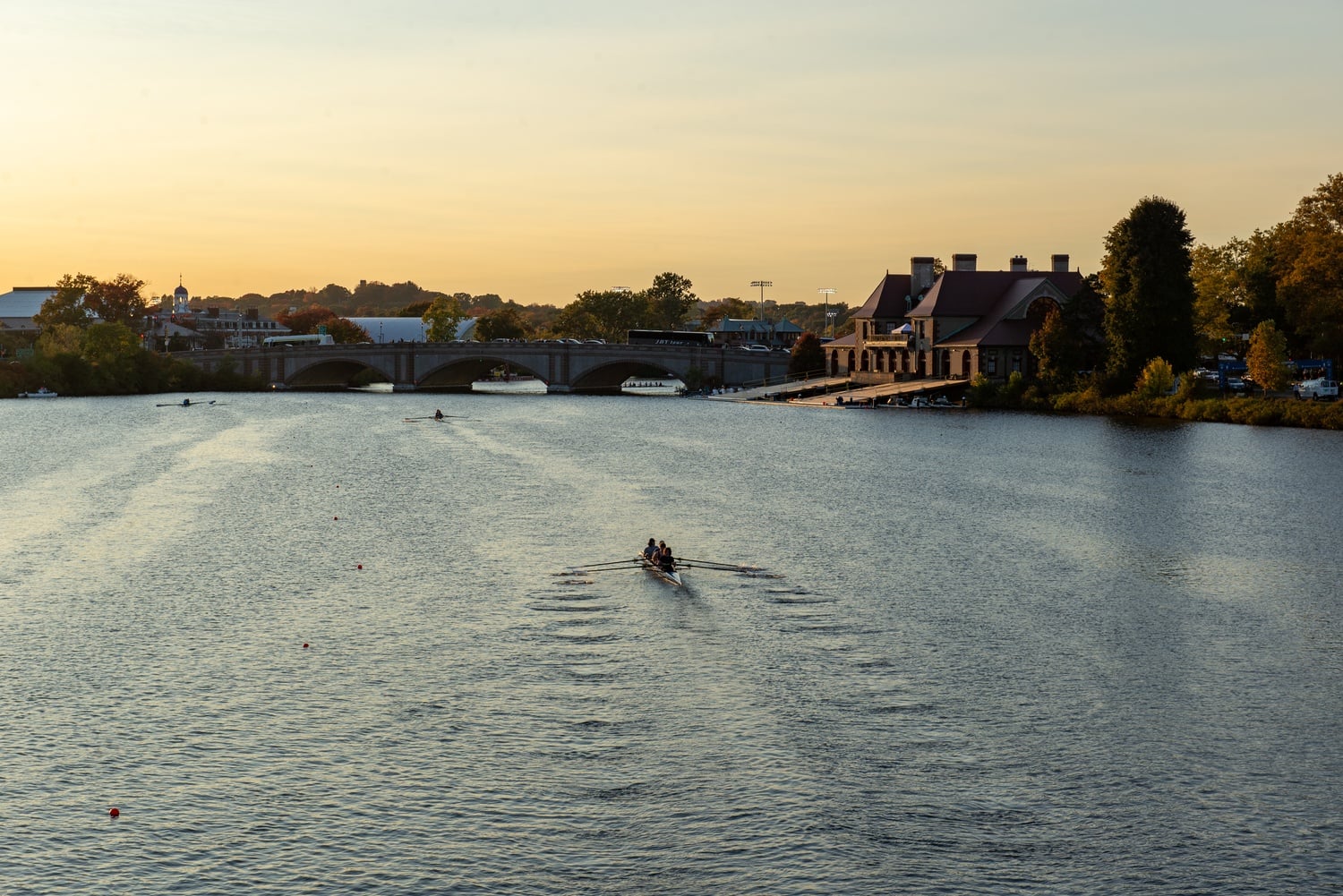
This weekend, as crews from around the world pass under the Weeks and Eliot Bridges, scores of Harvard’s current rowers will be on that same stretch of water. Oxford and Cambridge will both also race the Charles, which has become an early-season stop for the two teams. Last fall, Cambridge’s men posted the fastest time among men’s eights for the second straight year, while Oxford’s women took home the bronze.
As Oxford and Cambridge take on the Charles, Harvard’s rowers will watch intently, perhaps preparing to join their ranks and take part in the Boat Race in years to come.
—Staff writer Matilda C. Genieser can be reached at [email protected].
Want to keep up with breaking news? Subscribe to our email newsletter
Have a tip for The Crimson? Share it confidentially