Mental Health Can’t Wait
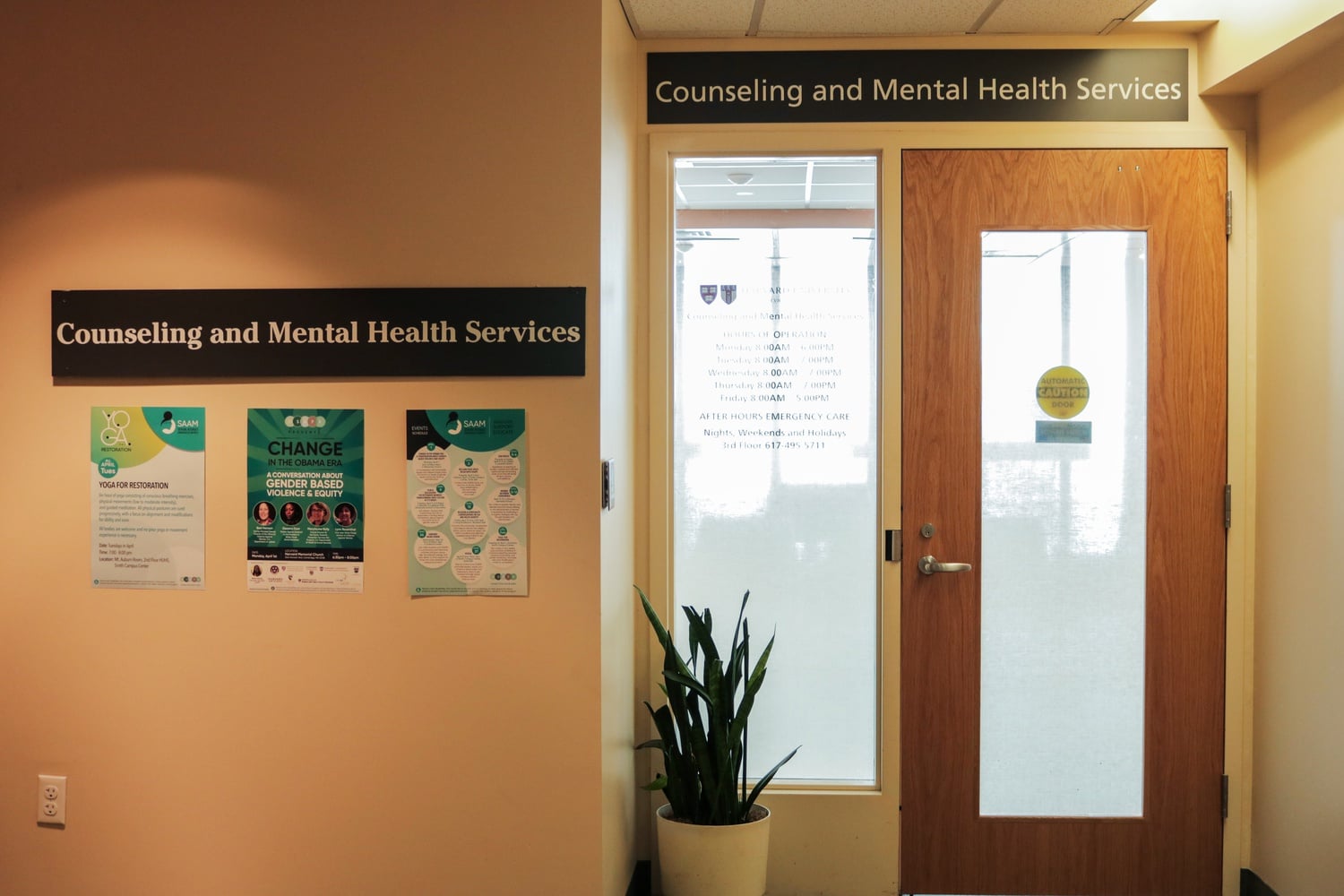
Over the past few weeks, the weight of being a college student has felt heavier. I haven’t been in regular therapy since my junior year of high school, and I’m not looking to return permanently. However, I needed somewhere to safely digest the harrowing headlines about the Cornell University case. So, I decided to seek support.
I opened my Harvard University Health Services portal to book an appointment with Counseling and Mental Health Services, expecting I’d be able to get one within a couple days. The earliest opening for a mere intake visit was two weeks away. Discouraged, I tried TimelyCare, the virtual mental health care service included in our student health fee — presumably to cover the gaps CAMHS can’t fill. Same result. I closed both tabs, defeated, without booking anything.
A better system would offer drop-in hours with CAMHS clinicians, so that students can receive help with an immediacy that matches the pace of our lives.
Moments of shared grief on college campuses make many of us ask, for the first time, where we’d turn if we needed help. At Harvard, the mental health system provides an answer to this question for students in emergencies or seeking longer-term therapy, yet comes up short for students who just need a place to talk.
At the moment, CAMHS appointments and TimelyCare sessions serve students who anticipate needing sustained clinical care. But not all needs can be predicted.
Emblazoned on the CAMHS website homepage is a wait time of 5-6 business days for an initial consult. These consults are short phone calls to match a student with a provider. In my experience, the therapy sessions themselves took weeks to schedule.
TimelyCare is no more immediate. Ironic, I know. And in 2025, the College even canceled TimelyCare psychiatry appointments for a whole month after hitting their contractual limit, leaving students worried about the continuity and ease of their care.
Sure, a myriad of peer-run counseling services like Contact, Eating Concerns Hotline and Outreach, Indigo, Response, and Room 13 are available to students without the bureaucratic friction I experienced. Even though they offer both hotlines and drop-in hours, a peer cannot be expected to replace the expertise of a professional clinician.
Clinicians offer a degree of separation that other support spaces on campus do not. In the wake of the Cornell University case, when a mental strain specifically impacts fellow students, we cannot be expected to support one another through an issue we’re collectively processing.
All that to say, HUHS’s services themselves are not the problem; it’s that the services can’t be easily reached when needed.
One could object that CAMHS runs a 24/7 hotline. However, a 2025 survey of nearly 6,000 students at the University revealed that fewer than half even knew the CAMHS hotline existed. Of those who did, less than 7 percent actually used it.
I understand why. Calling a hotline can feel like an escalation — an admission that what you’re going through is an emergency. Granted, CAMHS states that the hotline can be called whether one is “in immediate distress or not.” Yet, otherwise, they effectively emphasize that the hotline is a form of “urgent” care. I wasn’t ready to call my situation “urgent,” and I suspect many students who need care aren’t either.
Whether students fear the label or just hate to talk on the phone, a hotline cannot replace a face-to-face session with a clinician.
Harvard is hardly alone in the struggle to make mental health care accessible, but it isn’t without models to emulate. MIT offers “Let’s Chat,” a service through which students can attend in-person or virtual drop-in sessions with clinicians. Similar services exist across peer institutions like Cornell, Columbia University, and the University of Michigan.
Drop-in consultations with clinicians do not constitute radical mental health care reform. These programs are designed around a simple premise — sometimes, students need to speak to a professional outside of an emergency. CAMHS should hold short, drop-in hours in the Houses or at one central location, at least once a week.
In an accelerated environment like Harvard, our schedules and commitments can look very different day-to-day, week-to-week — as can our mental health.
Seeking help is hard enough without Harvard’s system adding a digital weeks-long waiting room. I’d hoped the hardest part of getting professional care would be typing my name and the reason for my visit. Instead, it was the daunting two-week wait that followed. Drop-in hours would cut out the middleman, allowing students direct access to care without disheartening waits and superfluous bureaucracy.
Needing help doesn’t arrive on a schedule, and getting it shouldn’t either.
Sasha A. Cavell ’29, a Crimson Editorial editor, is a Philosophy concentrator in Dunster House.
Want to keep up with breaking news? Subscribe to our email newsletter
Have a tip for The Crimson? Share it confidentially