Unfinished Experiments in Radical Science
The Vietnam-era movement Science for the People, a radical organization who believed science had been misused by the forces of capitalism, is attempting a rebirth.
t 7 p.m. on April 11, 2014, a panel of six sat onstage behind a long table at the University of Massachusetts Amherst, preparing to speak. They arranged their notes on the wrinkled plastic tablecloth.
The panelists weren’t there to discuss their academic work. Rather, they were speaking about their time as members of the Vietnam-era movement Science for the People, a radical organization who believed science had been misused by capitalist interests.
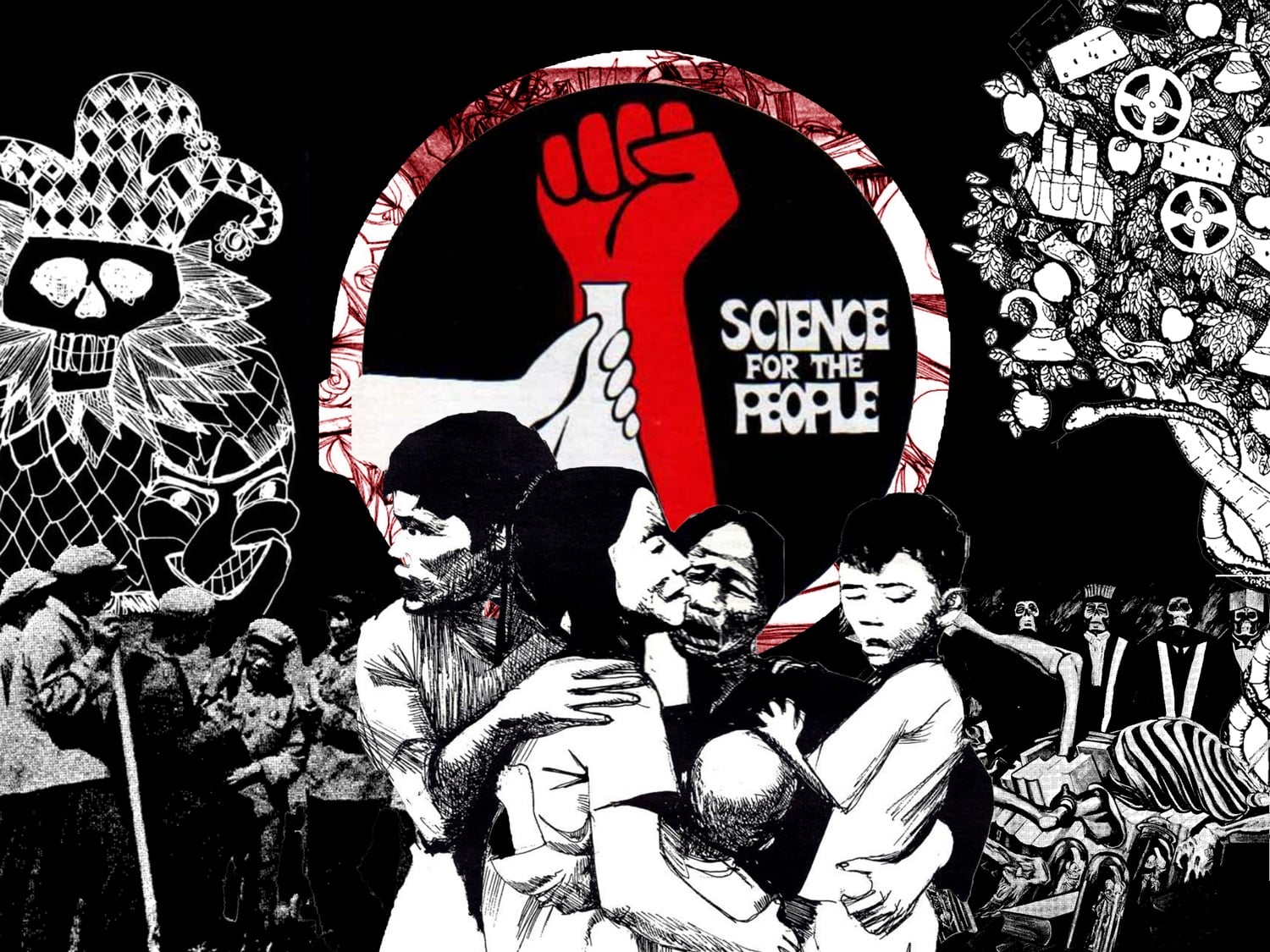
Allen S. Weinrub, who co-founded Science for the People in 1969, sat on the far end of the table. He wore a button with the organization’s emblem: a red fist beside a hand grasping an Erlenmeyer flask.
The organization was part of the anti-war movement in the 1960s. Early members of Science for the People were protesting the use of sciences like chemistry and physics to develop weapons — but increasingly critiqued science as a reflection of power imbalances in capitalist society.
“Who controls and for whom science work is done — that’s always the question,” Carol Cina told the audience. She had been a member of the organization’s chapter in Stony Brook, NY. “You always follow the money and you find out for whom.”
“We were basically a lot of really shit-kicking folks,” Weinrub said, to a burst of laughter from the audience. “We made sure that our voices were heard.”
Science for the People had dissolved in 1991, plagued by disorganization, burnout, and a $70,000 debt to the IRS it had no way of paying. But, at the conference in 2014, former members felt their critiques were as salient as ever. Science, Weinrub argued, was still under the thumb of capitalist power — and appetite in the room was high for a jumpstart.
Younger audience members — students born after Science for the People’s glory days had ended — evidently felt the same. Following the conference, they would enter a period of latent organizing and relaunch the collective in 2018.
But while the original organization inspired the new one, it is also, in some ways, a cautionary tale of the disunity inherent in radical critique.
“I’m trying to balance the two,” says Calvin Wu, who today is Science for the People’s international secretary. “We have to be forward looking, but also draw ideas and draw inspirations from history.”
‘Guerilla Theater’
orty-five years before the Amherst conference, on Dec. 27, 1969, nearly 50 early members of Science for the People were preparing for another panel.
In the wake of a Christmas nor’easter, the American Association for the Advancement of Science was holding its annual meeting in downtown Boston. Members of the organization, self-described as being a “who’s who of science” throughout its history, were gathered that day to celebrate one of the year’s flagship victories for science: the Apollo 11 mission, which had landed a man on the moon for the first time the preceding July.
But the members of Science for the People weren’t there to speak or celebrate the achievements of the scientific establishment. Instead, they were dressed in makeshift space suits, carrying a papier-mache “moon rock” and Magic-marker posters that read “Rockets In Space, Slums on Earth” and “Moon Rocks Are Not Edible.”
They disrupted a televised presentation about lunar exploration by MIT researcher Charles S. Draper, whose laboratory held military contracts. Just as Draper began to speak, the Science for the People protesters walked in front of the cameras and placed their “moon rock” on the podium.
The papier-mache moon rock only cost $1.49 to make, and, according to the organizers, “probably had more scientific value than the $30 million rocks the astronauts brought back.” At another meeting, they handed out pebble-sized “Mars rocks” to the audience.
In a release put out on Dec. 27, the disruptors wrote that they hoped their homemade space rocks would satisfy scientists’ imaginations so that they would “shift priorities and employ science and technology in the interests of the welfare of mankind.”
The moon men were part of a coalition of Boston-area scientist-activists — and their anti-NASA protest was one piece of a broader demand that the scientific enterprise reckon with everyday issues rather than further the interests of state and military powers. Chief among these interests, in their mind, was American involvement in Vietnam.
The group was already known for anti-war activism: earlier that year, some members participated in the March 4 research stoppage at MIT. The protests preceded MIT’s decision the following year to separate its military-funded Instrumentation Laboratory, led by Draper, from the university. AAAS invited the group to organize a youth slot at its annual meeting.
“They foolishly did that because they had no clue what we were going to do,” says Larry W. Beeferman, at the time a postdoctoral fellow at MIT. At the group’s event, titled “The Sorry State of Science,” the students presented three resolutions to the conference’s governing body: one advocating for American withdrawal from Vietnam, one addressing women’s equality in science, and a third opposing the technologies used for police repression of the Black Panther Party. All three failed to pass.
Beeferman and his colleagues weren’t the only scientist-activists organizing at AAAS. Beeferman recalls meeting up with members of Scientists and Engineers for Social and Political Action at the conference. These two groups would be the core around which Science for the People formed.
Charles L. Schwartz, a University of California, Berkeley physics professor who founded SESPA, said in a 1995 interview that he was called to action by the role of professorship in shaping military power.
“I’ve taught several thousand students, scientists and engineers, in a number of physics courses in my many years here,” Schwartz said. “I’m sure quite a number of those people have gone to work on atomic bombs because that’s where the jobs are. So should I say that’s not my responsibility? No, there’s a direct cause between what I’ve done and the end product.”
As a physicist, he felt he particularly bore the ethical weight of wartime technology — a responsibility he began to recognize when petitions against the Vietnam War started circulating on campus.
“I’m not just me, a tax payer, but I’m a physicist and the physicists have something to do with the war,” he said in the interview.
Schwartz tried to persuade the American Physical Society to publicly stand against the Vietnam War. When the effort failed, he founded SESPA — and remained involved when the groups merged to form Science for the People.
Historian Sheila N. Jasanoff ’64, who studies science and technology studies at the Harvard Kennedy School, sees the construction and detonation of the atomic bomb as an inciting moment for academics to “start thinking about the impact of scientific discoveries that did not necessarily turn out to be beneficial for people.”
The development of nuclear weapons, she adds, “is the granddaddy” of concerns about the potentially harmful consequences of later scientific advances, including bioweapons and the use of chemical warfare in Vietnam.
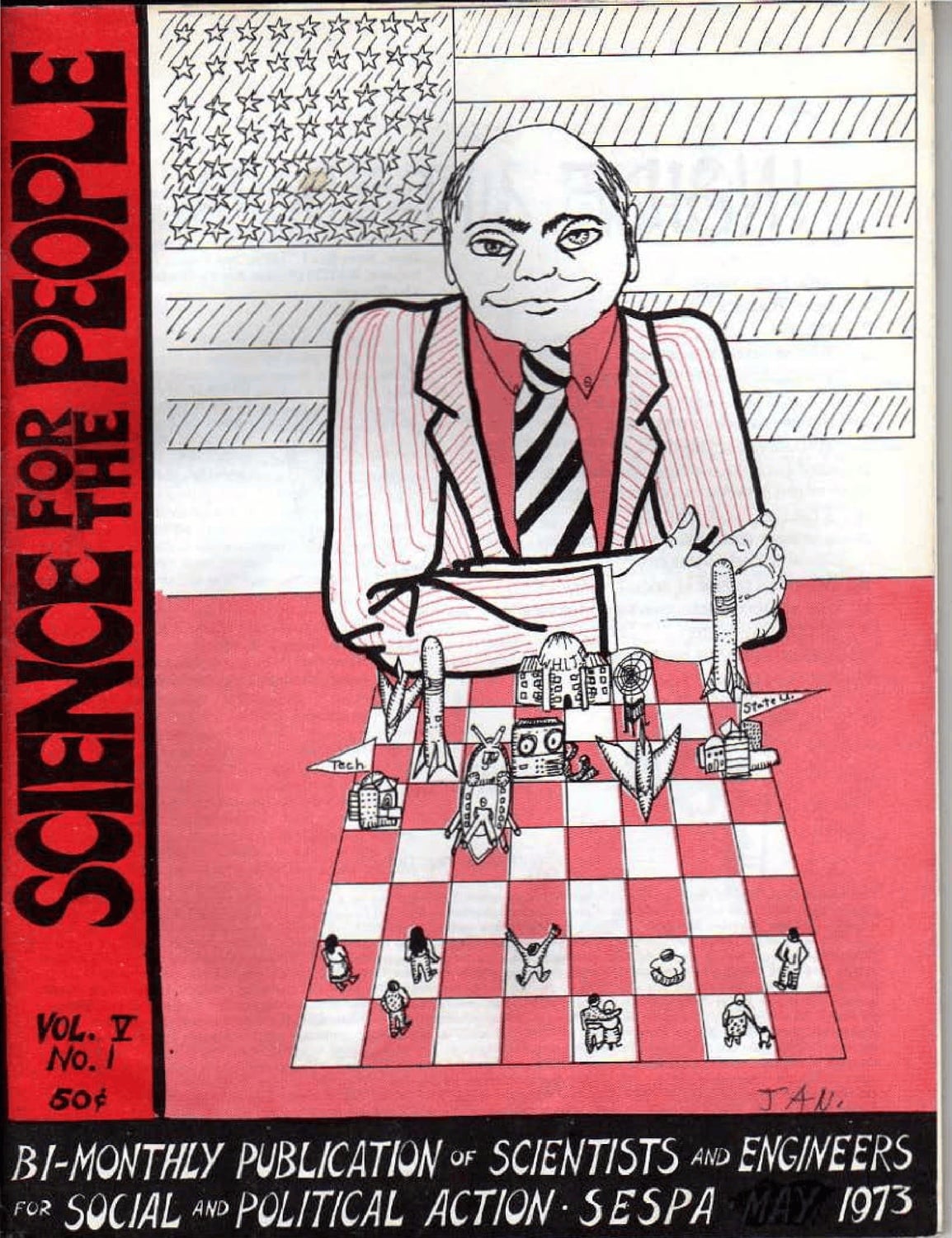
If Science for the People was picketing outside meetings and presenting session chairs with papier-mache moon rocks — engaging, as they put it in a newsletter report, in “guerilla theater” activism — other groups, particularly professors and students in organizations like the Union of Concerned Scientists, took more measured approaches.
The AAAS had previously heard motions to consider increasing student involvement in the organization and encouraging more intellectual exchange between the United States and the Soviet Union. In 1968, it published a statement on the use of herbicides in Vietnam, calling for a study on the effects of chemical herbicides on the environment — where members of the board emphasized that the ethics of the Vietnam War was “not at issue here.”
By comparison, Everett I. Mendelsohn, a professor of the history of science at Harvard who was involved in an anti-war faculty group, told The Crimson in 1991 that Science for the People’s radical, action-oriented approach made them “a little too insistent to be heard” by the scientific establishment.
For members of Science for the People, though, this insistence was the point. Richard C. Lewontin ’50, an early member of the organization and later a professor of zoology at Harvard, told The Crimson in 1991 that their goal was to scare attendees at AAAS meetings with their ardent activism.
“They were used to people being very quiet and respectful, and not used to a confrontational style,” he added. “We never shouted anyone down or kept anyone from speaking, but we didn’t let them get away either.”
Science for Whom?
t a cafe in Central Square, Larry Beeferman leafs through the first issue of the SESPA newsletter — an enterprise that would become Science for the People magazine. He’s lived in Cambridge since his days as a physics graduate student at Harvard, though he’s since quit physics, gone to law school, and become a fellow at Harvard Law School.
He points out a Cambridge address on the fifth page that recipients could write to if they wanted a copy of the group’s forthcoming pamphlet on the Sorry State of Science symposium at AAAS.
“This is really my address. That’s where I lived,” he says. And, gesturing to the newsletter as a whole, “that’s where I put this thing together.”
Beeferman designed the first newsletter on the floor of his apartment. In it, members reported on their activities at the 1969 AAAS meeting, describing their opposition to the “science mind-fuck.”
“The scientist typically feels that science is morally or politically neutral and that his work, being an end in itself, should require no further justification to society,” read the front page. “We think that these views of science and the scientist’s social role are unrealistic.”
The magazine was called Science for the People even before the organization was. But its early founders disagreed on who, exactly, “the People” were.
To Beeferman, the publication and organization should have focused on the role of the scientist as a laborer. “If you look at the way this was written, it’s very ‘science is workers,’” Beeferman says, leafing through the newsletter, which he has kept since its publication in 1969. But when Science for the People as a collective emerged from the activists protesting AAAS, Beeferman says it “had a very different orientation.”
The organization, in his view, was more focused on appealing to, and mobilizing the masses. Beeferman characterizes his politics as more “work-oriented” in comparison — and left the organization after two years as a result.
But for Esther V. “Little Dove” John ’74, Science for the People wasn’t focused enough on the working class. John joined Science for the People in 1971 as an undergraduate at Radcliffe College. She had been volunteering with the Black Panther Party, working out of a van to provide medical services. When the van broke down, members of Science for the People came to give her a jump start. They introduced her to their mission while they worked. As a member, John disrupted AAAS conferences in 1972 and 1973 — and says she was jailed in Mexico City after a demonstration at the 1973 conference.
To John, “the People” that the organization should serve didn’t include the scientists themselves — they were part of the “scientific elite.” She wanted to focus on the working class, so she left the group in 1973 to join the Progressive Labor Party and advocate for communist revolution in the United States.
Science for the People split on this problem of how it ought to relate to the working class.
In 1974, members of the Boston chapter, calling themselves the Unity Caucus, put forth a set of guidelines for what the organization should be, termed the “Principles of Unity.” Influenced by the October League, a Maoist organization of the era, members of the Unity Caucus sought to transform Science for the People from a loosely organized coalition of politically active scientists into a more ideologically unified institution. The caucus argued that the group ought to be led by the working class — rather than professional academics.
In a May 1975 bulletin, circulated among members of the organization, the Unity Caucus argued that their cause was predicated on the “necessity of working class leadership in overthrowing this system” of capitalist science — and posed the question: “Are scientists part of the working class or are they part of the new petty bourgeoisie?”
The caucus and its guidelines were controversial. George Salzman, a physicist at UMass Boston, wrote in response to the principles that Science for the People ought to remain “non-sectarian and non-doctrinaire.” An attempt to structure the group under any “Principles of Unity,” he warned, would lead to “internal divisiveness and eventual fragmentation.”
A pillar of the Unity Caucus’ position was that Science for the People ought to take Maoist “mass science” as an example — as opposed to capitalist “pseudoscience.”
In “The Mathematical Experience,” a text on the history and philosophy of mathematics, one Chinese mathematician described mass science in an interview with an American professor. Before the Cultural Revolution — Mao Zedong’s decade-long campaign to advance Chinese communism by purging the nation of the remnants of capitalism and tradition — the mathematician said, “some of us believed in the beauty of mathematics but failed to solve practical problems.”
“Now we deal with water and gas pipes, cables, and rolling mills,” he said. “We do it for the country and the workers appreciate it. It is a beautiful feeling.”
Beyond the Unity Caucus, Science for the People members were broadly interested in Chinese mass science, and sent a contingent to China in 1973 to learn about it. “We thought that China was sort of poised to take off and develop as a real socialist state not driven by a capitalist economy,” says Vinton Thompson, one of the members of Science for the People who went on the trip. The Cultural Revolution “had laid the educational basis and the material basis for developing industries and science.”
“There were lots of idealistic parts of it, and some of that was real, and there were awful parts of it. That was real too,” he says, referencing the massive ‘re-education’ campaign in the Cultural Revolution that led to the exile and death of countless Chinese intellectuals. “I don’t think we were entirely naive at recognizing that, but China looked like an interesting alternative to what we saw in the United States.”
In seeking and promoting international alternatives, members of Science for the People would also travel to Cuba and Sandinista Nicaragua to assist the development of science and technology in socialist societies. On the trips — sometimes years-long missions — members helped Cuban farmers develop sustainable agriculture programs and taught Nicaraguan students about local ecology.
Barbara and Jonathan R. Beckwith ’57, a journalist and a Harvard microbiologist, respectively, traveled to Cuba as part of Science for the People — but “kept a healthy skepticism towards the ideal places” like China, Cuba, and the Soviet Union, Barbara says.
Unlike other members of the organization, the Beckwiths “were kind of bored by Marx, so we didn’t quite get into it,” Barbara recalls.
She adds that there were disagreements within the organization about whose politics were most righteous. “There were a lot of divisions — there were real challenges,” she adds.
Standing Up from the Armchair
s members debated the political orientation of Science for the People, the cause that brought them together in the first place was waning. The United States withdrew from Vietnam in 1973, and the war came to an end two years later. Many of the anti-war groups of the era wouldn’t survive long into peacetime.
“People moved on to other things,” says Roberta Garner, who was a member of Science for the People in Chicago. To her, the organization functionally ended in 1975.
But for John H. Vandermeer, an ecologist at the University of Michigan and a founding member of the Ann Arbor chapter of Science for the People, the end of the war was a freeing experience. He recalls thinking that “finally the war is over, so now we can become creative and think of the other political changes that need to happen.”
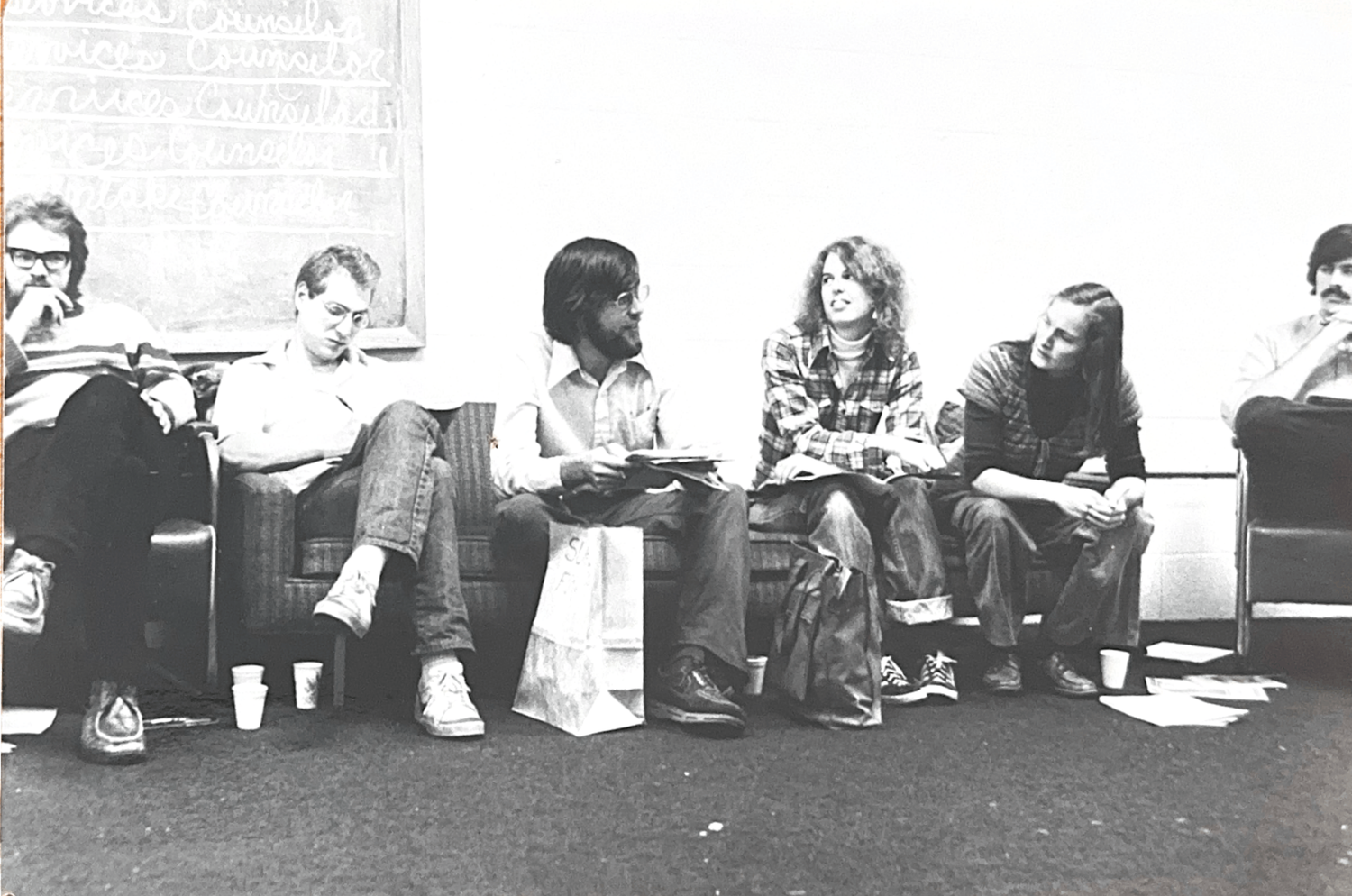
Rather than unify around a single shared cause in the wake of the war, chapters of Science for the People rallied around the publication of its magazine, by then a national enterprise.
Terri Goldberg was one of two full-time employees at the organization’s national headquarters in Cambridge between 1979 and 1982. The magazine was her primary responsibility.
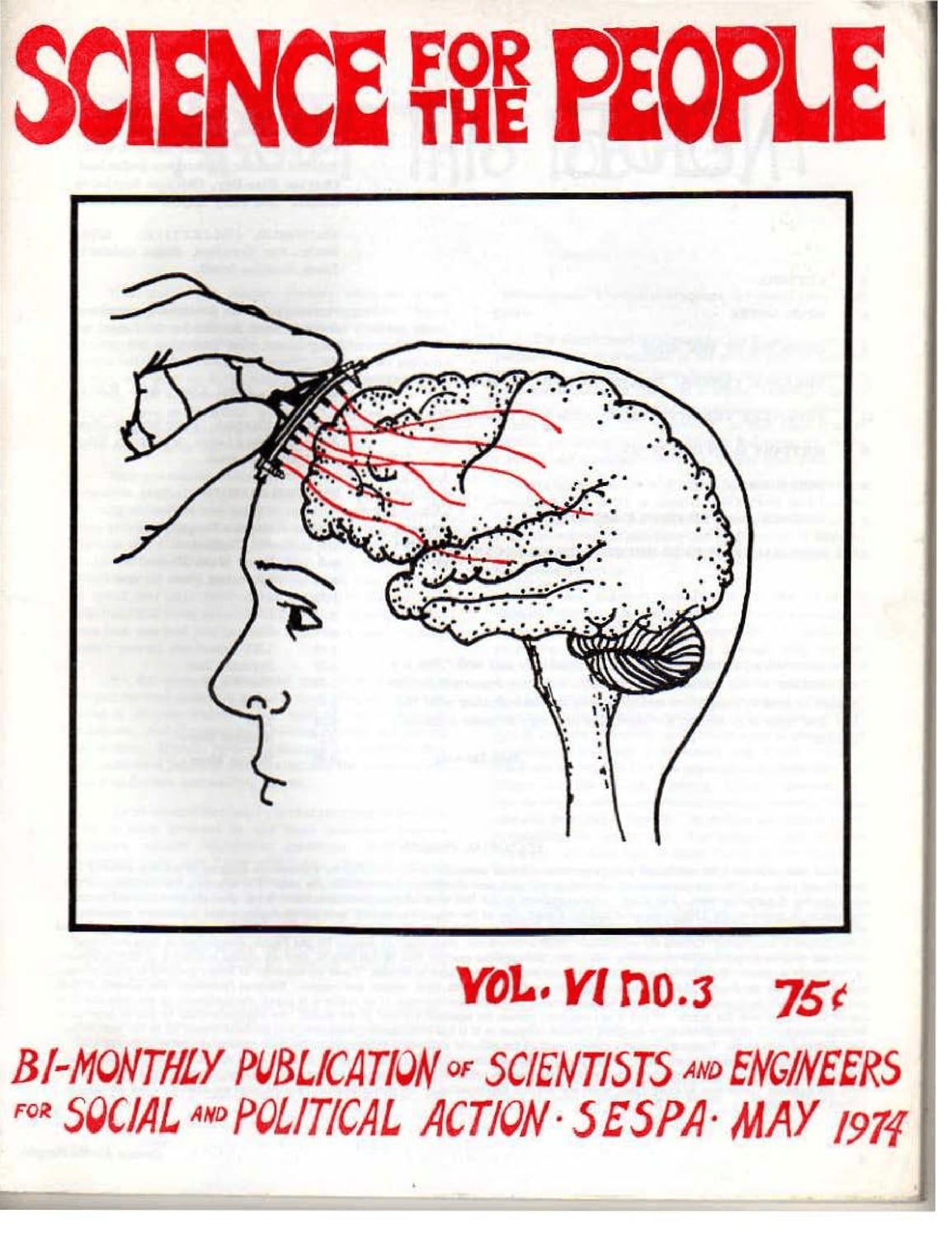
Though the magazine was never widely circulated, it became well-known in progressive and leftist scientists’ circles. If you were interested in left-wing theory and ideology, Goldberg says, “this was the publication to be involved with.”
Once every two months, she and a handful of volunteers from the Boston chapter would copy articles sent in from around the country onto photosensitive paper for darkroom development. They would slice columns of text and place them down on gridded pieces of cardboard. Once complete, Goldberg drove the physical copy to the printer and made several thousand copies. Then, she went back to the Science for the People office, located on Main Street between Harvard and MIT, where each issue had to be addressed to its recipient — individual subscribers, bookstores, and libraries.
The magazine gave a space for the “thinkers” to talk about their ideas for socialist science, Goldberg says. But, it was more difficult to find the momentum to put those ideas into action.
“We were constantly criticizing ourselves for being armchair liberals,” Vandermeer says, recalling that much of the organization’s work was producing intellectual critiques. “It was probably more of that than political activism. Although political activism was always the goal.”
Robert N. Proctor, who was part of Science for the People as a graduate student at Harvard in the 1970s, recalls a session where members of the organization “went around the room and did self-criticism.” Proctor says it mirrored practices during the Cultural Revolution — when class enemies, suspected capitalists, and intellectuals were forced to publicly admit to betraying the Maoist cause.
“That was very unpleasant and kind of cringey,” he says. The session was one reason he left Science for the People after a year.
At the same time, the organization’s intellectual criticism itself became robust and influential. Science for the People gained particular notoriety for its critique of sociobiology, or the idea that human behavioral traits might have developed as a product of our evolution — and our genetics. Though the question of genetic determinism had been salient since the rise of eugenics in the early 20th century, the 1975 publication of “Sociobiology: The New Synthesis” by Harvard entomologist Edward O. Wilson brought the debate back to new heights.
Wilson had spent his career studying social insects — bees and their hives, ants and their colonies — and wrote about their behavior in the context of the Darwinian instinct to pass on genes. He determined that soldier ants, for instance, die to defend their colonies because their sacrifice benefits closely related individuals who share their genetics. In the final chapter of the book, Wilson extended his observations to humans — and continued to espouse this belief in later writings. Like ants, he argued, modern behaviors could be explained by our evolution. Men had been hunters in prehistoric times, so remained more predisposed to traits beneficial in that role. Such predispositions, for Wilson, explained men’s prevalence in fields like politics and science.
Following publication by Harvard University Press, Wilson’s text was widely lauded for its scientific rigor. That year, the New York Times ran their review of the book on the front page, and the book received mostly favorable reviews in outlets like Nature and Scientific American — though some expressed skepticism about the extent to which Wilson’s insect work could be applied to mankind.
But for Science for the People, Wilson’s “new synthesis” was unconvincing and dangerous — reminiscent of the eugenics movement. “Wilson joins the long parade of biological determinists whose work has served to buttress the institutions of their society by exonerating them from responsibility for social problems,” they wrote in a letter to the New York Review of Books.
Bertram C. “Chip” Bruce, a member of Science for the People’s sociobiology study group, says that members would often gather at his Cambridge home to read genetics, anthropology, and sociology. They also taught anti-sociobiology workshops and wrote critiques of Wilson’s program in the magazine.
For Bruce, study and action went hand in hand. “We were all trying to learn more about this and what it meant for our lives,” he says, while they were also “trying to call attention to what we thought of as either bad science or misuse of science.”
In 1972, Harvard evolutionary biologist Richard Lewontin published a landmark paper examining how genetic variation was distributed among human populations. His analysis found that about 85 percent of variation occurred within populations, while about 6 percent occurred between conventional racial groupings. The paper’s findings still hold true.
“I think Lewontin was the first person to really try to say that somewhat complicated message, that race as biology is bullshit,” says Alan H. Goodman, a biological anthropologist who specializes in studies of race and poverty. Goodman says that such scientific pushback against race science by members of Science for the People was a form of activism “for the people who aren’t represented, the people without power.”
But while Science for the People members readily challenged scientific theories that naturalized racial and behavioral disparities, the organization was less certain how to confront inequality between men and women.
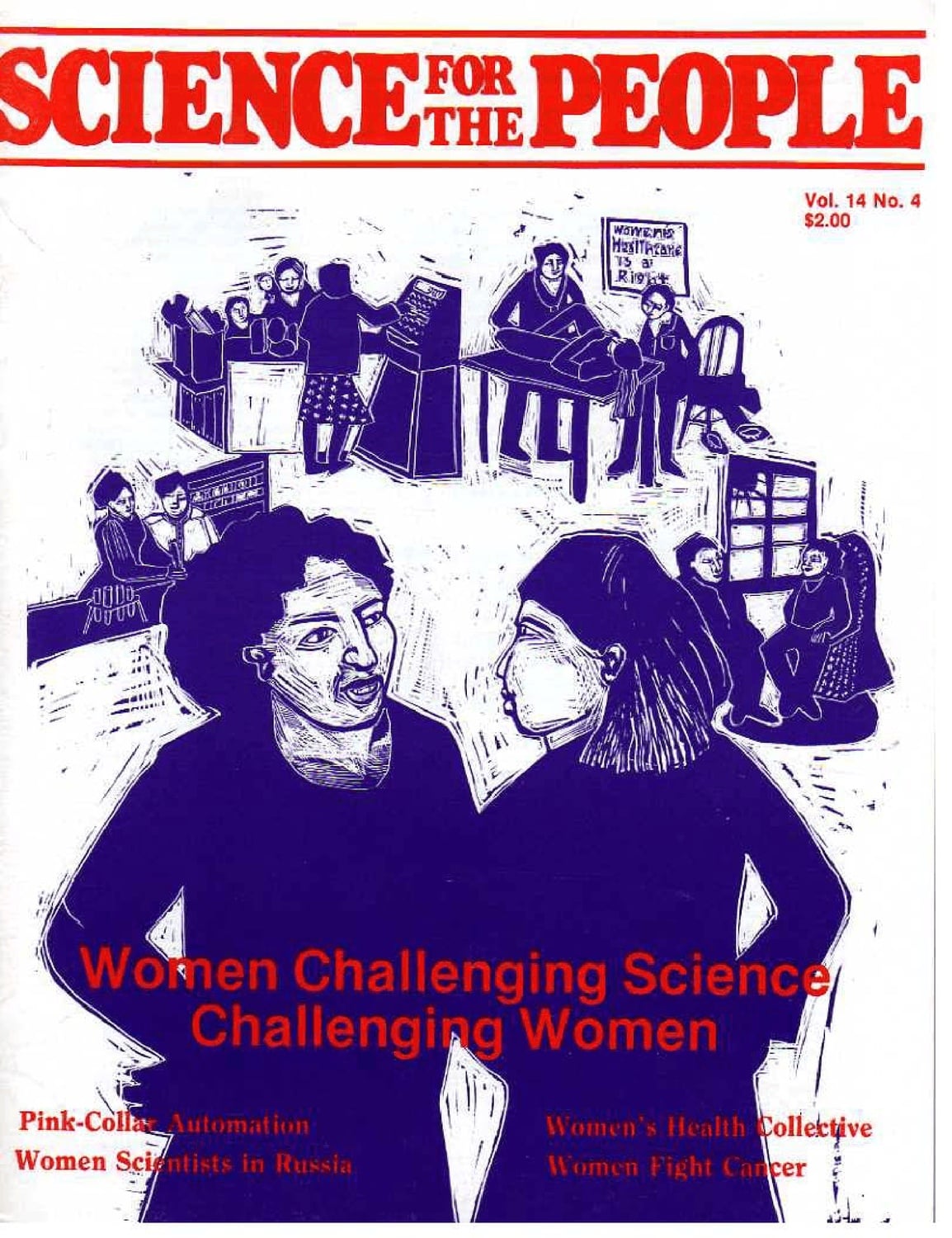
Second-wave feminism was just coming to a head in the 1970s. “Feminism and women’s rights was a brand new thing that burst onto the scene,” says Anne Fausto-Sterling, a professor at Brown who had been a member of Science for the People. The male members “weren’t against it necessarily,” she adds. “They just were like, ‘well, this is new, and what does it mean for me?’”
Though Science for the People was publicly in favor of women’s equality in science, Barbara Beckwith recalls that male members of Science for the People in the 1970s “were dominating — a ‘go get coffee, Barbara,’ kind of thing.” But, she adds, she and other women in the group “wanted to equalize.”
“No dominant group recognizes dominance until the not-dominant group tells them what’s going on,” she says.
But other members of the organization were less willing to make feminism a central axis of their critique.
In the November-December 1976 issue, a member of Science for the People’s St. Louis chapter wrote a letter to the magazine arguing that the sociobiology study group had become too focused on feminism rather than on racism, a struggle he saw as more important to the socialist cause because the ruling class was composed of both men and women.
Ruth Hubbard and Rita Arditti — two women members of Science for the People’s Boston chapter — rebutted the letter in the January-February 1977 issue, setting off a heated exchange in the magazine. One respondent, Lorraine Roth, suggested that the socialist revolution ought to be the priority. As a result, she said, certain aspects of feminist reasoning could be “dangerous and divisive.”
But even as members disagreed over which forms of oppression deserved priority, they continued to challenge scientific research they found dangerous.
In the early 1970s, molecular biologists had developed recombinant DNA technology, which allowed them to manually rearrange fragments of DNA. The technology would open new frontiers in the study of genetics, and inspire advancements in genetic engineering and gene therapy.
But members of Science for the People were concerned that the new technology could be used to develop bioweapons and destroy local ecologies.
“We were focused on the fact that genetic engineering was a new technology in human history, and all new technologies in human history have had side effects,” says Jonathan A. King, an MIT biology professor and a member of Science for the People. “We thought it needed to be regulated.”
When Harvard researchers sought city permission to develop a lab for recombinant DNA research in 1976, Cambridge residents were hesitant. Then-mayor Alfred E. Vellucci wrote in a press release that “we may make a creation that slips beyond control and turns around to destroy the creator.” Vellucci called public hearings on the safety of the research.
King told The Crimson in 1976 that public interest in recombinant DNA came, at least in part, from Science for the People’s grassroots organizing on the matter: they had circulated pamphlets and sent letters to public interest groups about the potential dangers. Science for the People wanted decisions about research progress to be controlled by the citizens of Cambridge, not elite scientists locked away in laboratories.
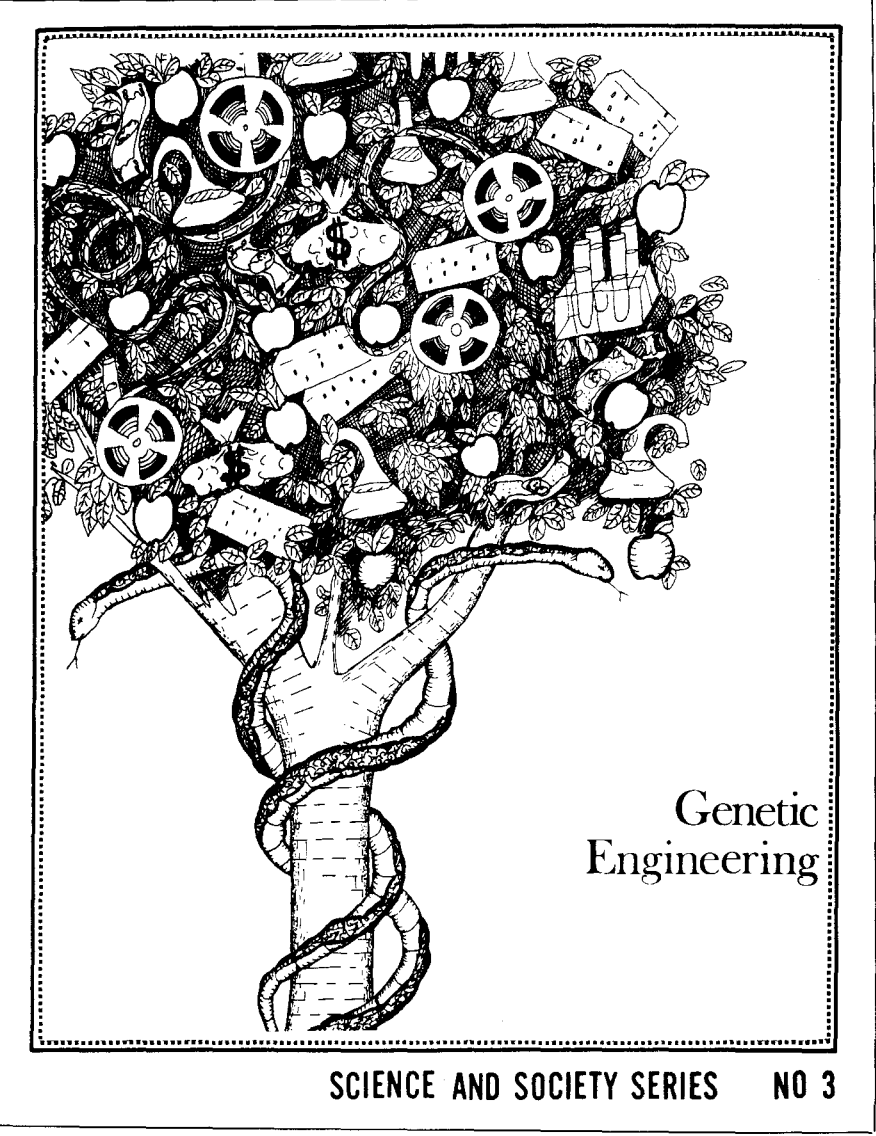
But these ideas were unpopular among some fellow scientists. In his memoir, Jonathan Beckwith, the Harvard microbiologist, wrote that James D. Watson — then a leading member of Harvard’s molecular biology department — used the labels “kooks” and “second-rate scientists” for researchers concerned about the hazards of recombinant DNA. King says he was never asked to give a talk to his department at MIT — he was a “black sheep,” despite his scientific success.
When the issue of recombinant DNA made it to City Hall, Cambridge placed a three-month moratorium on such research and created the Cambridge Experimentation Review Board — the first layperson group in the nation to recommend policies concerning recombinant DNA research.
Though recombinant DNA is widely used in microbiology labs, including Harvard’s, today, Science for the People’s efforts in the 1970s laid the groundwork for ongoing biosafety review practices that involve members of the public. Today, Cambridge’s Biosafety Committee is responsible for issuing permits for research that uses recombinant biological agents.
Goodman, the biological anthropologist, recalls the atmosphere that surrounded Science for the People in the 70s. “They were badass,” he says. “They were big, and people listened.”
‘Not With a Bang, but a Whimper’
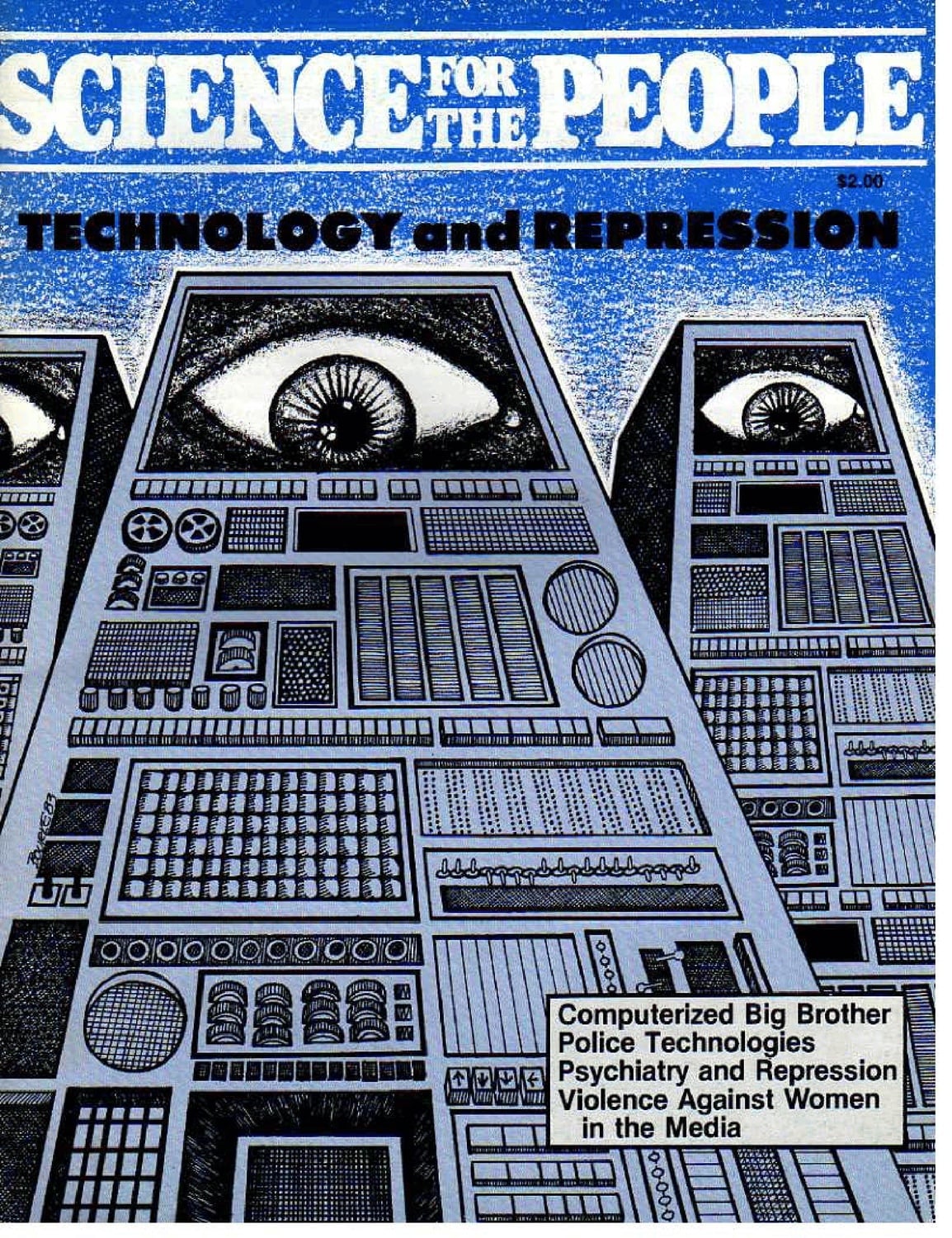
hen David U. Himmelstein arrived in Boston to begin a fellowship in 1982, he found that Science for the People was “past its peak.” The organization was still interested in anti-war organizing, and opposed Ronald Reagan’s Strategic Defense Initiative, but by then it was more a magazine than an activists’ collective. The city council petitions, radio call-ins, and AAAS demonstrations were decidedly over.
Even so, Himmelstein, a primary care physician whose research focuses on healthcare justice and economics, would get questions from international scholars coming through Boston about where the Science for the People building was.
“They had an image that this was a large-scale organization with enormous resources because it had produced such influential work,” Himmelstein says.
But how to square the enormity of its ideas with its diminishing presence?
Seth M. Shulman ’81, who joined the magazine’s staff after graduating college, told The Crimson in 1991 that the group had lost its energy and was animated by a sense of nostalgia — particularly for the glory days of activism during the Vietnam War — rather than action.
“It was an organization that probably looked back more than it looked forward,” he said.
But for Richard Lewontin, the Harvard evolutionary biologist, people became less interested in Science for the People as they found more specialized activist groups. There was no more need for a generalist organization.
John Vandermeer, the Michigan ecologist, had founded the New World Agriculture and Ecology Group as an offshoot of Science for the People. The group had visited Nicaragua to support science under the Marxist-Leninist Sandinistas in the 1980s, and Vandermeer continued to work in South and Central America after Science for the People ended.
“We regarded ourselves as a subgroup of Science for the People,” Vandermeer says. “When Science for the People sort of melted away, we just became a group in and of ourselves.”
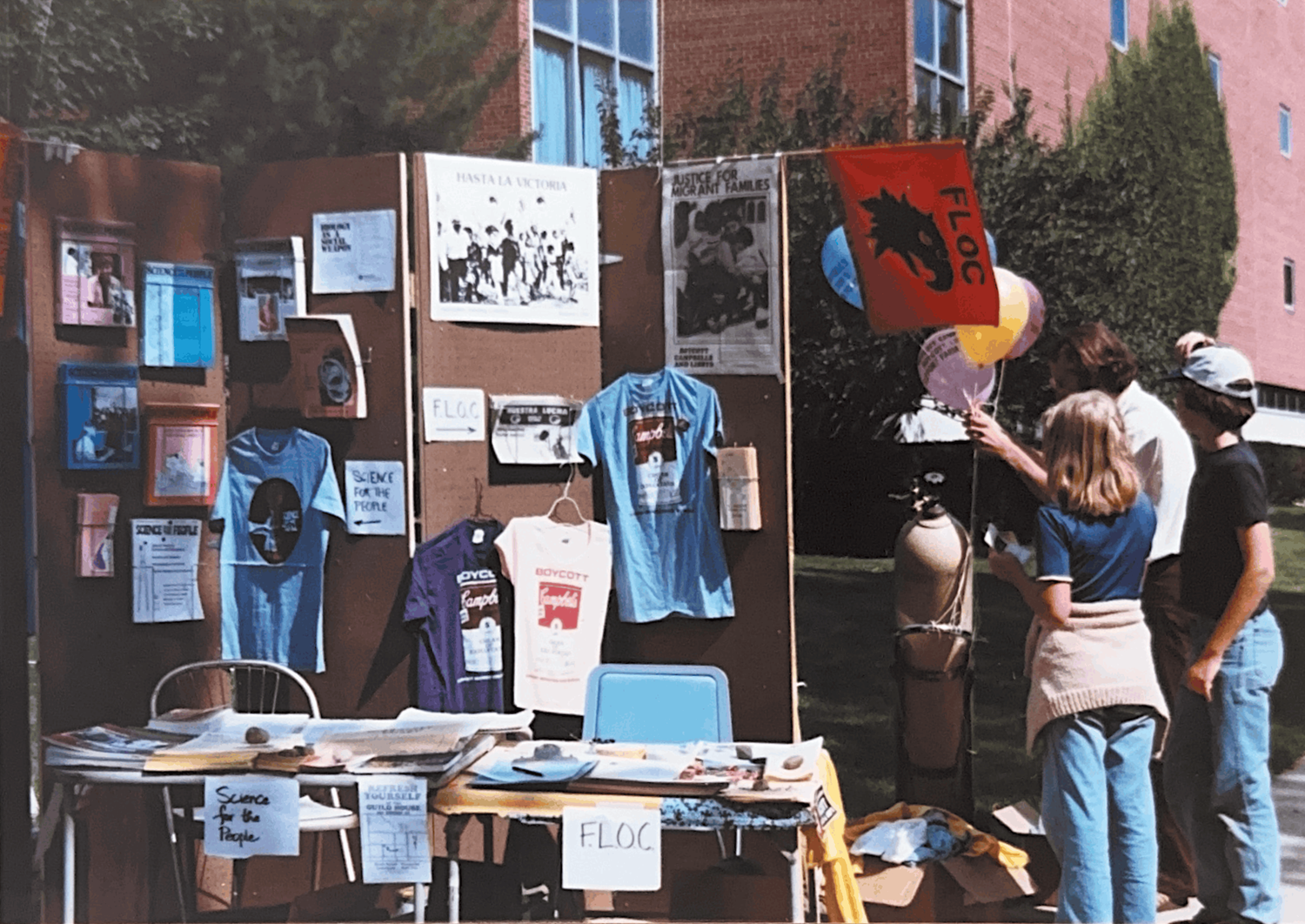
Terri Goldberg, the former staff person, left Science for the People in 1982 to help found the Council for Responsible Genetics, a group concerned with the ethical and social implications of modern biotechnology.
Science for the People’s “anarchic” structure was ineffective for organizing, she realized, so she turned elsewhere.
“As a staff person, I had no idea who I was accountable to or what structure there was,” she says. “I had to listen to everyone, which meant there was no one.” When she helped found the Council for Responsible Genetics, she felt very strongly that it should have a unified board.
In her time at Science for the People, Goldberg does not recall anyone asking her what the organization’s budget was. Everyone was too focused on critique. But it was financial issues that would spell Science for the People’s ultimate downfall.
Though magazine subscribers had been dropping since 1985, the organization had kept afloat for a few years using personal donations — and also by leaving its tax obligations unpaid . By 1990, Science for the People had ceased publication of its magazine and owed $70,000 in back taxes.
To pay off their debts and cover operations, Science for the People elected a board, with Jonathan Beckwith as president — the first and last time it ever elected a formal set of leaders. The group moved into a smaller office and turned to their defunct list of magazine subscribers — some 1,200 people — to ask that they join as due-paying members of the organization. But, out of 1,200 mailings, only 35 responded, and attempts to solicit larger donations returned similarly dismal results.
In his 2009 memoir, Beckwith wrote that trying to raise the money back “was a losing battle.”
“I stuck with it until the end because there was no other group that placed the issues of science and society in a wider societal context,” he wrote. “Also, it had been a part of my life for twenty years.”
At a general meeting in July 1991, over two decades after fifty young scientists dressed as space men paraded into a televised meeting of the American Association for the Advancement of Science, the board announced that Science for the People would “take the necessary steps to declare bankruptcy and to dissolve the current organization.”
Lisa Greber, a former staffer at the magazine, wrote in to the final meeting that Science for the People was, for her, “a way of thinking — a religion that I believe in profoundly. But I don’t know how to turn that belief into an organization that works.”
From Ann Arbor, John Vandermeer heard about the office closing and the organization’s tax troubles. “The central office closed, and everything else just sort of wilted away,” he says. “It ended not with a bang, but a whimper.”
A Reboot
he 2014 conference at UMass Amherst was only supposed to be a nostalgic gathering for the aging group — to “get us all together for a reunion before we all die,” according to conference organizer Sigrid Schmalzer.
“I started out imagining we were going to have twelve people eating sandwiches around a conference table in a seminar room at UMass,” Schmalzer says. “And then it just ballooned because so many people were interested.”
Though many older activists were there to reminisce, Schmalzer and her co-organizers also invited younger scholars who were doing work adjacent to Science for the People’s mission — and they left inspired.
Derek S. Denman, then a Ph.D. student at Johns Hopkins University, had been researching weaponized drones and surveillance drones. As president of the Human Rights Working Group at Hopkins, he helped organize against a university laboratory that was developing military drones for the Department of Defense. The working group projected drone strike footage onto buildings during foreign affairs conferences and circulated petitions demanding that the university divest its Pentagon-funded drone research.
For Denman, the former members of the organization were giants — and role models. “They’re engineers and physicists and biologists in this organization who have taken action that puts themselves at stake politically far more than I feel like anything I had done,” he says. “I came away from the conference with a tremendous admiration for what they’d done.”
The conference’s final panel was titled “Science for the People 2.0.”
“This is the kind of thing that you might tack onto a conference without any expectation that it’s really going to happen,” Schmalzer says. But, between 2014 and 2016, she adds, “there was slow motion type organizing happening to reboot this organization.”
And then, in November 2016, Donald Trump was elected president.
The election set off alarm bells throughout the scientific enterprise — and set into motion a wave of political interest in mainstream science. It also opened the doors for Science for the People’s resurrection.
On Earth Day in 2017, roughly 100,000 scientists and supporters descended on Washington D.C. as part of the March for Science. In 600 cities around the globe, nearly a million more staged protests in support. Endorsed by the American Association for the Advancement of Science, the Union of Concerned Scientists, and the high-profile journal Nature, the researchers primarily sought to protest cuts to federal science agencies and promote, as one journalist put it, “the untenable insistence that science is apolitical.”
Science for the People’s first statement as a revitalized organization was in support of the March for Science — but wrote that while the march was an “exciting first step,” the movement had much to learn from the radical science crusades of the 1970s.
“By reorganizing Science for the People, we aim to revitalize its legacy of documenting the use and abuse of science and to organize scientists to contribute to human liberation and transformative social change,” the Science for the People statement added. “To uncritically assume that science is progressive is to leave the tools of science in the hands of the powerful. We need to think about scientific work differently: what would science look like if it were with and for the people?”
Though Trump spurred the organization back into public action, members felt that the funding cuts under Trump were merely a symptom of the same problem Science for the People had been fighting decades prior.
The political establishment, according to modern Science for the People member and software engineer Kevin Ye, has “always waged a war on what we would call people’s science. They’ve waged a war on scientific access for regular people.”
But critiquing science carries different weight in a political moment where research funding is being dramatically reduced, according to W. Katherine Yih, a biologist who was part of the Ann Arbor chapter in the 1970s and 1980s. “I think we shouldn’t give up on the consciousness of science being a class-based activity,” Yih says. “But in these times it does feel important to just simply defend the notion of science.”
Vandermeer, one of the early members of StfP in the 1970s who is now “kind of on the outside of the group,” sees a modern relevance in the organization’s beliefs. For him, Science for the People’s critique is universal — just as it has been “ever since we had a thing that we might call science.”
If the original Science for the People was founded in opposition to the war in Vietnam, Calvin Wu, the organization’s current international secretary, says that today’s organization is focused on climate change, deportations, and the Palestine solidarity movement. “There’s not really one Vietnam moment for this present work,” he says. “But it’s just multiple of these moments.”
The modern Science for the People takes as its central organizing force their triannual online magazine, which picked up where the old group left off. But, unlike the original organization, they adopted a set of “principles of unity” in the hopes of preventing the destabilizing arguments the organization faced in its early years. They also have a volunteer steering committee.
“While old Science for the People, or SESPA, did some cool things, they also were not particularly stable,” says Josh Sodicoff, a member of the modern organization’s Chicago chapter. “And so I think more of the lessons from that are what not to do to maintain a stable organization.”
But for Shunryu Colin Garvey, who had been a graduate student in science and technology studies when he helped organize the 2014 conference, Science for the People’s modern critique is not enough. With the rise of AI, especially for military uses, he believes that an organization like Science for the People should do more than publish a magazine.
“No one,” he says, is “willing to take a radical step.” (Garvey says his radical step was to quit his postdoctoral post at Stanford and return to Japan, where he is now a Zen Buddhist priest and para-academic.)
With the organization’s reinvention, many former members have only loose ties to the modern organization.
“I’m a little bit out of politics,” says Roberta Garner, the sociologist who had been involved in the Chicago chapter in the 1970s and is now more than 80 years old. “Old people have other concerns.”
Yih still gets emails from the Boston chapter, though she is no longer as politically active as she once was. Back in the day, she recalls that “it felt as though we were on the cusp of some real improvements in the human condition.” But today, she says “there’s less of a notion that maybe we could make some meaningful change.”
Lately, chapters have been holding webinars about climate change, protesting a quantum computing data center on the shores of Lake Michigan, and pushing back against the U.S.’s initiative to build an AI manufacturing supply chain in the Philippines — which they see as both extractive and likely to undermine the sovereignty of the Filipino people.
For each cause, Science for the People members — a mixture of scientists in industry, like Ye, scientists in academia, like Wu, and science teachers and healthcare workers — are contributing their expert knowledge and research experience. But Ye says he wants Science for the People to be more than scientific “consultants.”
To him, their role as scientists “inside the ivory tower” is to champion “a people’s science.” There is a barrier, currently, between science and the people, he says — and it’s the scientists who have access to machines, labs, and funds.
But the ultimate goal, says Ye, is to “tear down the ivory tower. Tear down the university gates.”
But like Science for the People’s previous iteration, believing in change is easier than enacting it. Thinking back on the 2014 conference, Terri Goldberg, the magazine staffer, recalls how student attendees were studying their magazine and looked to her and her former comrades for direction.
“My feeling was, you guys gotta make it up. Whatever we were doing then is interesting and informative,” she says. “But it’s no formula for what to do in this era.”
“I’m not sure we’re exactly the role model you’re looking for,” she adds. “You’re going to have to figure out your own way of protesting.”
—Magazine Editor-At-Large Sophie Gao can be reached at [email protected]. Follow her on X @sophiegao2.
Want to keep up with breaking news? Subscribe to our email newsletter
Have a tip for The Crimson? Share it confidentially