On Harvard’s Birthday, Remember Our Other Founder
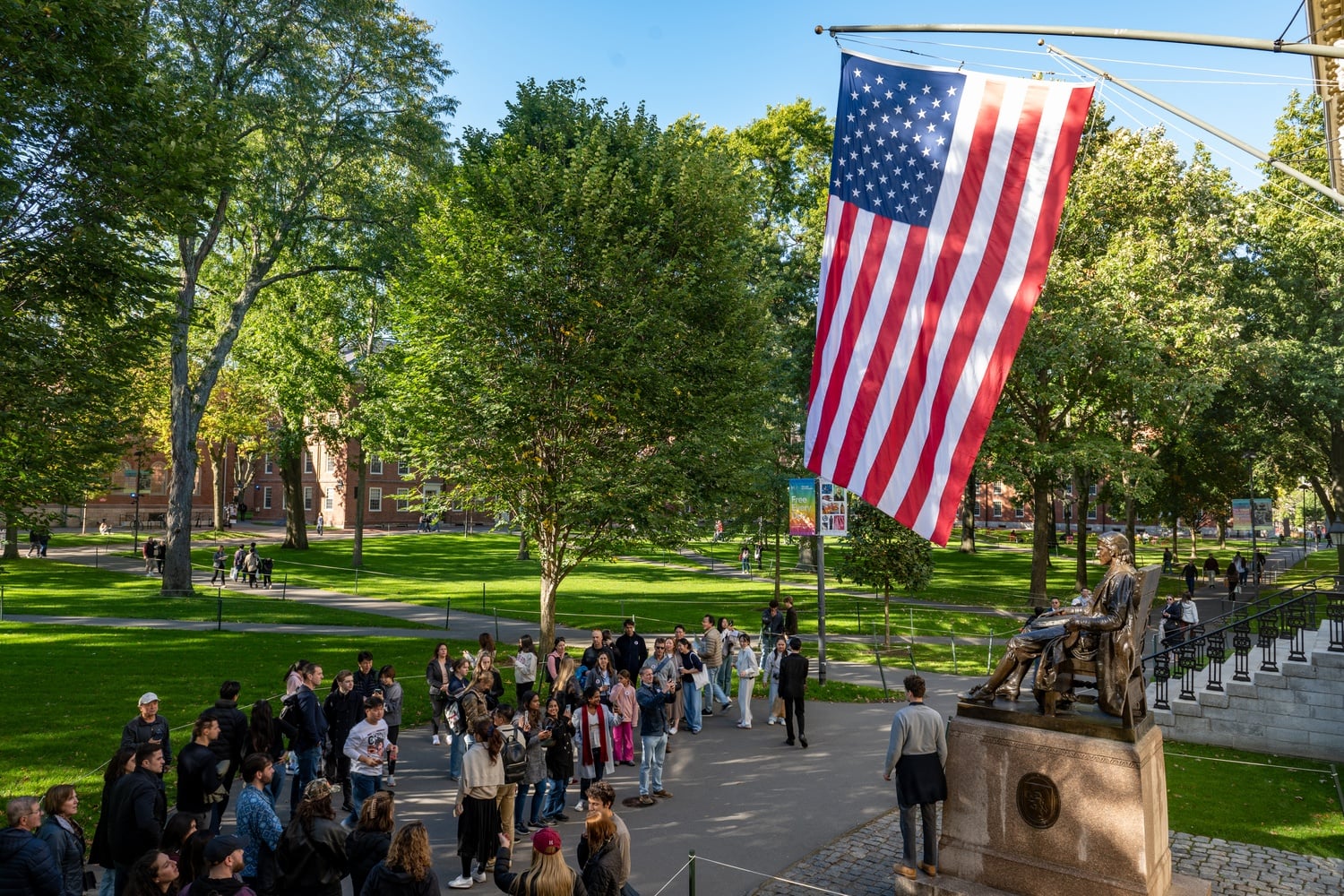
Happy birthday, Harvard. Who’s your daddy?
Today, October 28, is Harvard’s 390th birthday. Anyone who has heard about the “statue of the three lies” knows John Harvard wasn’t the University’s founder — so who was? My answer would be Sir Henry Vane the Younger, and his story might just teach us something about Harvard today and give us something to aspire to in the future.
Harvard was founded in 1636 by a vote of the Great and General Court of the Massachusetts Bay Colony. At that time, the governor of the Massachusetts Bay Colony was the 23-year-old Henry Vane, a man who has been described as “America’s first revolutionary.”
Vane is a forgotten figure at our University. As far as I can tell, no buildings at Harvard are named for him, and no statue here bears his likeness. The governor may not be the obvious pick for founder, but I wouldn’t be the first to suggest it. If John Harvard can be considered a founder for his donation, then Vane deserves the same recognition for presiding over the vote to establish Harvard College.
But regardless of what we call him, Vane’s life is an example worth examining.
Born in England in 1613, Vane left for the New World at just 22, seeking freedom from the monarchy. Only five months after arriving in New England, he was elected governor of the Massachusetts Bay Colony.
The struggle for religious freedom would define — and precipitate the end of — his gubernatorial term. For example, he defended Anne Hutchinson’s controversial religious teachings on the grounds of tolerance and civil liberty. It’s hard to imagine a politician today sticking their neck out like this.
Vane lost reelection to John Winthrop — not to be confused with his great-great-grandson — who began restricting immigration on religious grounds. Vane then returned to England, but before leaving, he published a defense of immigration in reply, writing “Christ bids us not to forget to entertaine strangers” and “Christ commands us to do good unto all.”
His commitment, both to defending others and to speaking up for what he believed was right, even at the expense of losing, should be emulated.
In England, Vane continued to be an active reformer in politics. As a member of Parliament, he helped to charter the colony of Rhode Island — the first American colony to guarantee religious freedom in its charter.
He was also an advocate for republicanism, but opposed the execution of King Charles I. Still, during the English Interregnum, he served on the Council of State — the executive branch of government at the time — becoming its president in 1652, technically making Vane England’s head of state.
However, Vane was wary of the new government’s power, proposing election reforms and calling for a constitutional convention more than a hundred years before America’s founders put pen to paper. Even when he was in power, Vane never became complicit — something especially relevant to Harvard students as they climb different career ladders.
After King Charles II was restored to the throne, Vane was tried for treason. He was denied legal representation, and the jury deliberated for about thirty minutes before sentencing him to death. And so, Vane was beheaded on June 14, 1662.
Of course, like all historical figures, Vane was not perfect. To be clear, he committed outright evils, such as his role in the war against the Pequot Native Americans.
Yet, at risk of mythologizing a complex individual, I’d argue that for his commitment to religious and political freedom, unyielding even to death, Vane stands as an exemplar of courage and open-mindedness rare for his time and ours.
Leaders and citizens and students alike, both at Harvard and throughout the nation, should not forget his example.
In today’s climate, we need selfless bravery. It’s worth remembering that, as in the case of Vane, the prize for valiant resistance is likely not riches or admiration in your lifetime, but rather isolation, ostracism, and sometimes death.
The stakes today might not be as high, but if we have seen anything, it is that capitulation may not even work in the moment — and it often has a far worse price to pay in the long run.
On Harvard’s 390th, and America’s 250th, I hope that we can each find the strength to stand up for what is right.
Maybe we all need to be a little bit more Vane.
Matthew R. Tobin ’27, a Crimson Editorial editor, is a double concentrator in Social Studies and Economics in Winthrop House.
Want to keep up with breaking news? Subscribe to our email newsletter
Have a tip for The Crimson? Share it confidentially