Have You No Shame, Sir?
O ye of little shame.
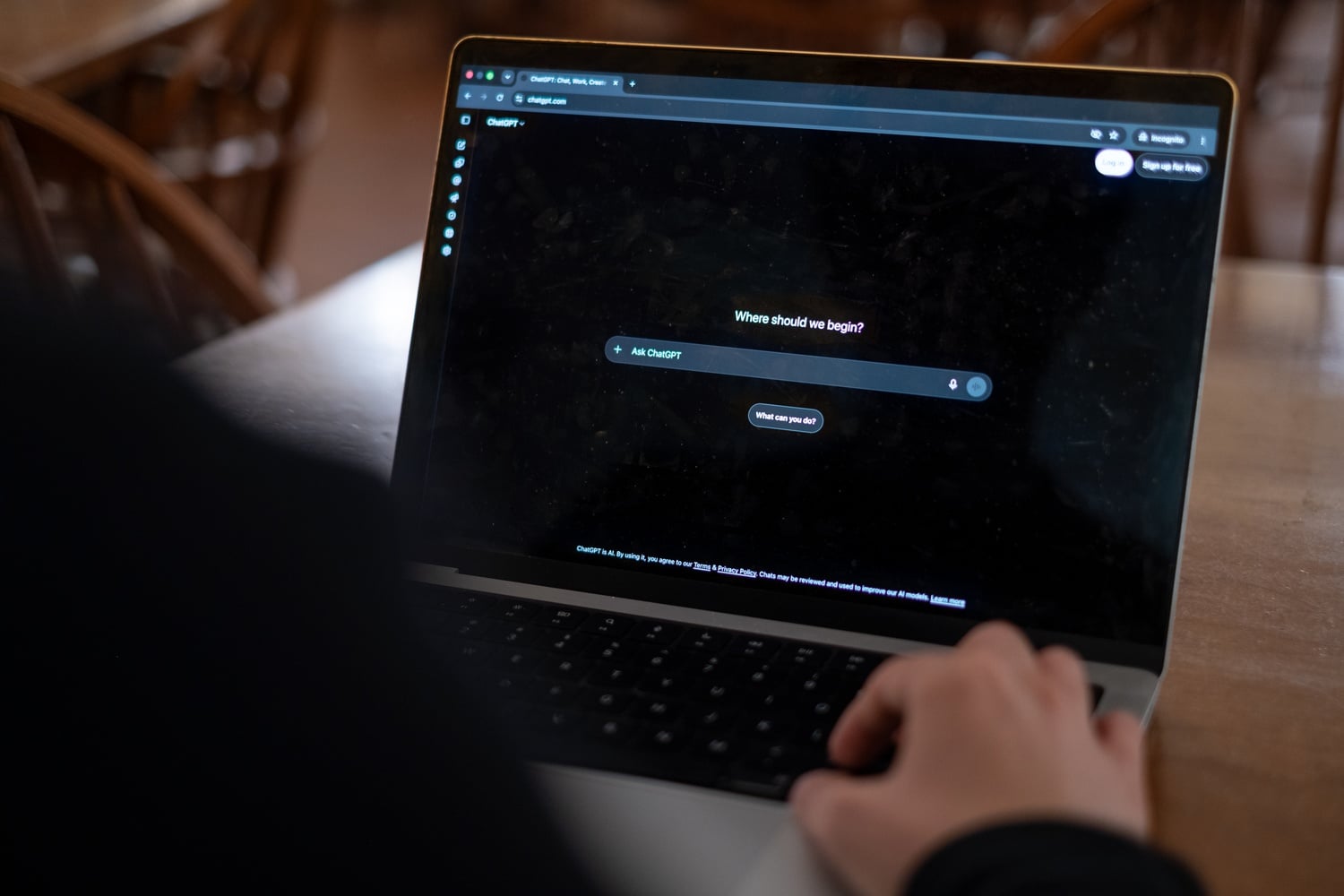
The glow of an LLM user interface, emanating from student laptop monitors in libraries, lecture halls, and lunchrooms, is by now a quotidian sight.
We can safely assume that these students are not all using artificial intelligence in ways their professors would condone — and yet, they seem without concern that their dishonesty should be on display for all to see.
Why do many students show no apparent hesitation in describing (loudly, at an adjacent table in Quincy Dining Hall) that Claude handled their readings? Some students seem almost proud of their ability to pass off AI-generated discussion posts as their own.
At today’s Harvard, the AI-enabled cheater finds an environment of remarkable comfort and support. Too many students would feel more ashamed to get a C on a paper than for their peers to discover that they wrote it with AI. Some simply don’t seem to believe that they are doing anything fundamentally wrong when they use the technology to cheat.
What Harvard needs is a culture of AI shame.
Feelings of shame attend behaviors that break ethical or social norms, and often (though certainly not always) serve important social functions. We want people to feel shame for stealing a wallet or cheating on a partner or — to pick a particularly egregious example — pushing over an elderly Cantabrigian in the Capital One Café.
Dishonest usage of AI is one such behavior worthy of shame, for it has a clear negative externality on the education of others. Beyond hollow section conversations and losing out on an A to Joe “Gemini” Schmo, there’s the fact that we seem to be paying tens of thousands of dollars per year to argue with Claude on Canvas.
The AI cheater not only squanders a spot at Harvard that another applicant might’ve made better use of, but also deprives themselves of a thorough education — one that they really ought to have if they aspire to an influential position in society.
Why then, despite these clear negatives, have ye no shame?
Let us consider a case study. The other night, as I sat reading in Lamont Library, I watched a student prompt a model to summarize his Gov 10: “Foundations of Political Theory” course readings. No shame could I detect — in fact, he consulted his friend at a neighboring desk for help!
I propose a few possible explanations for this lack of shame.
One is that our Gov 10 student genuinely believes that he is justified in using AI to complete his assignments. Perhaps he is one of those incurious adherents of the consumer view of education — “Give me the degree I paid for and leave me alone!” — and cares more that everyone believes he has read Plato’s “Republic” than about the inherent value of the text.
A second view is that even curious students have grown very good at justifying to themselves why their use of AI is, in fact, ethical. The ubiquity of AI tools — that every Google search births a Gemini response, for instance — renders AI usage almost the default, and ethical lines easy to smudge. AI is also adept at making one think that they’ve understood something, so perhaps our Gov 10 student believed that he hadn’t really lost much at all by consuming an AI-generated summary rather than studying Plato’s actual text.
A third view is that students are ashamed (if privately) of their AI use, but feel trapped in a hole of their own digging. Certain use patterns of AI seemingly can lead to cognitive atrophy. Once one is accustomed to outsourcing their thinking, the idea of writing an essay on one’s own feels an ever more insurmountable task, while resorting to AI becomes virtually reflexive.
In practice, the answer is likely some combination of all three phenomena — but no matter the origin of one’s shamelessness, it is worthy of critical examination. Somewhere along the line, the effects of our actions have misaligned with whether we feel shame.
I don’t imagine that we ought, after Hawthorne, to affix a scarlet “AI” to the coatbreast of cheating undergraduates. But if the student AI culture remains one of shamelessness, cultivating a healthy academic environment will remain elusive — no matter the myriad anti-AI policies Harvard may enact. After all, as I’ve argued before, an education of only AI-proof assignments would be woefully incomplete.
Maybe you do feel shame about your AI use. Good: allow such negativity to motivate a change in your behavior. A surfeit of positivity is what got us into this mess. Remember that cheating with AI is far worthier of shame than getting a bad grade.
We need to hold each other accountable for broadly harmful behavior. We need a student culture that privileges moral behavior over what today appear to be the most salient metrics: grades and prestige.
Perhaps those that have come to rely on AI will have to eat a few C’s and D’s when they are confronted with an AI-proof assignment — yet, one hopes that a recovery of their cognitive abilities will render the atrophy excuse moot.
Ye ought to feel shame.
Andrew W. Shlomchik ’29, a Crimson Editorial editor, is a Social Studies concentrator in Quincy House.
Want to keep up with breaking news? Subscribe to our email newsletter
Have a tip for The Crimson? Share it confidentially