Harvard Still Hasn’t Found a Permanent Director for Its Middle Eastern Studies Center
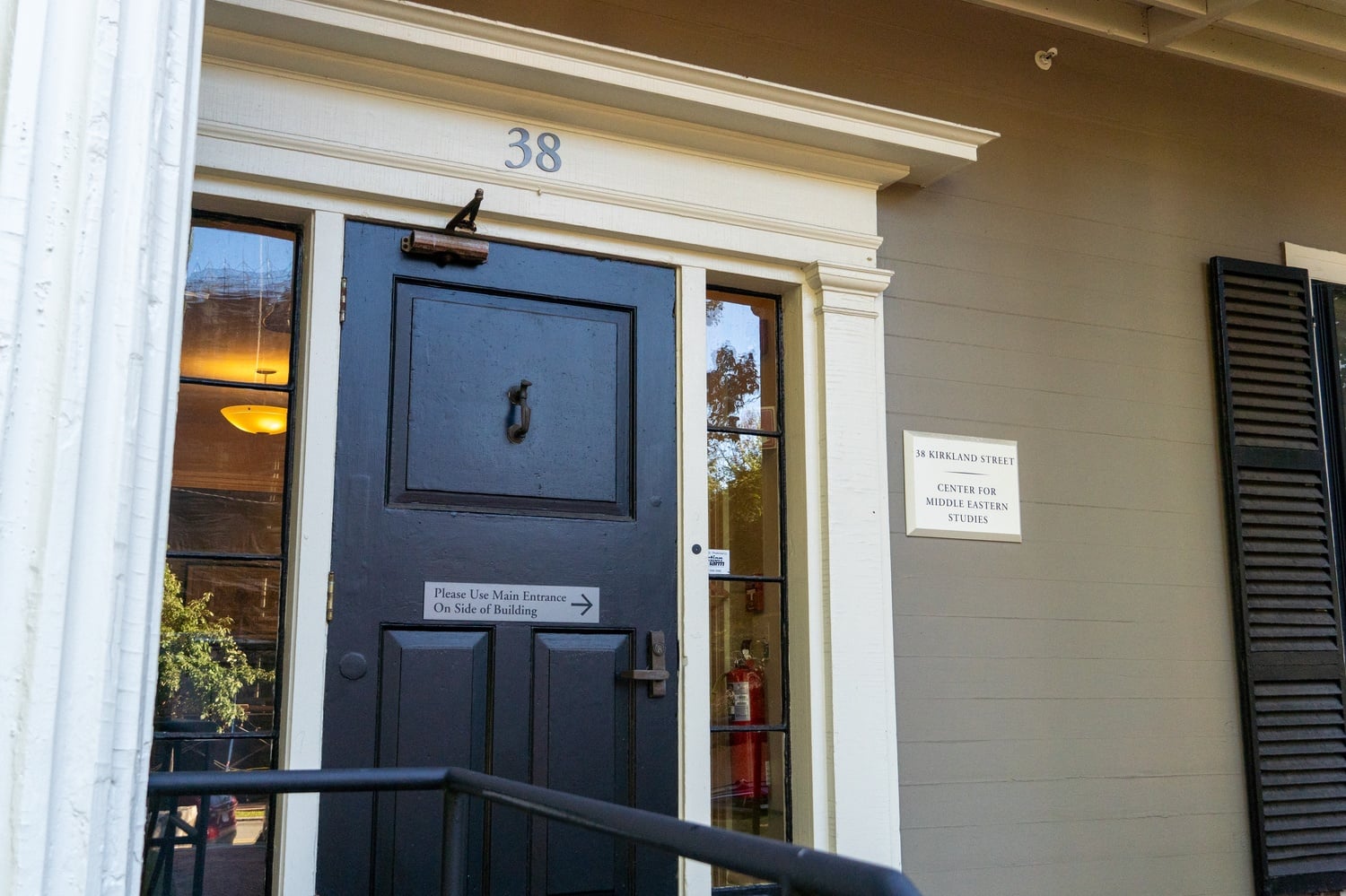
More than 18 months after ousting the leaders of its embattled Center for Middle Eastern Studies, Harvard has yet to name a new permanent director — and at least two professors have turned down the job.
Dean of Social Science David M. Cutler ’87 dismissed the center’s director, Turkish Studies professor Cemal Kafadar, and its associate director, History professor Rosie Bsheer, in March 2025. Harvard’s chapter of the American Association of University Professors alleged at the time that Cutler made the decision because he felt the center’s programming on Palestine was insufficiently balanced, a characterization Cutler disputed.
Global Health professor Salmaan A. Keshavjee, the center’s interim director, has had his term extended four times and is now set to serve through June 2027. Keshavjee confirmed to The Crimson that he had not been asked to stay on as director permanently.
At least two faculty members have been approached about the role and declined, according to a person familiar with the matter. The Crimson could not determine who they were.
Keshavjee first stepped in as interim director in 2024, while Kafadar was on leave. In a June 2025 email to CMES affiliates, the center’s executive director, Lauren Montague wrote that the FAS had launched a search for a new director and that Keshavjee would stay on through December 2025.
In January, Montague wrote to affiliates that the search “remains ongoing” and that Keshavjee had agreed to serve through March. His term was extended again in March, and in June, affiliates were told he would remain interim director through June 30, 2027.
CMES also did not hold its summer program in Tunisia this year, according to a person familiar with the matter, and the center’s website indicates the program will not be offered in summer 2027.
FAS spokesperson James M. Chisholm wrote in a statement that “the faculty director helps shape the center’s intellectual direction, and the Dean of Social Science is taking the time necessary to find the next leader.”
CMES became a flashpoint last year in Harvard’s clash with the Trump administration. In March 2025, former University President Lawrence H. Summers said a panel at CMES was “very likely” antisemitic, and other Harvard affiliates had accused the center of platforming antisemitism. Those concerns were amplified in the federal government’s April 11, 2025, letter demanding Harvard make sweeping reforms to keep its federal funding.
Get The Crimson in your inbox.
The letter named the center as one of the Harvard programs “that most fuel antisemitic harassment or reflect ideological capture” and called for them to be audited.
The dismissals drew swift condemnation from faculty, who pressed Faculty of Arts and Sciences Dean Hopi E. Hoekstra on the decision at a faculty meeting days later and accused administrators of preemptively caving to the Trump administration.
Hoekstra defended the removals at the meeting, saying they were not made in response to external pressure.
“I am confident that this was the right decision,” Hoekstra said. “While I appreciate that the external environment makes a decision like this one especially hard, it should never prevent us from addressing the needs of our academic units.”
The CMES dismissals were among a series of changes to programs with Palestine-related content across the University.
The same week, Harvard School of Public Health announced it had suspended its partnership with Birzeit University in the West Bank. Days later, Harvard Divinity School paused its Religion, Conflict, and Peace Initiative, which critics had accused of presenting a one-sided view of the Israel-Palestinian conflict.
In December, HSPH removed the director of the François-Xavier Bagnoud Center for Health and Human Rights, which had faced similar criticisms.
Faculty and students fiercely opposed the changes, arguing that Harvard was sacrificing academic freedom under federal pressure.
Though the threats to Harvard’s federal funding have largely subsided, faculty concerns about academic freedom have not. In The Crimson’s annual survey of FAS faculty, conducted this spring, 52 percent of respondents said they felt “very” or “somewhat” negatively about the state of academic freedom at Harvard.
—Staff writer Abigail S. Gerstein can be reached at [email protected] and on Signal at abbysg.97. Follow her on X @abbysgerstein.
—Staff writer Amann S. Mahajan can be reached at [email protected] and on Signal at amannsm.38. Follow her on X @amannmahajan.
Want to keep up with breaking news? Subscribe to our email newsletter
Have a tip for The Crimson? Share it confidentially