Dissent: You Can’t Have a Strike and Ignore It Too
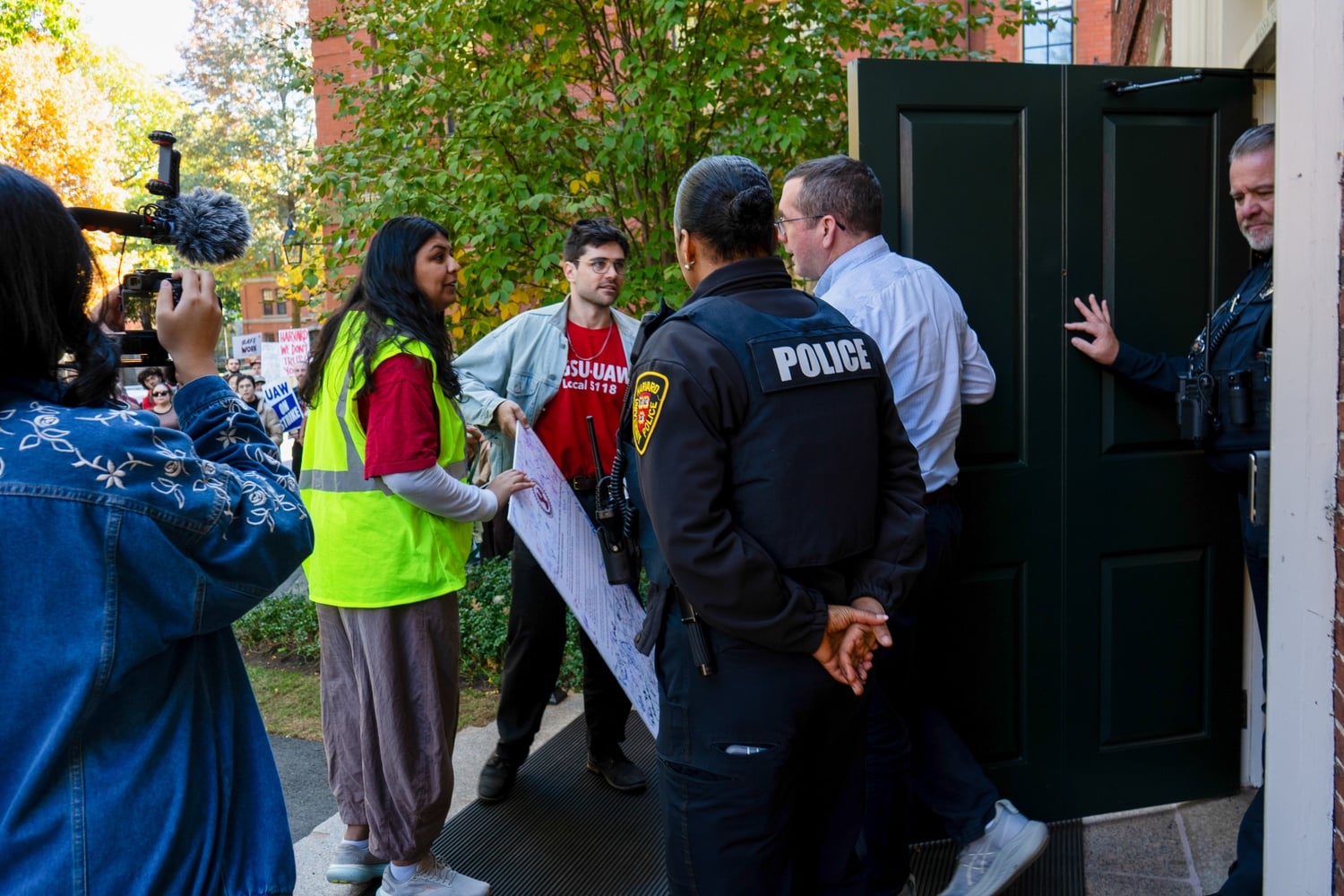
The purpose of a strike is to exert leverage. Much of the leverage of a strike is disruption. Thus, support for a strike that stops at disruption is not support at all.
In spite of this, today the Editorial Board wants to have it both ways, expressing general support for the demands of Harvard’s striking graduate students while condemning certain disruptions to teaching and learning. But what leverage does the union have except to hinder the University’s educational function?
There are two key facts to keep at the forefront when engaging with the strike: Harvard is the richest university in the world, and Harvard compensates graduate labor at a lower rate than peer institutions. The onus is thus on the University to remedy this issue. But inasmuch as the Board makes a direct call to action to Harvard’s administration, it is merely to discipline demonstrators.
In asking strikers to surrender their leverage while asking little of the University that made the strike necessary, the Board’s position amounts to support in name only. For this reason, we dissent.
The Board primarily takes issue with a recent incident in which the midterm for GenEd 1116: “Medical Ethics and History” was disrupted by a barrage of noise coming from striking demonstrators. Student frustration is understandable — it is natural to desire a quiet environment in which to take an exam.
But if one supports HGSU’s cause, they would be hard-pressed to find a consistent principle on which to draw the line for support for a strike here. The Board even acknowledges that disruptions are necessary, but claims they should occur outside of administrative buildings rather than classrooms and exams.
The more obvious flaw with this proposal is that those who work in administrative buildings could conceivably work from home if necessary — as they did during the last occupation of University Hall, for example. Hence, it is much harder for graduate laborers to substantively disrupt bureaucratic functions through a picket.
More broadly, though, drawing the line at this specific incident misunderstands the point of a strike. Both in the spring and this semester, demonstrators have marched in front of University Hall and Zimmer Hall, clearly to no avail. There is little leverage gained in doing the same thing over and over again. As long as the University will not compensate student workers fairly, strikers finding new and more disruptive ways to exert pressure is to be expected.
Not to mention, it seems to have worked — for many, the disruption has raised the urgency for an end to the strike.
Reactions to the absence of graduate student teaching clearly show that students see their labor as valuable. Strong teaching is at the core of any worthwhile education, and students ought to channel frustration towards the University that cannot pay even a competitive rate for pedagogical work.
There are obviously limits to moral forms of protest. Targeted harassment, physical aggression, and discrimination will never be acceptable. But if the Board is willing to accept banging drums and repetitive chants, it is unclear exactly what line a scream crosses.
Yes, it is regrettable that students are caught in the crossfire. But when the quality of life of those who teach us is at stake, we should be more willing to tolerate discomfort.
Adam N. Chiocco ’27, an Associate Editorial Editor, is a Philosophy concentrator in Pforzheimer House. Zakiriya H. Gladney ’27, a Crimson Editorial Chair, is a Statistics and Social Studies concentrator in Dunster House.
Dissenting Opinions: Occasionally, The Crimson Editorial Board is divided about the opinion we express in a staff editorial. In these cases, dissenting board members have the opportunity to express their opposition to staff opinion.
Want to keep up with breaking news? Subscribe to our email newsletter
Have a tip for The Crimson? Share it confidentially