There Is Still Student Demand for DEI
DEI isn’t dead.
Over the past two years, universities across the country cut DEI programming amid pressure from the Trump administration. Harvard was no exception. But a lack of institutional support for diversity, equity, and inclusion has not killed student demand. Whether or not the University explicitly funds or endorses diversity events, students have proven that they will continue to organize these cultural inclusion events on their own.
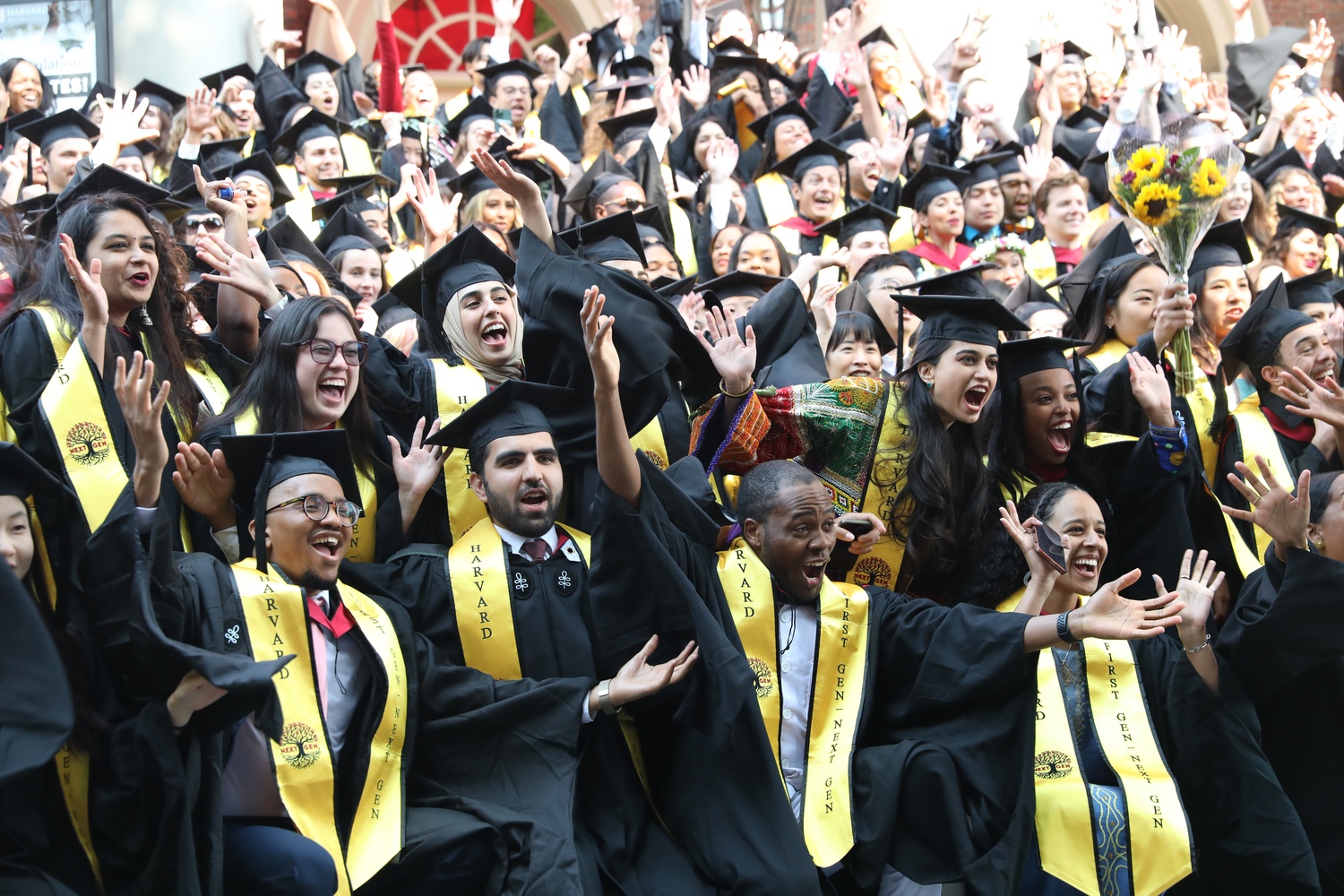
For example, in 2025, the University stopped funding and hosting affinity graduations. But students kept affinity celebrations alive, organizing eight independent ceremonies for the Class of 2026. At the Asian American and Pacific Islander celebration, more people wanted to come than its venue could hold.
Latinx Convocation used to take place in Memorial Church, right in the heart of Harvard Yard. The Latinx Convocation ceremony was held across the street in First Parish instead, which, according to its organizers, was because of funding uncertainty. That’s where I attended the event in my first weeks at Harvard this year.
As a freshman, I’ve found community through cultural events. Being a student of color doesn’t mean you are destined to feel out of place at Harvard. But upon first arrival on campus, even finding classrooms can feel like an extracurricular. It helps to know there’s a room you can always walk into.
Affinity convocations do not exist because minority students need extra hand-holding. They exist for the same reason student clubs and pre-orientation programs do: to connect freshmen with upperclassmen and communities as they arrive on campus.
Critics of campus DEI argue that events centered on identity divide students and undermine campus community. But when students see other people like themselves, they are more likely to feel at home on campus and thus more likely to be able to contribute to campus life. Indeed, Harvard students love to sort into niche clubs based on similar interests. Students not only should be able to but also clearly want to group themselves by culture and heritage as well.
The 2025 Latinx Convocation and the other affinity group welcomes that week were advertised as open to everyone. One attendee told The Crimson that seeing so many people gathered at Latinx Convocation helped him realize there was a community here for him.
I found that feeling again with the Harvard Taiwanese Cultural Society. I was making scallion pancakes, trying to get the combination of egg, pancake, and soy sauce exactly the way my grandpa makes it. My grandpa isn’t in Cambridge, but for one evening, it felt like he was.
I got to spend the evening trying to get the soy sauce right because someone else figured out where we could cook and how to pay for the ingredients. Fortunately, students continue to come together to make these events possible. In October 2025, the Harvard Undergraduate Association expanded its Helping Hands Fund to roughly $30,000 to help cover costs, giving organizers another place besides the University to turn.
Meanwhile, Harvard’s administrators say they are still doing their part. As College Dean David J. Deming said, “The work itself is still really important.” On that, we agree.
In an interview with the Harvard Gazette, a University-run publication, Deming said the Office of Culture and Community will continue to support students and celebrate their identities under a broader structure. He also told The Crimson in October 2025 that the new office had allocated more money for events than the former centers had by the same point the previous year.
However, both things can be true at the same time: The new office can allocate more money for events overall while long-standing traditions and groups simultaneously lose their funding and spaces they once counted on.
Speaking to the Gazette about upcoming events hosted by the OCC, Deming said he hoped students would “come out and see for themselves.” Clearly, many students would love to. Regardless of Harvard’s endorsement, students will continue to fill these rooms. Just make sure you come early if you want a seat.
Sydney O. Mafong ’30, a Crimson Editorial comper, lives in Wigglesworth Hall.
Want to keep up with breaking news? Subscribe to our email newsletter
Have a tip for The Crimson? Share it confidentially