Politics Has a Brain Rot Problem
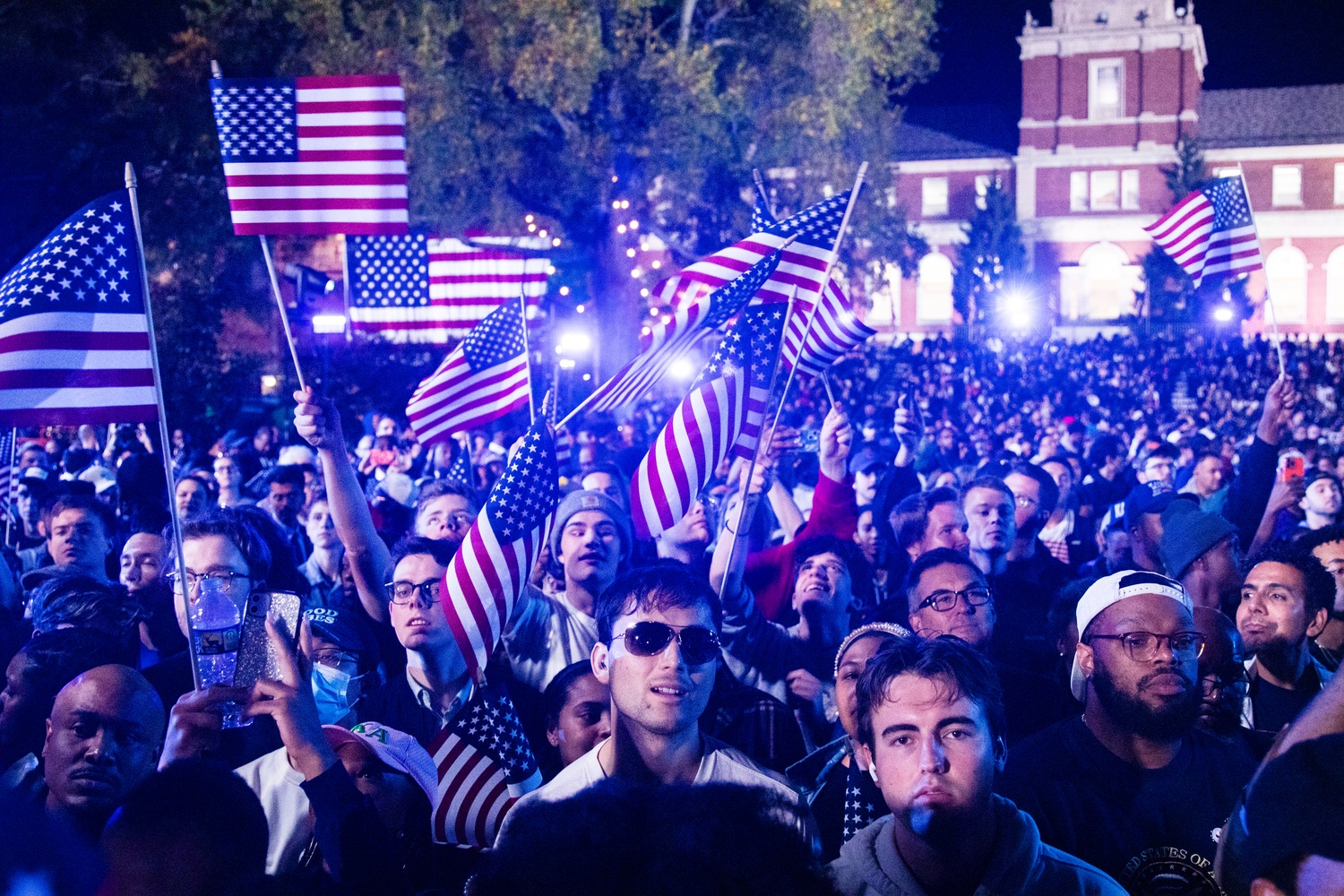
I need a break from homework. So I do what any young person would: I sit back and open TikTok, hoping to watch some harmless, funny videos that will take my mind off of exams. Instead, I am met with dramatic montages encouraging forceful deportation, edits of a romantic relationship between Donald Trump and Vladimir Putin, and meme-ified footage of military strikes in Iran.
What am I even watching?
With the midterm elections now upon us, both Democrats and Republicans are competing to win over young voters through social media, especially TikTok. Their strategies consist of the same foundation: memes, mockery, and whatever is trending, no matter how out of place it seems.
The steady feed of outrage content leaves young people less informed, more polarized, and most damaging of all, unable to see the people on the other side of the joke as real people.
Over the past few years, TikTok has become a standard part of campaign strategy and a battleground for political issues. Both the Democratic and Republican Parties have verified accounts, alongside many other lawmakers. At first glance, the idea of politicians’ content might sound harmless. After all, what’s so bad about using TikTok to publicize your message to young voters aged 18 to 29, especially when 63 percent of this demographic uses the app?
The problem arises when the politicians realize the true power of rage-bait content: polarization.
In August 2025, the Misinformation Review published a study that investigated the role of social media in the 2024 election results. After analyzing 51,680 political TikToks, the researchers found that 77 percent of the videos were explicitly partisan and received around twice the engagement as nonpartisan ones. Political videos earned views for covering hot-button, hateful topics, including racism, antisemitism, and election fraud.
TikTok isn’t just entertainment for young people — today, it’s commonly treated as a news source. Yet, the kind of content that’s rewarded does little to dissect the issues, policies, and information necessary for a functioning democracy. Instead, short, sometimes artificially generated videos that spread lies about the other party train young voters to react strongly before they even understand.
Consider the Epstein files. On TikTok, the Democratic Party frequently posts edits of Donald Trump and Jeffrey Epstein, calling them “BFFs” or depicting them dancing to a Flo Rida song. And let’s not forget about the Republican Party’s X post that read “#BREAKING: EPSTEIN FILES RELEASED” and then featured a link to “Never Gonna Give You Up” by Rick Astley.
It feels like both parties have lost sight of what this case is actually about. These posts have turned a criminal sex trafficking case into a content farm, and young voters are being taught to see it this way, too. Each time we laugh at the punchline, we become increasingly desensitized to it and its harmful implications.
Nevertheless, some will insist social media politicking is simply a series of harmless memes. I understand that algorithms promote these polarizing videos, and as such, politicians are incentivized to use them. But when everything is a meme — including discrimination and abuse — nothing is taken seriously. Issues are not approached from a place of problem-solving, as politicians become less accountable for delivering on their promises and more likely to dehumanize their own constituents.
All these videos do is divide us further as a society: Harvard’s Youth Poll found in spring 2026 that only 15 percent of young voters trust our federal government, and polarization has been shown to decrease trust in both government and in one’s fellow citizens. It can be tempting to read these numbers and think they are describing other young people, not us. Yet Harvard students are voters too, and we scroll the same feeds as everyone else. Just because we have high-achieving students with access to rare political opportunities does not mean we are immune to having our feelings exploited through these posts.
We can demand better. Midterm general elections are today, and there is still time to make your attention count. When you cast your ballot, truly consider how a candidate would perform and try to sift through all of the rage-bait content that makes the other side seem evil.
We must stop using real-world issues as opportunities for social media content before we can no longer tell the two apart.
Tara G. Malhotra ’29, a Crimson Editorial editor, is a joint concentrator in English and Anthropology in Cabot House.
Want to keep up with breaking news? Subscribe to our email newsletter
Have a tip for The Crimson? Share it confidentially