Experts Say Democratic Midterm Gains Won’t Undo Damage to U.S. Soft Power Under Trump
Political scientists said Thursday that Democrats’ sweeping midterm victories could help restore America’s global standing, but cautioned that rebuilding the country’s soft power would take more than a single election cycle.
During a panel discussion at the Harvard Kennedy School, Canadian political scientist David A. Welch said Tuesday’s election results were well-received in Canada. But Duke professor Bruce W. Jentleson warned that the Democratic victories alone would not be enough to repair the country’s international reputation.
“There are some really interesting candidates Democrats put up they should get some credit for,” Jentleson said. “But I think this recovery of America’s reputation is going to take more than just one or two more election cycles.”
The remarks came two days after voters delivered a sweeping rebuke to the Trump administration, handing Democrats control of both the House and Senate.
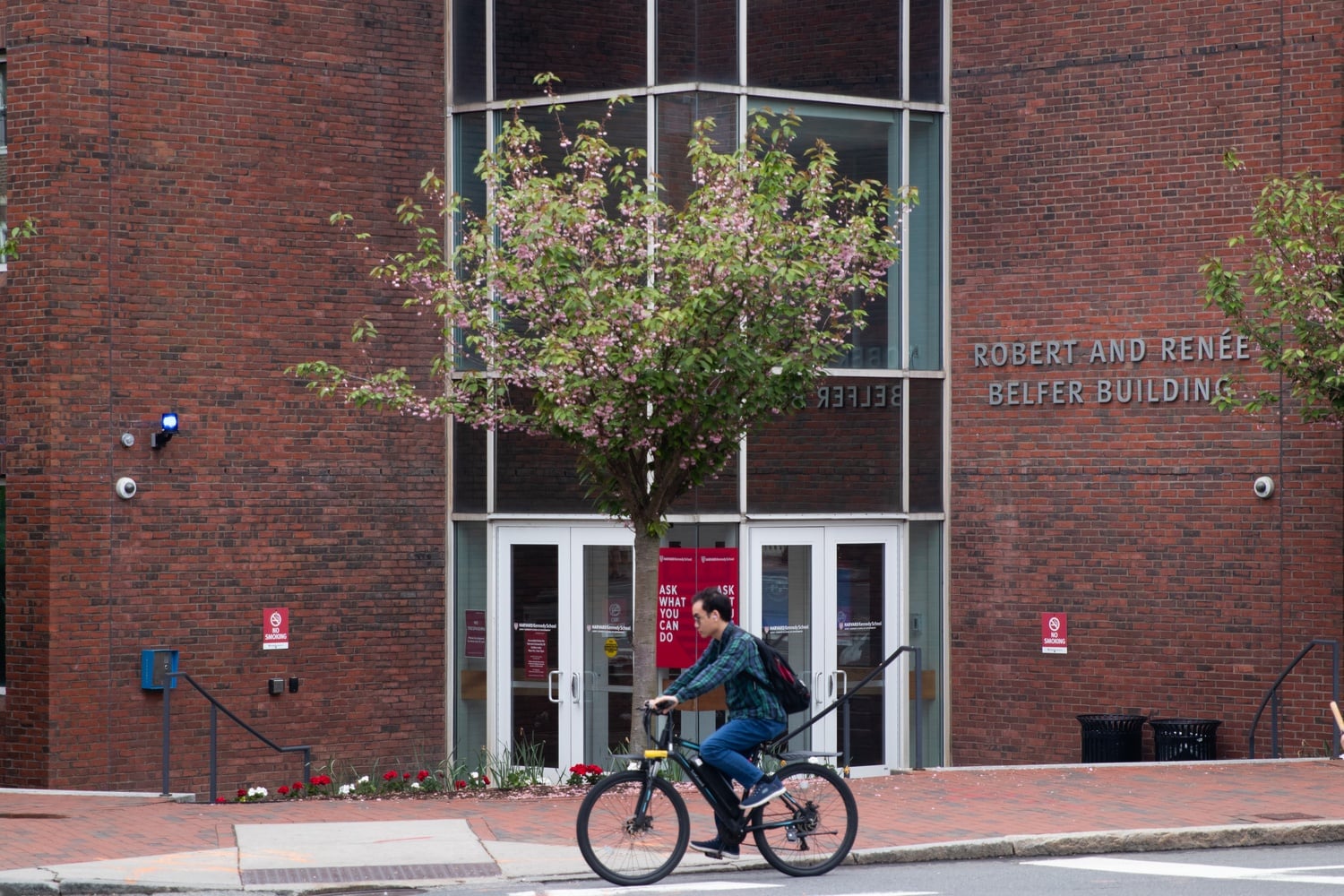
The panel, part of a conference on soft power hosted by the Belfer Center for Science and International Affairs, featured Jentleson and Welch alongside Duke political scientist Peter D. Feaver and former U.S. State Department Director of Policy Planning Anne-Marie Slaughter. Harvard historian Fredrik Logevall moderated the discussion.
The panelists contrasted U.S. soft power during the Cold War with its current standing, arguing that domestic political instability has weakened the country’s ability to wield international influence.
Jentleson argued that the instability had been exacerbated by the Trump administration, but predated it, citing efforts to impeach former President Bill Clinton and the Supreme Court’s intervention in the 2000 presidential election.
“I think the damage to American soft power runs really deep,” Jentleson said.
Feaver agreed with Jentleson’s assessment, but said the second Trump administration had been particularly influential in shaping international perceptions of the U.S. He described the administration as “the bell that can’t be unrung.”
Get The Crimson in your inbox.
Discussing Republican members of Congress who have broken with the Trump administration, Feaver questioned why more lawmakers had not pushed back against the White House’s policy agenda.
“The answers you get back are disturbing about the health of the American political system because it’s fear of physical harm,” said Feaver. “That is a toxicity in our system that both parties have to collectively work to get out.”
Slaughter drew parallels between the U.S. and Europe, arguing that both face growing political instability, economic upheaval, and acceptance of political violence. Slaughter and Welch also criticized aspects of capitalism, calling for an overhaul of economic, health care, and social programs.
Throughout the discussion, panelists praised the research of former HKS Dean Joseph S. Nye Jr., who pioneered the concept of soft power. Nye died in May 2025.
Welch said that Nye “would have been enormously heartened” by the midterm results.
“It would have filled him back up with a great deal of hope,” he said.
Welch also pointed to Nye’s argument that international students play a critical role in developing soft power by fostering favorable perceptions of their host countries when they return home. Welch argued that the U.S., Canada, and Europe should expand efforts to recruit international students.
The Trump administration has posed several challenges to Harvard’s ability to enroll international students since returning to office. The White House moved to revoke the University’s ability to enroll foreign students in May 2025, but Harvard quickly won relief in court.
Vice President JD Vance also announced last month that the Department of Justice would investigate the University for potential J-1 visa fraud related to its sponsorship of international researchers.
Slaughter argued that the diverse slate of Democratic candidates elected Tuesday would help improve perceptions of the U.S. abroad.
“That is good for our soft power,” she said.
Want to keep up with breaking news? Subscribe to our email newsletter
Have a tip for The Crimson? Share it confidentially