He Talked Markets at Harvard Law. Now Kevin Warsh is Trump’s Fed Chair Nominee.
Classmates say Kevin Warsh gravitated toward finance early on at Harvard Law School. Now, he is President Donald Trump’s nominee to lead the Federal Reserve, the nation’s central bank.
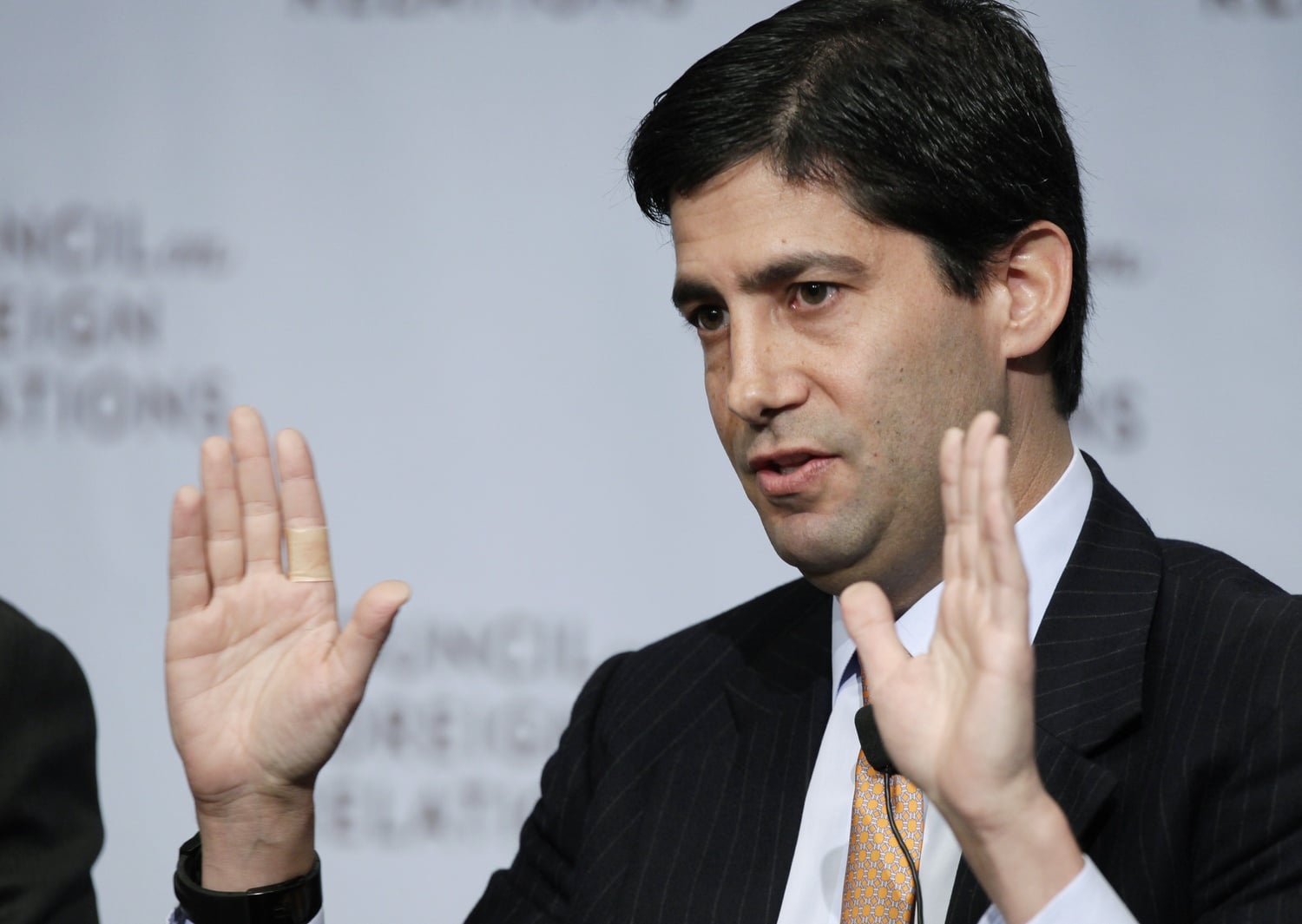
Kevin M. Warsh was always interested in finance.
From his first day at Harvard Law School, classmates say, he made that clear — gravitating toward markets and business while others weighed careers in litigation or public service.
Now, he is President Donald Trump’s nominee to serve as the next chair of the Federal Reserve.
Warsh’s nomination reflects an unconventional path to one of the country’s most influential economic roles. If confirmed, Warsh and his predecessor — current Fed Chair Jerome H. Powell — would share a distinction: neither holds a doctorate in economics, a credential long typical of Fed leaders.
Warsh would enter the Fed at a fraught moment. Trump has criticized the central bank’s refusal to lower interest rates, the Justice Department has opened an investigation into renovations at the Fed’s Washington headquarters, and the Supreme Court is currently deliberating a case that could remove Lisa D. Cook from her post.
To understand how Warsh propelled himself from a legal education to the national economic spotlight, The Crimson spoke with more than a dozen people who knew him at HLS — professors, classmates, and roommates.
They described a student singularly focused on finance and unusually deliberate about his ambitions.
Warsh declined to comment for this story.
“Law school divides into a couple of different sectors,” said Divonne Y. Smoyer, who graduated alongside Warsh. “Not that he couldn’t go into any of the other areas, but he was the kind of guy who you knew that he was going to go into corporate law or in business generally.”
Robert M. Tarkoff, one of Warsh’s housemates, said he “had a pretty good sense of what he wanted to do,” regularly attending Wall Street guest lectures and spending hours discussing the “world of finance.”
“That was always his interest,” Tarkoff said. “From day one.”
Get The Crimson in your inbox.
While many students sought lighter electives, Warsh enrolled in demanding courses at the Harvard Business School and the MIT Sloan School of Management.
“There were a lot of people in law school that would seek out easier classes. Kevin sought out harder classes,” Tarkoff said. “He would sign up for the hardest business school classes at Sloan, and would typically do better than the people who were in business school.”
HLS Professor Howell E. Jackson, who teaches financial regulation, wrote that Warsh demonstrated “a sophisticated understanding of financial matters and a genuine curiosity about the appropriate scope of financial regulation.”
Jackson, who said he taught Warsh when he was a student at HLS, added that Warsh’s experience during the 2008 financial crisis “could be especially valuable if he is confirmed.”
Still, Warsh’s trajectory is rare for a law graduate.
“Most lawyers go work for law firms or the like,” said James H. Freis Jr., a former Treasury Department official who served from 2005 to 2012. “Kevin went into a banking career and now has moved into a path that traditionally, before Jay Powell, was always a Ph.D. economics path.”
“That’s clearly a non-traditional path for someone from Harvard Law School,” he added.
Several classmates said Warsh’s analytical bent was evident early on. James G. Cahilly recalled a first-year class in which Warsh dissected a hypothetical into “three elements of risk.”
“I thought, ‘Oh man, that is an incredibly insightful way to break that down,’” he said. “I was so impressed by that.”
Cahilly added that Warsh was “notably generous,” recalling how Warsh helped him weigh a career in investment banking.
“He genuinely listened to what I was saying, what my interests were, going out of his way to help me with his time and with his ideas,” Cahilly said. “I’ll never forget that.”
Matthew T. Henshon, a friend and classmate, said he and Warsh have remained close despite holding different political beliefs, which he attributed to Warsh’s openness to disagreement.
“He’s more conservative than I am. I’ve worked for a bunch of Democrats along the way,” Henshon said. “You could disagree without being disagreeable, and that’s sort of how he was and how he is.”
“That’s something that, frankly, we don’t get a lot of right now in today’s politics,” he added.
Thomas R. Fallati, who attended high school and law school with Warsh, said he was unsurprised by the nomination.
“He always had insightful things to say and whenever we did have conversations on current affairs, he was always very thoughtful and nuanced,” he said.
Freis, who played intramural basketball with Warsh, described him as “definitely a people person,” with “good skill in speaking, relating to people, and understanding complex problems.”
“One strong memory that I have is that Kevin was a great jumper and rebounder,” he said. “I put that in part to knowing that he had been a competitive tennis player, and I could just imagine that he could jump and rocket a serve past you.”
That mix of analytical rigor and interpersonal ease, former classmates said, carried into Warsh’s professional career. During the 2008 financial crisis, when Warsh worked at the Fed while Cahilly was at Goldman Sachs, Cahilly said Warsh reached out directly to risk managers to hear concerns firsthand.
“There’s nobody watching these interactions way back then,” Cahilly said. “I think that’s an insight into someone’s character when they’re selfless and so generous, the way he was.”
“When you get into this big politics stuff, it’s really tough to know who someone really is,” he added. “But if you wind back the clock and see moments where it didn’t seem like anything mattered, I think sometimes that’s a pretty good insight.”
—Staff writer Uy B. Pham can be reached at [email protected] or on Signal at ubp.88. Follow him on X @uybpham.
Want to keep up with breaking news? Subscribe to our email newsletter
Have a tip for The Crimson? Share it confidentially